Its a Perfect day

Stanley finds pegs fascinating

Stanley finds pegs fascinating


One of the songs sung by the choir I belong to at our recent concert is Perfect Day.
Laughter and Lyrics Choir

Laughter and Lyrics Choir

Today has been just perfect. It is usually called Grandma day as I look after Stanley on Wednesdays and Thursdays. But today it was Turtle Day as I had bought a turtle shaped sand pit for him to play in.
Stanley really is a delight in every way and just spending time with him makes me feel wonderful.
It was especially good today for two reasons
1. We have both been feeling very unwell until today, with chest infections followed by throat infections
2. The sun was shining in a clear blue sky and it was lovely and warm.
Stanley usually arrives at 8am to be greeted by my little dachshund, Dayna who races out of the front door to greet him. They both then race in to get to the best armchair ~ Dayna, and the Chuggington corner ~ Stanley. Now when my children were little it was all Thomas the Tank engine and I do feel a bit disloyal saying this but Chuggington is just so much more exciting! I have collected all the trains ~ wooden and die-cast, some track, two carrying cases, a hard back story book and a floor layout for imaginative play. Now Stanley is only 16 months old but he plays with Chuggington things for hours. He ‘rides the rails’ around, across and under furniture whether or not the dog is sitting on it, he builds tunnels with mega bricks (or grandma’s legs), and he drives the trains in and out of their sheds in the carrying cases endlessly. He just never seems to tire of it. At lunchtime as a special treat he gets to watch an episode of Chuggington which I have pre-recorded while he eats what I have prepared. I have 78 episodes recorded now so that pretty much guarantees peaceful lunchtimes until he starts school!
I jokingly say to my daughter that if I were to go on Mastermind, the BBC high brow quiz show, my specialist subject would be Chuggington ~ I know so much about it I have started creating new storylines as I watch. I also make pictures for Stanley by cutting out the card trains which come with each new toy and building a scene around them with the train names written on. I then laminate them. Stanley loves these and it is how we both learned all the names.
But today, even Chuggington came second to the TURTLE sandpit. I sited it on the patio near a gazebo so that Stanley would have some shade and Grandma would have somewhere to sit. Having forgotten to buy buckets and spades etc., I gathered old plastic containers, a colander and a jug, spatulas and wooden spoons, which worked almost as well. And then the fun started.
When Stanley had enough of that exercise he thoroughly inspected the garden. Being his first Spring at an age where he could make sense of his surroundings it was a joy just to follow him watching and listening. But the highlight for me was sharing the discovery that two of the birdhouses my daughter made for me are occupied by nesting blue tits. Stanley adores watching birds in the trees and bushes, in the sky or on the ground, at the water table or on the feeders. So to show him where they are nesting was a joy.
After that he toddled up to my shed. Now anyone who has read my post “Windows” will know that my sheds are very special places for relaxation and meditation and usually no-one else ventures in there. However, today Stanley looked at the shed, pushed at the locked door and said, “Open, Yea?” in a voice that would totally melt the polar ice cap. Of course I said yes and in no time at all the nicknacks in my sanctuary were all rearranged. There was a moment when I looked at him, ancient toy car in one hand and orange wooden rosary prayer beads in the other and the happiness I felt took my breath away. And I realised that at that moment Stanley and I were both in that place where ‘heaven happens’.

Palm Sunday 2014

I have celebrated Palm Sunday in many different countries, Kenya, Spain, France, Poland, Italy and UK and it is a church tradition that I love. When I was at work (teaching primary children) one of our jobs was to make the palm crosses for the local church each year. It was an eagerly awaited treat for the 10/11 year olds in their final year of primary school, to learn how to weave and fold the crosses from simple palm leaves.
I have written about other Palm Sundays before and the links are below if you would like to read them. I hope you do.
This year I am laid up in bed with a very nasty case of tonsillitis on antibiotics so I have not even seen a palm!
But I did look at the Vatican website to see the celebrations in St Peter’s Square. My overriding impression is that this Pope, like Jesus, is adored by the people because of his common touch and understanding of what it means to be poor in this world. But my fear is that like Jesus, he is rattling too many cages and there will be those who plot against him. I also see in his face that after only a few months in the job he is looking exhausted and strained.
Two Haiku I wrote last year sum up my fears.

Pope Francis Pope Francis

Cheering throngs gather

In Messianic fervour

Fronds fall at His feet
~
Calling for His death

Crowds that cheered Him now decry

Innocent, He’ll die

You can see the Palm Sunday in Rome here http://www.news.va/en/news/pope-to-celebrate-palm-sunday-mass-in-saint-peters
And my previous Palm Sunday posts are here:~

Palm Sunday 2012

Krakow today

Lenten memories of Lourdes

Comings and Goings

Mothering Sunday

Mothering Sunday


It was Mothering Sunday in the UK yesterday and I had a wonderful day. Having accidentally dropped a hint on ‘What’s App,’ my three children who live abroad remembered to send me cards, flowers, text messages and most importantly, their love. I am very fortunate though to have my youngest daughter and my adorable grandson living very near me. They came round for lunch bearing flowers and a beautiful gift that little Stanley had personalized. It is a ceramic train that he painted red and it has his little finger prints all over it ~ I will treasure it always.
As usual Mothering Sunday brings a mixture of feelings. It is less than 30 months since my mum died and my emotions are still very raw. My mother lived in the same road as me, which was great when I was caring for her. But now that the house is empty and up for sale, I find it sad to go there and deal with its disposal.
The house is on a corner plot. At the front there is a lovely park with a stream and woods beyond where my children played when they were young. In the distance there are the beautiful Cotswold Hills. After my mother became unable to move around, she sat at the front window literally 24 hours a day. She loved her views and the constantly changing scenes being played out ‘over the park’. The sequence of events has varied little over the years, although the main characters grow, move, die and are replaced.
Early in the mornings there is the noisy clatter of the milkman who still delivers pints in glass bottles to his customers of many years. When my son was a teenager he used to get up at 4am to help the milkman with his round to earn his pocket money, before going to school.
This is followed by the dog walkers who go out in all winds and weathers to exercise their dogs before going to work.
Next, the many locals who work at the Government Communications Headquarters (GCHQ) pass by. GCHQ is a major local employer and is housed in a magnificent building nicknamed ‘The Doughnut’, because of its unusual shape.
Sometime later, the mums, dads, grandparents or carers taking children to the nearby schools pass by, the children happily skipping and chatting as they rush along the pavement. The parents are usually struggling with pushchairs, schoolbags, toys and umbrellas. It is noticeable that no-one seems to use prams now, just very complex buggy systems.
Later the local retired men gather on the corner of the field having collected their daily newspaper. They sit on the bench, put there in memory of a previous resident, and put the world to rights.
Once the children are settled in school, the dog walkers come out in force. Some are on a mission and walk briskly from one end of the field to the other. Others gather in little groups to chat while the dogs run about, sniffing each other warily before chasing each other and playing boisterously together. There are professional dog walkers who bring 4, 5 or even 6 dogs at a time to get their daily exercise. Then there is the dog trainer, a very serious young man, who displays an impressive control over his beautiful sheepdogs as they sit, lie, wait, come or fetch at the sound of his voice or a brief series of whistles. His praise is their only reward.
Much later the local postman, Gary, comes and parks his little red van opposite the house. He must walk miles in a day but he is always cheerful and concerned for everyone on his round.
Occasionally, in an ageing community, there will be a paramedic’s car or an ambulance outside a house. News of this travels fast, usually via the hairdresser, which is how most local news is carried round the estate.
There have been a few dramas and terrible tragedies on the park in the past. Some years ago a distressed young man sat in the local pub talking to himself and having a pint of beer alone, with a rope beside him. Although people thought this was strange no-one thought to interrupt him, get involved, or get help. Later of course he was found hanging from a tree in the park. I do wonder if a well-chosen word, a friendly face, or an offer of help might have saved him. But people don’t like to intrude on others’ privacy.
Another young man was found dead in the playground after an apparent accidental overdose of drugs. Such a waste of a life, and so sad. The night does strange things to people and young men seem to be particularly at risk I think.
But most of the time the park is a happy, friendly place and the scene of a lot of fun and games.
Four years ago it was noticed that there were daffodil stems growing in a strange pattern on the grassy field. Now virtually every grass verge in the Cotswolds is covered in daffodils each March, either wild or cultivated. In Cheltenham it is the first thing that greets visitors to Cheltenham races. In the forest there are so many wild daffodils that there is a dedicated daffodil walk.
But it was very unusual to see them growing in this spot and they had appeared so mysteriously. As I walked my dog each day I noticed the pattern growing but it was not until the flowers appeared that the message was clear. The daffodils spelled out “MARRY ME”.
The local newspaper begged for details of who the romantic person was who planted this unusual proposal and eventually a young man owned up. He also revealed that his girlfriend had said “Yes”.
I walked there last night and the words are still visible. Isn’t that a lovely way to propose? I find it very touching.
I have lived opposite this park for 30 years and I never tire of it. It brings me a great deal of comfort to know that in her later years when she couldn’t get out and about, my mum was able to sit and enjoy this bustling and beautiful little corner of the world.
The house is empty and silent now except for prospective buyers being shown around it. No doubt they will renovate the whole place with new bathroom and kitchen and decor. My mum’s home will be unrecognizable and the past will be obliterated, every trace of the lovely couple who lived there will be gone. But they will never be forgotten.

If you still have parents, or anyone who is special to you, do tell them before its too late.
This poem was included in the funeral sheet for a dear friend of mine who used to travel ACROSS to Lourdes with us on the Jumbulance. I have written posts about our trips to Lourdes before. The poem was written by Susan M Greenwood of North West Hosanna House Group

If with pleasure you are viewing
Any work that I am doing,
If you like me, or you love me, tell me now.
Don’t withhold your approbation
Till the Father makes oration
And I lie with snowy lilies o’er my brow.
For no matter how you shout it,
I won’t care so much about it,
I won’t see how many tear drops you have shed.
If you think some praise is due me.
Now’s the time to slip it to me,
For I cannot read my tombstone when I’m dead.

More than fame and more than money
Is the comment warm and sunny,
Is the hearty warm approval of a friend.
For it gives to life a savour
And it makes me stronger, braver,
And it gives to me the spirit to the end.
If I earn your praise bestow it,
If you like me, let me know it,
Let the words of true encouragement be said.
Do not wait till life is over
And I’m underneath the clover,
For I cannot read my tombstone when I’m dead.

Big River ~ Rescue

It was St David’s day on 1st March and my friends with Welsh roots were rightly proud. It got me thinking about the North of England, where I was born and jokingly I suggested that we Geordies should have a patron saint too! There can be few people prouder of their roots than Geordies!

The word Geordie is believed to be a corruption of the name George, which was the most common name for pitmen in the North. It is a slang word for anyone born and raised in the area of the River Tyne, just as Cockney is a slang word for someone born within the sound of Bow Bells.
I certainly qualify as Geordie because I was born in Gateshead, very close to the Tyne. Sadly no blue plaque for me as the house was demolished when the Felling Bypass was built near Gateshead International Stadium!
I was born in the scorching summer of 1947 which followed a record breaking winter. My mum recounted being trapped indoors for weeks by the snowdrifts which were piled up outside the house. The war had recently ended and times were hard for everyone. There was destruction all around from the bombs which had been aimed at the shipyards, coalmines and factories around Gateshead. Food and clothes were still rationed and jobs were in short supply and poorly paid. My father was in the navy during the war then went back to work in the shipyards as a welder. He had to cross the river and cycle many miles each day to get to work. Housing for the majority of working people was atrocious. With gas lighting, tiny kitchens which we called a scullery, and outside toilets, there were no mod cons. There was no central heating, just a gas or coal fire in the living room. Only the local doctor and policeman had a phone or a car as far as I knew. Entertainment was provided by the wireless or the newspaper which had cartoon strips in it. There was no TV for us, and computers hadn’t even been invented. On the rare occasions when we travelled to the seaside at Whitley bay or South Shields for the day, we went by train. To go to the city (of Newcastle), we went on a tram or trolley bus.
Life was tough in the late 40s and early 50s. But Geordies were tough too, reflecting their industrial surroundings ~ whatever their age.
I was certainly a determined child. One of my earliest memories is of telling my mum that I wanted to go and show my favourite aunty my new slippers. My mum must have been busy because I managed to dress, put on said slippers and get my doll and her pram down the 15 steps which led to our back yard. From there I walked the cobbled lanes pushing my little pram onward through Felling Park to Sunderland Road. Now Sunderland Road has always been busy so I sensibly waited at the crossing. In those days there were policemen directing traffic on main roads and this was my downfall. Naturally the policeman on duty was surprised to see such a young child crossing the road alone. And so my trip to show my aunty my new slippers came to a very sticky end. I was taken to the police station where I sat eating chocolate cake until they traced my distraught mother. I was just 2½ years old at the time!
I guess I was lucky to have been picked up by such a kind policeman. But I wasn’t the luckiest child ever rescued in the North. That award definitely goes to Mary Leighton.
Mary was born in 1771 in Wylam, a village on the banks of the River Tyne. She was christened in St Peter’s Church that April. According to newspaper reports, on the night of 16th November there was a dreadful flood which washed away bridges all along the Tyne. The village of Wylam was devastated and many houses were washed away. Baby Mary was asleep in her wooden cradle when the flood reached her home. Her cradle was carried away on the floodwaters with her inside it. Miraculously the cradle complete with baby Mary, alive and well, was picked up by a ship near the mouth of the Tyne.
There are many famous people who were Geordies. The Newcastle University website is a mine of information http://libguides.ncl.ac.uk/content.php?pid=462634&sid=3833544
And many talented people today are proud of their northern roots. Jimmy Nail who is a bit younger than me but his memories are closely aligned with mine. He expressed just what I feel in his song ~ Big River

Some of my other blogposts about the North are here:

Bridges http://wp.me/p2gGsd-Sk
Spanish City http://wp.me/p2gGsd-Kz
Durham Light Infantry http://wp.me/p2gGsd-tT

My 80/20 Rule

My 80/20 Rule

I do agree with this very useful guidance on common courtesy on social networks. I don’t use twitter but I love Pinterest. I have found some rather strange boards but if you are selective it can be brilliant. I’ve been looking for home decorating tips and ideas for transforming my very sad garden! I also collect Zentangle patterns and photographs that remind me of places I’ve been. I think the photographers are wonderful to share their pictures-in all Pinterest, like blogging enriches my life. I do plug some of my blog posts too of course!

J.A. Hennrikus's avatarLive to Write - Write to Live

pinterest2 I dove into Pinterest this past weekend. I’ve used it for a bit, but like many things social media, my first impulse was “this is fun, but what’s the point?”. And then a few friends talked me through it, and how they find it helpful. And one of the Sisters in Crime New England board members started a SinCNE site, and I tried to help. Turns out that half of the Wicked Cozy Authors already use Pinterest to engage readers with their series in different ways. So I started to poke around a bit. And I noticed that the sites I was most drawn to followed the 80/20 rule.

What, you may ask, is the 80/20 rule? It is simple. My definition in this context is that 80% of your social media use should be about other people (or organizations). 20% can be in service of yourself. Only 20%. 10%…

View original post 295 more words

Snowdrops

Thanks to reading one of my favourite blogs I remembered that the flower of the day is the snowdrop. I already have snowdrops and hellebores appearing in my garden as the weather is so mild here so I thought I would repost some of the photos I have taken of these flowers in the past. I live near the Rococo gardens at Painswick, a place I have blogged about several times. According to The Independent Newspaper in 2008,

The Rococo Garden has one of the largest naturalistic plantings of snowdrops in the country and is in many ways the spiritual home of Galanthus Atkinsii.

Although many believe the Romans introduced snowdrops they are more likely to have been brought to England in the early 16th Century. Galanthus nivalis is native to a large tract of mainland Europe from the Pyrenees in the west, through France and Germany to Poland in the north, Italy, Northern Greece and European Turkey.

Most of the other species Galanthus come from the eastern Mediterranean, though several are found in South Russia, Georgia and Azerbaijan. Galanthus fosteri comes from Jordan, Lebanon, Syria, Turkey and Israel.
More photos are at the following links:
Springtime http://wp.me/p2gGsd-MW
Snowdrops and Hellebores http://wp.me/p2gGsd-ET

Tin and China Clay Mines in Cornwall

This post is for Alice who wanted to see my photos of mines in Cornwall.

I was very excited to see the remains of mines scattering the skyline during our recent holiday in Cornwall.

I’ve always been interested in industrial buildings.  I guess this is mainly due to my father’s influence as he was a steel man from the age of 13 and he developed in me a passion for ships, bridges and buildings.  The other reason could be because of where I grew up.  I lived in the Felling, a shipbuilding and mining area in the North of England.  I skipped past the railway station and shipyard every day on my way to school and there was a derelict engine house complete with winding gear at the end of our street of 2 up and 2 down back to back miners’ cottages.  These were our adventure playgrounds.  Children were never allowed to play on the grass or ride bikes in the municipal parks in those days!  Parks were for floral displays and grown ups to walk in and the park warden was fierce.

Being a traditional and romantic sort of person I accept that industrialisation almost wiped out the jobs for blacksmiths, weavers, spinners, millers and grinders. But I find there is great beauty in the  machinery that drove the mines and  the mills, and in the engines that turned their wheels and moved their goods.

The Redruth and Camborne area was the central tin and copper mining district of Cornwall.   The area is now part of the Cornish Mining World Heritage Site and has made the most of it’s heritage by opening up the old tramways and railways as trails for walking, biking or horse-riding.  Along the trails there are the remains of the historic mines.  And along the way there are spectacular views of the coast or  gorgeous countryside.  I was amazed to learn that Gwennap and the mines around it was once the richest copper producing area in the world.

One or two of the mines are now restored.  For example Geevor Tin Mine, Gwennap Pit and King Edward Mine are open as visitor attractions but we avoided those preferring to walk around and discover the remains of derelict mines.

We did however visit Wheal Martyn.  This place is amazing being almost a complete Victorian China Clay works.  Thousands of people made their living here in its day.  It is brilliantly preserved with its huge waterwheel, tools, machinery, vintage vehicles, pits and tunnels all in working order.  Walking round, it feels as if the workers have just left their labours for the day.

There is still a great china clay industry in Cornwall but it is not just used for ceramics now.  Mostly it is used in the production of paper, cosmetics and toothpaste, as well as in the farming, building, medical and chemical industries.

Enigma

Inspired by haiku heights

Inspired by haiku heights

At the dialysis unit where my husband is a patient there are some really interesting old characters.  If you take the time to chat to them, all manner of fascinating facts emerge about their lives.  One such dear man was called Peter.  I knew he had been in the navy during the war, and so had my father and my father in law, so we had a lot to chat about.  He loved to read and, knowing I enjoyed books, he brought one in for me one day.  He told me that he was in this book!  It was a naval adventure book based on true incidents.  On reading the book I found that he was indeed in it!

During the war Peter had been 2nd Lieutenant on HMS Hero, a naval destroyer.  Coincidentally, the ship had been built in Newcastle on Tyne in 1936 at the Vickers Armstrong shipyard where my father had started work as a 13 year old lad in 1936.  Who knows, he may even have worked on The Hero!

Anyway, the reason this story fits in with today’s Haiku heights prompt word “Enigma”, is that the Hero was actually the ship that torpedoed the German submarine U-559 which was carrying the Enigma machine and the code books.  These were of vital importance to the allies during the war as they enabled the codebreakers at Bletchley Park to give advance warning to the ships in the Arctic Convoys, which were suffering terrible casualties.

Briefly, what happened was that on 30th October 1942 an RAF patrol aircraft spotted the German submarine and alerted HMS Hero by radio.  When the sub realised she had been spotted by hero, she dived but too late.  Hero dropped depth charges which cracked the sub’s pressure hull.  This caused explosions and flooding on board the sub and 4 crewmen died.  The rest of the crew evacuated the sub as it was forced to surface. The U-559 sub was known to be carrying the Enigma machine and code books so the youngest, fittest and slimmest crewmen from HMS Petard, a nearby ship, were sent to board the stricken sub through the holed hull.  These were Lieutenant Fasson, Able Seaman Grazier, and improbable but true, a 16 year old NAAFI canteen assistant, Tommy Brown.  They managed to swim to the abandoned sub and get inside.  They located the Enigma machine and the code books with all the current settings for the Enigma key and retrieved them.  Sadly only one of these brave men survived to tell the tale.  Grazier and Fasson drowned when the submarine sank as they tried to get out.

The Enigma machine and codes they retrieved was immensely valuable to the code-breakers at Bletchley Park, who had been unable to crack the codes.  For details of how Enigma works and photos of the three brave men who gave so much, click this link http://www.nww2m.com/2012/10/sci-tech-tuesday-70th-anniversary-of-enigma-capture-from-u-559/

Peter, was 2nd Lieutenant on HMS Hero and there is a photo of him in the book.  It shows a tall, fit young man with dark hair and a bushy beard looking very smart in his uniform on board ship.  Peter died recently, elderly and frail, but thanks to the book his story will never die.

Orders were scrambled

Unbreakable codes concealed

In the ocean’s depths

 ~

Running the gauntlet

Torn apart by torpedoes

In Arctic Convoys

 ~

HMS Hero

Retrieved the Enigma, when

Able seamen dived


HMS Hero

HMS Hero

Unbreakable codes

The ultimate enigma

Cracked at Bletchley Park

During World War II, the Germans used the Enig...

http://www.bbc.co.uk/history/worldwars/wwtwo/enigma_01.shtml

Ripples

This post is inspired by Haiku Heights prompt word ‘Ripples’.

Little plastic ducklings

Little plastic ducklings

Ducklings bobbing as

Babies learn to swim, making

Ripples in the pool

Stanley learning to swim

Stanley learning to swim

~

Fishermen despair

As dipping ducks surface in

Ripples on the lake

~

With muscles rippling

She races to complete the

London Marathon

My daughter did the London Marathon in 2010.  She said it was the most fantastic and memorable day ever. The 26.2 miles were long, gruelling and emotional but she completed it in a respectable 4 hours, 20 minutes and 33 seconds. She raised £2032 for Myeloma UK.

~

Recession’s ripples

Spread round the world.  The poor are

The first to suffer

~

Wireless waves ripple

“War is over”.  Not heard in

Jungles of Burma

~

Deep in the Burmese jungle in 1945, the “forgotten army”, including my uncle Robert, had no idea the war was over.  News took a while to filter through; some had no radios and others had no time to listen to the BBC.

Mountbatten said, “You call yourselves the ‘forgotten army’, well you are wrong.  At home they haven’t even heard of you”.

~

My tribute to Nelson Mandela

220px-Nelson_Mandela-2008_(edit)

This week’s word prompt at haiku heights is the word “Chivalry”.  My understanding of this word for the modern age is an honourable person with strength ~ of mind, body and soul, who is courageous and disciplined and uses their power to protect the weak and defenceless.  This defines Nelson Mandela perfectly in my opinion.

Cherishing freedom

He fought with true dignity

And changed the whole world

~

With perseverance

For freedom and harmony

He gave his whole life

~

On Robben Island

Prepared to die for his cause

He rocked the whole world

My grandson, Ben, was reading a book about Nelson Mandela for his homework on Monday and it was wonderful to have the opportunity to discuss this living legend with him.  Someone once said “If you can’t explain it to a 6 year old, you don’t understand it yourself”.  I hope I gave Ben and Rosie a clear view of just how extraordinary and special this man is.  In fact I said that in my opinion he is a living saint!

I can’t imagine a world without Nelson Mandela, I am sure it will be a poorer place.  All my adult life he seems to have been in the news or making the news.  I remember the protest marches, the Sharpeville Massacre which took place on 21 March 1960 and shocked the world.  And how could anyone forget the fabulous song, “Free Nelson Mandela”, by the Specials.  You can listen to it here and I bet you can’t keep your body still ~ you just have to dance!  It reminds me of the cricket club I went to near Kisumu in Kenya with some friends in 1985.  The Tanzanian band played all night until the early hours and the dancing was out of this world.  I was lucky enough to go to one of the original tour concerts of Ladysmith Black Mambazo in 1987 too.  I will never forget that night, especially the township jive!

So, while the irreplaceable 94 year old, is still struggling for survival in a Johannesburg hospital, I thought I would pay tribute to him in my blog.  Firstly I would like to honour him by using his own name!  He was named Rolihlahla Dalibhunga by his parents but was given his English name, Nelson, by a teacher on his first day at school.  He is fondly known by his clan name – “Madiba” among his own people.  It is from the Xhosa tribe to which he belonged.

He wrote his own story in a book called Long Walk to Freedom.
Mandela expressed his goal so eloquently from the dock in court in 1964 thus:

“I have cherished the ideal of a democratic and free society in which all persons live together in harmony and with equal opportunities,” he said. 

“It is an ideal which I hope to live for and to achieve. But if needs be, it is an ideal for which I am prepared to die.”

I think that he achieved his life’s ambition and he has left a great legacy in the form of the Elders.  They give me hope that the world will one day be a free, fair and just place for all people regardless of creed, colour or politics.

You can find all the facts and figures about Nelson Mandela’s life on the wonderful BBC site just click the link.

ladysmith Black mambazo band

What would you campaign for?

I have been fascinated this month by the TV and Radio 4 coverage of the centenary of the death of an amazing Geordie woman and suffragette, Emily Davison.  Being a Geordie myself and something of a campaigner in my time, I can identify with the strength of feeling she had for her cause.  Her cause was women’s rights.

As part of my research for the WW1 play we will be doing next year in conjunction with the Everyman Theatre, I have been studying Emily Davison.
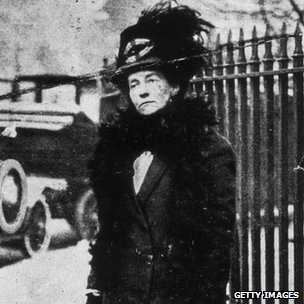
Emily Davison  1872-1913

Emily Davison
1872-1913

Emily was born in 1872 and was from a respectable Northumberland family.  She was intelligent and well educated, going up to Oxford University and gaining a first class honours.  However she could not graduate as degrees were closed to women.  The unfairness of this would not have escaped her.  She went on to study foreign languages before leaving to become a governess, then a teacher, after her father died leaving her mother unable to further fund Emily’s course.  But it was women’s suffrage that was her raison d’etre.

In 1906 she joined the Women’s Social and Political Union (WSPU). formed in 1903 by Emmeline Pankhurst

Emily progressed from disrupting meetings to stone throwing and arson.  She was arrested and imprisoned for various offences nine times.  In 1909 Emily was sentenced to a month’s hard labour for throwing rocks at the chancellor’s carriage.

On 2 April 1911 she was found “hiding in the crypt in the Houses of Parliament”.   She was actually in a cupboard in St Mary Undercroft, which is the chapel for the Palace of Westminster.  It was the night of the census and she wanted to put ‘House of Commons’ as her official residence.  I am awed by her cunning and courage, as was Tony Benn MP, who had a plaque about this event placed in the House in 1999, albeit in a broom cupboard!

In 1912 she was sentenced to six months in Holloway Prison for setting fire to a pillar box. While in prison she was force-fed after going on hunger strike.  This was a barbaric act akin to torture.  Indeed in the Houses of Parliament, the labour MP George Lansbury said the Prime Minister HH Asquith would go down in history as being, “the man who tortured women”.

On 4 June 2013 Emily took a risk too far when she tried to disrupt the Derby at Epsom, a famous horse race and British institution.  It was assumed for a long time that she had wanted to commit suicide when she ran onto the track in front of the King’s horse, Anmer.  However scholars, forensic scientists and others have examined evidence in recent years and have concluded that she probably just wanted to make a spectacular gesture by holding up her suffragette scarf and maybe putting it on the King’s horse, to draw attention to the cause.

Finally in 1914, the year the world was plunged into a dreadful war, Prime Minister Asquith made a commitment to giving women the vote after the war.

In 1918 the Representation of the People Act granted women over the age of 30 the right to vote, as long as they were married to, or a member of, Local Government Register.  It also extended men’s suffrage to the right for all men to vote over the age of 21, and abolished most property qualifications for men.

In 1928 women were granted equal suffrage with men as they could vote at the age of 21 and most of the property rules were abolished.

So Emily, along with the thousands of brave women in the suffragette movement, achieved her goal.  Her courage and steadfastness is remembered and celebrated still a hundred years on.

There is a wealth of documentary evidence and articles written about the Suffragettes and Emily Davison and I have added links for anyone who would like to know more.  I have also attached a link to newsreel of both her death and her wonderful funeral for those who would like to see it.

Being on the Public Affairs Committee in the Women’s Institute is my own way of making a difference in my own community and the world at large these days.  The WI campaigns on many issues and is well respected for their achievements.  The following article asks “what would suffragettes get off their backsides for today?”  Do read it.

 http://www.telegraph.co.uk/women/womens-politics/10096640/What-Emily-Wilding-Davison-and-the-suffragettes-would-get-off-their-backsides-for-today.html

Emily Davison's Funeral

Emily Davison’s Funeral

Moral

Inspired by Haiku heights word ‘Moral’.

Fairness and justice

Honesty and compassion

Gentleness is strength

~

Every night should be

Like Christmas Night for me, filled

With wonder and awe

~

As I sit and suffer this weekend,  the moral of this haiku is to listen to my own advice and stay away from children with colds!

Snuffling and sneezing

Grandchildren spreading their germs

Thought I was immune

As I missed the deadline for the last 2 prompts, Eccentric and Stone, I am adding the links here in the hope that you will take the time to read them.

Eccentric ~ http://wp.me/p2gGsd-Ul

Stone ~ http://wp.me/p2gGsd-U4

Cotswold Stone

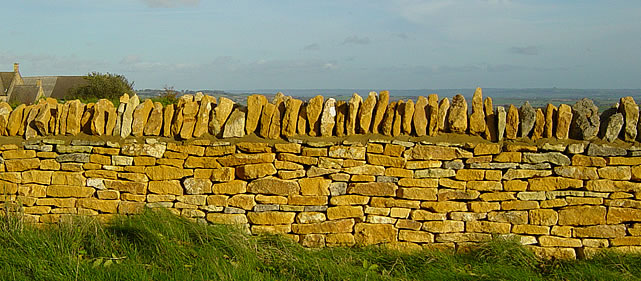
dry stone wall in the cotswolds

dry stone wall in the cotswolds

This post is inspired by the Haiku heights prompt word “Stone”

Golden meadows bound

With dry stone walling.  Built by

Cotswold craftsmen

The Cotswolds, where I live, is a very beautiful area in the heart of England, which covers the counties of Gloucestershire, Oxfordshire, Wiltshire, Worcestershire and Warwickshire.

Beyond the hedgerows

As far as the eye can see

Yellow rapeseed glows

Rapeseed field

Rapeseed field

There are gentle hills and wolds, meandering rivers rich with salmon, trout, roach, bream and eels, a coastline along the Severn Valley, ancient woodland in the Forest of Dean complete with wild boar and roaming deer, beautiful market towns and unspoilt villages,  gorgeous thatched cottages, magnificent country houses, fertile farms, and even several castles!

One of the outstanding features of the Cotswolds is the beautiful stone which is used for building.  During the time of the enclosures act in Britain it was cheaper for farmers to enclose their land with dry-stone walls than to plant hedges, and to this day one of the special features of the Cotswolds is the golden dry-stone walls about a metre in height which border country lanes and lush farmland

The limestone found in the Cotswolds is from the Jurassic period about 150 million years ago, a time when dinosaurs roamed over the earth and the area was once below the sea.  It is still possible to find fossils in the rocky cliffs and quarries.  In fact Huntsman’s Quarry has a superb collection of large fossils that were unearthed during quarrying.

Fossilised features

Of prehistoric creatures

In limestone preserved

You can download a fascinating fact sheet about the quarry here

Quarrying has been carried out in the Cotswolds for many years, for sand, gravel and clay as well as stone.  Some of the old quarries have been turned into the Cotswold Water park which covers an area of  40 square miles and has 150 lakes.  All sorts ofwater sports go on here and it is a beautiful area to walk around enjoying the nature and wildlife.  You can read all about it here

At the weekend I took my grandchildren to Warwick castle to enjoy the Horrible Histories.  It was a great day out in wonderful weather.  The castle was sold by the Greville family in 1978 and is now owned by the business group that owns Madame Tussauds.  This has enhanced the visitor’s experience as every room is filled with models of the famous people who lived in or visited the castle.  It must cost millions to maintain the structure of this impressive building.  The walls are so think and the building so huge, that the bedrock is groaning under the strain.  But there is 1000 years of history oozing out of every stone.

Stone steeped in stories

Of secrets and scandals in

High society

Bedrock is cracking

Sinking under centuries

Of blood-soaked conflict

Enjoy my pictures from the weekend…

Bridges Part 11 ~ Haiku

Over Severn‘s Gorge

An iconic iron bridge

First cast in furnace

Another view of the bridge

Another view of the bridge (Photo credit: Wikipedia)

The years float away

On day trips to my birthplace

By ‘Blinking Eye’

English: Millennium Bridge, Newcastle to Gates...

English: Millennium Bridge, Newcastle to Gateshead This elegant tilting pedestrian and cyclist bridge is the lowest above-ground crossing of the River Tyne. It has become something of an icon of Newcastle and Gateshead. (Photo credit: Wikipedia)

A lifetime abridged

Sorrows surface in snatches

Sanitised soundbites

~

Brick by brick I build

A bridge to carry me home

Made of words and deeds

~

Related articles

Story – Haiku

He said “you can’t make

a silk purse from a sow’s ear”

His meaning was clear

This post is inspired by the haiku heights prompt for today ~ “Story”

This was the comment made about me at the age of 10 by the Headmaster of the school I was expecting to go to when me moved across the country for my father’s job.  I had missed a lot of school due to illness so was way behind others of my age.  I also had a Geordie accent which he equated with being uneducated.  These factors led him to believe I was stupid and not worth educating!  My determined parents decided to move me somewhere else thank goodness!

His words have stayed with me always and inspired me to become a teacher.  Eventually I became a Headteacher.   My aim was to value every child, to educate them to the best of their ability, and to develop in them self confidence and high self esteem so that whatever their talents they could go out into the world prepared to lead full, rewarding and satisfying lives.

I guess it is a milestone in my story!

Haiku

Gone Fishing

It’s that time of year again when the weather is just about good enough for Gerry to go fishing ~ joy!

heavenhappens's avatarHeavenhappens

Under a fishing umbrella by the side of a lake in the pouring rain with husband and grandchildren, heaven happens.  There is nothing quite so exciting as being at the mercy of the elements but safe!  It appeals to our most basic human need for shelter and protection.  All our needs are met.  We are together, warm and dry and we have a picnic.  We are relaxed and at peace.  There is nothing we mustdo but enjoy ourselves.  It is a precious gift ~ time to be.  Grandchildren learn how to fish.  They watch the fluorescent tip of the float marking the place where the line enters the water.  The bait of sweetcorn gently drifts in the depths as we throw more corn in to attract the fish.  And it does.   The float waggles then dips down ~ a bite!    Ben gets the landing net ready and Rosie slides the…

View original post 244 more words

Youngling

Invading my space
Busy Blue tit emerges
Eco warrior!

Blue Tit

Blue Tit (Photo credit: Wikipedia)

I was amused to watch a blue tit flying in and out of a small hole in my brickwork. I thought he might be nest building, but actually he was helping himself to my cavity wall insulation then flying into a nearby bush to line his nest! Whatever next? Central heating? Solar panels?
blue tit 2

blue tit