
Education
Frogs in Torun
Through towering trees
Strange sounds are carried from a
Bog seething with frogs
Sunday’s prompt for Haiku Heights’ September challenge is the word ‘Frog’. My mind works in mysterious ways and the prompt instantly took me back to 2004 when I travelled with a group of friends from Global Footsteps, to take part in a conference in Torun, which is in Poland. I’ve written about it before but I think it is worth revisiting.

There is a wonderful fountain in the centre of Torun with several statues of frogs in it. It is called the Flisakiem fountain. Flisak was a raftsman in Torun who played the violin very well. According to an old legend, the city of Torun was overrun by a plague of frogs and no-one knew how to get rid of them. The Mayor promised the hand of his daughter in marriage to any person who could clear the city of the frogs. Of course, rather like the Pied Piper of Hamelin, Flisak played so well that all the frogs followed him and left the city of Torun. He claimed his reward and married his beloved and they lived happily ever after.
It was on a chilly June morning in London that we caught the ‘Orbis’ coach for the 36 hour journey to Torun. The bus was not full so there was plenty of room and it was very comfortable. The friendly hostess, Isabella, served tea and coffee and we had a pleasant journey to Dover where we caught the Ferry to Calais. The weather was very pleasant and we had an enjoyable crossing. The channel was unusually busy because it was the 60th Anniversary of the D Day Landings. Old soldiers were gathering for a memorial service.
We got back onto the coach and set off northwards through France, Belgium, Netherlands and Germany, crossing the River Oder at the Polish border town of Slubice. We were expecting long delays at the border but were astonished to be met by smiling customs officers who briefly checked our passports and waved us through with no problems. This is a very encouraging development since Poland joined the European Union this year. Already the scenery was fascinating to me and the weather was beautiful. I noticed the narrow cobbled roads in the towns, the many shrines by the roadside in the country and lots of churches. There was an abundance of pine tree forests and masses of poppies on the verges. I was thrilled to spot a stag and a hare and then amazed to see storks in the fields and a flock of herons. We were travelling on Route 22 towards the city of Gdansk. We saw flats along the way that reminded me of Russia, and a huge river with men fishing. Petrol stations were Statoil and fuel was 4.0 zl, about 60p, I guessed for a litre. We saw agriculture everywhere – endless fields of crops with no fences; allotments with dachas like grand sheds; orchards; lakes and picnic spots; and miles of greenhouses and garden centres. We saw timber-framed houses and lots of new buildings, but we saw very little livestock. In Belgium and Germany we had seen herds of very healthy looking cattle but none at all yet in Poland. We saw big churches with round towers, Rapunzel-style, and the remains of old city walls were evident in many towns.
At Bydgostcz we stopped for coffee and met a Polish-Canadian-Scot who reminisced about D-Day, when he was 15 years old. He told us how he had been taken away from his village in Poland by the German occupying forces. They had forced him to fight for them. He was saved by the US troops who eventually offered to take him to the USA to start a new life. He had opted for Canada and eventually married a Scottish lady and went back with her to Scotland. He has now retired to Vancouver Island in Canada but visits Poland as often as he can.
On entering Torun we saw storks on huge nests on top of telegraph poles. When the coach stopped a friend was there to meet us. He took us to the TTCA building to rest and unpack before we met our group leader who treated us to a meal at Damroki restaurant. The food was delicious and we were entertained by an impromptu folk concert performed by groups from all over Eastern Europe, who had attended the Folk Festival in Torun earlier in the day.

On Monday, Ula (or Ursula), who is a professional guide, met us at the TTCA. Thankfully she speaks English very well, self-taught we later found out. She is going to give us a 5-hour tour of Torun. She was a mine of information and she showed us everything of interest in the old and new town. We walked miles until we were ready to mutiny so she took us to her favourite coffee shop. This was wonderful so all was forgiven. We drank a special coffee like Cappuccino with Pierniki sprinkled on top. Pierniki is gingerbread, which is the local speciality. Later Ula took us to a restaurant, which served pancakes and dumplings with exquisite fillings and lashings of strawberries and cream on top. We were a little puzzled, as they seemed to put savoury and sweet fillings all together and the portions were way too big, however it was very enjoyable. After our marathon walking tour we went back for a well-earned rest and shower before dinner.
We were amazed at the low prices of meals in Torun. It varies of course but it was possible to get a very good meal and a drink for less than £2. Coffee and delicious pastries with fruit and cream cost less than £1.40. Kodak films for my camera (pre-digital cameras!), which cost £4 in the UK cost £1 here and a loaf of freshly baked bread from the bakers cost about 23p. We just cannot imagine how the shopkeepers manage to sell their goods at these prices and still make a profit. We are worried that the cost of living may rise dramatically now that Poland has joined the EU.
Public transport is very reasonable here and accommodation is good. Rents seem very cheap at £75 a month for a 1 bed roomed, central flat. Big US hotel chains are moving in with high priced rooms but there are still bargains to be had for the traveller or tourist. We stayed at the Twin Town Association building, which is in the restored Burgher House and Tower of the ruined Teutonic Castle. The large rooms have been refurbished to a very high standard and we shared bathrooms and a kitchen as in a Youth Hostel in UK. It was comfortable and cheap and, with fabulous views of the River Vistula from our windows it suited us very well.
On Tuesday our guide met us at 8 am and rushed us off to catch the bus to the railway station where we caught a train for the 90-minute journey to Gniezno. The city is known as the cradle of the Polish state as it was in the Cathedral here that the first King of Poland, Boleslaw Chrobry, was crowned in 1025. We rushed to the Cathedral of the Assumption of the Blessed Virgin Mary and St Adalbert, founded 1000 years ago by King Boleslaw the Brave. Here we saw the famous bronze doors from 1175, which show 18 scenes from the life of St Adalbert. We also saw the statue of Our Lady of Gniezno and the sarcophagus of St Adalbert. St Adalbert was a Bohemian Bishop from Prague who passed through Gniezno in 997 on a missionary trip to convert the Prussians, a heathen Baltic tribe who lived in N E Poland. Sadly they didn’t want to be converted so they chopped his head off. King Boleslaw paid a ransom of his weight in gold for the body then brought it back to Gniezno and buried it in the Cathedral in 999. Pope Sylvester then canonised the martyr.
After this very short visit we rushed off to catch a narrow gauge train to Biskupin. This trip was organised as a treat and was a major highlight of the trip for me. Gorgeous weather and fabulous countryside edged with poppies, and white and purple wildflowers. Biskupin was besieged by children on school trips but was very interesting. It was a sort of Baltic Blists Hill, with characters in costume minting coins, chopping wood, firing crossbows and riding horses etc. The ‘iron age’ fortified town was built entirely of wood some 2730 years ago on the shore of a beautiful lake. It was subsequently disappeared under a peat bog where it was perfectly preserved until 1933 when it was discovered by accident. It is now a fascinating archaeological reserve and one time film set.
Wednesday was another gorgeous day arranged for us by a local friend, Anya. We started with a bus ride to the bike shop where we hired bikes. It took an age to organise this because the shop appeared to only have huge mountain bikes, which were fine for the men but not for we 3 delicate and very fussy ladies! We ended up a very motley selection with one on an ancient ‘sit up and beg’ shopper complete with basket, dodgy gears and a mudguard, another on a man’s bike with sticky red handles, and me on a junior BMX! After lots of giggles and false starts we set off for a 23 km round trip to Anya’s home for a barbecue. We cycled through the forest and past vast poppy fields and a bog seething with very vocal frogs. When we reached Anya’s home village of Lysomice we saw stork families on top of telegraph poles. Then we were treated to a super barbecue and lots of homemade blackcurrant drinks, some alcoholic and some not! We also met Killer the guard dog, who eats cucumbers, and had a guided tour of garden and greenhouses where Anya’s family grow tomatoes, cucumbers, fir trees and flowers to sell at the local Farmers’ Markets. The whole day was absolutely wonderful and we really enjoyed the cycle ride home to Torun. I was very proud of myself since I hadn’t been on a bicycle for 25 years!
Thursday saw the Feast of Corpus Christe and being a Catholic country, the celebrations were massive so we had a free day in Torun. After the 9am Mass in the churches and 2 Cathedrals, the entire congregation left to process through the streets to the square where decorated altars had been set up. There were columns of nuns, altar servers, guides, scouts, priests, and rows of young girls in long white dresses and veils. They carried baskets of flower petals, which they scattered on the ground in front of the canopy covering the Priest and the Monstrance containing the sacred host. There was a military band leading the procession and a vehicle at the rear with loudspeakers amplifying traditional hymns. The processions came from all quarters to meet near Copernicus’ statue. There was a huge poster showing Pope John Paul 11 who visited Torun in 1999. A service was held here before the whole procession moved on to another square for another service. The crowd was huge and everyone was dressed in their ‘Sunday Best’. The windows and balconies of many houses and businesses were hung with posters, tapestries, candles, statues and mini shrines to celebrate the Feast Day. The Priests and altar servers wore white cassocks with embroidered or lacework chalice and host decorations. It was a grand occasion and a privilege to watch. It reminded me of May processions in the North of England when I was a child.
In the evening we visited the Fort and saw a huge fire on the horizon. We never did find out what building was on fire.
On Friday we had a very early start again for the 7.45am bus to the railway station to catch the train to Malbork. The journey took just 2 hours so we arrived in time for a lovely cup of coffee in the shopping centre. Sadly when we came out the heavens had opened so we had to buy umbrellas. The rain was torrential but nevertheless we set off for Mary’s castle. This is reputed to be Europe’s largest Gothic castle and Poland’s oldest castle. It is so important that in 1997 it was included in UNESCO’s World Heritage List. It is situated on the Nogat River, an eastern arm of the Vistula River, which flows through Torun. It is a truly impressive and huge reconstruction. The castle was built in three parts (higher, middle and lower castle) by the Teutonic Knights, who called it Marienburg (Mary’s Fortress). The Teutonic Knights, a German order, were also called Knights of the Cross. Their commander in chief was called a Grand Master. They were crusaders who wore white robes with a black cross. The castle was started in 1276 and finished within 30 years. The Knights ruled from here for 150 years. It was the largest fortress in the middle ages, but the castle, like Poland, had a very stormy history being in the hands of various conquering armies then largely destroyed in World War Two. It is now in danger from subsidence. Inside the castle there are several notable exhibitions. There is a room full of tapestries and a room full of exquisite jewellery boxes, altars, crucifixes, artwork and jewellery all made purely from amber. There is also a bombed out church which has not been renovated due to lack of funds. This is breathtakingly poignant with its battered walls and statues, and the miraculously undamaged boss of the Mother and Child. The memory of the broken crucifix will stay with me always. This empty shell of a church was the most moving thing I saw in Poland and for me it illustrates the total pointlessness of war.
Saturday was a very special day and we had to get up very early for a bus and train journey to Gdansk. The area was referred to a Gyddanyzc (Gdaniesk) or wetness in 999 in “The Life of St Adalbert”. There was a settlement here as early as 2500BC and by the 13th century when the Teutonic Knights seized the city it was a major port and municipal centre. In 1454 the city broke free from the Knights and became a part of Poland. Over the next century there was incredible economic development in the city, which had a monopoly of trade in Polish grain. The city also became the largest town in Poland and a great centre for shipbuilding. 1580 to 1650 was a ‘Golden Age’ when artists and craftsmen settled here and the city became a centre of artistic and cultural style. In 1793 during the second partition of Poland the city was annexed to the Prussian state and underwent a long period of Germanisation, briefly interrupted by a period of French rule in 1807 to 1814. After 1850 there was another economic boom due mainly to the railways, the port and shipbuilding. In 1920 after WW1 due to the influence of the Britain the free city of Gdansk was created under the patronage of the League of Nations. However it then fell to the Germans in WW2 during which the Polish citizens of Gdansk were exterminated in concentration camps. Allied forces carried out air raids then the Soviet Russian troops almost destroyed the city and ruined its industrial base. After WW2 the Germans were expelled and thousands of new inhabitants set about rebuilding the city. I think they did a wonderful job as the city is incredibly beautiful. Peace did not last long though, because between 1970 and 1980 workers’ protests turned violent and prompted great social and political changes in Poland. In 1997 the city ceremoniously celebrated the millennium of the visit of St Adalbert Slawnikowic, the Bishop of Prague who left Gdansk in 997 on a Christian mission to then still pagan Prussia. In 1992 and 1999 Pope John Paul 2 visited Gdansk.
We explored as much as it was possible to see in a day. We saw the shops, the churches and cathedrals, the memorial to the fallen shipyard workers and then caught a tram to the beach and paddled in the Baltic. It was a wonderful day and Gdansk is a place that everyone should visit. It is a city with everything in my opinion. It has history, culture, spirituality, beautiful buildings, wonderful people and a golden sandy beach. What more could anyone want.


Tin and China Clay Mines in Cornwall
This post is for Alice who wanted to see my photos of mines in Cornwall.
I was very excited to see the remains of mines scattering the skyline during our recent holiday in Cornwall.
I’ve always been interested in industrial buildings. I guess this is mainly due to my father’s influence as he was a steel man from the age of 13 and he developed in me a passion for ships, bridges and buildings. The other reason could be because of where I grew up. I lived in the Felling, a shipbuilding and mining area in the North of England. I skipped past the railway station and shipyard every day on my way to school and there was a derelict engine house complete with winding gear at the end of our street of 2 up and 2 down back to back miners’ cottages. These were our adventure playgrounds. Children were never allowed to play on the grass or ride bikes in the municipal parks in those days! Parks were for floral displays and grown ups to walk in and the park warden was fierce.
Being a traditional and romantic sort of person I accept that industrialisation almost wiped out the jobs for blacksmiths, weavers, spinners, millers and grinders. But I find there is great beauty in the machinery that drove the mines and the mills, and in the engines that turned their wheels and moved their goods.
The Redruth and Camborne area was the central tin and copper mining district of Cornwall. The area is now part of the Cornish Mining World Heritage Site and has made the most of it’s heritage by opening up the old tramways and railways as trails for walking, biking or horse-riding. Along the trails there are the remains of the historic mines. And along the way there are spectacular views of the coast or gorgeous countryside. I was amazed to learn that Gwennap and the mines around it was once the richest copper producing area in the world.
One or two of the mines are now restored. For example Geevor Tin Mine, Gwennap Pit and King Edward Mine are open as visitor attractions but we avoided those preferring to walk around and discover the remains of derelict mines.
We did however visit Wheal Martyn. This place is amazing being almost a complete Victorian China Clay works. Thousands of people made their living here in its day. It is brilliantly preserved with its huge waterwheel, tools, machinery, vintage vehicles, pits and tunnels all in working order. Walking round, it feels as if the workers have just left their labours for the day.
There is still a great china clay industry in Cornwall but it is not just used for ceramics now. Mostly it is used in the production of paper, cosmetics and toothpaste, as well as in the farming, building, medical and chemical industries.


Related articles
- Tin Mines (winspiration.me)
Lost Gardens of Heligan
 Original George V postbox at Lost Gardens of Heligan.
Seeing this old post box at Heligan reminded me that the prompt word for haiku-heights this week is “time”. The postbox is from the first world war period and is marked with the plain G R indicating it was from the time of King George V, who reigned for 26 years from 6 May 1910 to 20 January 1936. It seemed fitting to link it with the sad fate of the gardeners who worked on the gardens
Garden abandoned
Young men posted like letters
To fight at the front
I recently wrote about the mysterious Church of Ampney St Mary which had been covered in ivy and lost for years until it was rediscovered in 1913.
Today I visited an equally mysterious garden in Cornwall which had been lost in undergrowth and weed for over 75 years until it was rediscovered quite by accident in 1990. Heligan had been the seat of the Tremayne family since the 16th Century and was surrounded by fabulous gardens which had been designed and added to by successive members of the family. At the beginning of the 20th century there were 22 full time gardeners looking after the estate. But in 1914 when war broke out they all had to go away to fight. Before leaving one of the gardeners scratched a puzzling message into a wall saying, “Don’t come here to sleep or slumber…”. Under the message were the names of the workers and the date August 1914.
W Durnsford
W Guy
William Robins
R Barron
Chaeles Dyer
Charles Ball
Albert Rowe
W Rose
3 Paynters – initials illegible
Vercoe
Vickery
Leonard Warne
D Hocking
Percy Carhart
Others were illegible
16 of the 22 gardeners were killed in the war and the fortunes of the Tremayne family home were altered for ever. During the First World War Britain suffered a terrible decline in its social and economic structures. Many large estates were broken up including Heligan. The house itself was rented out and the gardens became overgrown through neglect until they all but disappeared.
That could have been the end of the story but John Willis, who is a descendent of the Tremayne family who lived in the area visited Heligan with some friends. While exploring he found a tiny room buried under fallen masonry and there on a wall he found the gardener’s sad message. It captured his imagination and along with his friends he decided to restore the gardens to their former glory in memory, not of the great people who had owned the estate, but of the great gardeners who had worked on it.
And so the amazing restoration of the Lost Gardens of Heligan began. It is an ongoing project but the gardens today were magnificent. My favourite bits are the Crystal Grotto, the flower garden and the jungle. My favourite plant was the tree fern. But the whole place is enchanting, atmospheric, mysterious and inspirational. I saw lots of wildlife and half expected to see fairies dancing in the woods!
Do enjoy the photos I took today in the flower garden and take a look at the website for the Lost Gardens of Heligan.


All the world’s a stage
As I drove around the park area of Cheltenham today I noticed a road called Rowena Cade Avenue. I wondered how many residents of our lovely town know who she was, so I thought I would blog about her connection with the town and her amazing legacy. As this year is the centenary of the start of WW1 I thought this was appropriate. Rowena spent her formative years living in Cheltenham where her uncle was Head of the Junior school at Cheltenham College. Rowena herself went to Cheltenham Ladies College for a while. Rowena lived with her father James, and her mother, in a house called Ellerslie, which backed onto Pittville Pump Rooms. When the First World War started she was given the heartbreaking job of selecting and breaking in horses to be sent to the front. Readers may have seen the play or film of Michael Morpurgo’s book, War Horse. This perfectly illustrates the horrors those poor horses were sent to.
After the war Rowena’s father had died and the rest of her family had dispersed, so she moved to Cornwall. It was here she developed her talent for designing and making costume, putting on shows, and ultimately developing the unique and iconic Minack Theatre. The theatre was entirely planned and financed in the 1920s and 30s by this inspirational woman, Rowena Cade. The Minack was her passion and she literally worked on it until she died at almost 90 years of age.
We visited the Minack Theatre while we were on holiday in Cornwall. The weather was spectacularly good which made the setting all the more wondrous. The stage is made of stone set against a backdrop of the cliffs and sea. There is a stone balcony, stone pillars, stone boxes and all the terraced seating is tiered into the cliff face and made of stone. Many of the seats have the year carved into them as well as the title of plays performed in that year. The first play to be performed there was The Tempest in 1932. There is a seat with 1939 carved into it and the next one says “Break for the war”! Some of the stone seats have huge cockle shells carved into them.
Around the theatre is a spectacular garden with plants from all around the globe. The plants were chosen by Rowena to withstand the salty winds coming off the sea, as well as the very wet winters and often hot, dry summers.
Minack theatre is open all year round to visitors. If you are lucky and you visit between in spring or summer months you may see a play, concert or opera. You would be advised to take a cushion and have something warm to wear as the seats are solid stone and it can get very cold.
While we were there, the performance was the Marriage of Figaro. This year there is surely something for everyone, including:
Pygmalion, Tosca, Far From the Madding Crowd, The Producers, Oh What A Lovely War, A Midsummer Night’s Dream. The full programme can be found on the website http://www.minack.com/
I took lots of photos as the weather was so good. I hope they give you an insight into the wonderful achievements of Rowena Cade.


My tribute to Nelson Mandela

This week’s word prompt at haiku heights is the word “Chivalry”. My understanding of this word for the modern age is an honourable person with strength ~ of mind, body and soul, who is courageous and disciplined and uses their power to protect the weak and defenceless. This defines Nelson Mandela perfectly in my opinion.
Cherishing freedom
He fought with true dignity
And changed the whole world
~
With perseverance
For freedom and harmony
He gave his whole life
~
On Robben Island
Prepared to die for his cause
He rocked the whole world
My grandson, Ben, was reading a book about Nelson Mandela for his homework on Monday and it was wonderful to have the opportunity to discuss this living legend with him. Someone once said “If you can’t explain it to a 6 year old, you don’t understand it yourself”. I hope I gave Ben and Rosie a clear view of just how extraordinary and special this man is. In fact I said that in my opinion he is a living saint!
I can’t imagine a world without Nelson Mandela, I am sure it will be a poorer place. All my adult life he seems to have been in the news or making the news. I remember the protest marches, the Sharpeville Massacre which took place on 21 March 1960 and shocked the world. And how could anyone forget the fabulous song, “Free Nelson Mandela”, by the Specials. You can listen to it here and I bet you can’t keep your body still ~ you just have to dance! It reminds me of the cricket club I went to near Kisumu in Kenya with some friends in 1985. The Tanzanian band played all night until the early hours and the dancing was out of this world. I was lucky enough to go to one of the original tour concerts of Ladysmith Black Mambazo in 1987 too. I will never forget that night, especially the township jive!
So, while the irreplaceable 94 year old, is still struggling for survival in a Johannesburg hospital, I thought I would pay tribute to him in my blog. Firstly I would like to honour him by using his own name! He was named Rolihlahla Dalibhunga by his parents but was given his English name, Nelson, by a teacher on his first day at school. He is fondly known by his clan name – “Madiba” among his own people. It is from the Xhosa tribe to which he belonged.
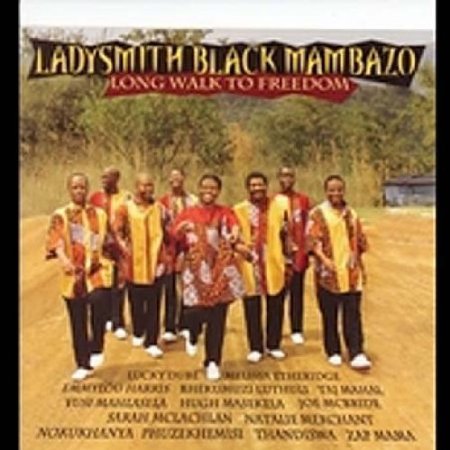
He wrote his own story in a book called Long Walk to Freedom.
Mandela expressed his goal so eloquently from the dock in court in 1964 thus:
“I have cherished the ideal of a democratic and free society in which all persons live together in harmony and with equal opportunities,” he said.
“It is an ideal which I hope to live for and to achieve. But if needs be, it is an ideal for which I am prepared to die.”
I think that he achieved his life’s ambition and he has left a great legacy in the form of the Elders. They give me hope that the world will one day be a free, fair and just place for all people regardless of creed, colour or politics.
You can find all the facts and figures about Nelson Mandela’s life on the wonderful BBC site just click the link.
The Ivy Church at Ampney St Mary in the Cotswolds
This ancient little church is a little gem which I normally drive right past on my way to pick up the grandchildren from school. It sits off the busy A417 which goes from Cirencester to Fairford. Today I decided to stop and have a look around. It was a bit drizzly but I still managed to get some photographs which I will put in a gallery for you to enjoy.
It is very ancient with the remains of a stone cross in the grounds where travelling monks would have given sermons originally. The church itself was built of local limestone rubble around 1250 and it has a very simple interior. Unusually it has a stone screen separating the nave from the chancel, or the people from the altar. It probably had a wooden screen over this with a crucifix on it in the early days. Originally there would have been no furniture or pews, just rushes on the stone floor where the people stood to hear Mass. Most of the windows looked leaded to me and one is particularly unusual as it is set in a single piece of carved stone. There is a very pretty bell tower which has a Sanctus Bell in it made about 1747 in Gloucester by Abel Rudhall. It carries the motto, “Peace and Good Neighbourhood”.
Above there is a very rugged looking wagon vault roof of oak beams.
The oldest things in the church are probably the original stone entrance archway which is now sealed up. On the outside, above this arch there is an ancient carving of a lion stamping on a two-headed serpent, representing good conquering evil. There is a griffon looking on. Apparently it is the only one of its kind in England. Inside the church there is a Norman stone font which is complete. Then there is the beautiful arched door which is ancient and solid made from elm or oak. It has the original metal hinges and handles.
Best of all inside are the remnants of wall paintings which were defaced then plastered over after the reformation. There are intriguing bits of these paintings gradually being revealed but you have to look very hard to make them out. I saw a face which I am sure is the Virgin Mary. I saw a number of saints including St Christopher with the infant Jesus. But try as I might I could not find St George and the dragon who is supposed to be depicted somewhere on the walls.
The history of this simple rural church is like a Disney story. The parish in common with much of England was hit by the Black Death in medieval times. So after 1350 the entire village with its remaining inhabitants was moved to higher ground in a nearby village. Any cottages left fell into ruins. The church was used less and less until eventually it was abandoned. Ivy grew over it until it was entirely covered, disappeared, and was forgotten. Doesn’t it have shades of Sleeping Beauty? A century ago in 1913 it was discovered again and all the ivy removed to reveal this lovely little gem of history. Since then it has been restored but with all its original features preserved.
The churchyard has a little stream running around it and a stone bridge which leads to a little wooded area. Beyond this there is Ampney Brook which was in full flow today. The ancient dry stone walls leading to the church from the brook are still there and I felt strange thinking of all those villagers of long ago who had trodden this same path to get to their little church. Some had maybe lived through the Black Death and floods which were the ruin of their way of life. Today there is a deep peace about the place and I am so glad I stopped to visit the Ivy Church.

Ampney Church of St Mary


What would you campaign for?
I have been fascinated this month by the TV and Radio 4 coverage of the centenary of the death of an amazing Geordie woman and suffragette, Emily Davison. Being a Geordie myself and something of a campaigner in my time, I can identify with the strength of feeling she had for her cause. Her cause was women’s rights.
As part of my research for the WW1 play we will be doing next year in conjunction with the Everyman Theatre, I have been studying Emily Davison.
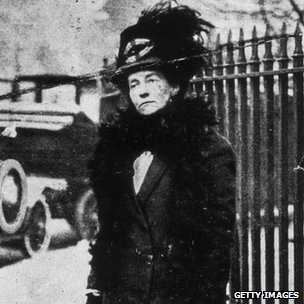
Emily Davison
1872-1913
Emily was born in 1872 and was from a respectable Northumberland family. She was intelligent and well educated, going up to Oxford University and gaining a first class honours. However she could not graduate as degrees were closed to women. The unfairness of this would not have escaped her. She went on to study foreign languages before leaving to become a governess, then a teacher, after her father died leaving her mother unable to further fund Emily’s course. But it was women’s suffrage that was her raison d’etre.
In 1906 she joined the Women’s Social and Political Union (WSPU). formed in 1903 by Emmeline Pankhurst
Emily progressed from disrupting meetings to stone throwing and arson. She was arrested and imprisoned for various offences nine times. In 1909 Emily was sentenced to a month’s hard labour for throwing rocks at the chancellor’s carriage.
On 2 April 1911 she was found “hiding in the crypt in the Houses of Parliament”. She was actually in a cupboard in St Mary Undercroft, which is the chapel for the Palace of Westminster. It was the night of the census and she wanted to put ‘House of Commons’ as her official residence. I am awed by her cunning and courage, as was Tony Benn MP, who had a plaque about this event placed in the House in 1999, albeit in a broom cupboard!
In 1912 she was sentenced to six months in Holloway Prison for setting fire to a pillar box. While in prison she was force-fed after going on hunger strike. This was a barbaric act akin to torture. Indeed in the Houses of Parliament, the labour MP George Lansbury said the Prime Minister HH Asquith would go down in history as being, “the man who tortured women”.
On 4 June 2013 Emily took a risk too far when she tried to disrupt the Derby at Epsom, a famous horse race and British institution. It was assumed for a long time that she had wanted to commit suicide when she ran onto the track in front of the King’s horse, Anmer. However scholars, forensic scientists and others have examined evidence in recent years and have concluded that she probably just wanted to make a spectacular gesture by holding up her suffragette scarf and maybe putting it on the King’s horse, to draw attention to the cause.
Finally in 1914, the year the world was plunged into a dreadful war, Prime Minister Asquith made a commitment to giving women the vote after the war.
In 1918 the Representation of the People Act granted women over the age of 30 the right to vote, as long as they were married to, or a member of, Local Government Register. It also extended men’s suffrage to the right for all men to vote over the age of 21, and abolished most property qualifications for men.
In 1928 women were granted equal suffrage with men as they could vote at the age of 21 and most of the property rules were abolished.
So Emily, along with the thousands of brave women in the suffragette movement, achieved her goal. Her courage and steadfastness is remembered and celebrated still a hundred years on.
There is a wealth of documentary evidence and articles written about the Suffragettes and Emily Davison and I have added links for anyone who would like to know more. I have also attached a link to newsreel of both her death and her wonderful funeral for those who would like to see it.
Being on the Public Affairs Committee in the Women’s Institute is my own way of making a difference in my own community and the world at large these days. The WI campaigns on many issues and is well respected for their achievements. The following article asks “what would suffragettes get off their backsides for today?” Do read it.

Emily Davison’s Funeral
Related articles
- Emily – an Opera (crosseyedpianist.com)
- I would have stood shoulder to shoulder with the Suffragettes (independent.co.uk)
Cotswold Stone
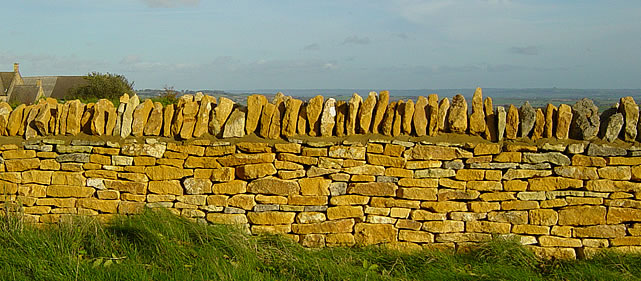
dry stone wall in the cotswolds
This post is inspired by the Haiku heights prompt word “Stone”
Golden meadows bound
With dry stone walling. Built by
Cotswold craftsmen
The Cotswolds, where I live, is a very beautiful area in the heart of England, which covers the counties of Gloucestershire, Oxfordshire, Wiltshire, Worcestershire and Warwickshire.
Beyond the hedgerows
As far as the eye can see
Yellow rapeseed glows

Rapeseed field
There are gentle hills and wolds, meandering rivers rich with salmon, trout, roach, bream and eels, a coastline along the Severn Valley, ancient woodland in the Forest of Dean complete with wild boar and roaming deer, beautiful market towns and unspoilt villages, gorgeous thatched cottages, magnificent country houses, fertile farms, and even several castles!
One of the outstanding features of the Cotswolds is the beautiful stone which is used for building. During the time of the enclosures act in Britain it was cheaper for farmers to enclose their land with dry-stone walls than to plant hedges, and to this day one of the special features of the Cotswolds is the golden dry-stone walls about a metre in height which border country lanes and lush farmland
The limestone found in the Cotswolds is from the Jurassic period about 150 million years ago, a time when dinosaurs roamed over the earth and the area was once below the sea. It is still possible to find fossils in the rocky cliffs and quarries. In fact Huntsman’s Quarry has a superb collection of large fossils that were unearthed during quarrying.
Fossilised features
Of prehistoric creatures
In limestone preserved
You can download a fascinating fact sheet about the quarry here
Quarrying has been carried out in the Cotswolds for many years, for sand, gravel and clay as well as stone. Some of the old quarries have been turned into the Cotswold Water park which covers an area of 40 square miles and has 150 lakes. All sorts ofwater sports go on here and it is a beautiful area to walk around enjoying the nature and wildlife. You can read all about it here
At the weekend I took my grandchildren to Warwick castle to enjoy the Horrible Histories. It was a great day out in wonderful weather. The castle was sold by the Greville family in 1978 and is now owned by the business group that owns Madame Tussauds. This has enhanced the visitor’s experience as every room is filled with models of the famous people who lived in or visited the castle. It must cost millions to maintain the structure of this impressive building. The walls are so think and the building so huge, that the bedrock is groaning under the strain. But there is 1000 years of history oozing out of every stone.
Stone steeped in stories
Of secrets and scandals in
High society
Bedrock is cracking
Sinking under centuries
Of blood-soaked conflict
Enjoy my pictures from the weekend…


Stanley’s growing up healthy ~ Haiku
These haiku are inspired by the word prompt at www.haiku-heights.blogspot.com
The word for this week is Health.
I am constantly amazed at the pace of Stanley’s development. It seems that every week he has acquired a new skill and grown a bit more aware of the people, places and things around him.
He is now rolling over, trying to crawl, giggling at his toes or anything else that waves around in front of him! He is also getting very sociable, going to ‘bounce and rhyme’ at the local library as well as ‘Little Fishes’ at the swimming pool.
He has started eating a variety of fruit, vegetables and cereals that his mum purees for him. All in all I am delighted to say he is a healthy and happy baby and a joy to be with.
Mini masterpiece
A picture of perfection
Healthy and happy

Healthy and Happy
Bootees abandoned
Tiny toes make tempting toys
Baby’s delighted

Tiny toes
Curiosity
Compels him to crawl, eager
To investigate

Compelled to crawl


Eggs ~ Haiku
This post is nspired by Haiku Heights prompt word which is Egg.
Fast food for fledgelings
Nesting under bleeding heart
Five healthy chicks hatched
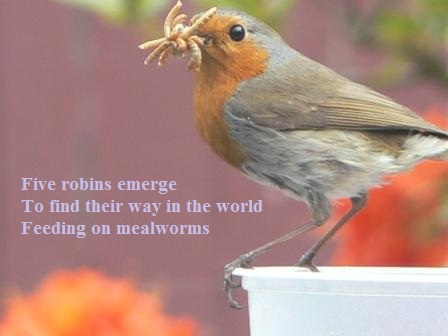
robin gathering mealworms to feed its young
Naturally at this time of year there are birds nesting and I am lucky enough to have a variety of birds in my garden. We have watched fascinated as a pair of robins burrowed a nest into a large plant pot where they successfully reared 5 chicks. We have also seen Blue Tits nesting in one of our bird boxes. I am very lucky to have a variety of bird boxes all hand made by my clever daughter. She adapts them to different species of birds and they seem very popular!
Vacant possession
A luxury detached home
Built for a blue tit

My Blue Tit’s Bird House
The first thing that popped into my head was not the birds nesting in my garden! It was the Russian Christmas at Chatsworth House that I went to a couple of years ago. Chatsworth is a gorgeous stately home set in beautiful Derbyshire countryside. It is beautiful to see at any time of year, but especially so at Christmas when every room is transformed according to a theme. The Russian Christmas appealed to me as I love Russian culture and crafts. The photo shows a room filled with hanging eggs decorated by local school children. It is a Russian tradition to decorate eggs, usually at Easter, as a celebration of life and a promise for the future. The eggs are called, ” Pisanki”
In coldest winter
Celebrating life and hope
Pretty pisanki

I Decorated eggs at Chatsworth
Related articles
- Eggshells ~ Haiku Day 5 (heavenhappens.wordpress.com)
Lily of the Valley

Lily of the Valley in my lounge

Bluebells

Azalea


Lily of the Valley in the garden

Bleeding heart plant


Cherry Blossom


Lily of the valley

Two robins in the garden
May has got to be one of the most beautiful times of the year here in the Cotswolds. In my garden at the moment there is such a variety of blossom. We have several varieties of apple, two kinds of pear, a cherry tree and a quince all covered in blossom. The hellebores are almost over but there are still a few tulips and primroses. The blue bush, whose name I can never remember, is covered in flowers and the orange azalea is amazing. But the piece de resistance has got to be the Lily of the Valley. I did not plant these, they were already naturalised when we moved in ~ but they are superb. They are prolific under my pear trees. The perfume that surrounds them is just beautiful. There are so many in our garden that I picked a couple of bunches on Sunday. I brought one indoors where the perfume fills the room. I gave the other bunch to a lovely local lady when I took her some rhubarb I had just picked. The rhubarb is another thing that seems to love our soil as it grows really well. Unfortunately my husband is not allowed to eat it now that he is on dialysis so I tend to give it away.
Lily of the Valley is a native of Britain. The 16th century Gerard’s Herbal decries it as “growing on hampstead Heath, four miles from London, in great abundance@” I must remember to check if it still grows there. It used to be a tradition here to give bunches of Lily of the Valley on May 1st. It still is in France I believe, where the flowers are called Muguet.
In 1851 Queen Victoria commissioned a special painting to commemorate 1st May. It was a very special year for her as it was Prince Arthur’s first birthday, the 82nd birthday of the Duke of Wellington who was the Prince’s grandfather, and the opening day of the Great Exhibition. Of course Lily of the Valley featured prominently in the painting with the Duke of Wellington presenting a posy to the Queen, Prince Albert and the young prince Arthur. The painting was completed by Franz Xaver Winterhalter and is in the style of the adoration of the Magi which seems rather irreverent to me but was a sign of the times I guess.

Believe in yourself

Laughter and Lyrics Choir
Yesterday was very emotional for me in so many ways. I belong to a choir called “Laughter and Lyrics” which meets every Friday morning in the restaurant of the Everyman Theatre. We have only been singing together for a few months and we are all of different ages and from varied backgrounds. But I think we gel as a choir and make a beautiful sound together. Of course singing is very emotional at any time but yesterday was especially so as we had been invited to sing at a service to celebrate the life of the much loved father of one the ladies in the choir. The service was in a beautiful little church in one of the most idyllic villages in the Cotswolds, Dumbleton, and the sun shone on it.
As I sang in that beautiful church with our choir of wonderful ladies I felt privileged to be there, blessed to be alive, and grateful to be me.
One of the songs we are practicing for our show in July is “Believe”, written by Lin Marsh.
It is often sung at final assemblies here in the UK when pupils are moving on to a new school. It is so uplifting and affirming.
I hope you enjoy listening to this You Tube version of it, and know that it is meant for you.
Story – Haiku
He said “you can’t make
a silk purse from a sow’s ear”
His meaning was clear
This post is inspired by the haiku heights prompt for today ~ “Story”
This was the comment made about me at the age of 10 by the Headmaster of the school I was expecting to go to when me moved across the country for my father’s job. I had missed a lot of school due to illness so was way behind others of my age. I also had a Geordie accent which he equated with being uneducated. These factors led him to believe I was stupid and not worth educating! My determined parents decided to move me somewhere else thank goodness!
His words have stayed with me always and inspired me to become a teacher. Eventually I became a Headteacher. My aim was to value every child, to educate them to the best of their ability, and to develop in them self confidence and high self esteem so that whatever their talents they could go out into the world prepared to lead full, rewarding and satisfying lives.
I guess it is a milestone in my story!

Xerox inspired Haiku
Hope you don’t mind if I sneak in 2 days worth of haiku as I missed yesterday! So my open prompt comes today when ~ I heard my first cuckoo!
Loud and clear cuckoo
sings, summer’s early warning.
Nesting birds beware
~~~
Xerox inspired ~ Before I retired from my job in education, I was linked with Kianja Primary School in Nyanza Province, near Kisumu in Kenya. The first time I went there I was amazed to see classes of up to 80 children in what were effectively large mud huts with no windows or doors ~ and no resources! The teacher was using water to write on a wall to illustrate his lesson. Sometimes teachers would take lessons outside under a huge mango tree. The children were bright, keen, polite, well-behaved, friendly ~ and learning!
They had no electricity so a xerox machine would have been of no use to them.
Water on mud walls
left a lasting impression.
One teaching resource
~~~
African children
Learn in tribal village school
Under mango tree
A Haiku inspired by The 33 Waterfalls
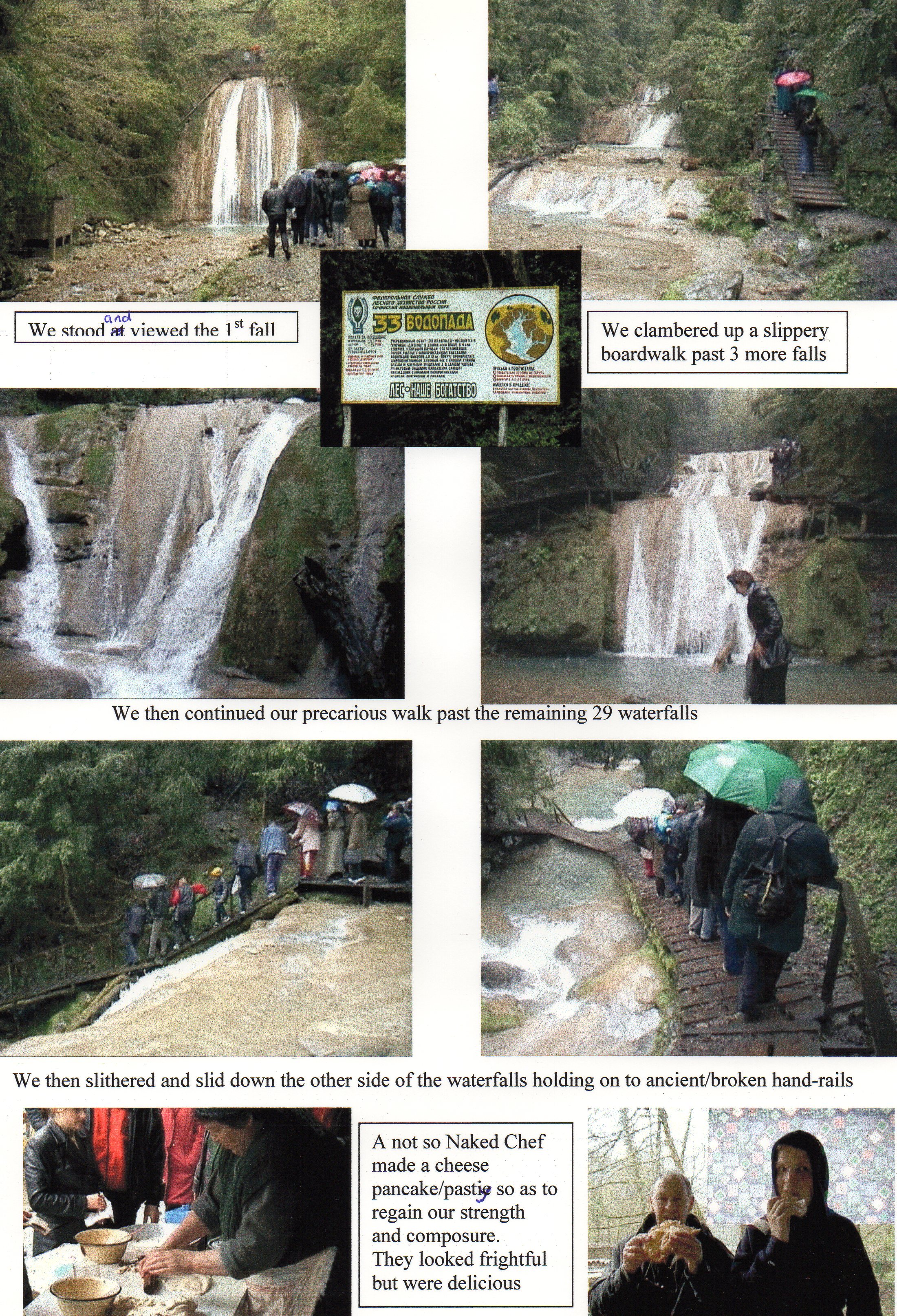 33 Waterfalls in Dzhegosh Gorge near Sochi
On one of my many trips to Russia, I was taken to an area of outstanding natural beauty in the Shakhe river valley. We travelled by coach through rustic villages, stopping along the way at small wineries and family businesses selling home made crafts and furniture. The river flows through the Dzhegosh Gorge, where the 33 waterfalls are to be found, as well as rapids, 13 cascades and countless streams! In order to get to the gorge you have to walk through a dense forest of ancient Oak, Maple, Alder and Hornbeam trees. There are also some exotic plants as well as mosses and tiny box trees growing wild there.
Once you arrive at the 33 waterfalls there is a steep and rather treacherous climb up a slippery wooden walkway to the top. From there the views are truly breathtaking. It really is a magical place. Once you have braved the rapids and been soaked by the waterfalls on the way down, you can buy the most amazing pastie type food which is prepared by a local Babushka who cooks them expertly in an old oil drum in the forest. It looked, and was, rough and ready and I did not see a Food Hygiene certificate, but her food tasted wonderful!
Cascading river
Fragments and falls, crashing through
Walkways of wonder
Moth ~ Haiku
Tenderly treasured
Nurtured chrysalis to moth
Now time to release

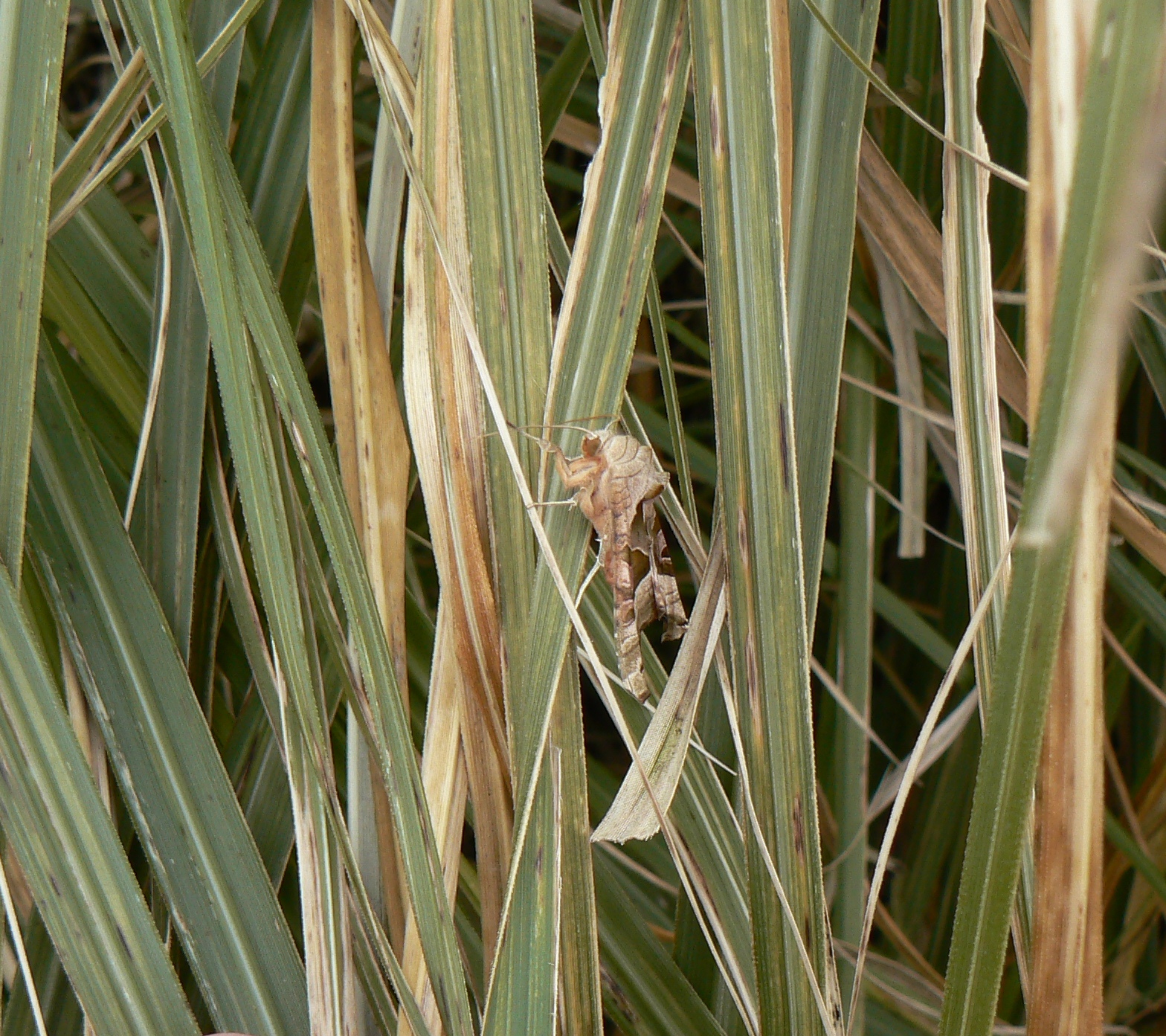 The grandchildren have been breeding butterflies and moths in a cage. When they are ready the children release them into the bushes in the morning while the sun is shining. It’s a serious business and Rosie worries about them with maternal zeal.
April 23rd 1964 ~ 400th Anniversary of the birth of William Shakespeare
As it is Shakespeare’s birthday celebrations in Stratford this weekend I thought I would reblog a post I wrote when I first started blogging.

William Shakespeare was born on April 23rd 1564 and died on 23rd April 1616. 1964 was the 400th anniversary of his birth and I was living in Stratford on Avon, which was certainly the most exciting place to be at that time for a theatre mad teenager.
The highlight of my acting career had been the part of Mole in Toad of Toad Hall at St Gabriel’s Convent in Carlisle. Cardinal Heenan was the honoured guest in the audience. My part was memorable as it involved a tea party at Toad Hall. We had real cakes and biscuits. I had never seen those pink and white marshmallows with a biscuit base and coconut all over the top. I became so engrossed in examining and eating them that I forgot where I was and had to be prompted to continue my lines. “Oh, you silly ass, Mole”…
View original post 724 more words
Pariah ~ Haiku
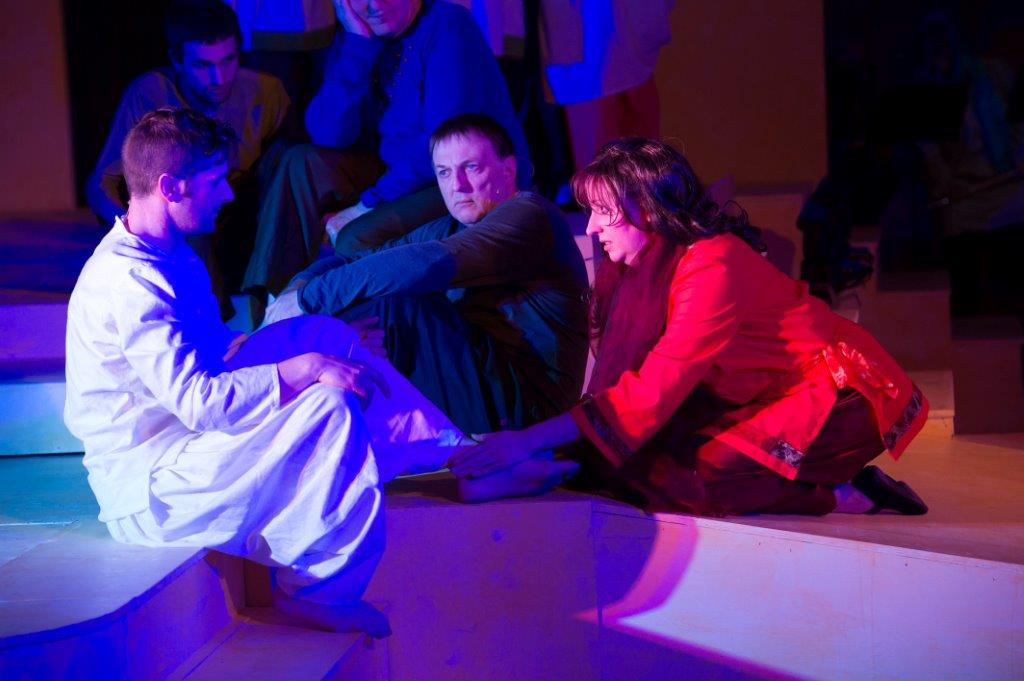
Mary Magdala ~ Pariah?
Mary Magdala
Spilt oils on his feet and wept
Begging forgiveness
~~~~~
Judas, pariah?
Or pawn in a cosmic game
At Gethsemane.
We have just finished performing the Gloucester Mystery Plays in the fabulous setting of Gloucester Cathedral and Worcester Cathedral. The plays were directed by Sheila Mander and received some very good reviews. One former actor said,
“Her motley crew of patches, rude mechanicals, all shapes, sizes, ages, levels of acting ability, musicianship and technical support experience were met together to serve one of the greatest stories ever told – amateurs and professional all – with God (we all know that He would really like to be Jeremy Irons) topping and tailing the entire affair. The spirit of Ye Olde rough and ready Middle English Mystery Play tradition is both honoured in its purest form and updated to modern relevance in a beautifully structured piece. Each actor, amateur and professional alike, somehow manages through simple, honest and often movingly unsophisticated service to this mammoth narrative to deliver one of the most touching and engaging pieces of theatre you could ever wish to attend. It is indeed theatre fulfilling many of its most powerful functions. Like smokers who quit the habit judge people who smoke, ex actors like myself can be an impossible audience to please. This little gem pleased me no end. It is charming, challenging, provocative but most essentially of all it is warmly approachable.” I can’t weait for the next production! Enjoy some of the photos below of rehearsals.
http://www.gmpfestival.com/diary-of-events/
 Jesus taken by soldiers in GMP
  Judas kisses Jesus
  Judas played brilliantly by Robbie
  Rehearsing the Crucifixion in the timber yard
  Satan played by mark Kempner corrupts Judas
  Jesus is arrested
  Jesus brilliantly played by Lawrence Aldridge is crucified in Gloucester cathedral
  Whole cast rehearsing the Gloucester Mystery Plays
  Actors who played Apostles in the GMP
Related articles
- Pariah ~ Haiku (heavenhappens.wordpress.com)
- Gloucester Mystery Plays (heavenhappens.wordpress.com)
- Cacophony (heavenhappens.wordpress.com)
Gloucester Mystery Plays


Mystery Play at Worcester Cathedral

Gloucester Mystery Play
Weeks of rehearsals are over and the show is now underway. It is a privilege to be part of such a spectacular production. This week we are performing amidst the breathtaking beauty of Gloucester Cathedral. The first night was not perfect but it was so moving. It will get better and better as we become familiar with the new and very complex staging.
The second night was “visually stunning, music just right, costumes and lighting spectacular ~ colourful, vibrant and flowing, stage crew and props slick” according to the audience. It felt amazing to perform in such a show and in such a setting. Can’t wait for tonight!
I will post a video when we are finished the run, but for now here are some pictures from rehearsals. Enjoy!
 Heavenhappens