My 15 minutes of Fame!

Me on set with Tom Chambers

Me on set with Tom Chambers

It has been such an unusual and exciting week for me.  While I was on holiday in Cornwall, I got a call from a casting agent about doing some filming as a supporting artist for a BBC production of a TV series.  I had not auditioned or even applied for a part so I was very surprised and a little puzzled.  However the explanation was simple.  Earlier this year, I helped some students at the local university in the making of a short and very moving film, for their degree course.  In order to complete the whole project professionally I had to register with an agency which I did.  The film, “The Day My Name Changed” was produced, directed, shot and edited successfully.  One of the students was kind enough to write a glowing comment on the agency’s website about me, which apparently had been picked up by a casting agent who was looking for people of just my age and type.

So it was that I found myself working this week in the Cotswold countryside alongside professional actors I have admired for years.

The TV series is called Father Brown and it is set in some of the most beautiful Cotswold villages, which is perfect for me as I live nearby.   This will be the second series of the 1950’s drama based on stories by the author GK Chesterton, and starring Mark Williams who played Arthur Weasley in the Harry Potter films.  The character Father Brown, who wears trademark shabby robes and a misshapen hat, is a bicycle-riding, crime-fighting, Roman Catholic Priest in the series. Sorcha Cusack plays the Parish secretary, Mrs McCarthy.

I can’t tell you the storyline or the other characters in the series we were filming for professional reasons but I can say the whole experience was fascinating and really enjoyable, if a little exhausting!

I was told to arrive on set by 7am prepared to work for up to 12 hours.  First I had to go to a costume area where I found everything hung up on hangers or bagged with my name on them.  There were underclothes from the 50’s including corsets, petticoat, suspenders and stockings with seams.  There was a hat, gloves, shoes, a handbag and a pair of glasses, all genuine 1950’s.  There was a dress and matching jacket.  Once I had got into all of this on one of the hottest days of the year I was a bit uncomfortable!  Next it was into the makeup and hairdressing area.  Here there were several superb makeup artists and hairdressers equipped with whole tables of boxes and bags of exciting things ~ brushes of every size and thickness, rollers of every colour and type, hairgrips and combs by the dozen, and more makeup than I had ever seen!

These wonderful artists sat me down and transformed me with heated rollers then pinned on my blue hat.  A covering of mat makeup and pink lipstick as per 1950 and I was done!

I hardly recognised myself and I thought I looked ancient and awful but everyone else seemed to think I looked ok so off I went to be photographed by Continuity.  The continuity people are amazing and very important when filming.  As shots are not necessarily filmed consecutively it is really important that every detail is right.  The arm holding the handbag, gloves on or off, the right glasses on, hair still in place, makeup still on ~ the continuity people are checking and photographing constantly.

When everyone had been through costume, makeup, hair and continuity, it was time to line up for more photographs and an inspection for approval by the Director of Costumes.  At this point details could be checked and adjustments made.  Hats swapped, jewellery dispensed or removed, cardigans and jackets altered on the spot, shoes changed ~ his word was final.  Only when he was happy were we allowed to get onto a minibus to be taken to the actual set for the filming.

It was at this point I felt like a real star as we were treated so well.  Everyone on the crew from the driver to the director knew each of our names.  They have a list of the actors and supporting artists with photographs and are expected to know them by name.  We were given bottles of water during breaks, coffee and tea was available at any time, and a lovely cooked lunch was provided from a big catering van, which everyone used from the most important to the least.  There were crew buses which everyone sat together on to eat lunch.  After lunch everyone had to go through costume, makeup, hairdressing, photographs, continuity and inspection again to make sure nothing had changed.  Then off in the bus for an afternoon of filming.

The whole experience was wonderful, and, at the end of the day, 5 of us were asked to stay behind for late filming.  I was really excited to be one of the 5 chosen.  Suddenly a sleek 1950’s black car drove smoothly down the road and stopped right where we were filming and out stepped one of my favourite stars from Casualty who was also a winner of one of the best shows on TV in the winter, “Strictly Come Dancing” ~ Tom Chambers!

I can’t tell you what he was doing there but I was tickled pink to be on set with him and to have my photograph taken with him.

It was a long day and it was very hot.  It was uncomfortable wearing all those 1950’s clothes and the stiletto heeled and pointy-toed shoes were killing me. I still think I looked awful.  But I wouldn’t have missed it for the world.  I enjoyed every minute and I got to do it all over again on Thursday in a different village wearing a different costume.

I do hope they ask me again!

http://www.bbc.co.uk/blogs/writersroom/posts/Tahsin-Guner-and-Rachel-Flowerday-on-developing-new-BBC-One-daytime-drama-Father-Brown

http://doyouwriteunderyourownname.blogspot.co.uk/2013/01/father-brown-tv-review.html

Tin and China Clay Mines in Cornwall

This post is for Alice who wanted to see my photos of mines in Cornwall.

I was very excited to see the remains of mines scattering the skyline during our recent holiday in Cornwall.

I’ve always been interested in industrial buildings.  I guess this is mainly due to my father’s influence as he was a steel man from the age of 13 and he developed in me a passion for ships, bridges and buildings.  The other reason could be because of where I grew up.  I lived in the Felling, a shipbuilding and mining area in the North of England.  I skipped past the railway station and shipyard every day on my way to school and there was a derelict engine house complete with winding gear at the end of our street of 2 up and 2 down back to back miners’ cottages.  These were our adventure playgrounds.  Children were never allowed to play on the grass or ride bikes in the municipal parks in those days!  Parks were for floral displays and grown ups to walk in and the park warden was fierce.

Being a traditional and romantic sort of person I accept that industrialisation almost wiped out the jobs for blacksmiths, weavers, spinners, millers and grinders. But I find there is great beauty in the  machinery that drove the mines and  the mills, and in the engines that turned their wheels and moved their goods.

The Redruth and Camborne area was the central tin and copper mining district of Cornwall.   The area is now part of the Cornish Mining World Heritage Site and has made the most of it’s heritage by opening up the old tramways and railways as trails for walking, biking or horse-riding.  Along the trails there are the remains of the historic mines.  And along the way there are spectacular views of the coast or  gorgeous countryside.  I was amazed to learn that Gwennap and the mines around it was once the richest copper producing area in the world.

One or two of the mines are now restored.  For example Geevor Tin Mine, Gwennap Pit and King Edward Mine are open as visitor attractions but we avoided those preferring to walk around and discover the remains of derelict mines.

We did however visit Wheal Martyn.  This place is amazing being almost a complete Victorian China Clay works.  Thousands of people made their living here in its day.  It is brilliantly preserved with its huge waterwheel, tools, machinery, vintage vehicles, pits and tunnels all in working order.  Walking round, it feels as if the workers have just left their labours for the day.

There is still a great china clay industry in Cornwall but it is not just used for ceramics now.  Mostly it is used in the production of paper, cosmetics and toothpaste, as well as in the farming, building, medical and chemical industries.

Lost Gardens of Heligan

Original George V postbox at Lost Gardens of Heligan. Original George V postbox at Lost Gardens of Heligan.

Seeing this old post box at Heligan reminded me that the prompt word for haiku-heights this week is  “time”.  The postbox is from the first world war period and is marked with the plain G R indicating it was from the time of King George V, who reigned for 26 years from 6 May 1910 to 20 January 1936.   It seemed fitting to link it with the sad fate of the gardeners who worked on the gardens

Garden abandoned

Young men posted like letters

To fight at the front

I recently wrote about the mysterious Church of Ampney St Mary which had been covered in ivy and lost for years until it was rediscovered in 1913.

Today I visited an equally mysterious garden in Cornwall which had been lost in undergrowth and weed for over 75 years until it was rediscovered quite by accident in  1990.  Heligan had been the seat of the Tremayne family since the 16th Century and was surrounded by fabulous gardens which had been designed and added to by successive members of the family.  At the beginning of the 20th century there were 22 full time gardeners looking after the estate.  But in 1914 when war broke out they all had to go away to fight.  Before leaving one of the gardeners scratched a puzzling message into a wall saying, “Don’t come here to sleep or slumber…”.  Under the message were the names of the workers and the date August 1914.

W Durnsford
W Guy
William Robins
R Barron
Chaeles Dyer
Charles Ball
Albert Rowe
W Rose
3 Paynters – initials illegible
Vercoe
Vickery
Leonard Warne
D Hocking
Percy Carhart
Others were illegible

16 of the 22 gardeners were killed in the war and the fortunes of the Tremayne family home were altered for ever.  During the First World War Britain suffered a terrible decline in its social and economic structures.  Many large estates were broken up including Heligan.  The house itself was rented out and the gardens became overgrown through neglect until they all but disappeared.

That could have been the end of the story but John Willis, who is a descendent of the Tremayne family who lived in the area visited Heligan with some friends.  While exploring he found a tiny room buried under fallen masonry and there on a wall he found the gardener’s sad message.  It captured his imagination and along with his friends he decided to restore the gardens to their former glory in memory, not of the great people who had owned the estate, but of the great gardeners who had worked on it.

And so the amazing restoration of the Lost Gardens of Heligan began.  It is an ongoing project but the gardens today were magnificent.  My favourite bits are the Crystal Grotto, the flower garden and the jungle.  My favourite plant was the tree fern.  But the whole place is enchanting, atmospheric, mysterious and inspirational.  I  saw lots of wildlife and half expected to see fairies dancing in the woods!

Do enjoy the photos I took today in the flower garden and take a look at the website for the Lost Gardens of Heligan.

All the world’s a stage

As I drove around the park area of Cheltenham today I noticed a road called Rowena Cade Avenue. I wondered how many residents of our lovely town know who she was, so I thought I would blog about her connection with the town and her amazing legacy. As this year is the centenary of the start of WW1 I thought this was appropriate.  Rowena spent her formative years living in Cheltenham where her uncle was Head of the Junior school at Cheltenham College.  Rowena herself went to Cheltenham Ladies College for a while. Rowena lived with her father James, and her mother, in a house called Ellerslie, which backed onto Pittville Pump Rooms. When the First World War started she was given the heartbreaking job of selecting and breaking in horses to be sent to the front.  Readers may have seen the play or film of Michael Morpurgo’s book,  War Horse.  This perfectly illustrates the horrors those poor horses were sent to.

After the war Rowena’s father had died and the rest of her family had dispersed, so she moved to Cornwall.  It was here she developed her talent for designing and making costume, putting on shows, and ultimately developing the unique and iconic Minack Theatre.  The theatre was entirely planned and financed in the 1920s and 30s by this inspirational woman, Rowena Cade.  The Minack was her passion and she literally worked on it until she died at almost 90 years of age.

We visited the Minack Theatre while we were on holiday in Cornwall. The weather was spectacularly good which made the setting all the more wondrous.  The stage is made of stone set against a backdrop of the cliffs and sea.  There is a stone balcony, stone pillars, stone boxes and all the terraced seating is tiered into the cliff face and made of stone.  Many of the seats have the year carved into them as well as the title of plays performed in that year.  The first play to be performed there was The Tempest in 1932.   There is a seat with 1939 carved into it and the next one says “Break for the war”!  Some of the stone seats have huge cockle shells carved into them.

Around the theatre is a spectacular garden with plants from all around the globe.  The plants were chosen by Rowena to withstand the salty winds coming off the sea, as well as the very wet winters and often hot, dry summers.

Minack theatre is open all year round to visitors.  If you are lucky and you visit between in spring or summer months you may see a play, concert or opera.  You would be advised to take a cushion and have something warm to wear as the seats are solid stone and it can get very cold.

While we were there, the performance was the Marriage of Figaro.  This year there is surely something for everyone, including:

Pygmalion, Tosca, Far From the Madding Crowd, The Producers, Oh What A Lovely War, A Midsummer Night’s Dream.  The full programme can be found on the website http://www.minack.com/

I took lots of photos as the weather was so good.  I hope they give you an insight into the wonderful achievements of Rowena Cade.

Tin Mines ~ Haiku

I am loving the totally different landscape in Cornwall.  It is hilly with occasional surprise glimpses of tin mines, relics of an industrial past.  There are bays and coves with caves where smugglers hid their bounty.  Unfortunately our car broke down as soon as we arrived, probably due to the long journey in searing temperatures.  Still it gave me a chance to explore Truro city itself and the beautiful cathedral.  I was very surprised to see abandoned churches, almost derelict up for sale.  Even our hotel is a former convent with a magnificent deconsecrated chapel which is now used as a great hall for weddings and conferences.  Ah well, it is a sign of the times I suppose.  Christianity, like old industries are being squeezed.

Old tin mines stand tall

Telling stories of the past

On Cornish coastline

Image

Relics of the past

Old convents and churches stand

Boarded up ruins

Race For Life

Inspired by haiku-heights prompt “measure”.

It was too darn hot

But the girls ran the distance

In the Race for Life

Like any mum I am really proud of all my children, but at the weekend two of my daughters exceeded even my expectations. They both run regularly to keep fit and are naturally competitive. They are also very caring people who do a great deal for charities that are close to their hearts. So they both signed up to run the Race for Life with the aim of raising money for Cancer Research charities.
It was a scorching hot day on Sunday as they donned their pink tee shirts and set off for the Racecourse. The organisers made no allowance for the heat and kept the runners out in the sun for an hour while they literally “warmed up”.
There were literally hundreds of runners on the course, some walking, some jogging and some running. But my girls both managed to run the 10k distance in less than 1 hour. An amazing feat in view of the heat and the crowds they had to battle through to finish.

Woodcarving

This post is inspired by the last two prompts from http://haiku-heights.blogspot.co.uk/

Mum's woodcarving

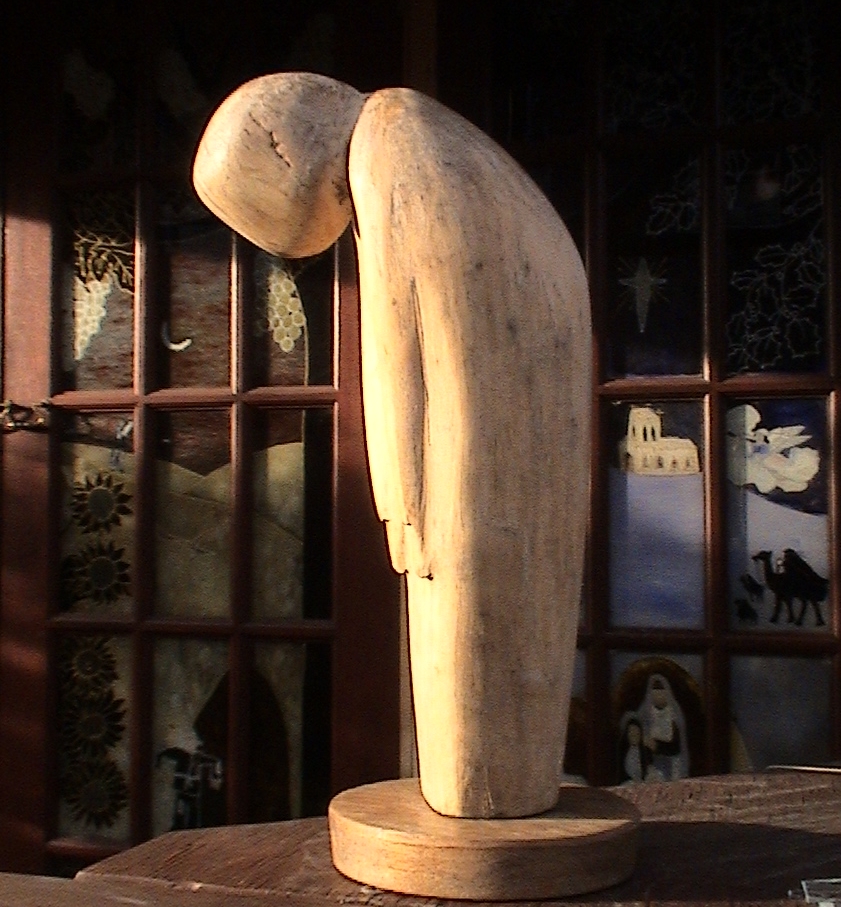
Mum’s woodcarving

Their hands held the tools

As they carved out the figure

That touches my heart

~

She whittled in wood,

Carved, chiselled and sanded.

A figure was formed

~

My parents now gone

Left a lasting impression

Character forming

~

She saw through the wood

A spirit living within

And set his soul free

~

Silent and stooping

The essence of pure sadness

Released from the wood

~

Working with the wood

His chiselled features forming

Smooth-sanded statue

The first prompt “fingerprint”, made me consider how special some things are to me simply because they belonged previously to, and were held by, someone I have loved. I was reminded especially of a figure that my mum carved out of wood many years ago. The wood was hard to work with so my dad helped with the chiselling and carving. I distinctly remember them both working away very happily at this piece of original craftwork, their fingerprints ingrained in the wood.
Gradually the character in the wood was revealed. It was a particularly striking piece I always thought, but my mum thought him a little gloomy for display in the house. So he lived on a plinth in the garden for years. As he stood battered by the weather he gradually looked more and more dejected.
The second prompt word is “sand” which fits nicely into the second stage in the life of this figure.
After my parents had both died the figure came to me. He was battered, discoloured and very rough but very precious to me, having been physically created by my parents. So my lovely husband took the figure off its rotten plinth, cleaned and sanded it down, then fixed the base. He still looks very careworn and dejected ~ the figure that is ~ not my husband, but I love it so much that it now sits on a shelf in my lounge.
I would not part with it at any price.

Cotswold Colours Today

Gracious today has been a visual feast in the Cotswolds.  I had to drive from Cheltenham to the market town of Moreton in Marsh along the A429.  There can be no more beautiful stretch of road in the world than this.   It is part of the ancient Roman Fosse Way.  Unfortunately, it is a single carriageway, rural road and there are very few opportunities to stop and just stare at the views.  But I managed to find a farm track where I could park to take some photos on my phone.  As I drove along, I saw fields of blue Linseed, green crops, yellow rapeseed, red poppies and golden earth.  At one point I looked over the wildflower strewn hedgerow to see 3 fields of soft blue Linseed; in the near distance there were fields of vivid yellow rapeseed; and in the far distance a startlingly red field of poppies.  The colours took my breath away.

I saw a dry stone waller at work and a thatcher and  arrived in Moreton to find the market in full flow.

Firefly

Earthborn stars glimmer
In lustful luminescence
Along twinkling tracks

In the UK we don’t see fireflies, or at least we only see the wingless female which we call the ‘glowworm’. She is in the same family as the firefly and she glows with a yellow lime green light.
Near where I live there is a disused railway track with a colony of glowworms which is protected by the council. When the old track was converted into a cycle track a few years ago, the council paid £150,000 to install special dim, red lighting which turns off at 11pm, so that the glowworm colony could thrive.
Glowworms have fascinated writers and poets such as Dryden, Tennyson, Wordsworth, Thomas hardy and even Shakespeare who eveoked their ‘ineffectual fire’ in Hamlet. They also get a mention in Roald Dahl’s ‘James and the Giant Peach’, when they end up serving as the light in the Statue of Liberty!
Did you know that during the Great War , Allied soldiers used the light from glowworms to read their maps at night?
Fascinating facts I would never have known if I hadn’t been inspired by haiku Heights this week!

http://www.firefly.org/

Lampyris_noctiluca

Crescendo

Laughter and Lyrics Choir I'm the white haired one 7th from left and caroline is the gorgeous oneon the right of the middle

Laughter and Lyrics Choir
I’m the white haired one 7th from left and Caroline is the gorgeous one on the right of the middle

An emotionally charged post for Haiku Heights prompt word ‘crescendo’.  I joined a ladies’ choir this year run by Caroline Edwards at the Everyman Theatre.  It is held on Friday mornings and several of my friends including those from WI joined too.  Lots of choirs popped up in the UK after the charismatic Gareth Malone appeared on TV to prove that everyone could sing by setting up choirs in all kinds of establishments.  Of course in order to make a beautiful sound you need a great teacher to whip you into shape.  We have Caroline for that and she is wonderful.  She has moulded our lively group of women into a choir!

We have a great deal of fun, drink lots of coffee, eat lots of cake, chat a lot, and have become firm friends who support each other.   caroline runs several choirs who will all get together on 15th July for a grand show at the theatre.  It is a sell out concert.  My heart breaks that after all my practicing I won’t actually be there on the night.  However I have enjoyed every minute with our choir ‘Laughter and Lyrics’.  The last song we are singing at the show is Sing ~ I know that along with a backdrop of video images produced by the fabulous Mark Kempner, there won’t be a dry eye in the house.  I will post a clip after the event when it goes public, but for now listen to Gary barlow and the Military Wives Choir as you read my haiku on ‘crescendo’

Deep emotions flow
To spine-tingling crescendo
Heartfelt harmony
~
Together we stand
Black with a splash of colour
Hearts break while we sing
~
‘Latte and Lyrics’
Choir gathers, faces aglow
Singing with gusto

~
Caroline’s choir grows
Along with coffee and cake
Gathering goosebumps
~
Perfect performance
As 5000 women sing
Hymn ‘Jerusalem’

I recently went to the Annual general meeting of the WI at Cardiff Arena again.  As always it reaches a crescendo when the 4000 plus women sing Jerusalem.  When you are part of it the sound is wonderful.   This clip is from 2010 when I was one of the women singing.


Open gardens for the NGS


Although the weather was cool and cloudy today, we visited Sandywell barn House in Whittington, which was open as part of the National garden Scheme (NGS). There are over 3700 gardens in the UK which open for one or more days a year to raise money for charity. Most of them are privately owned and a labour of love ~ and it shows. Sandywell was a lovely garden, the work of a lovely ‘plantaholic’ designer lady and her husband. The garden was set in 2.5 acres and totally walled in with some brick wall and some old Cotswold stone. Their lovely house was converted from an old cow shed but is now really settled in the landscape near to the beautiful Sandywell Manor House, which itself is now apartments.

Originally the money raised all went to Nursing charities. Today there are many medical charities supported including; Macmillan Cancer Relief, Marie Curie Cancer Care, Help the Hospices and Crossroads Caring for Carers.

NGS gives away more than £2.5 million each year to nursing, caring and gardening charities and over the last 15 years they have given more than £25 million in total. Most of the work is done by volunteers so the charity’s overheads are small. Consequently more than 80p in every pound raised goes directly to the charities. A wonderful result I think.

As I said the weather was not brilliant and I am not a great nature photographer but I will let me photos show you some of the highlights of this gorgeous garden.

Lunch


Inspired by Haiku Heights prompt word “Lunch”

I have simple tastes when it comes to food, especially lunch.  In winter there is nothing better than home-made soup and crusty bread with lots of butter.

With fresh home-made soup

Crusty bread from the oven

A nourishing meal

P1080686

I think the best lunches I ever had were on holidays travelling in France.  It was such a treat to buy wines, cheeses, French breads, and wonderful cakes from the patisserie.  My favourite cakes were called “Religieuse” as they look like a nun in her habit.  They are usually made of choux pastry filled with the most delicious cream and covered with ganache.  A bit like an éclair, they are usually coffee or chocolate flavour they are simply the best cake ever.  A picnic by a river in France is my idea of heaven, especially if it is near the Pyrenees!

Soft cheese on French bread

Religieux to follow

And café au lait

200px-Religieuses

A picnic is best

Sitting by a river on

A warm sunny day

~

Today I got a photo of my son enjoying a pint.  His term is over and holidays are just beginning. Tomorrow he sets off for Bali in Indonesia for a friend’s wedding.  Happy days.

End of the school year

Liquid lunch to celebrate

Happy holidays

~

Enigma

Inspired by haiku heights

Inspired by haiku heights

At the dialysis unit where my husband is a patient there are some really interesting old characters.  If you take the time to chat to them, all manner of fascinating facts emerge about their lives.  One such dear man was called Peter.  I knew he had been in the navy during the war, and so had my father and my father in law, so we had a lot to chat about.  He loved to read and, knowing I enjoyed books, he brought one in for me one day.  He told me that he was in this book!  It was a naval adventure book based on true incidents.  On reading the book I found that he was indeed in it!

During the war Peter had been 2nd Lieutenant on HMS Hero, a naval destroyer.  Coincidentally, the ship had been built in Newcastle on Tyne in 1936 at the Vickers Armstrong shipyard where my father had started work as a 13 year old lad in 1936.  Who knows, he may even have worked on The Hero!

Anyway, the reason this story fits in with today’s Haiku heights prompt word “Enigma”, is that the Hero was actually the ship that torpedoed the German submarine U-559 which was carrying the Enigma machine and the code books.  These were of vital importance to the allies during the war as they enabled the codebreakers at Bletchley Park to give advance warning to the ships in the Arctic Convoys, which were suffering terrible casualties.

Briefly, what happened was that on 30th October 1942 an RAF patrol aircraft spotted the German submarine and alerted HMS Hero by radio.  When the sub realised she had been spotted by hero, she dived but too late.  Hero dropped depth charges which cracked the sub’s pressure hull.  This caused explosions and flooding on board the sub and 4 crewmen died.  The rest of the crew evacuated the sub as it was forced to surface. The U-559 sub was known to be carrying the Enigma machine and code books so the youngest, fittest and slimmest crewmen from HMS Petard, a nearby ship, were sent to board the stricken sub through the holed hull.  These were Lieutenant Fasson, Able Seaman Grazier, and improbable but true, a 16 year old NAAFI canteen assistant, Tommy Brown.  They managed to swim to the abandoned sub and get inside.  They located the Enigma machine and the code books with all the current settings for the Enigma key and retrieved them.  Sadly only one of these brave men survived to tell the tale.  Grazier and Fasson drowned when the submarine sank as they tried to get out.

The Enigma machine and codes they retrieved was immensely valuable to the code-breakers at Bletchley Park, who had been unable to crack the codes.  For details of how Enigma works and photos of the three brave men who gave so much, click this link http://www.nww2m.com/2012/10/sci-tech-tuesday-70th-anniversary-of-enigma-capture-from-u-559/

Peter, was 2nd Lieutenant on HMS Hero and there is a photo of him in the book.  It shows a tall, fit young man with dark hair and a bushy beard looking very smart in his uniform on board ship.  Peter died recently, elderly and frail, but thanks to the book his story will never die.

Orders were scrambled

Unbreakable codes concealed

In the ocean’s depths

 ~

Running the gauntlet

Torn apart by torpedoes

In Arctic Convoys

 ~

HMS Hero

Retrieved the Enigma, when

Able seamen dived


HMS Hero

HMS Hero

Unbreakable codes

The ultimate enigma

Cracked at Bletchley Park

During World War II, the Germans used the Enig...

http://www.bbc.co.uk/history/worldwars/wwtwo/enigma_01.shtml

Ripples

This post is inspired by Haiku Heights prompt word ‘Ripples’.

Little plastic ducklings

Little plastic ducklings

Ducklings bobbing as

Babies learn to swim, making

Ripples in the pool

Stanley learning to swim

Stanley learning to swim

~

Fishermen despair

As dipping ducks surface in

Ripples on the lake

~

With muscles rippling

She races to complete the

London Marathon

My daughter did the London Marathon in 2010.  She said it was the most fantastic and memorable day ever. The 26.2 miles were long, gruelling and emotional but she completed it in a respectable 4 hours, 20 minutes and 33 seconds. She raised £2032 for Myeloma UK.

~

Recession’s ripples

Spread round the world.  The poor are

The first to suffer

~

Wireless waves ripple

“War is over”.  Not heard in

Jungles of Burma

~

Deep in the Burmese jungle in 1945, the “forgotten army”, including my uncle Robert, had no idea the war was over.  News took a while to filter through; some had no radios and others had no time to listen to the BBC.

Mountbatten said, “You call yourselves the ‘forgotten army’, well you are wrong.  At home they haven’t even heard of you”.

~

My tribute to Nelson Mandela

220px-Nelson_Mandela-2008_(edit)

This week’s word prompt at haiku heights is the word “Chivalry”.  My understanding of this word for the modern age is an honourable person with strength ~ of mind, body and soul, who is courageous and disciplined and uses their power to protect the weak and defenceless.  This defines Nelson Mandela perfectly in my opinion.

Cherishing freedom

He fought with true dignity

And changed the whole world

~

With perseverance

For freedom and harmony

He gave his whole life

~

On Robben Island

Prepared to die for his cause

He rocked the whole world

My grandson, Ben, was reading a book about Nelson Mandela for his homework on Monday and it was wonderful to have the opportunity to discuss this living legend with him.  Someone once said “If you can’t explain it to a 6 year old, you don’t understand it yourself”.  I hope I gave Ben and Rosie a clear view of just how extraordinary and special this man is.  In fact I said that in my opinion he is a living saint!

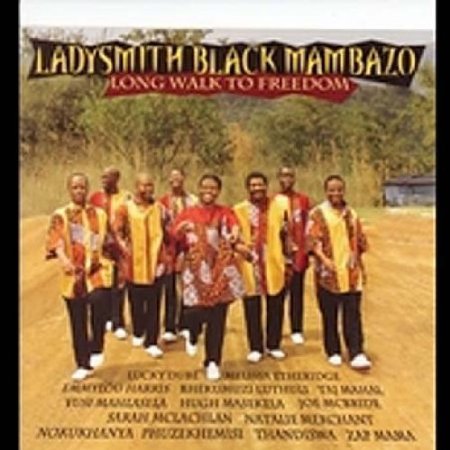
I can’t imagine a world without Nelson Mandela, I am sure it will be a poorer place.  All my adult life he seems to have been in the news or making the news.  I remember the protest marches, the Sharpeville Massacre which took place on 21 March 1960 and shocked the world.  And how could anyone forget the fabulous song, “Free Nelson Mandela”, by the Specials.  You can listen to it here and I bet you can’t keep your body still ~ you just have to dance!  It reminds me of the cricket club I went to near Kisumu in Kenya with some friends in 1985.  The Tanzanian band played all night until the early hours and the dancing was out of this world.  I was lucky enough to go to one of the original tour concerts of Ladysmith Black Mambazo in 1987 too.  I will never forget that night, especially the township jive!

So, while the irreplaceable 94 year old, is still struggling for survival in a Johannesburg hospital, I thought I would pay tribute to him in my blog.  Firstly I would like to honour him by using his own name!  He was named Rolihlahla Dalibhunga by his parents but was given his English name, Nelson, by a teacher on his first day at school.  He is fondly known by his clan name – “Madiba” among his own people.  It is from the Xhosa tribe to which he belonged.

He wrote his own story in a book called Long Walk to Freedom.
Mandela expressed his goal so eloquently from the dock in court in 1964 thus:

“I have cherished the ideal of a democratic and free society in which all persons live together in harmony and with equal opportunities,” he said. 

“It is an ideal which I hope to live for and to achieve. But if needs be, it is an ideal for which I am prepared to die.”

I think that he achieved his life’s ambition and he has left a great legacy in the form of the Elders.  They give me hope that the world will one day be a free, fair and just place for all people regardless of creed, colour or politics.

You can find all the facts and figures about Nelson Mandela’s life on the wonderful BBC site just click the link.

ladysmith Black mambazo band

The Ivy Church at Ampney St Mary in the Cotswolds

This ancient little church is a little gem which I normally drive right past on my way to pick up the grandchildren from school.  It sits off the busy A417 which goes from Cirencester to Fairford.  Today I decided to stop and have a look around.  It was a bit drizzly but I still managed to get some photographs which I will put in a gallery for you to enjoy.

It is very ancient with the remains of a stone cross in the grounds where travelling monks would have given sermons originally.  The church itself was built of local limestone rubble around 1250 and it has a very simple interior.  Unusually it has a stone screen separating the nave from the chancel, or the people from the altar.  It probably had a wooden screen over this with a crucifix on it in the early days.  Originally there would have been no furniture or pews, just rushes on the stone floor where the people stood to hear Mass.  Most of the windows looked leaded to me and one is particularly unusual as it is set in a single piece of carved stone.  There is a very pretty bell tower which has a Sanctus Bell in it made about 1747 in Gloucester by Abel Rudhall.  It carries the motto, “Peace and Good Neighbourhood”.

Above there is a very rugged looking wagon vault roof of oak beams.

The oldest things in the church are probably the original stone entrance archway which is now sealed up.  On the outside, above this arch there is an ancient carving of a lion stamping on a two-headed serpent, representing good conquering evil. There is a griffon looking on.  Apparently it is the only one of its kind in England.  Inside the church there is a Norman stone font which is complete.  Then there is the beautiful arched door which is ancient and solid made from elm or oak.  It has the original metal hinges and handles.

Best of all inside are the remnants of wall paintings which were defaced then plastered over after the reformation.  There are intriguing bits of these paintings gradually being revealed but you have to look very hard to make them out.  I saw a face which I am sure is the Virgin Mary.  I saw a number of saints including St Christopher with the infant Jesus.  But try as I might I could not find St George and the dragon who is supposed to be depicted somewhere on the walls.

The history of this simple rural church is like a Disney story.  The parish in common with much of England was hit by the Black Death in medieval times.  So after 1350 the entire village with its remaining inhabitants was moved to higher ground in a nearby village.  Any cottages left fell into ruins.  The church was used less and less until eventually it was abandoned.  Ivy grew over it until it was entirely covered, disappeared, and was forgotten.  Doesn’t it have shades of Sleeping Beauty?   A century ago in 1913 it was discovered again and all the ivy removed to reveal this lovely little gem of history.  Since then it has been restored but with all its original features preserved.

The churchyard has a little stream running around it and a stone bridge which leads to a little wooded area.  Beyond this there is Ampney Brook which was in full flow today.  The ancient dry stone walls leading to the church from the brook are still there and I felt strange thinking of all those villagers of long ago who had trodden this same path to get to their little church.  Some had maybe lived through the Black Death and floods which were the ruin of their way of life.  Today there is a deep peace about the place and I am so glad I stopped to visit the Ivy Church.

What would you campaign for?

I have been fascinated this month by the TV and Radio 4 coverage of the centenary of the death of an amazing Geordie woman and suffragette, Emily Davison.  Being a Geordie myself and something of a campaigner in my time, I can identify with the strength of feeling she had for her cause.  Her cause was women’s rights.

As part of my research for the WW1 play we will be doing next year in conjunction with the Everyman Theatre, I have been studying Emily Davison.

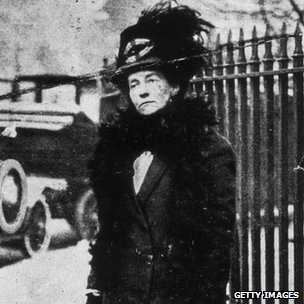
Emily Davison  1872-1913

Emily Davison
1872-1913

Emily was born in 1872 and was from a respectable Northumberland family.  She was intelligent and well educated, going up to Oxford University and gaining a first class honours.  However she could not graduate as degrees were closed to women.  The unfairness of this would not have escaped her.  She went on to study foreign languages before leaving to become a governess, then a teacher, after her father died leaving her mother unable to further fund Emily’s course.  But it was women’s suffrage that was her raison d’etre.

In 1906 she joined the Women’s Social and Political Union (WSPU). formed in 1903 by Emmeline Pankhurst

Emily progressed from disrupting meetings to stone throwing and arson.  She was arrested and imprisoned for various offences nine times.  In 1909 Emily was sentenced to a month’s hard labour for throwing rocks at the chancellor’s carriage.

On 2 April 1911 she was found “hiding in the crypt in the Houses of Parliament”.   She was actually in a cupboard in St Mary Undercroft, which is the chapel for the Palace of Westminster.  It was the night of the census and she wanted to put ‘House of Commons’ as her official residence.  I am awed by her cunning and courage, as was Tony Benn MP, who had a plaque about this event placed in the House in 1999, albeit in a broom cupboard!

In 1912 she was sentenced to six months in Holloway Prison for setting fire to a pillar box. While in prison she was force-fed after going on hunger strike.  This was a barbaric act akin to torture.  Indeed in the Houses of Parliament, the labour MP George Lansbury said the Prime Minister HH Asquith would go down in history as being, “the man who tortured women”.

On 4 June 2013 Emily took a risk too far when she tried to disrupt the Derby at Epsom, a famous horse race and British institution.  It was assumed for a long time that she had wanted to commit suicide when she ran onto the track in front of the King’s horse, Anmer.  However scholars, forensic scientists and others have examined evidence in recent years and have concluded that she probably just wanted to make a spectacular gesture by holding up her suffragette scarf and maybe putting it on the King’s horse, to draw attention to the cause.

Finally in 1914, the year the world was plunged into a dreadful war, Prime Minister Asquith made a commitment to giving women the vote after the war.

In 1918 the Representation of the People Act granted women over the age of 30 the right to vote, as long as they were married to, or a member of, Local Government Register.  It also extended men’s suffrage to the right for all men to vote over the age of 21, and abolished most property qualifications for men.

In 1928 women were granted equal suffrage with men as they could vote at the age of 21 and most of the property rules were abolished.

So Emily, along with the thousands of brave women in the suffragette movement, achieved her goal.  Her courage and steadfastness is remembered and celebrated still a hundred years on.

There is a wealth of documentary evidence and articles written about the Suffragettes and Emily Davison and I have added links for anyone who would like to know more.  I have also attached a link to newsreel of both her death and her wonderful funeral for those who would like to see it.

Being on the Public Affairs Committee in the Women’s Institute is my own way of making a difference in my own community and the world at large these days.  The WI campaigns on many issues and is well respected for their achievements.  The following article asks “what would suffragettes get off their backsides for today?”  Do read it.

 http://www.telegraph.co.uk/women/womens-politics/10096640/What-Emily-Wilding-Davison-and-the-suffragettes-would-get-off-their-backsides-for-today.html

Emily Davison's Funeral

Emily Davison’s Funeral

Moral

Inspired by Haiku heights word ‘Moral’.

Fairness and justice

Honesty and compassion

Gentleness is strength

~

Every night should be

Like Christmas Night for me, filled

With wonder and awe

~

As I sit and suffer this weekend,  the moral of this haiku is to listen to my own advice and stay away from children with colds!

Snuffling and sneezing

Grandchildren spreading their germs

Thought I was immune

As I missed the deadline for the last 2 prompts, Eccentric and Stone, I am adding the links here in the hope that you will take the time to read them.

Eccentric ~ http://wp.me/p2gGsd-Ul

Stone ~ http://wp.me/p2gGsd-U4

Eccentric ~ Haiku

This post is for Haiku heights prompt word ‘Eccentric’

Everything about Warwick Castle was eccentric when we visited at the weekend.  The theme was ‘Horrible Histories’ so there were knights in armour and princesses, dragons and wizards in the towers as well as scarily lifelike waxwork models of kings, queens and nobility.

But the most eccentric things were the peacocks which seemed intent on stealing the show with their courtship and flying displays.  I have never seen a peacock perch so high in a tree before!

He shows no restraint

With his flamboyant display

Attracting a mate

I missed the deadline for the Stone Haiku in which I posted lots of pictures of Warwick castle so please do click on the link and read it! http://wp.me/p2gGsd-U4

Meanwhile here are some more photos for you to enjoy