Haiku for Carpe Diem

This haiku is inspired by a wonderful haiku by Basho, a haiku master.
This one he wrote in Spring 1687 and it had a title. In that time a title for a haiku was a commonly used practice. The title of this haiku was: ‘Mourning over the death of Priest Tando’.

chi ni taore ne ni yori hana no wakare kana

falling to the ground
a flower closer to the root
bidding farewell

Mired in the mud

Moored to bright  orange buoys

Awaiting the tide

 Image

Caught fast in the thorns

Bleeds a bright splash of colour

Autumn accident

Image

Prayer

This post is inspired by the Carpe Diem Haiku prompt for today, “Prayer”

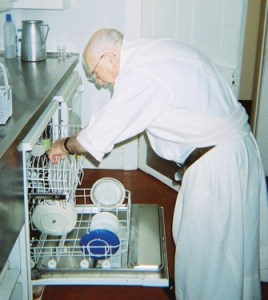
When I first retired from my work in education, I went to work as a housekeeper at Prinknash Abbey This was a labour of love and I learned a great deal about the prayerful life from the Benedictine monks who live and work there.  I learned from Fr Alphedge that every single thing you do can be a prayer if it is done with reverence and joy.

Fr Alphedge at work and prayer

Peaceful and prayerful

monks, masters of mindfulness

sacramental lives

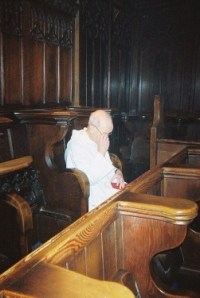
Fr Adhelm in the chapel at prinknash

Meaningful moments

Of quiet contemplation

simple and sincere.

Incense is made at Prinknash

Alone with your thoughts

humbly open your heart, and

Let healing begin

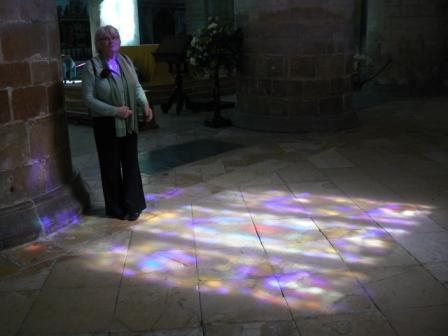
Stained glass window from Gloucester cathedral

Drowning in despair

from the core of your being

you cry to the Lord

Peace dove made of tiles

Simple and sincere

the sorrowful supplicant

speaks softly to God

Pieta from polish church in Torun

Fragile, the faithful

cry out in consternation.

Consolation comes.

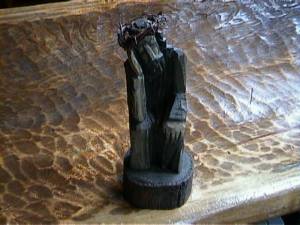
sorrowful statue

Studying Icons

In silent contemplation

Wisdom is revealed

An icon from Russian Karelia

Autumn haiku

These haiku are inspired by Haiku Heights prompt ~ Conscious

Conscious commitment

Finding fulfilment

Committed to following

A creative path


Conscious of time passing

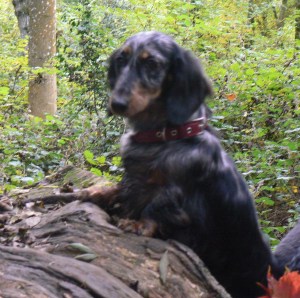
Dog days are over

Awesome autumn has arrived

Attracting the crowds

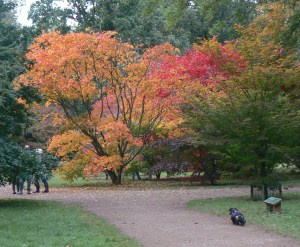
Dayna ther dachsund

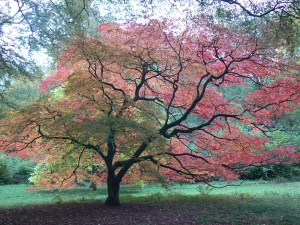
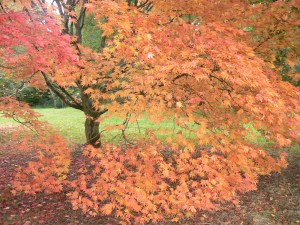
Conscious of colours

Japanese jewels

Seasonal spectacular

Autumnal Acers


Conscious of nature

Conscious of nature

Arboretum in autumn’s

cascading colours


Battlefield ~ Haiku

Todays Haiku Heights word is Battlefield.  This stirred up lots of poems in my head ~

My father in law was in the Arctic Convoys.  He served on the destroyer HMS Liverpool guarding merchant navy vessels taking supplies to the beleaguered Russians via Murmansk.  His ship was torpedoed twice in the Mediterranean but he survived the war.

Foes in the fjords

Death lurks in depth for Allied

Atlantic convoys.

My uncle Robert fought and died in Burma as part of the “forgotten army”.  Because they had no supplies and no radios they didn’t even know that the war was over so kept on fighting.  Uncle Robert was killed after the official end of the war so his widow did not get a war pension!

Forgotten fighters

in the jungles of Burma

fought and died in vain.

Of course people at home in the UK fought their own battles and lived through countless air raids.  The things they feared most were the doodle bugs which made a dreadful whining noise overhead.  But the most worrying time was when the whining stopped, as that meant the bombs were falling! 

Air raid warning as

Doodle Bugs whine overhead.

Silence brings despair.

Many young children were evacuated from cities to relative safety in the countryside which brought its own terrors.

Evacuated!

Human fish out of water

blitzed from city homes.

Paradox ~ haiku

Paradox Lake 6

Paradox Lake 6 (Photo credit: xeaza)

The word prompt for todays haiku from haiku heights is ‘Paradox‘.  Where to start?  Media, Medicine, Religion…

Outrage on front page,

adverts inside, profits from

sinister sex trade.

My blood boils when I buy a local family newspaper such as the recent Gloucestershire Echo.  On the front page they gloat and pontificate, taking the moral high ground, over the police storming local brothels.  Men and women were arrested, masses of money was seized and young foreign girls who were victims of illegal trafficking were rescued and taken away.  Yet, inside the same newspaper, albeit near the back, were lurid adverts for the services provided by these same establishments.  Is this double standards ~ Yes!  Is this hypocrisy ~ Yes!  Is this paradoxical ~ Yes!!  Should I stop buying the newspaper ~ Yes!   Should I start a campaign ~ I know I should……but will it change anything…?

Nurses come nightly,

tenderly numbing his pain

Killing him kindly.

The world of medicine is riven with paradoxes concerning treatments for prolonging life, saving life, ending life.  Decisions and actions can have monumental consequences.  There will always sadly be some people who misuse their position, skills and knowledge to cause harm to themselves or others.  But for the most part the medical staff we meet are caring people trying to alleviate suffering who have to live with their conscience, and their choices .

Fundamentalists

Freedom denying,

Future destroying.

Sadly the most glaring paradoxes are to be found in the world of ‘religion‘.  I listened to a wonderful “Thought for the day” on BBC Radio 4 today about just this.  Canon Dr Alan Billings talks about how the individual’s faith and religious practice can be a very good and positive thing; but collectively, due to desire to protect and preserve ‘their’ values and traditions, hierarchical religious communities can act in damaging, destructive and downright wicked ways.  I think of the dreadful cover-ups of child abuse, of the  unjust and insensitive treatment of women or anyone who does not conform to the perceived ‘norm’, and of course the killing and maiming carried out in the name of religion.  It always comes down to a desire by those in positions of power to subjugate those without it.

Hummingbird hawkmoth ~ Haiku

Hummingbird hawkmoth

In Autumn hedgerow

Hummingbird Hawkmoth hovers

Foreign visitor

Humming Bird Hawk Moth (Macroglossum stellatarum)

  • Wingspan 40 – 50 mm
  • Not a native to the UK.
  • Description: large proboscis and antenna, fan tailed thorax, orange hindwings and grey-brown fore-wings, marked with two black lateral stripes.
  • Takes its name from the habit of flitting between blooms collecting nectar with its long proboscis, with a flight pattern resembling that of the humming bird.
  • Although it has occasionally been known to overwinter in southern counties, this day flying moth is largely a migrant from the continent, flying any time from  spring to October.
  • A prolonged spell of warm summer weather and a southerly prevailing wind, can result in a fairly large presence of the humming hawk moths in the UK.

I have spotted these exotic visitors to England only twice; once in my garden, and once at the nursing home where my mum lived for the last 18 months of her life.

I read somewhere that the hummingbird hawkmoth is considered a good luck omen in malta and Italy.  Apparently a swarm of them was seen crossing the English Channel flying towards England on the day of the D Day landings in 1944.  My sighting was not such a good omen as I wrote in a previous post amended below!

“Just last year we sat in the garden on a sunny autumn Thursday, my mother and I.  We saw a hummingbird hawkmoth, a rare visitor to the UK.  Like a large bee crossed with a moth, it hovered over the flowers like a hummingbird.   We were at the The Owlpen, mum’s care home, enjoying the last warm days of the year.  Sitting with us were Diana, Phyllis, Agnes and a lovely Welsh lady who didn’t speak at all.   Agnes spotted a plane with four wings flying round and round in circles.  A training flight we thought or maybe a pleasure flight.  No-one else noticed it.  Diana was earnestly knitting hats for merchant seamen.  She has made hundreds over the years from wool that people bring her.  She says it keeps her mind alert and her hands busy.  She doesn’t need a pattern now, she knows the stitches so well, but she has to concentrate on counting the rows.   Phyllis is a large lady with sparkly eyes, very little hair, and sorely swollen legs.  She has difficulty walking and forgets where she has put her stick.  She loves to chat about her grandchildren and to hear about other people’s.  Agnes is mum’s best friend at the Owlpen.  She is a lovely cultured lady who reads the Times from cover to cover every day to ‘keep abreast of the news’. Agnes enjoys good conversation but gets cross with herself when she can’t remember the words she wants to say.

Mum’s eyes do not sparkle today.  They look milky and dull like an aged pet.  She is not joining in the conversation and does not appear to be enjoying the lovely day.  It worries me that she seems so quiet and a bit confused.  I fear she is fading in mind and body so I ask the nurse to make an appointment for the doctor to visit.

On Monday I arrive early to be there when the doctor comes.  He is young, gentle and kind and asks mum lots of questions.  She is overawed by him and doesn’t want to be a nuisance so she says she is fine.  I gently coax the symptoms out of her.  Didn’t you have a pain in your tummy mum?  “Yes, a little bit”.  Doesn’t it hurt your back when you are moved mum?  “Yes, a little bit”.  Haven’t you gone off your food because it makes you sick mum?  “Yes, a little bit”.  Bless her, it breaks my heart to see how dependent and deferential she has become.  Where is the proud, strong, creative lady?  What happened to the northern matriarch who watched over the whole extended family for the last sixty years?

The doctor says he won’t distress her further as she seems a bit down.  So I stay for the whole day.  We read the book of Old Gateshead and go down ‘memory lane’.  We have coffee and share a bit of cake.  At lunchtime I sit with her and she manages to eat a whole bowl of soup.  She is so animated now that we decide to have a girlie afternoon.  Fortunately I had brought my manicure set and some nail varnish.  I cut her nails and massage her hands with Wild Rose Beauty Balm from Neal’s Yard.  Then I buff the nails to smooth them and paint them Midnight Bronze.  By the time I leave she looks relaxed and radiant, and the room is filled with the smell of roses.  I have never felt closer to her and I will treasure the memory of that day forever.  My mum died before the week was out.

I would give the world to be able to see my mum today, take her for a drive, or make her a special lunch.”

http://youtu.be/4SI6Lu9LeBI

Island and Lights haiku

Oops I missed a day yesterday in the haiku Heights challenge as I had a dreadful migraine and could not face the computer.  However all well today so am sneaking both in together!

Island Haiku

In Ladoga Sea

Russia’s rejected lived, on

Old Valaam Island

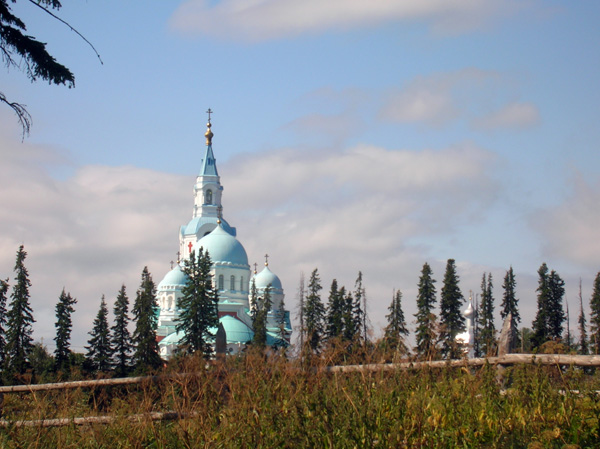
Valaam Monastery

Blind residents on the island

The new Valaam Monastery

Across Lake Ladoga

I visited Russian Karelia and Finland in 2001 on a tour of Monasteries and Orthodox Churches when I was studying Icons.  It was a totally wonderul trip and I saw some magnificent sights.  We stayed at the new Valaam monastery where there is a brilliant iconographer.  I learned a lot from him.  We also visited the Old Valaam Monastery which is on an island in lake Ladoga.  In 2001 the island was a sad and menacing place.  The monastery and cathedral were badly damage; with lots of deliberate damage from its troubled past and natural damage from the severe weather.  In times past Russia’s disabled soldiers and rejected people, many suffering awful physical and mental problems were sent to this island.  They were virtually abandoned there, isolated from the rest of the world and had to fend for themselves as best they could.   They had no love for the buildings or the faith of the few monks left there and lived in abject poverty and squalor.

I am thrilled to say that the monastic community is now thriving and the buildings are restored.  The website http://valaam.ru is just wonderful and will tell you all about the history of this special ancient place.  There is also a wonderful picture gallery so do look at it if you have time.

As I mentioned I am very interested in Icons and I loved to travel and take photographs or collect pictures of old icons.  My favourites are the Marian or Theotokos (Bearer of God) ones, and I have a collection from all over the world.  It fascinates me that every culture has their own take on the Mother of God and I have black ones, Chinese ones, and even an Indian squaw one from a reservation in NW Canada.  There seems to be a deep need in every culture to revere a mother figure so that is what my next Haiku reflects:~

Lights haiku

She lights up my life

Motherhood epitomised,

My icon, my rock.

Haiku Heights prompt ~ Starve

Girls chat on smart phones

As babies sit in puschairs

Starved of attention.

I notice these days as I wander about that everyone seems to be on the phone chatting.  Of course smart phones are wonderful in emergencies or for generally keeping in touch when  away from home.  But the one time I get really upset is when I see a young mum or dad with a precious baby in a pram, or a toddler pottering alongside them, being IGNORED!  This time before children start school is so special and it will never come back.  I wish I could say to the parents or carers, “Please put the phone away and talk to the child!”   I would say that conversation is one of the most basic needs that every child has a right to.  It stimulates interest in their surroundings; develops their relationships; makes them feel safe, loved and cared for; promotes curiosity; and opens the way to learning.  Tone of voice used, making eye contact and paying attention to the child are really important factors in encouraging his or her self confidence and self esteem.  Conversation also increases the child’s vocabulary and their speaking and listening skills, which are vital first steps towards learning.

So please do yourself and your child a favour “TURN OFF YOUR PHONE & TALK TO YOUR CHILD!”

Image

Image

Image

Image

Meadow Haiku

Through Cox’s Meadow

past ancient mills, farms and fairs,

The River Chelt flowed.

Many years ago, when my children were young, I decided to follow the River Chelt from its source near Dowdeswell to its mouth at the River Severn near Wainlodes.  I took my long suffering children with me on what I considered to be a great adventure ~ and very educational!  They had differing opinions, but as it was a good summer and they were too young to argue,  they came along anyway.

The history of places has always fascinated me; how things came to be the way they are; and how they were before.  The changes just in my lifetime are breathtaking, but the further back you go the more interesting it gets.  Features like buildings, placenames and rivers are great starting points for research I find.

Now the River Chelt is only small but it has always been very unpredictable.  There are so many springs up in the Cotswolds that after a heavy rainfall there can be flash flooding without any warning.  The river used to run from the high ground down through the meadow named after the farmer, Mr Cox, then straight down the High Street in Cheltenham.  People had to use stepping stones to cross.  That all changed when the mill owner, a Mr Barrett, diverted the river in order to power his corn mill in the centre of town.  The course of the river has been tweaked several times over the years and various culverts have been put in, but it still floods occasionally.  The worst floods I can remember were in 2007.  On July 20th the heavens opened and the rivers burst their banks all over Gloucestershire.  The power station was affected and the water supply was cut off.  For weeks we had bottled water delivered to central depots where residents went to collect it.  Homes, pubs, abbeys, churches and schools were flooded; and traffic on some roads was restricted to boats!

Some years before that the local council in their wisdom did major work on Cox’s meadow.  The meadow had been a wonderful community facility and a natural floodplain for centuries.  Annual fairs were held there and community games, charity events and circuses.  But it was transformed into a barren wasteland and designated a “balancing pond” or “overflow reservoir”.  There is nothing in it now apart from a path which the dog walkers enjoy, and a scultpture over the drain cover.  And, sadly when the floods came, it was worse than useless.  Whereas previously the river overflowed freely into the meadow, now it was channelled along a route behind houses resulting in those houses being flooded!

Goodness, these Haiku prompts really do stir up the memories ~ all that from the word ‘meadow’!

80_RChelt_M5_3_lg 

This slideshow requires JavaScript.

English: A frosty morning in Cox's Meadow Part...

English: A frosty morning in Cox’s Meadow Part of the Cheltenham flood defence system, Cox’s meadow was remodelled in 2005/2006 to store River Chelt flood water. This photograph was taken at the start of several days when the temperature rarely rose above freezing. (Photo credit: Wikipedia)

English: Lilley Brook near Cox's Meadow The Li...

English: Lilley Brook near Cox’s Meadow The Lilley Brook meanders through trees at the edge of Cox’s Meadow just before it joins the River Chelt. (Photo credit: Wikipedia)

English: The river Chelt meets the river Sever...

Grass ~ Haiku

Just read in the Guardian newspaper that two more US troops have been killed in Afghanistan and two more UK soldiers from 3rd Battalion Yorkshire Regiment have been killed at a Helmand  checkpoint by an Afghan policeman.   When will the killing ever stop?

Had to change todays Haiku on the theme of “Grass” as this news makes me so sad:~

memorial garden

Grassed garden of grief

A moving memorial

Heroes lie honoured.

National Memorial Arboretum, Alrewas, UK

National Memorial Arboretum, Alrewas, Stafford...

National Memorial Arboretum, Alrewas, Staffordshire, UK (Photo credit: johnmuk)

related articles

Creation ~ haiku

creation illuminated manuscript from St John's bible

Illumination

Meditation on the word

Sacred creation

This haiku was inspired by the September Challenge on haiku heights ~ today’s word is Creation.

One of the most beautiful creations I have seen in recent years is an exquisite handwritten St John’s Bible.  It is the fulfilment of a lifetime’s ambition for the artist and calligrapher, Donald Jackson.  Working with a Benedictine community  in Minnesota, USA and with scholars in Wales, UK, he has created over many years “a work for eternity”.  Every word is written by hand and every illustration is a modern meditation on the text.  Do click on the link ~ you will be amazed by the beauty of the work.

I saw the first edition when it was displayed at St Martin in the Fields Church in London and was lucky enough to buy prints and take photographs.  I believe it is on display in USA now and it is well worth seeing.

I could have written lots of haiku on the “Creation” theme ~

Created with care

A harvest in harmony

Floral creation

A harvest time floral creation in Hereford cathedral

Illumination

Sunlight reveals its beauty

Creation in glass

Creation window at Cirencester Agricultural College

tained Glass window in the chapel at Cirencester Agricultural College

Stained glass depiction of Jesus in Gloucester Cathedral

Illumination!

and the most important one ~ my soon to be born grandchild!

Life is unfolding

In the comfort of the womb

A new creation

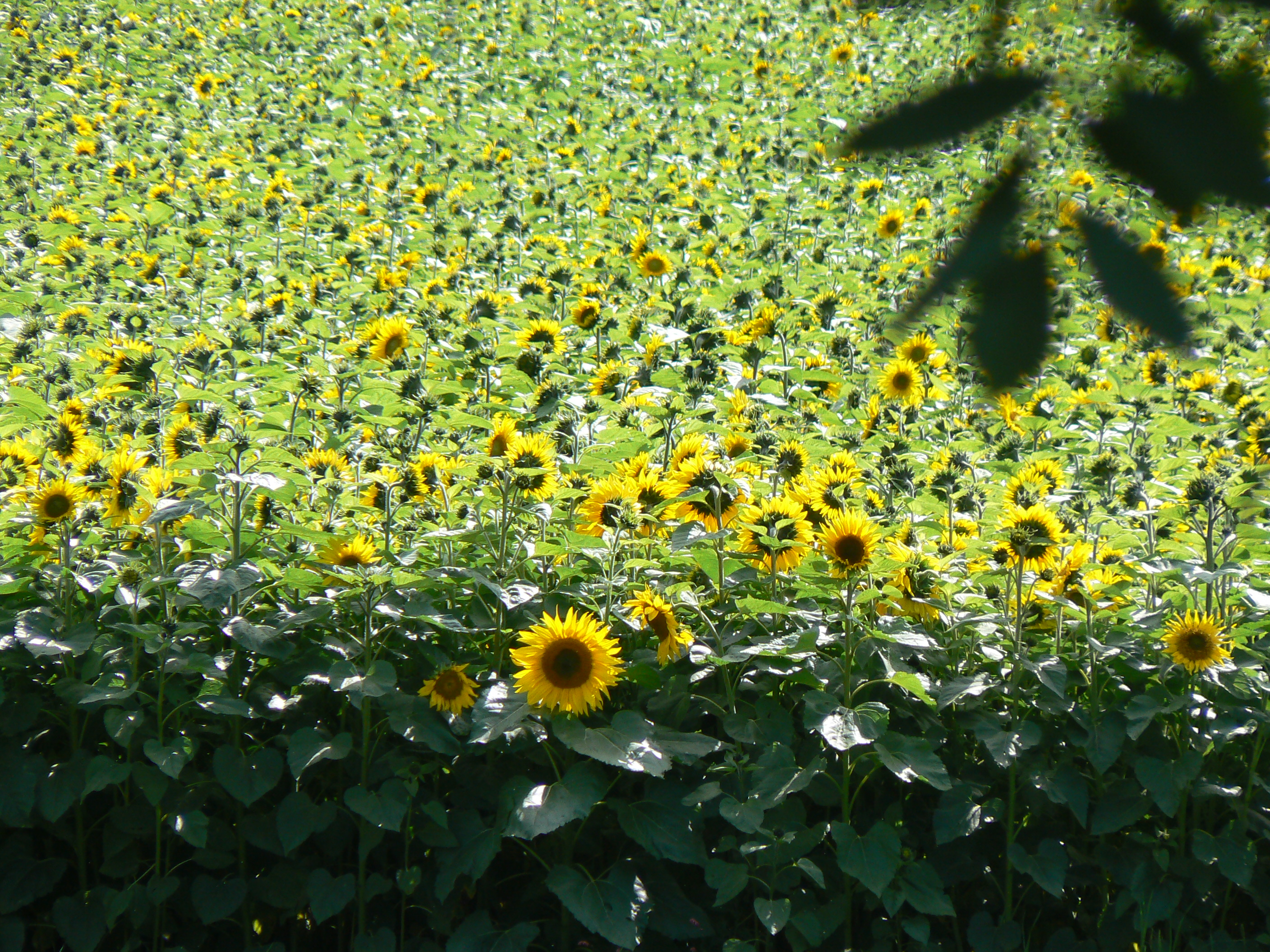
Sunflower season

Golden Sunflowers

Yearning for enlightenment

Turn to face the sky

The sunflowers have been washed out this year in some parts of the Cotswolds due to the dreadful wet summer.  At Snowshill most of the young plants died as their roots rotted in the rain=soaked earth.  But there are still some sunflowers around and I delight in them.  The ones in my garden have just come into bloom and they are magnificent.

In Cheltenham ladies College there is a beautiful stained glass window depicting sunflowers ~ in Victorian times they were considered a symbol of faith in God as the sunflowers appear to be turning their heads to face Him.

I painted sunflowers on my summerhouse doors as for me they signify the arrival of Autumn, my favourite season.