Hummingbird hawkmoth ~ Haiku

Hummingbird hawkmoth

In Autumn hedgerow

Hummingbird Hawkmoth hovers

Foreign visitor

Humming Bird Hawk Moth (Macroglossum stellatarum)

  • Wingspan 40 – 50 mm
  • Not a native to the UK.
  • Description: large proboscis and antenna, fan tailed thorax, orange hindwings and grey-brown fore-wings, marked with two black lateral stripes.
  • Takes its name from the habit of flitting between blooms collecting nectar with its long proboscis, with a flight pattern resembling that of the humming bird.
  • Although it has occasionally been known to overwinter in southern counties, this day flying moth is largely a migrant from the continent, flying any time from  spring to October.
  • A prolonged spell of warm summer weather and a southerly prevailing wind, can result in a fairly large presence of the humming hawk moths in the UK.

I have spotted these exotic visitors to England only twice; once in my garden, and once at the nursing home where my mum lived for the last 18 months of her life.

I read somewhere that the hummingbird hawkmoth is considered a good luck omen in malta and Italy.  Apparently a swarm of them was seen crossing the English Channel flying towards England on the day of the D Day landings in 1944.  My sighting was not such a good omen as I wrote in a previous post amended below!

“Just last year we sat in the garden on a sunny autumn Thursday, my mother and I.  We saw a hummingbird hawkmoth, a rare visitor to the UK.  Like a large bee crossed with a moth, it hovered over the flowers like a hummingbird.   We were at the The Owlpen, mum’s care home, enjoying the last warm days of the year.  Sitting with us were Diana, Phyllis, Agnes and a lovely Welsh lady who didn’t speak at all.   Agnes spotted a plane with four wings flying round and round in circles.  A training flight we thought or maybe a pleasure flight.  No-one else noticed it.  Diana was earnestly knitting hats for merchant seamen.  She has made hundreds over the years from wool that people bring her.  She says it keeps her mind alert and her hands busy.  She doesn’t need a pattern now, she knows the stitches so well, but she has to concentrate on counting the rows.   Phyllis is a large lady with sparkly eyes, very little hair, and sorely swollen legs.  She has difficulty walking and forgets where she has put her stick.  She loves to chat about her grandchildren and to hear about other people’s.  Agnes is mum’s best friend at the Owlpen.  She is a lovely cultured lady who reads the Times from cover to cover every day to ‘keep abreast of the news’. Agnes enjoys good conversation but gets cross with herself when she can’t remember the words she wants to say.

Mum’s eyes do not sparkle today.  They look milky and dull like an aged pet.  She is not joining in the conversation and does not appear to be enjoying the lovely day.  It worries me that she seems so quiet and a bit confused.  I fear she is fading in mind and body so I ask the nurse to make an appointment for the doctor to visit.

On Monday I arrive early to be there when the doctor comes.  He is young, gentle and kind and asks mum lots of questions.  She is overawed by him and doesn’t want to be a nuisance so she says she is fine.  I gently coax the symptoms out of her.  Didn’t you have a pain in your tummy mum?  “Yes, a little bit”.  Doesn’t it hurt your back when you are moved mum?  “Yes, a little bit”.  Haven’t you gone off your food because it makes you sick mum?  “Yes, a little bit”.  Bless her, it breaks my heart to see how dependent and deferential she has become.  Where is the proud, strong, creative lady?  What happened to the northern matriarch who watched over the whole extended family for the last sixty years?

The doctor says he won’t distress her further as she seems a bit down.  So I stay for the whole day.  We read the book of Old Gateshead and go down ‘memory lane’.  We have coffee and share a bit of cake.  At lunchtime I sit with her and she manages to eat a whole bowl of soup.  She is so animated now that we decide to have a girlie afternoon.  Fortunately I had brought my manicure set and some nail varnish.  I cut her nails and massage her hands with Wild Rose Beauty Balm from Neal’s Yard.  Then I buff the nails to smooth them and paint them Midnight Bronze.  By the time I leave she looks relaxed and radiant, and the room is filled with the smell of roses.  I have never felt closer to her and I will treasure the memory of that day forever.  My mum died before the week was out.

I would give the world to be able to see my mum today, take her for a drive, or make her a special lunch.”

http://youtu.be/4SI6Lu9LeBI

Kindness

  • One of my facebook contacts, Dr david hamilton,  posted this message and video today and it is so cheerful I thought I would pass it on:~

He said, “I spoke at the General Assembly of the World Kindness Movement yesterday and met some really inspiring people. Here’s a video made by one of them (Orly Wahba, who founded, ‘Life Vest Inside’). It’s one of the most inspiring videos I’ve ever seen….you never know how far a simple act of kindness travels. The ripple effect in action.

http://www.youtube.com/watch?v=nwAYpLVyeFU&feature=player_embedded

The Little Match Girl by Hans Christian Anderson

Most terribly cold it was; it snowed, and was nearly quite dark, and evening– the last evening of the year. In this cold and darkness there went along the street a poor little girl, bareheaded, and with naked feet. When she left home she had slippers on, it is true; but what was the good of that? They were very large slippers, which her mother had hitherto worn; so large were they; and the poor little thing lost them as she scuffled away across the street, because of two carriages that rolled by dreadfully fast.

One slipper was nowhere to be found; the other had been laid hold of by an urchin, and off he ran with it; he thought it would do capitally for a cradle when he some day or other should have children himself. So the little maiden walked on with her tiny naked feet, that were quite red and blue from cold. She carried a quantity of matches in an old apron, and she held a bundle of them in her hand. Nobody had bought anything of her the whole livelong day; no one had given her a single farthing.

She crept along trembling with cold and hunger–a very picture of sorrow, the poor little thing!

The flakes of snow covered her long fair hair, which fell in beautiful curls around her neck; but of that, of course, she never once now thought. From all the windows the candles were gleaming, and it smelt so deliciously of roast goose, for you know it was New Year’s Eve; yes, of that she thought.

In a corner formed by two houses, of which one advanced more than the other, she seated herself down and cowered together. Her little feet she had drawn close up to her, but she grew colder and colder, and to go home she did not venture, for she had not sold any matches and could not bring a farthing of money: from her father she would certainly get blows, and at home it was cold too, for above her she had only the roof, through which the wind whistled, even though the largest cracks were stopped up with straw and rags.

Her little hands were almost numbed with cold. Oh! a match might afford her a world of comfort, if she only dared take a single one out of the bundle, draw it against the wall, and warm her fingers by it. She drew one out. “Rischt!” how it blazed, how it burnt! It was a warm, bright flame, like a candle, as she held her hands over it: it was a wonderful light. It seemed really to the little maiden as though she were sitting before a large iron stove, with burnished brass feet and a brass ornament at top. The fire burned with such blessed influence; it warmed so delightfully. The little girl had already stretched out her feet to warm them too; but–the small flame went out, the stove vanished: she had only the remains of the burnt-out match in her hand.

She rubbed another against the wall: it burned brightly, and where the light fell on the wall, there the wall became transparent like a veil, so that she could see into the room. On the table was spread a snow-white tablecloth; upon it was a splendid porcelain service, and the roast goose was steaming famously with its stuffing of apple and dried plums. And what was still more capital to behold was, the goose hopped down from the dish, reeled about on the floor with knife and fork in its breast, till it came up to the poor little girl; when–the match went out and nothing but the thick, cold, damp wall was left behind. She lighted another match. Now there she was sitting under the most magnificent Christmas tree: it was still larger, and more decorated than the one which she had seen through the glass door in the rich merchant’s house.

Thousands of lights were burning on the green branches, and gaily-colored pictures, such as she had seen in the shop-windows, looked down upon her. The little maiden stretched out her hands towards them when–the match went out. The lights of the Christmas tree rose higher and higher, she saw them now as stars in heaven; one fell down and formed a long trail of fire.

“Someone is just dead!” said the little girl; for her old grandmother, the only person who had loved her, and who was now no more, had told her, that when a star falls, a soul ascends to God.

She drew another match against the wall: it was again light, and in the lustre there stood the old grandmother, so bright and radiant, so mild, and with such an expression of love.

“Grandmother!” cried the little one. “Oh, take me with you! You go away when the match burns out; you vanish like the warm stove, like the delicious roast goose, and like the magnificent Christmas tree!” And she rubbed the whole bundle of matches quickly against the wall, for she wanted to be quite sure of keeping her grandmother near her. And the matches gave such a brilliant light that it was brighter than at noon-day: never formerly had the grandmother been so beautiful and so tall. She took the little maiden, on her arm, and both flew in brightness and in joy so high, so very high, and then above was neither cold, nor hunger, nor anxiety–they were with God.

But in the corner, at the cold hour of dawn, sat the poor girl, with rosy cheeks and with a smiling mouth, leaning against the wall–frozen to death on the last evening of the old year. Stiff and stark sat the child there with her matches, of which one bundle had been burnt. “She wanted to warm herself,” people said. No one had the slightest suspicion of what beautiful things she had seen; no one even dreamed of the splendor in which, with her grandmother she had entered on the joys of a new year.

Glory Haiku

England’s Glory Match Box, made in Gloucester

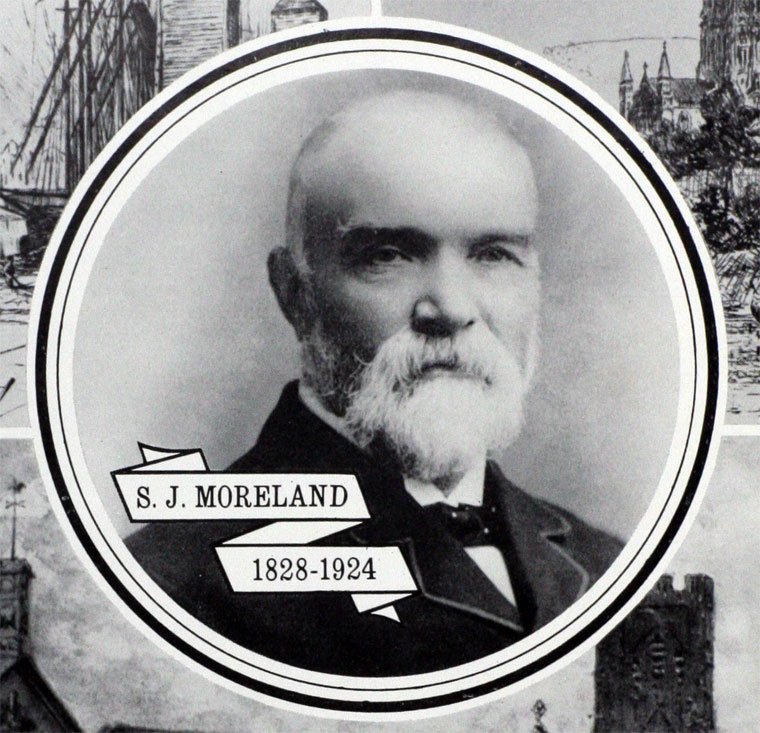
I was sitting at a WI meeting yesterday in 2 Brunswick Square which is now the offices of Gloucestershire Federation of the Women’s Institute, (GFWI).  The room we have our meetings in used to be the bedroom of Mrs Moreland whose family owned the match factory in Gloucester.  It so happens that their matches were called England’s Glory so off my mind went to today’s haiku heights  theme word, which is Glory!

Symbol on matchbox

‘HMS Devastation’

proud “England’s Glory”

HMS Devastation, symbol on England’s Glory matchbox

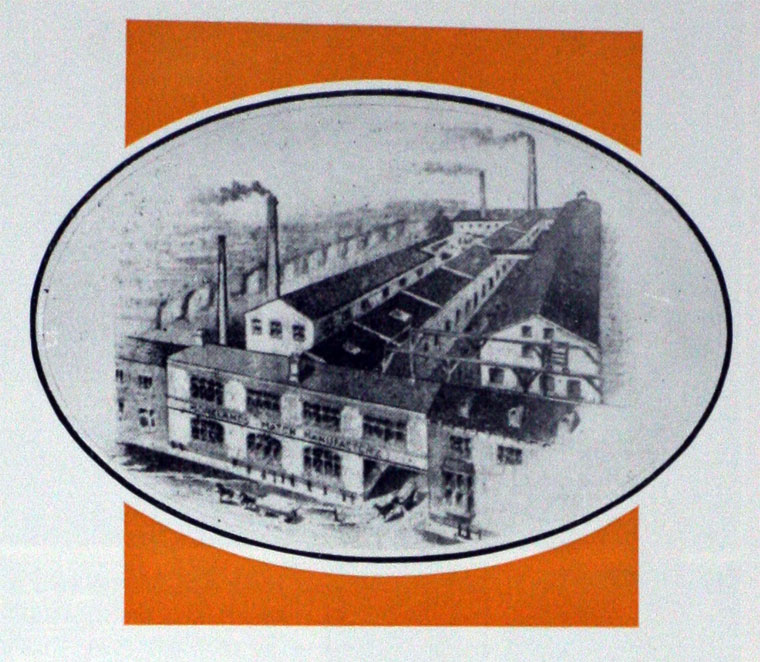
Moreland match factory

Moreland match factory

S J Moreland, factory owner

The factory was situated alongside the Gloucester to Sharpness canal which was a thriving transport system for the timber trade in the nineteenth and twentieth centuries.  All sorts of timber products were made there before matchsticks became their sole product.  Originally the matches were handmade.  This was a very dangerous job as white phosphorous was used in the tips.  Conditions were so bad in London factories that the matchstick girls went on strike in 1888.  You may have read Hans Christian Anderson’s beautiful story of The Little Match Girl.  It is so sad!  But, eventually conditions improved and a safer form of phosphorous was used in the making of safety matches.  Before the first world war there were 650 people employed in Gloucester’s Match factory. but by 1911 a continuous automatic matchmaking machine was installed.  Many of the workers at the factory went off to war in 1914 never to return, and due to the introduction of the machinery the number of workers dwindled.
When I first came to Gloucestershire in 1967 the factory was still operating but had been taken over by Bryant and May.  They stopped making matches there and the factory closed in 1975.  England’s Glory matches are still made, but they are made in Sweden now!  There is a trading estate on the site of Moreland’s match factory now but there are still lots of reminders of the times gone by.

England’s Glory matchboxes were great fun.  They had jokes or wise words on the backs.  My husband remembers some.

One said, ” Trainee electrician – do they have to do Ohm work?”

Another said, ” A pessimist is someone who complains of the noise when opportunity knocks!”

Timber is still an important industry in Gloucester and the Sharpness Canal is still a thriving waterway.

Now where are my notes from that meeting?

Inspired by September Challenge day 21 at Haiku Heights

Island and Lights haiku

Oops I missed a day yesterday in the haiku Heights challenge as I had a dreadful migraine and could not face the computer.  However all well today so am sneaking both in together!

Island Haiku

In Ladoga Sea

Russia’s rejected lived, on

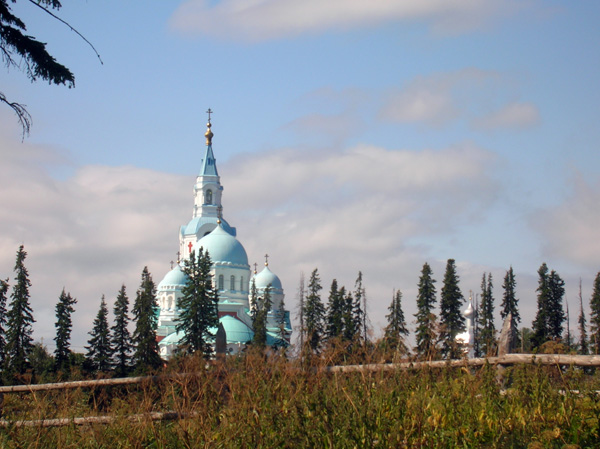
Old Valaam Island

Valaam Monastery

Blind residents on the island

The new Valaam Monastery

Across Lake Ladoga

I visited Russian Karelia and Finland in 2001 on a tour of Monasteries and Orthodox Churches when I was studying Icons.  It was a totally wonderul trip and I saw some magnificent sights.  We stayed at the new Valaam monastery where there is a brilliant iconographer.  I learned a lot from him.  We also visited the Old Valaam Monastery which is on an island in lake Ladoga.  In 2001 the island was a sad and menacing place.  The monastery and cathedral were badly damage; with lots of deliberate damage from its troubled past and natural damage from the severe weather.  In times past Russia’s disabled soldiers and rejected people, many suffering awful physical and mental problems were sent to this island.  They were virtually abandoned there, isolated from the rest of the world and had to fend for themselves as best they could.   They had no love for the buildings or the faith of the few monks left there and lived in abject poverty and squalor.

I am thrilled to say that the monastic community is now thriving and the buildings are restored.  The website http://valaam.ru is just wonderful and will tell you all about the history of this special ancient place.  There is also a wonderful picture gallery so do look at it if you have time.

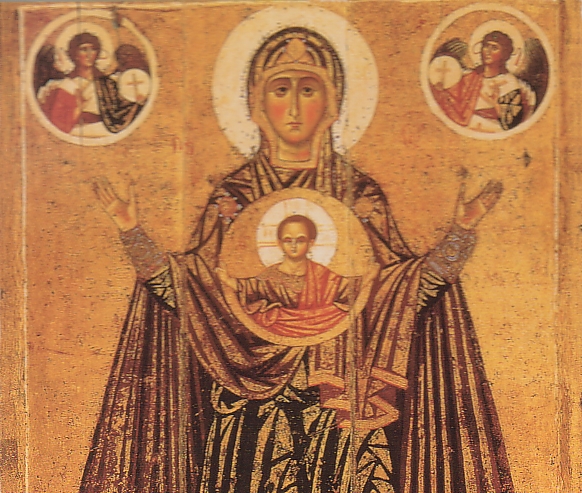
As I mentioned I am very interested in Icons and I loved to travel and take photographs or collect pictures of old icons.  My favourites are the Marian or Theotokos (Bearer of God) ones, and I have a collection from all over the world.  It fascinates me that every culture has their own take on the Mother of God and I have black ones, Chinese ones, and even an Indian squaw one from a reservation in NW Canada.  There seems to be a deep need in every culture to revere a mother figure so that is what my next Haiku reflects:~

Lights haiku

She lights up my life

Motherhood epitomised,

My icon, my rock.

Haiku Heights prompt ~ Starve

Girls chat on smart phones

As babies sit in puschairs

Starved of attention.

I notice these days as I wander about that everyone seems to be on the phone chatting.  Of course smart phones are wonderful in emergencies or for generally keeping in touch when  away from home.  But the one time I get really upset is when I see a young mum or dad with a precious baby in a pram, or a toddler pottering alongside them, being IGNORED!  This time before children start school is so special and it will never come back.  I wish I could say to the parents or carers, “Please put the phone away and talk to the child!”   I would say that conversation is one of the most basic needs that every child has a right to.  It stimulates interest in their surroundings; develops their relationships; makes them feel safe, loved and cared for; promotes curiosity; and opens the way to learning.  Tone of voice used, making eye contact and paying attention to the child are really important factors in encouraging his or her self confidence and self esteem.  Conversation also increases the child’s vocabulary and their speaking and listening skills, which are vital first steps towards learning.

So please do yourself and your child a favour “TURN OFF YOUR PHONE & TALK TO YOUR CHILD!”

Image

Image

Image

Image

Meadow Haiku

Through Cox’s Meadow

past ancient mills, farms and fairs,

The River Chelt flowed.

Many years ago, when my children were young, I decided to follow the River Chelt from its source near Dowdeswell to its mouth at the River Severn near Wainlodes.  I took my long suffering children with me on what I considered to be a great adventure ~ and very educational!  They had differing opinions, but as it was a good summer and they were too young to argue,  they came along anyway.

The history of places has always fascinated me; how things came to be the way they are; and how they were before.  The changes just in my lifetime are breathtaking, but the further back you go the more interesting it gets.  Features like buildings, placenames and rivers are great starting points for research I find.

Now the River Chelt is only small but it has always been very unpredictable.  There are so many springs up in the Cotswolds that after a heavy rainfall there can be flash flooding without any warning.  The river used to run from the high ground down through the meadow named after the farmer, Mr Cox, then straight down the High Street in Cheltenham.  People had to use stepping stones to cross.  That all changed when the mill owner, a Mr Barrett, diverted the river in order to power his corn mill in the centre of town.  The course of the river has been tweaked several times over the years and various culverts have been put in, but it still floods occasionally.  The worst floods I can remember were in 2007.  On July 20th the heavens opened and the rivers burst their banks all over Gloucestershire.  The power station was affected and the water supply was cut off.  For weeks we had bottled water delivered to central depots where residents went to collect it.  Homes, pubs, abbeys, churches and schools were flooded; and traffic on some roads was restricted to boats!

Some years before that the local council in their wisdom did major work on Cox’s meadow.  The meadow had been a wonderful community facility and a natural floodplain for centuries.  Annual fairs were held there and community games, charity events and circuses.  But it was transformed into a barren wasteland and designated a “balancing pond” or “overflow reservoir”.  There is nothing in it now apart from a path which the dog walkers enjoy, and a scultpture over the drain cover.  And, sadly when the floods came, it was worse than useless.  Whereas previously the river overflowed freely into the meadow, now it was channelled along a route behind houses resulting in those houses being flooded!

Goodness, these Haiku prompts really do stir up the memories ~ all that from the word ‘meadow’!

80_RChelt_M5_3_lg 

This slideshow requires JavaScript.

English: A frosty morning in Cox's Meadow Part...

English: A frosty morning in Cox’s Meadow Part of the Cheltenham flood defence system, Cox’s meadow was remodelled in 2005/2006 to store River Chelt flood water. This photograph was taken at the start of several days when the temperature rarely rose above freezing. (Photo credit: Wikipedia)

English: Lilley Brook near Cox's Meadow The Li...

English: Lilley Brook near Cox’s Meadow The Lilley Brook meanders through trees at the edge of Cox’s Meadow just before it joins the River Chelt. (Photo credit: Wikipedia)

English: The river Chelt meets the river Sever...

Super Sweet Blo…

super-sweet-blogging-award

Super Sweet Blogging Award.

I have been nominated for a super sweet blogging award by Jade Jarvis.  I am very grateful, especially as Jade has introduced me to some amazing new blogs that I had not come across before.

Rules to accept this award:

First rule:

  • Thank the super sweet blogger who made the nomination.

Thank you inspiremylife  for nominating me for this blog award. It is a great boost to my confidence.

If you enjoy reading beautiful and inspired writing, following her blog is a must!

Second rule:

  • Nominate a baker’s dozen of other bloggers.  I have an eclectic mix of sites that I follow and these are just a few that I love.

My nominations are:

  • Answer these five questions below:
  1. Cookie or cake? lemon drizzle cake please!
  2. Chocolate or Vanilla Ice cream? Got to be Madagascan Vanilla, preferably soft and whippy with a chocolate flake in! Yummy.
  3. What is your favorite sweet treat? At the moment Weight Watchers caramel wafers as I am on a diet!
  4. When do you crave sweet things the most? Middle of the afternoon when I take a mini break from all the rushing about.
  5. If you had a sweet nickname, what would it be? Divine White Chocolate.

Grass ~ Haiku

Just read in the Guardian newspaper that two more US troops have been killed in Afghanistan and two more UK soldiers from 3rd Battalion Yorkshire Regiment have been killed at a Helmand  checkpoint by an Afghan policeman.   When will the killing ever stop?

Had to change todays Haiku on the theme of “Grass” as this news makes me so sad:~

memorial garden

Grassed garden of grief

A moving memorial

Heroes lie honoured.

National Memorial Arboretum, Alrewas, UK

National Memorial Arboretum, Alrewas, Stafford...

National Memorial Arboretum, Alrewas, Staffordshire, UK (Photo credit: johnmuk)

related articles

Creation ~ haiku

creation illuminated manuscript from St John's bible

Illumination

Meditation on the word

Sacred creation

This haiku was inspired by the September Challenge on haiku heights ~ today’s word is Creation.

One of the most beautiful creations I have seen in recent years is an exquisite handwritten St John’s Bible.  It is the fulfilment of a lifetime’s ambition for the artist and calligrapher, Donald Jackson.  Working with a Benedictine community  in Minnesota, USA and with scholars in Wales, UK, he has created over many years “a work for eternity”.  Every word is written by hand and every illustration is a modern meditation on the text.  Do click on the link ~ you will be amazed by the beauty of the work.

I saw the first edition when it was displayed at St Martin in the Fields Church in London and was lucky enough to buy prints and take photographs.  I believe it is on display in USA now and it is well worth seeing.

I could have written lots of haiku on the “Creation” theme ~

Created with care

A harvest in harmony

Floral creation

A harvest time floral creation in Hereford cathedral

Illumination

Sunlight reveals its beauty

Creation in glass

Creation window at Cirencester Agricultural College

tained Glass window in the chapel at Cirencester Agricultural College

Stained glass depiction of Jesus in Gloucester Cathedral

Illumination!

and the most important one ~ my soon to be born grandchild!

Life is unfolding

In the comfort of the womb

A new creation

Haiku ~ Revelation

Olympic revelation,

Inspiring and excelling,

Heroic athletes.

The Olympic pennant we made at WI to present to an Olympic AthleteCheltenham_coat_of_arms

Benhall Women’s Institute was formed in October 2009 on the outskirts of Cheltenham Spa in the Cotswolds.

Our Olympic Pennant displays 5 cameos representing local features:

  •  Pittville Pump Room ~ a Regency Spa building officially opened in 1830
  •  Cheltenham Gold Cup, which is a prestigious award presented annually at the National Hunt Race meeting at Cheltenham racecourse
  •  The Devil’s Chimney at Leckhampton ~ a rocky pinnacle which is a prominent local landmark on the Cotswold Way
  •  The “Doughnut”, an iconic building in Benhall, home of GCHQ ~ the Government Communications Headquarters and part of our WI logo
  •  The Olympic Torch is at the centre of our pennant.  The slim UK 2012 design is very distinctive.  It will be coming through Cheltenham on its way from lands End to London on Wednesday 23rd May 2012.

The pennant’s background depicts the honey colour of Cotswold stone and is bound with the Olympic colours of blue, black, red, yellow and green.

On the back of the pennant is this message:~

“The members of Benhall WI would like to congratulate you for participating in the 2012 Olympics.  We hope you enjoy your visit to London 2012.  We present this pennant as a souvenir”.

The pennant was designed and created by a group of Benhall WI members

Haiku inspired by September Challenge at Haiku Heights.


Blessed by the birds

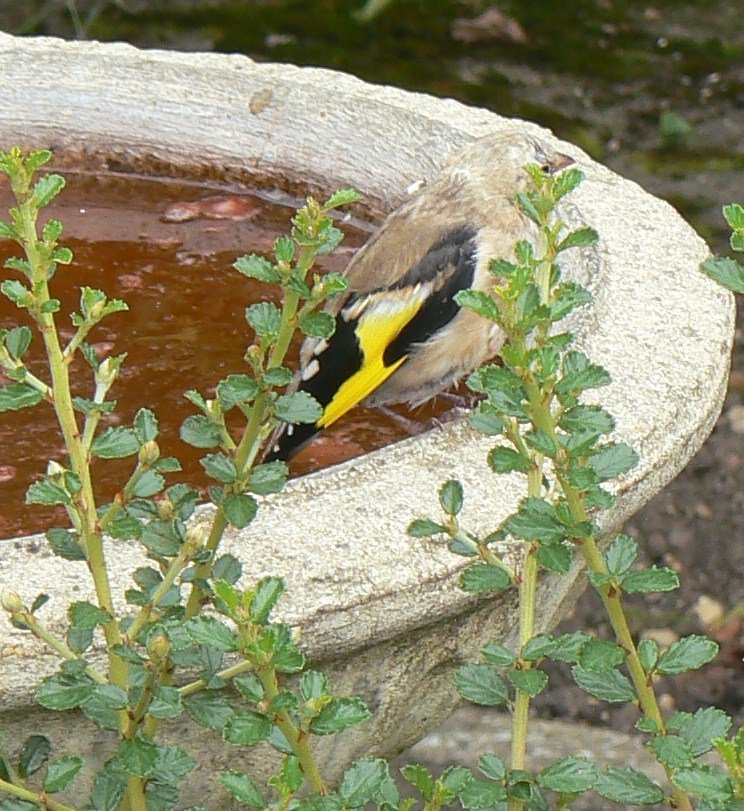
I am sitting by the open french window reading my favourite blogs when a tiny little wren pops in through the door.  This is amazing as yesterday another little bird flew in throught the same door.  I was sitting reading and saw a bright yellow streak flash by my newspaper.  It was a young female goldfinch.  It settled down beside my chair totally oblivious to my little dog, Dayna, sitting beside me.  I was so worried that Dayna might hurt the bird that I put don my hand to chase it out.  The little goldfinch grasped my fingers and let me carry it out into the garden.  It showed no signs of being willing to fly off so I tried putting it on the bird table with some food ~ but there it sat staring at me.  Popping back onto my fingers I moved it to the bird bath thinking some cold water might jolt it into flying away.  But no, it seemed quite happy to sit there and watch me.  At last I got my camera to take photographs of it as it posed.  It was a big burly pigeon who eventually frightened it off.  I was thrilled to see it soar into a nearby tree.

Was it newly fledged and unaware of danger?  Was it disorientated by flying indoors?  I don’t know but I will always be thrilled that for a few minutes I was able to get so close to such a beautiful creature.

goldfinch on my hand 2

goldfinch on my hand

Goldfinch on the bird table

goldfinch on the bird bath