Small Stones 5 ~ Stanley’s first smile

I can’t believe how quickly my grandson, Stanley is developing. he is 5 weeks old today and he is already smiling! I went for a long walk with him, Jenny his mummy and my little dog, Dayna today. It was wonderful as the weather is dry and mild again. The fields all around Gloucestershire are still waterlogged though with lots of flooding near the rivers. But for me there was only one thing that mattered today ~ Stanley’s smile.

No gold nor jewels
Could be as precious to me
As Stanley’s first smile

Pain

I am moved and inspired by haiku heights word prompt this week, which is ‘Pain’.

On Saturday  my daughter went through the pain of childbirth and produced a wonderful son, Stanley Jack.  That pain was worth going through.

A cold winter’s day

An arrow of agony

A baby is born

On Sunday my husband bent down to pick up a basket of logs for the stove and his back gave way.  That pain was definitely not worth going through!  By Thursday my husband’s pain was so bad he was kept in hospital where he still is.  Although he is very brave it must be a pain to have so many pills, injections, procedures and tests when he is already on dialysis 3 times a week and chemotherapy alternate days for an existing condition!  He has a  very high pain threshold but this back has beaten even him.

Advancing in age

Every movement is torture

Unbearable pain

On Monday I saw a homeless person sitting in a doorway in the bitter cold and wet.  I feel for him in his physical discomfort but also in the pain of alienation from the community and rejection by society that he must feel.

Hopeless and homeless

Shivering in the shadows

Harbouring his hurts

Looking round the town decorated for Christmas, I am struck by the contrast between the glitzy shop windows, the festive decorations, the singing of the choirs in the streets ~ and the horror of homeless young people, male and female, huddled in doorways.

Two thousand years on

Young mums still search for shelter

Crisis at Christmas

On Tuesday I was reminded of a child I once took to Lourdes.  She was 10 years old and gravely ill.  She needed a heart and lung transplant, which she eventually received.  sadly she died before the year was out and her funeral took place on Christmas Eve.  I will never forget her bravery.  She wrote her own funeral mass sheet and drew pictures of rabbits on it.  She chose the music from Watership Down to be played at the service.

When treatment has failed

And the torment is over

Bright eyes close in pain.

Today sitting at home alone I am reflecting on the pain of having family scattered all over the world.  But how lucky I am to have email, facebook, mobile phone and text messaging.  My family are instantly updated on my husband’s condition and they instantly respond with supportive calls and texts.

Tender the ties that

bind families together

Hearts bleed when they break

It was not so easy to stay in touch in the 19th century.  I have been researching my family tree and discovered a tragic tale about my great grandfather, William Patrick Roche, who suffered from the pain of losing his birth family for the whole of his life.  According to an old letter written by his granddaughter, my Aunty Nancy, William was born in Ireland in County Cork in 1840. His mother and father had 8 children, but after the last baby his mother died. The Irish Potato Famine was in full swing so William’s father could not manage all of the children on his own so he remarried.    His new wife did not get on with William. So a sea captain friend was paid 40 guinees to take William Patrick to sea and train him. William was 12 years old.  The rest of the family went on one of the ‘Famine Ships’ which sailed from Cobh to America.

Bound for a new life

But crammed into coffin ships

No comfort nor hope.

I searched the records at the National Archives in London and traced the original document which William’s father, James Roche signed.  The date was 2 February 1855.  The ship was HMS Conway and it was a Royal Navy flagship.  The commanding officer was John Fulford.  William’s birthdate was given as 17 March 1839!  Whether this was a true birthdate to make him look old enough, and because it was St Patrick’s Day, I don’t know but it makes him 16 when he signed up not 12 as the family history has him!  He was contracted as “Boy 2nd Class” to serve in the Royal navy for 10 years from his 18th birthday plus the time before he was 18 so that means 12 years, or up to 1867.  I believe I have traced him on the 1861 census serving on a ship called “Victor Emmanuel” in the Meditterranean.  I have not managed to trace him on the 1871 census so it may be that he was on a merchant vessel, sailing overseas on tea clippers at this time.

After William went to sea in 1855 he never saw his family again because their father and new wife emigrated to USA with the other children.

Fleeing the famine

Fragmented Families sailed

To an Isle of Tears

William eventually became 1st mate on Tea Clippers that sailed between China and UK. One day he sailed into Glasgow and decided to take a trip to the highlands of Scotland. Near Inverness he saw a young girl sitting on a farm gate. her hair was so long she could sit on it. He thought she was beautiful and decided there and then that he would come back when she was older and marry her. Jessie Miller (born Munro) was her name. Her mother had died when she was 9 years old so she and her sister had gone to live with an aunt who had a farm for them to work on. 3 years later William Patrick came back for Jessie and they married and went to live in Sunderland. He became an optician and Jessie had 8 children. One of them was Lizzie Roche who was my grandmother. Sadly Jessie died in 1907 when she was just 50. William went on to reach the age off 76 dying in the Newcastle Royal Infirmary in 1916. He often travelled to Dublin to try and trace where his family had gone. He also put adverts in American newspapers.  But he never did find any of them again. Today with the internet I am hoping to continue the search on his behalf.

“O the tender ties

Close twisted with the fibres of the heart,

Which broken break them, and drain off the soul

Of human joy; and make it pain to live.” 

by Young

Storm Haiku

On far distant hills

Dark storm clouds are gathering

Threatening thunder.

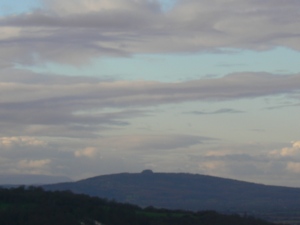
May Hill seen from Prinknash Abbey grounds today

May Hill seen from Prinknash Abbey grounds today

Today’s haiku prompt at haiku heights is ‘Storm’.  It brought to mind the time when I worked at St Peter’s Grange, Prinknash Abbey, which I have described in earlier posts.  The view from Prinknash is amazing as the Abbey is set high in the hills near Cranham and Painswick.  Although there are wonderful woods behind the Abbey, the front has a clear view over the vale towards Gloucester City with its beautiful Cathedral.  One day I will write about my time working at the King’s School in Gloucester (founded by Henry V111) while Harry Potter was being filmed in the Cathedral.  However, today I will stick to the point of my blog!  On a clear day there is a wonderful view from Prinknash, of May Hill, with its clump of trees on the summit.  They were planted in celebration of Queen Victoria’s Diamond Jubilee in 1897 and are visible for miles around.  Beyond that there are the Brecon Beacons and the Black Mountains.

Having observed that view on a daily basis, the monks were very good at forecasting the weather merely from looking at May Hill.  If the hill looked a misty blue they knew there would be rain at Prinknash later.  If the crown of trees was lost in cloud there would be a storm.

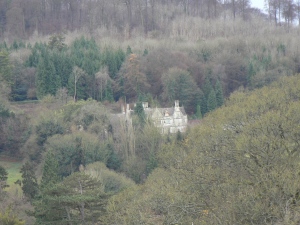
Interestingly, I discovered while working at St Peter’s Grange that it was built in this position, sheltered by the hills and trees, as protection from the plague.  There is documentary evidence, as well as internal evidence in the Grange, that some parts were built in the 14th century.  In 1339 the Bishop of Worcester granted a licence “For the Abbot of Gloucester and his fellow monks to celebrate Mass or to have it celebrated by a suitable chaplain in an oratory within their manor of Princkenasch.”  So we know that there was a chapel on the site then.  By the time the Grange was built the Black Death had already swept through England and people thought it was carried on the wind.  Wealthy people therefore built their homes on the side of a hill sheltered from the wind in the hope that this would protect them.

St Peter's Grange at Prinknash Abbey on the side of the hill, sheltered by trees

St Peter’s Grange at Prinknash Abbey on the side of the hill, sheltered by trees

One of my jobs at the Abbey was to polish the Parker room.  This room was named after William Parker who was Master of the Works in the Abbey before he was elected Abbot in 1515.  He was responsible for many improvements to the building.  In July 1535 Abbot Parker entertained King Henry V111 and Anne Boleyn for a week.  They used St Peter’s Grange as a hunting Lodge as there were many deer around – as there are today nearby.  One fascinating snippet that appeals to me is that Abbot Parker had windows put in positions from which he could watch the monks about their work.  He used to spy on them.  I believe, contrary to what Wikipedia says, that this is where the phrase “Nosey Parker” comes from.

St. Peter's Grange, Prinknash

St. Peter’s Grange, Prinknash (Photo credit: Wikipedia)

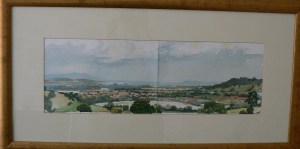
At Prinknash the monks have long been known for their art and craft work.  They made beautiful pottery for many years from the local clay.  They still make Incense that is exported all over the world.  One of the monks who has sadly passed away created a wonderful painting for the millennium which was displayed in the Abbey Church.  he also painted and created stained glass.  Many of his pictures were made into lovely cards which were sold in the Abbey Shop.  Today there is a gallery displaying the artwork of a prolific painter monk, Fr Stephen Horton.  I was fortunate enough to buy some of his original paintings while I worked at the Grange.  They are my pride and joy.  The one I love especially is a watercolour of the Vale of Gloucester as seen from the roof of the Abbey.   When inspiration struck him for this painting he had no suitably sized paper on which to paint the panorama.  Being a monk and used to making use of whatever is available, he used two pieces of A4 paper side by side.  This painting speaks to me of so much more than the view.  It is creativity at its most basic I feel.  The painting had to be painted there and then using whatever was to hand.  The muse could not wait for a trip to the art suppliers!  It also speaks to me of the way of life of the monks.  They waste nothing and ask for nothing.  They live such a simple life yet produce beauty all around them from whatever is there to be used.

Painting by Fr Stephen Horton OSB

Painting by Fr Stephen Horton OSB

One of the saddest things that happened at Prinknash was the theft of  a statue of Our Lady of Prinknash in 2002.  There are many statues at Prinknash but this one was extremely beautiful and so special.  It was about 20 inches tall, carved of Flemish Oak, and had belonged to St Thomas More. After the Reformation, it was taken abroad but returned in 1925 when the Benedictine monks founded their new abbey at Prinknash.  Of course this means it was hundreds of years old and priceless in the truest sense.   The Abbey Church was always open for visitors and those who wished to pray, and the statue used to stand on a shelf to the left side of the church.  One day it just disappeared while the monks were at tea, stolen to order presumably as nothing else was taken.  It devastated the community in the abbey and the wider community, including myself, who attended mass there.  I almost believe it took the heart out of some of the monks and the community itself.  I have a picture of that statue and I often think that one day it will return to its rightful home.  Maybe when the current unrightful owner dies he will leave it in his will to be returned to Prinknash ~ after all he can’t take it with him!

  • Prayer (heavenhappens.wordpress.com)

Trees Haiku

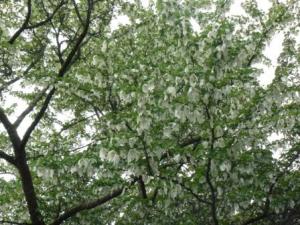
A Handkerchief tree at Minterne Gardens in Dorset

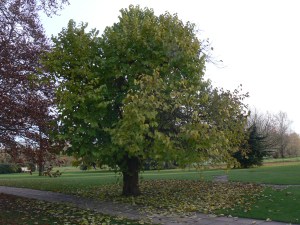
I am fascinated by trees, not only for their beauty, but for the stories they could tell.  Some trees have lived through amazing times and been part of the lives of such interesting people.  If only they could talk!

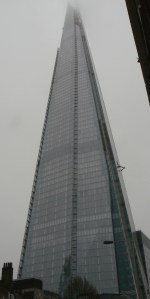
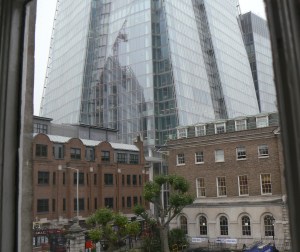
This week I went to the city with a couple of friends. We visited two wonderful museums and wandered along the streets of London where the trees are at their glorious Autumn best.  We strolled along the Embankment beside the River Thames and marvelled at the changing skyline.  I was struck by the juxtaposition of old buildings and new, especially the magnificent Shard which is so close to the old St Thomas’s.  It is a breathtaking sight and a brilliant feat of engineering.  Yet even in front of this awesome glass building my eyes were drawn to a row of trees nearby.

Consumed by the clouds

Engineered to perfection

A giant in glass

The Shard with trees in the foreground

The enormous Shard disappearing into the clouds

Sheer face of the Shard

Glass monument to mammon

Shatters the skyline

View of the Shard from St Thomas’s

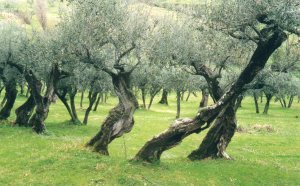
One amazing tree I have seen is an ancient olive tree at the site of St Francis of Assissi’s remote hermitage, the Eremo delle Carceri on Mount Subasio.   Olive trees are the longest living trees.  Indeed in good conditions some live to a thousand years old.  This tree is one of them.  It is protected and propped up by poles.  I find it breathtaking to think that St Francis actually touched this tree, walked by the stream and slept in the cave, all of which can still be seen.  I found it very moving when I visited in 2000 and I have to admit to picking some leaves from the tree.  I have pressed them and kept them in my travel journal from Rome and Assissi.  St Francis lived a simple life and slept in the cave on a bed of stone and a pillow of wood.  Some of his followers lived there as hermits too in prayer and meditation.  The warren of caves still exists in a clearing with a stream and lots of trees.

The ancient Olive Tree that St Francis would have seen

Birds stopped to listen

As the humble hermit preached

At one with the trees.

Leaves from the Olive Tree on Mount Subasio

An early picture of St Francis of Assissi

St Francis’s cell in the cave at Mount Subasio

Olive Trees in Italy

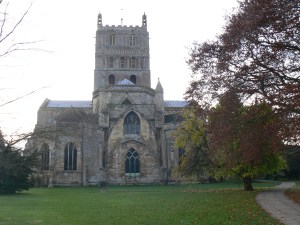
Another tree that inspires me is the Mulberry tree which was in the garden of St Thomas More’s home when he was Lord Chancellor in the time of King Henry V111.  Sir Thomas More, as he was then, bought some land in Chelsea and Kensington in 1524 in order to build his Great House.  Sadly his house is long gone, but the Mulberry tree he planted is still there.  On the site today is Allen Hall, the Seminary of the Roman Catholic Archdiocese of Westminster.  Visitors can visit the seminary by appointment and walk to the secluded walled garden where Thomas More’s Mulberry Tree still stands.  Outside and nearby is a beautiful statue of St Thomas More in a garden facing the river Thames.  In the grounds of Tewkesbury Abbey near where I live there is a Mulberry tree grown from a seed from St Thomas More’s tree.  I often visit this tree and sometimes pick the delicious fruit.

Mulberry Tree at Tewkesbury Abbey

Tewkesbury Abbey and Trees

Portrait of St Thomas More

He planted his tree

And dreamed of Utopia

In turbulent times

The Yew trees in the beautiful village of Painswick in the Cotswolds are also very interesting.  There are 99 of them in the grounds of St Mary’s Church and many of them are hundreds of years old.   They lived through the English Civil War (1642-1645).  There is evidence of Royalist cannonballs high up on the walls of the church to this day.  At times people have tried to establish more Yew Trees in the churchyard but a hundredth will never grow.  It seems as if 99 is the maximum for some reason.  There is an old story that if a hundredth tree ever grows, the devil would pull it out.  It is one of our old Cotswold mysteries!

Last but by no means least, is a historic small-leaved Lime tree at Westonbirt which is unbelievably ancient.  It is reputedly 2000 years old!  It is so big that it seems as if it is many trees.  However, it is actually a clump of around 60 trees all growing from one original.  This was the result of coppicing which was a way of managing woodland for fuel established in Anglo-Saxon times.  Over hundreds of years of repeated cutting, the stump gradually spreads outwards in a ring until it reaches enormous proportions.  My photo does not do it justice!

Ancient Lime tree at Westonbirt

Remembrance Sunday

Poppy Day in UK

Remembrance Day falls on the same day as Armistice Day this year, Sunday 11th November.  This will not happen again until 2018.  Somehow as I get older it seems more special.  I listened to the BBC Radio 4 Remembrance Service at the Cenotaph in London today.  It was very moving.  There were 2 veterans of the Battle of El Alamein speaking.  They were only 21 in 1942 when the battle occurred.  It is recognised as a turning point in the war.   After this victory at El Alamein, Winston Churchill would write in “The Hinge of Fate”, his famous verdict: “Before Alamein we never had a victory. After Alamein, we never had a defeat.”

Field Marshal Montgomery and Rommel

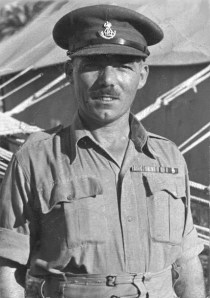
Grandad
With Durham Light Infantry in the Western Desert

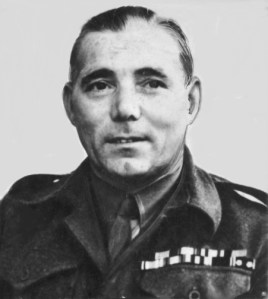
My grandfather, Frederick Charles McCluskey was in the Durham Light Infantry with the Eighth Army and fought in this battle.  He was one of the lucky ones, he survived.   But he had a tough time in this war and it left him with Malaria, which recurred throughout his life, and dreadful foot problems from his long trek through the desert.  He was part of the long march through the Western desert and told me that he wore out the soles of his shoes, then the soles of his feet on this trek.  His friends wrote an obituary in the local newspaper after he died in 1988:-

“Tyneside war hero, Major Frederick Charles McCluskey who played a leading role in a legendary desert trek to freedom, has died at the age of 88.  In June 1942, he and 200 men from The Durham Light Infantry’s 9th Battalion evaded fierce enemy fire to escape after being surrounded by a division of Rommel’s desert army at Gazzala, North Africa.  They travelled 350 gruelling miles to safety.   Major McCluskey, who lived in Newcastle fought in both world wars.”

Grandad
Major F C McCluskey

I also found out that my grandfather who was born in 1900 enlisted in the army for the First World War.  He was just 14 years 8 months when he joined as a Bugler with the Yorkshire Regiment.  He served right through the First World War.  After the war he joined the Durham Light Infantry and was with them throughout his career, ending it as a Major with a commendation for the MBE.  He only left the army in 1952 when my much loved grandmother, his wife, was dying of stomach cancer.

Grandad as a young bugler in the First World War

In 1952 he bought a general store in Newcastle where I spent many happy childhood hours sitting by the fire in the back of the shop, or helping myself to sweeties.

I am very proud of my granddad and it is lovely to remember him today and all he did for our country.

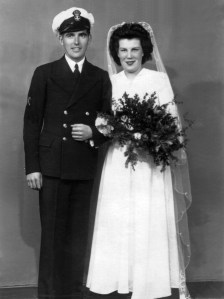
I also remember my dad who was in the Royal Navy.  My mum and he were married during the war in 1945

Mum and Dad’s Wedding 1945

Silence

My blog today is inspired by Haiku Heights prompt word for this week which is ‘Silence’

For many years I have had a quote on my shelf and I have no idea who said it but it brings me great comfort . . .

Let thy soul walk softly in thee

As a saint in Heaven unshod

For to be alone with silence

Is to be alone with God

My son used to say the most peaceful places are under the sea or on top of a mountain.  He used to dive and he still climbs,  so the first Haiku is for him . . .

Seeking solitude

In an underwater world

Stilled by silence

Any new mother will tell you that the most peaceful time is when her child is sleeping peacefully.  As a grandmother this is still true . . .

Nestled in shadows,

In silence I watch her sleep,

An angel at rest

Sometimes, when there are no words that can help, only ‘time out’ will soothe the broken heart or the troubled mind . . .

Silence speaks softly

Solicitous to sorrow

Soothing suffering

Having travelled to Lourdes many times, I am constantly amazed that there can be 40,000 emotional people gathered in the underground basilica for a service but a gentle “Shhh!” will bring total silence . . .

Soft shushed to silence

In sickness and suffering

They stream into Lourdes

2am in the grotto at lourdes, a time for silent prayer

Studying Icons

In silent contemplation

Wisdom is revealed


Prayer

This post is inspired by the Carpe Diem Haiku prompt for today, “Prayer”

When I first retired from my work in education, I went to work as a housekeeper at Prinknash Abbey This was a labour of love and I learned a great deal about the prayerful life from the Benedictine monks who live and work there.  I learned from Fr Alphedge that every single thing you do can be a prayer if it is done with reverence and joy.

Fr Alphedge at work and prayer

Peaceful and prayerful

monks, masters of mindfulness

sacramental lives

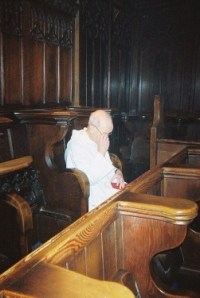
Fr Adhelm in the chapel at prinknash

Meaningful moments

Of quiet contemplation

simple and sincere.

Incense is made at Prinknash

Alone with your thoughts

humbly open your heart, and

Let healing begin

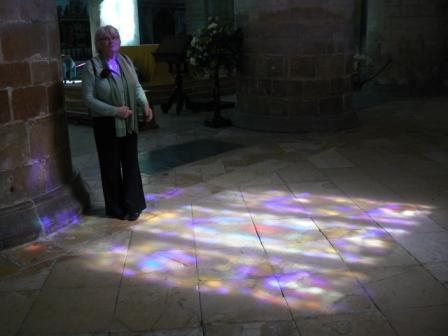
Stained glass window from Gloucester cathedral

Drowning in despair

from the core of your being

you cry to the Lord

Peace dove made of tiles

Simple and sincere

the sorrowful supplicant

speaks softly to God

Pieta from polish church in Torun

Fragile, the faithful

cry out in consternation.

Consolation comes.

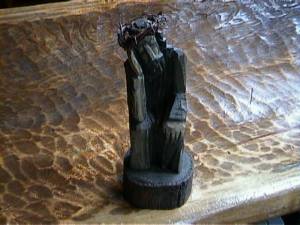
sorrowful statue

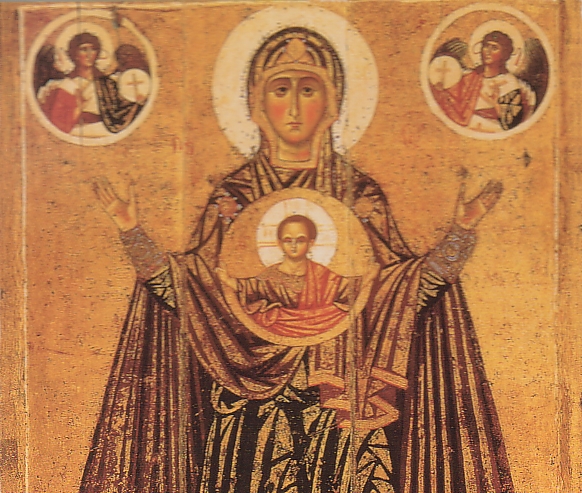
Studying Icons

In silent contemplation

Wisdom is revealed

An icon from Russian Karelia

October 18th ~ Feast of St Luke

Today is the feast day of St Luke the patron saint of doctors.  It is said that he was born in Antioch in Syria.  I have been so worried today by the news from Syria that I thought I would post this article about St Luke from http://www.catholic.org

Would that there was someone so wise in Syria today who could change the course of history in that troubled country.

Luke, the writer of the Gospel and the Acts of the Apostles, has been identified with St. Paul’s “Luke, the beloved physician” (Colossians 4:14). We know few other facts about Luke’s life from Scripture and from early Church historians.

It is believed that Luke was born a Greek and a Gentile. In Colossians 10-14 speaks of those friends who are with him. He first mentions all those “of the circumcision” — in other words, Jews — and he does not include Luke in this group. Luke’s gospel shows special sensitivity to evangelizing Gentiles. It is only in his gospel that we hear the parable of the Good Samaritan, that we hear Jesus praising the faith of Gentiles such as the widow of Zarephath and Naaman the Syrian (Lk.4:25-27), and that we hear the story of the one grateful leper who is a Samaritan (Lk.17:11-19). According to the early Church historian Eusebius Luke was born at Antioch in Syria.

In our day, it would be easy to assume that someone who was a doctor was rich, but scholars have argued that Luke might have been born a slave. It was not uncommon for families to educate slaves in medicine so that they would have a resident family physician. Not only do we have Paul’s word, but Eusebius, Saint Jerome, Saint Irenaeus and Caius, a second-century writer, all refer to Luke as a physician.

We have to go to Acts to follow the trail of Luke’s Christian ministry. We know nothing about his conversion but looking at the language of Acts we can see where he joined Saint Paul. The story of the Acts is written in the third person, as an historian recording facts, up until the sixteenth chapter. In Acts 16:8-9 we hear of Paul’s company “So, passing by Mysia, they went down to Troas. During the night Paul had a vision: there stood a man of Macedonia pleading with him and saying, ‘Come over to Macedonia and help us.’ ” Then suddenly in 16:10 “they” becomes “we”: “When he had seen the vision, we immediately tried to cross over to Macedonia, being convinced that God had called us to proclaim the good news to them.”

So Luke first joined Paul’s company at Troas at about the year 51 and accompanied him into Macedonia where they traveled first to Samothrace, Neapolis, and finally Philippi. Luke then switches back to the third person which seems to indicate he was not thrown into prison with Paul and that when Paul left Philippi Luke stayed behind to encourage the Church there. Seven years passed before Paul returned to the area on his third missionary journey. In Acts 20:5, the switch to “we” tells us that Luke has left Philippi to rejoin Paul in Troas in 58 where they first met up. They traveled together through Miletus, Tyre, Caesarea, to Jerusalem.

Luke is the loyal comrade who stays with Paul when he is imprisoned in Rome about the year 61: “Epaphras, my fellow prisoner in Christ Jesus, sends greetings to you, and so do Mark, Aristarchus, Demas, and Luke, my fellow workers” (Philemon 24). And after everyone else deserts Paul in his final imprisonment and sufferings, it is Luke who remains with Paul to the end: “Only Luke is with me” (2 Timothy 4:11).

Luke’s inspiration and information for his Gospel and Acts came from his close association with Paul and his companions as he explains in his introduction to the Gospel: “Since many have undertaken to set down an orderly account of the events that have been fulfilled among us, just as they were handed on to us by those who from the beginning were eyewitnesses and servants of the word, I too decided, after investigating everything carefully from the very first, to write an orderly account for you, most excellent Theophilus” (Luke 1:1-3).

Luke’s unique perspective on Jesus can be seen in the six miracles and eighteen parables not found in the other gospels. Luke’s is the gospel of the poor and of social justice. He is the one who tells the story of Lazarus and the Rich Man who ignored him. Luke is the one who uses “Blessed are the poor” instead of “Blessed are the poor in spirit” in the beatitudes. Only in Luke’s gospel do we hear Mary ‘s Magnificat where she proclaims that God “has brought down the powerful from their thrones, and lifted up the lowly; he has filled the hungry with good things, and sent the rich away empty” (Luke 1:52-53).

Luke also has a special connection with the women in Jesus’ life, especially Mary. It is only in Luke’s gospel that we hear the story of the Annunciation, Mary’s visit to Elizabeth including the Magnificat, the Presentation, and the story of Jesus’ disappearance in Jerusalem. It is Luke that we have to thank for the Scriptural parts of the Hail Mary: “Hail Mary full of grace” spoken at the Annunciation and “Blessed are you and blessed is the fruit of your womb Jesus” spoken by her cousin Elizabeth.

Forgiveness and God’s mercy to sinners is also of first importance to Luke. Only in Luke do we hear the story of the Prodigal Son welcomed back by the overjoyed father. Only in Luke do we hear the story of the forgiven woman disrupting the feast by washing Jesus’ feet with her tears. Throughout Luke’s gospel, Jesus takes the side of the sinner who wants to return to God’s mercy.

Reading Luke’s gospel gives a good idea of his character as one who loved the poor, who wanted the door to God’s kingdom opened to all, who respected women, and who saw hope in God’s mercy for everyone.

The reports of Luke’s life after Paul’s death are conflicting. Some early writers claim he was martyred, others say he lived a long life. Some say he preached in Greece, others in Gaul. The earliest tradition we have says that he died at 84 Boeotia after settling in Greece to write his Gospel.

A tradition that Luke was a painter seems to have no basis in fact. Several images of Mary appeared in later centuries claiming him as a painter but these claims were proved false. Because of this tradition, however, he is considered a patron of painters of pictures and is often portrayed as painting pictures of Mary.

He is often shown with an ox or a calf because these are the symbols of sacrifice — the sacrifice Jesus made for all the world.

Luke is the patron of physicians and surgeons.

English: Saint Luke the Evangelist. Russian Ea...

English: Saint Luke the Evangelist. Russian Eastern Orthodox icon from Russia. 18th century. Wood, tempera. Luke is the author of the Gospel of Luke and the Acts of the Apostles. He is considered one of the Four Evangelists. (Photo credit: Wikipedia)
Paradox ~ haiku

Paradox Lake 6

Paradox Lake 6 (Photo credit: xeaza)

The word prompt for todays haiku from haiku heights is ‘Paradox‘.  Where to start?  Media, Medicine, Religion…

Outrage on front page,

adverts inside, profits from

sinister sex trade.

My blood boils when I buy a local family newspaper such as the recent Gloucestershire Echo.  On the front page they gloat and pontificate, taking the moral high ground, over the police storming local brothels.  Men and women were arrested, masses of money was seized and young foreign girls who were victims of illegal trafficking were rescued and taken away.  Yet, inside the same newspaper, albeit near the back, were lurid adverts for the services provided by these same establishments.  Is this double standards ~ Yes!  Is this hypocrisy ~ Yes!  Is this paradoxical ~ Yes!!  Should I stop buying the newspaper ~ Yes!   Should I start a campaign ~ I know I should……but will it change anything…?

Nurses come nightly,

tenderly numbing his pain

Killing him kindly.

The world of medicine is riven with paradoxes concerning treatments for prolonging life, saving life, ending life.  Decisions and actions can have monumental consequences.  There will always sadly be some people who misuse their position, skills and knowledge to cause harm to themselves or others.  But for the most part the medical staff we meet are caring people trying to alleviate suffering who have to live with their conscience, and their choices .

Fundamentalists

Freedom denying,

Future destroying.

Sadly the most glaring paradoxes are to be found in the world of ‘religion‘.  I listened to a wonderful “Thought for the day” on BBC Radio 4 today about just this.  Canon Dr Alan Billings talks about how the individual’s faith and religious practice can be a very good and positive thing; but collectively, due to desire to protect and preserve ‘their’ values and traditions, hierarchical religious communities can act in damaging, destructive and downright wicked ways.  I think of the dreadful cover-ups of child abuse, of the  unjust and insensitive treatment of women or anyone who does not conform to the perceived ‘norm’, and of course the killing and maiming carried out in the name of religion.  It always comes down to a desire by those in positions of power to subjugate those without it.

Island and Lights haiku

Oops I missed a day yesterday in the haiku Heights challenge as I had a dreadful migraine and could not face the computer.  However all well today so am sneaking both in together!

Island Haiku

In Ladoga Sea

Russia’s rejected lived, on

Old Valaam Island

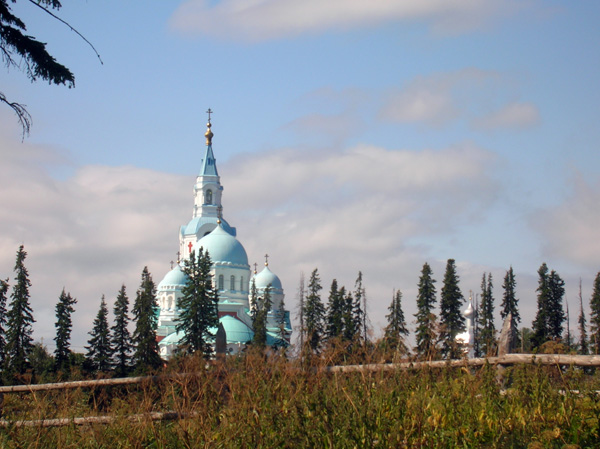
Valaam Monastery

Blind residents on the island

The new Valaam Monastery

Across Lake Ladoga

I visited Russian Karelia and Finland in 2001 on a tour of Monasteries and Orthodox Churches when I was studying Icons.  It was a totally wonderul trip and I saw some magnificent sights.  We stayed at the new Valaam monastery where there is a brilliant iconographer.  I learned a lot from him.  We also visited the Old Valaam Monastery which is on an island in lake Ladoga.  In 2001 the island was a sad and menacing place.  The monastery and cathedral were badly damage; with lots of deliberate damage from its troubled past and natural damage from the severe weather.  In times past Russia’s disabled soldiers and rejected people, many suffering awful physical and mental problems were sent to this island.  They were virtually abandoned there, isolated from the rest of the world and had to fend for themselves as best they could.   They had no love for the buildings or the faith of the few monks left there and lived in abject poverty and squalor.

I am thrilled to say that the monastic community is now thriving and the buildings are restored.  The website http://valaam.ru is just wonderful and will tell you all about the history of this special ancient place.  There is also a wonderful picture gallery so do look at it if you have time.

As I mentioned I am very interested in Icons and I loved to travel and take photographs or collect pictures of old icons.  My favourites are the Marian or Theotokos (Bearer of God) ones, and I have a collection from all over the world.  It fascinates me that every culture has their own take on the Mother of God and I have black ones, Chinese ones, and even an Indian squaw one from a reservation in NW Canada.  There seems to be a deep need in every culture to revere a mother figure so that is what my next Haiku reflects:~

Lights haiku

She lights up my life

Motherhood epitomised,

My icon, my rock.

Creation ~ haiku

creation illuminated manuscript from St John's bible

Illumination

Meditation on the word

Sacred creation

This haiku was inspired by the September Challenge on haiku heights ~ today’s word is Creation.

One of the most beautiful creations I have seen in recent years is an exquisite handwritten St John’s Bible.  It is the fulfilment of a lifetime’s ambition for the artist and calligrapher, Donald Jackson.  Working with a Benedictine community  in Minnesota, USA and with scholars in Wales, UK, he has created over many years “a work for eternity”.  Every word is written by hand and every illustration is a modern meditation on the text.  Do click on the link ~ you will be amazed by the beauty of the work.

I saw the first edition when it was displayed at St Martin in the Fields Church in London and was lucky enough to buy prints and take photographs.  I believe it is on display in USA now and it is well worth seeing.

I could have written lots of haiku on the “Creation” theme ~

Created with care

A harvest in harmony

Floral creation

A harvest time floral creation in Hereford cathedral

Illumination

Sunlight reveals its beauty

Creation in glass

Creation window at Cirencester Agricultural College

tained Glass window in the chapel at Cirencester Agricultural College

Stained glass depiction of Jesus in Gloucester Cathedral

Illumination!

and the most important one ~ my soon to be born grandchild!

Life is unfolding

In the comfort of the womb

A new creation

The Spirit of Our School

Rest not! Life is sweeping by; go and dare before you die. Something mighty and sublime, leave behind to conquer time. — Goethe

St Thomas More School was a huge part of my life.  In the early 1970’s I watched the new school building rise in the middle of an open field that had once been farmland and an orchard.  There was an ancient hedgerow all around the site and just one magnificent old oak tree in what would be the playing field.  When it was opened in 1975, I was having my third child so was not available for teaching.  But, as I drove past the school every day, I vowed that one day I would work there.

I got my wish in 1984 when my youngest child was ready to start school.  I was offered a job and jumped at the chance.   The next decade was a time of great blessing as I worked in virtually every class, teaching all age groups, then became deputy Head.  In 1994 the original Headteacher was due to retire and, to my surprise, I was offered his job.  He had been such an inspirational Head that the school was a joy to work in.  Taking on his role, I tried to emulate him while making my own mark and bringing my own vision for the school into being.

Due mainly to the quality of the staff and their outstanding teamwork, the school became a strong and successful community, ‘an oasis of excellence’, appreciated by staff, pupils and parents alike.

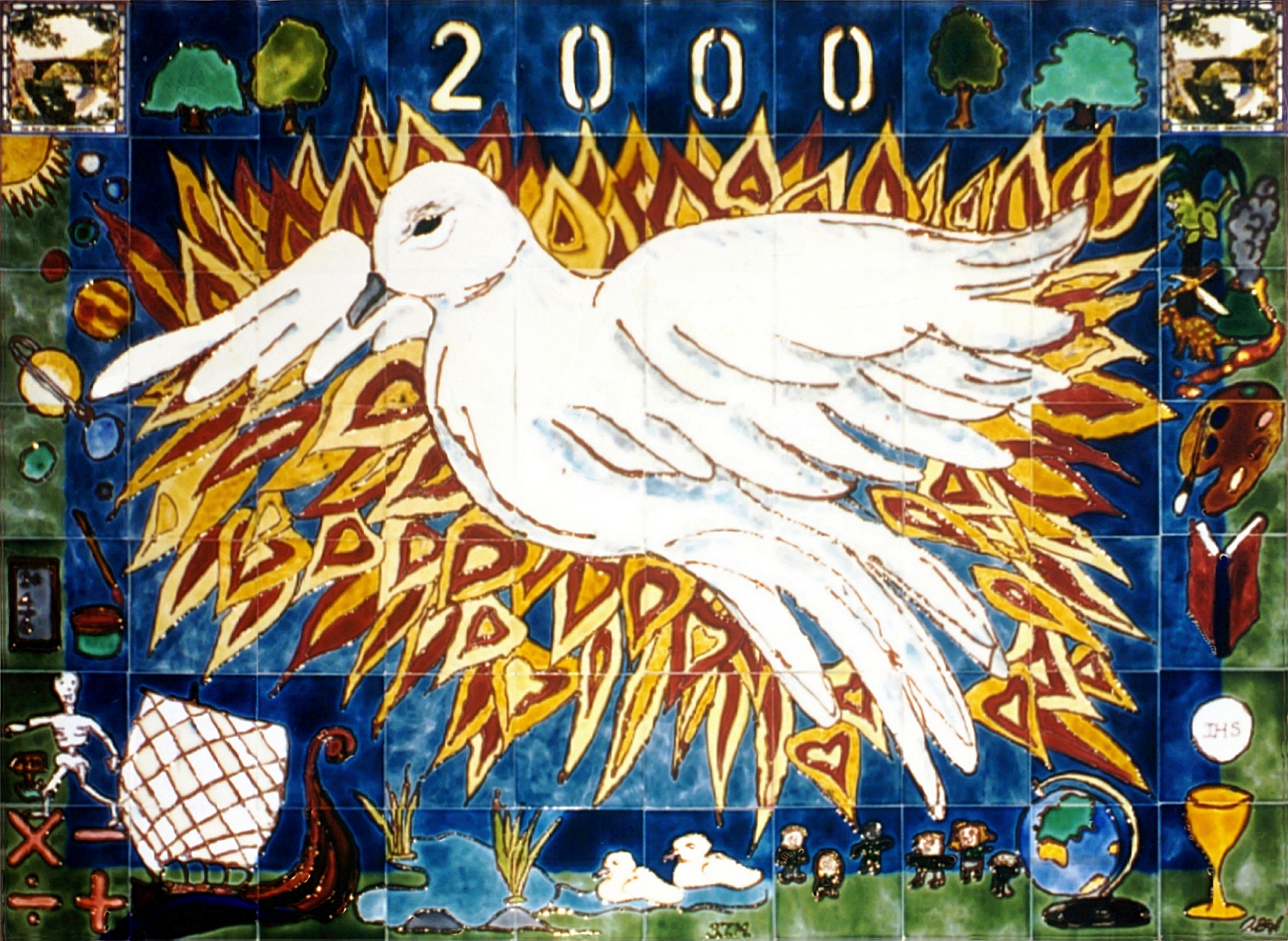
In 1999, as the new millennium approached, the staff wanted to mark the year 2000 with a special feature.  We wanted the whole school community to be involved in creating something totally unique and meaningful.  We came up with the idea of making a large tile frieze.  Each year group was asked to brainstorm their favourite lessons, subjects, or topics, and represent their ideas on paper.

Reception class, the youngest children were just 4 or 5 years old and had only just started school.  They had their photographs taken in their shiny new uniforms, so that was their contribution.

The Year 1 class had helped to build a pond and were raising ducklings which they had hatched from eggs in an incubator, so they drew pictures of that.  I have a wonderful memory of the day the ducklings hatched out ~ the local policeman had called up to the school on a social visit and he watched as the first duckling struggled to crack open the shell.  When it finally succeeded and out popped this beautiful and perfect little bundle of yellow feathers, he was overwhelmed by emotion and had tears in his eyes.

In Year 2 the 7 year olds made their first Holy Communion as it was a Catholic school so they drew a chalice and host.  Being the most significant event in the year, that was their contribution.

Year 3 was the first year of juniors and the children enjoyed learning about Vikings and the Human Body, so they drew lovely longboats and skeletons.

In Year 4 things got much more subject focussed so Maths was represented by a calculator and mathematical symbols.

In Year 5, Music, Dance and Art were the main features, so a pot of paint and a brush was drawn.  Science too was represented by the planets.

By Year 6 the children were getting ready to move on to secondary school.  In order to give them a taste of independence and adventure, it was our tradition to take the class away to Shropshire for a week to stay in a Youth Hostel.  Here, in the Ironbridge Gorge, birthplace of the Industrial Revolution, we had a wonderful time.  We visited the Iron Museum, The Jackfield Tile Museum, Blist’s Hill Reconstructed Village, River Severn Museum and of course the first Iron Bridge ever built.  We also had amazing night hikes, midnight feasts and parties.  Altogether it was an incredible opportunity for fun and learning.  So naturally the Ironbridge at Coalbrookdale was the emblem of Year 6.

The staff gathered all these pictures and images together and chose the ones that would be painted on to the tiles.  The Year 5 teacher, ABW, a wonderfully creative artist and teacher, took on the challenge of putting all the ideas together and creating a design on tracing paper which could be transferred onto numbered ‘green’ tiles.  It was agreed that we would go to Jackfield Tile Museum to create the finished work.

A representative group of staff, parents and children spent a weekend at the Youth Hostel and were each given a small area of the tile frieze to paint.  ABW had done a magnificent job scaling all the children’s artwork up or down so that the frieze would reflect the life of the school.  It was agreed that the year 2000 would go at the top, as well as the 4 trees, oak, ash, poplar and beech, which were the school emblem.  In the top corners would be tiles depicting the Ironbridge itself. The children’s artwork would go around the edge, and at the centre would be the Holy Spirit in the form of a dove surrounded by flames.

We painted the tiles in coloured glaze.  I will never forget the atmosphere in that studio at Jackfield as we worked on the frieze.  There was a stillness and peace in the room which was truly sacramental.  While we worked, the Spirit moved in that place and heaven happened.

When we finished, the tiles were left at the Jackfield tile Museum to be fired.  A couple of weeks later they were collected and set into a frame made by the reception class teacher’s husband.

Bishop Mervyn Alexander of Clifton RIP came in the year 2000 to celebrate the school’s 25th anniversary and he blessed the tile frieze.

Although most of the staff who worked at the school have retired or moved on now, the frieze is still there in the school hall.  And with it is a little piece of all of us who made it.

Sunflower season

Golden Sunflowers

Yearning for enlightenment

Turn to face the sky

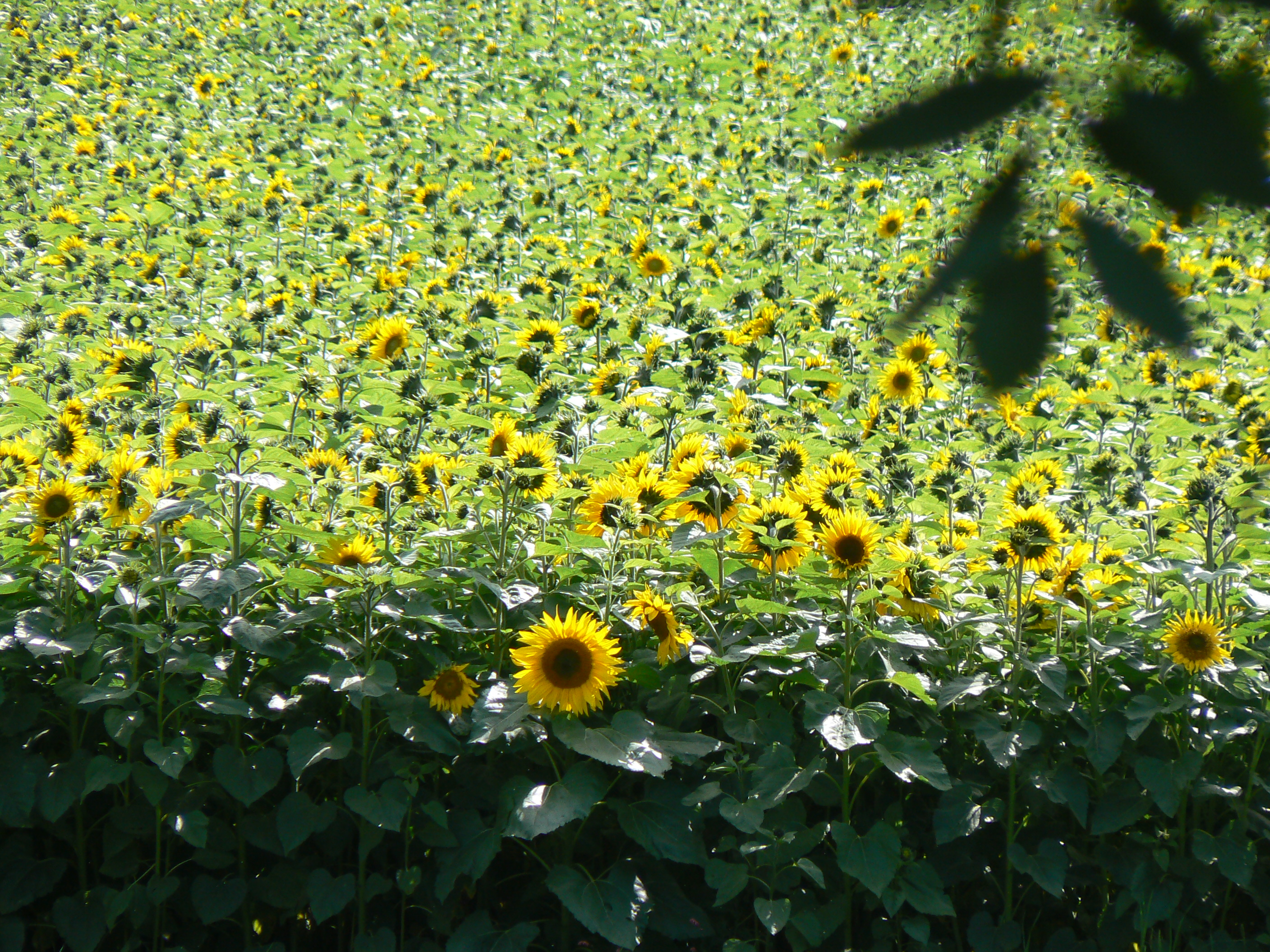
The sunflowers have been washed out this year in some parts of the Cotswolds due to the dreadful wet summer.  At Snowshill most of the young plants died as their roots rotted in the rain=soaked earth.  But there are still some sunflowers around and I delight in them.  The ones in my garden have just come into bloom and they are magnificent.

In Cheltenham ladies College there is a beautiful stained glass window depicting sunflowers ~ in Victorian times they were considered a symbol of faith in God as the sunflowers appear to be turning their heads to face Him.

I painted sunflowers on my summerhouse doors as for me they signify the arrival of Autumn, my favourite season.

The power of powerlessness

One of my favourite blogs is “writingyourdestiny.com” and a phrase struck me in one of her posts, “I’m finding that even within chaos of a big move, we can create a sacred space by our attitude”.

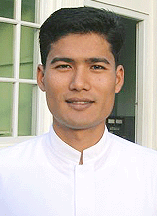
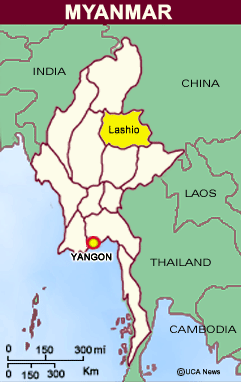
This got me thinking and remembering one of the most significant and memorable meetings I have ever had.  It was with a young catholic priest called Tino from Lashio in Myanmar (Burma).

I met Tino while he visited the UK in 2010.  He was staying with my friends C&D.  At the time Burma was still in turmoil.  The 2010 elections were considered neither free nor fair as the people were too afraid to vote for any of the opposition parties, and the popular choice, Aung Sang Sui Kyi, had been sidelined.  The majority of people in Burma were living in abject poverty with few mod cons, and even the basics were difficult to get.

Tino himself grew up in poverty, repressed by the state, and trying to live his faith with all the odds stacked against him.  He lived 36 miles from the nearest Mass centre and would often walk for hours to get there.  As a child he had sometimes been carried there on the shoulders of the local priest who is now the Bishop of Lashio, Philip Lasap Za Hawng D.D.

Tino depended on C&D who sponsored him, for long term practical, financial and emotional support and along with aid from the church, for his continuing education and training to become a Priest.

When I was in the garden of their home I was overwhelmed by the aura of peace, contentment and holiness that Tino exudes.  He has the gentlest countenance I have ever seen on a man, yet strong, unafraid and self-assured; filled with compassion and love.

Tino was feeling unwell that day due to the unfamiliar and rich food he had been eating, but he showed no sign of irritation with visitors.  He just made himself quietly available to bring the love of God and his own peace to all who came near.

It was a wonderful experience and a great privilege to meet such an inspirational man.  Who would have thought that in the last few months things have changed so much in Burma.  Aung Sang Sui Kyi is now a free woman.  She and her party won a landslide vistory in the April 2012 elections.  She was able to travel to Oxford to be reunited with her family, friends and colleagues.  Tino is able to continue his studies in Rome.  And I am able to write this post knowing that Burma has just ended censorship of the press:

 http://www.guardian.co.uk/world/2012/aug/20/burma-ends-advance-press-censorship

Tino and Aung Sang Sui Kyi have a serenity common to many Burmese which seems to come from a place deep within.  They have the ability to keep a still heart and a quiet mind regardless of what goes on around them.  It is impressive and reminds me of Meister Eckhart‘s words:

“The most powerful prayer, one well nigh omnipotent, and the worthiest work of all is the outcome of a quiet mind.  To the quiet mind all things are possible.  A quiet mind is one which nothing weighs on, nothing worries…”


Sanctuary ~ a Sacred Space

My Sanctuary

At WI I received a lovely gift in the lucky dip.  It was a silver bag containing a little silver and diamanté heart and 2 bottles of Sanctuary; a brand of luxury bathroom products.  It was lovely, although as I only have a shower, it may be passed to someone else!

The word ‘sanctuary’ comes from the Latin root word, sanctus, which means holy.  So the primary meaning of the word is, ‘a sacred space’.  Following on from this is the idea of a ‘place of refuge’, where someone can escape to and find safety.

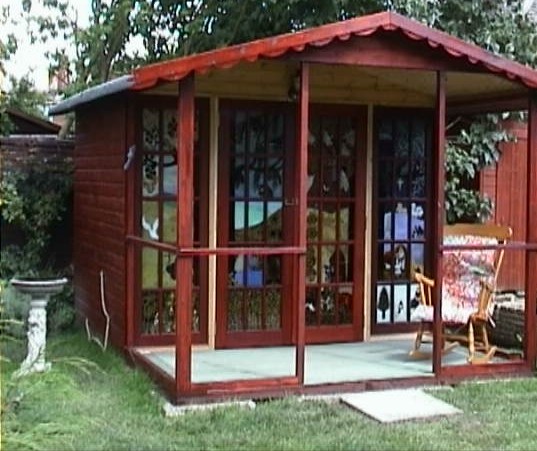
In the year 2000 I retired exhausted from full time working, and spent a year seeking ‘sanctuary’ from a life so busy that it had overwhelmed me.  Being too ill to go anywhere, my sanctuary had to come to me, so my wonderful husband built me a summerhouse at the end of the garden where I could find some healing peace.

It was 3metres by 4metres made of solid wood lined with tongue and groove pine panels with a waterproof, pitched roof and 4 doors.  Each door had 12 glass panes and I was inspired to paint them with glass paints.

At the time I was reading “Landmarks”, An Ignatian Journey, by Margaret Silf and the book inspired me to consider my faith journey.  Knowing that the Domain in Lourdes has been the most formative place in my faith life, and thinking (wrongly) that I might never be well enough to go there again, I decided to reflect its importance in my summerhouse.  Each door would have a depiction of the grotto and of water included, as well as images that I love.

I chose the 4 seasons as my theme and decided to paint the doors Spring, Summer, Autumn and Winter.  Before the doors were hung I measured out 4 pieces of wall lining paper and sketched my designs

 for each door.  I used trees, laburnum, wisteria, maple, holly, bending towards each other to form arched shapes.   I then drew images from nature related to each season, mice, hedgehogs, robins and anything else that came into my mind.  Once the paper design was complete I stuck the paper onto the back of each door and drew over it straight onto the glass with ‘tube lining’.  This dries quite quickly so then I started to paint! 

I am not an artist so the result was very primitive, but because the glaze comes in such beautiful colours, the overall effect was stunning.

Once the doors were hung we laid electricity cables to the summerhouse so that we could light it from inside or out.  This meant that at night we could see the stained glass effect shining down the garden from the house.  If I was in the summerhouse on a sunny day with the doors shut, the stained glass effect cast coloured light all over the inside of the summerhouse.  If I was in there at night I sometimes turned off the lights and lit candles to gain a different effect.

This was my sacred space, my sanctuary, my still point, my little bit of Lourdes and I loved it.  In my summerhouse I looked deep inside my self; I wrote my life story; I restored my spirit; I emerged a different person.

Sadly, I had to move home 3 years ago, and I could not take my summerhouse with me.  But I have the photographs and I just have to think of it to find a beautiful stillness.

Finding the still point

Cast off by the sea,

Sandstone, beauty concealing,

Pure quartz lies entombed.

Just back from a holiday on the Jurassic coast of Dorset (www.jurassiccoast.com), I am reflecting on how much I enjoyed the break.  Being by the sea in lovely weather is such a joy,  and May in Dorset is especially magical.  The rhododendrons, azaleas and camellias are in full bloom; the young swans are hatching in their hundreds at Abbotsbury Swannery, and the national collection of water lilies at Chickerell is breathtakingly beautiful.

We stay in the simplest of log cabins in an area of total peace and quiet with awesome views.  It certainly raises the spirits and clears the mind when you have no network coverage on your phone, no TV, no internet and no computer to distract you!  I planned to do lots of writing but I didn’t.  Instead I read Thomas Hardy’s poetry, and, taking inspiration from the natural world around me, I did lots of drawings and zentangles – yoga for the brain!

Going on holiday gives us opportunities to open our hearts and minds to wonder and beauty.  We have time to notice the lamb sleeping by his mother; the blue tit helping itself to the crumbs from your picnic; the poppies growing by the roadside and the cygnet trying in vain to hide under the mother’s wing.

I realise that these small beautiful moments are happening all around me all the time, the difference is I take notice when I am on holiday.

“Two men looked out through prison bars,

One saw mud and the other saw stars”

I don’t know where or when I first found this quote, but it is so relevant.  Life is not on anyone’s side ~ it just goes on ~ and we make of it what we will.  Whatever happens to us we have choices about how we feel and what we focus on ~ is it the mud or the stars?

The Haiku is about a very ordinary stone I found on Chesil Beach.  It is a type of sandstone, roughly shaped by the sea over millennia.  But on turning it over I saw a deep hole, like a cave in the stone, filled with quartz crystals.  The beauty of it seemed to reveal the sacred hidden in a most unexpected place.

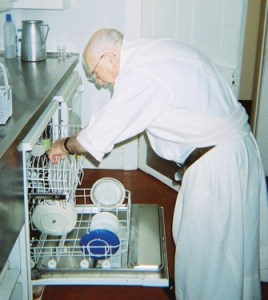
When I worked for a time at Prinknash Abbey I used to share the chores with a wonderful old monk.  He was always so happy, building up the fire, sweeping the floor, even scrubbing out enormous pots and pans.  His philosophy was to treat every task as a gift to God, not a sacrifice.  He fully immersed himself in each task, doing it with reverence and radiating peace and stillness.  I suppose today we would call this “mindfulness”, I called it the sacrament of the moment and I try hard to follow his example.

On holiday in Dorset I think I succeeded in seeing the good in everything I did as my photos below will show.  I hope you enjoy them.

A little bit of magic

I went to a memorial service today for a young man of 36 whom I used to teach.  He was a beautiful soul who saw through life’s shams.  One of his tributes was from his brother who remembered him saying

“you know bro the trouble with the world is people love things and use people, and we are meant to use things and love people”.  I was deeply touched by this and some of his poetry.  I have reproduced one of his poems here for you as a tribute to him.

I believe in magic

like stories once we were told

of fantasy

of fe fi fo fum

of rainbows giving us gold

I believe in magic

‘s just a twinkle in an eye

feelings, I can’t explain to you

‘s like the wisdom of our sky

Life is magic……

it makes you want/want to “free beauty”

…..so beauty can be found ?

as hidden it can be !

Let your selfish side sound

& truly beauty cannot free

but the light you might’ve missed

hits as sunshine when you know

that a true open smile played the twist

to let beauty’s secret show…..

Love peace & harmony for a better world

…..fret ye not for a day shall come

wrongs made right as they should be

all is said as shall be done

our minds in righteous unity…..

©Ashley Cassin

Notes from Ashley. It’s about everything in life being connected, containing spirit.  From the trees to the flowers to the birds & the bees to you & me to the stars in the sky & the one that keeps us alive, I’m trying to explain that peace & harmony is love or love is peace & harmony or love is god or god is love, I believe it as I write & this whole world could benefit from not abusing love (calling it their own ) as it is in so many differing ways, what if love is the energy of life, & people are fighting -killing for it, then it becomes the opposite of what it is. We should always be thankful, accepting, respecting everything everybody. we’re all individuals, but we’re all just atoms in this energy, so why can we just live with it.

Gone Fishing

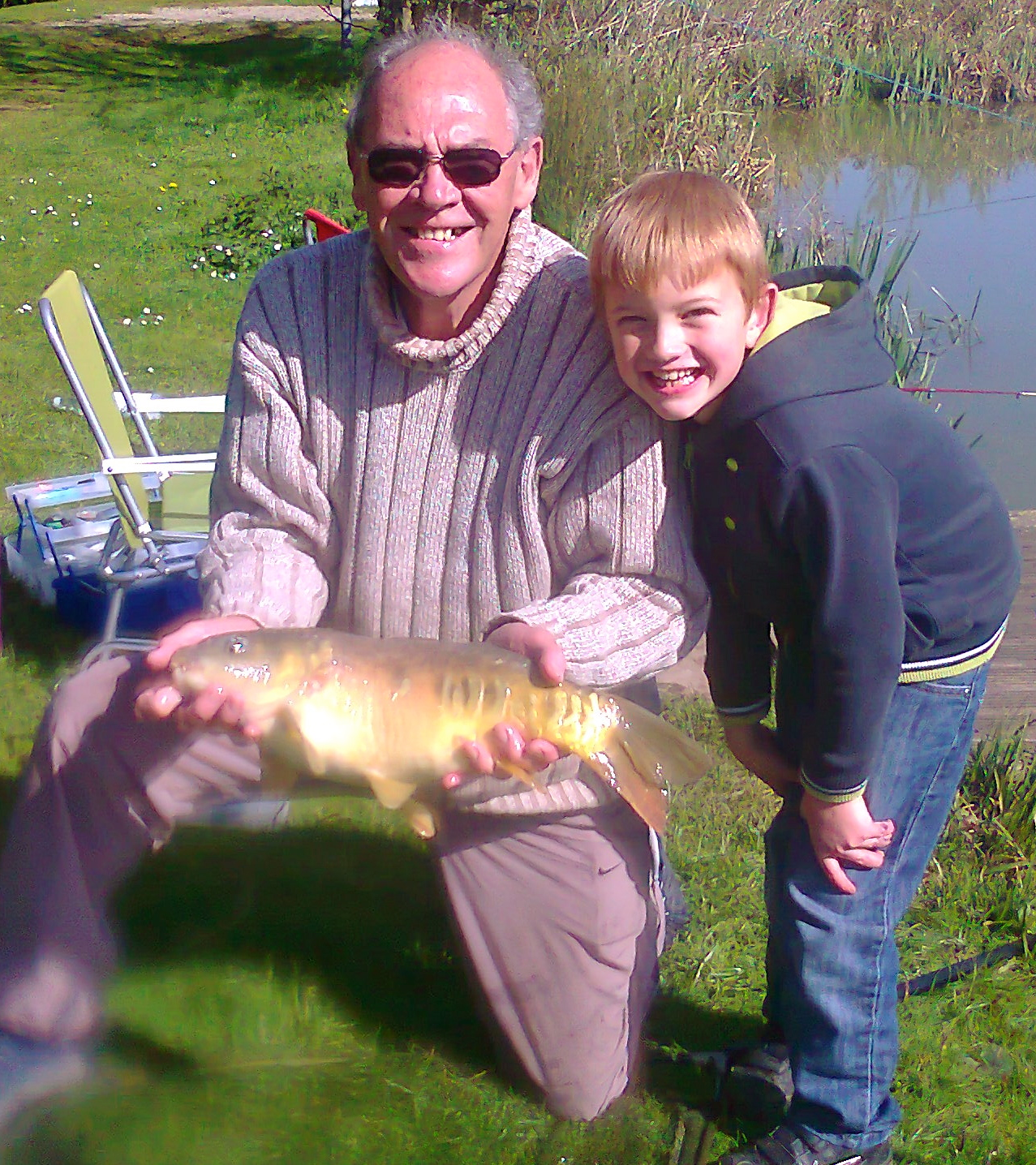
Under a fishing umbrella by the side of a lake in the pouring rain with husband and grandchildren, heaven happens.  There is nothing quite so exciting as being at the mercy of the elements but safe!  It appeals to our most basic human need for shelter and protection.  All our needs are met.  We are together, warm and dry and we have a picnic.  We are relaxed and at peace.  There is nothing we must do but enjoy ourselves.  It is a precious gift ~ time to be.  Grandchildren learn how to fish.  They watch the fluorescent tip of the float marking the place where the line enters the water.  The bait of sweetcorn gently drifts in the depths as we throw more corn in to attract the fish.  And it does.   The float waggles then dips down ~ a bite!    Ben gets the landing net ready and Rosie slides the unhooking mat into place.  The mat is clean and padded to protect the fish from injury or infection.  Gerry reels it in and Ben slips the net into the water and under the fish, gently lifting it clear of the water.    It’s heavy, maybe 8lbs.  A beautiful mirror carp.  It has a golden belly and silver scales along each side of the backbone.  The hook slips easily out of its mouth with the help of tiny forceps.  The children take a photograph of this beautiful creature then it is placed gently back in the net and returned to the lake.  We don’t throw the fish back like the match fishermen.  We let it rest in the net for a few minutes then tilt the net so it can swim out safely, unharmed.

The rain stops, ducks settle on the bank.  The sun comes out to end the day on a glorious note.   The match fishermen leave, but we stay to watch the sun go down.  The sky glows golden and the lake glitters.  Flies abound and the fish leap up to catch them.  Bats swirl around silently.  Then huge wings darken the sky as three herons appear over the tree tops.  They dominate the lake as they swoop down and help themselves to a fish supper.

It is an amazing sight and all we can do is watch in awe, then write Haiku about it!

Sun sets, fishing stops

Herons hover overhead

Fish glide into reeds

Grandad teaching Ben to fish, Rosie practising with a stick!

He’s got it!

Heron waiting for a fish supper

Easter 1997

An unforgettable day for me was Easter Sunday in 1997.  I had travelled to kisumu in Kenya with a group of educationalists from Gloucestershire.

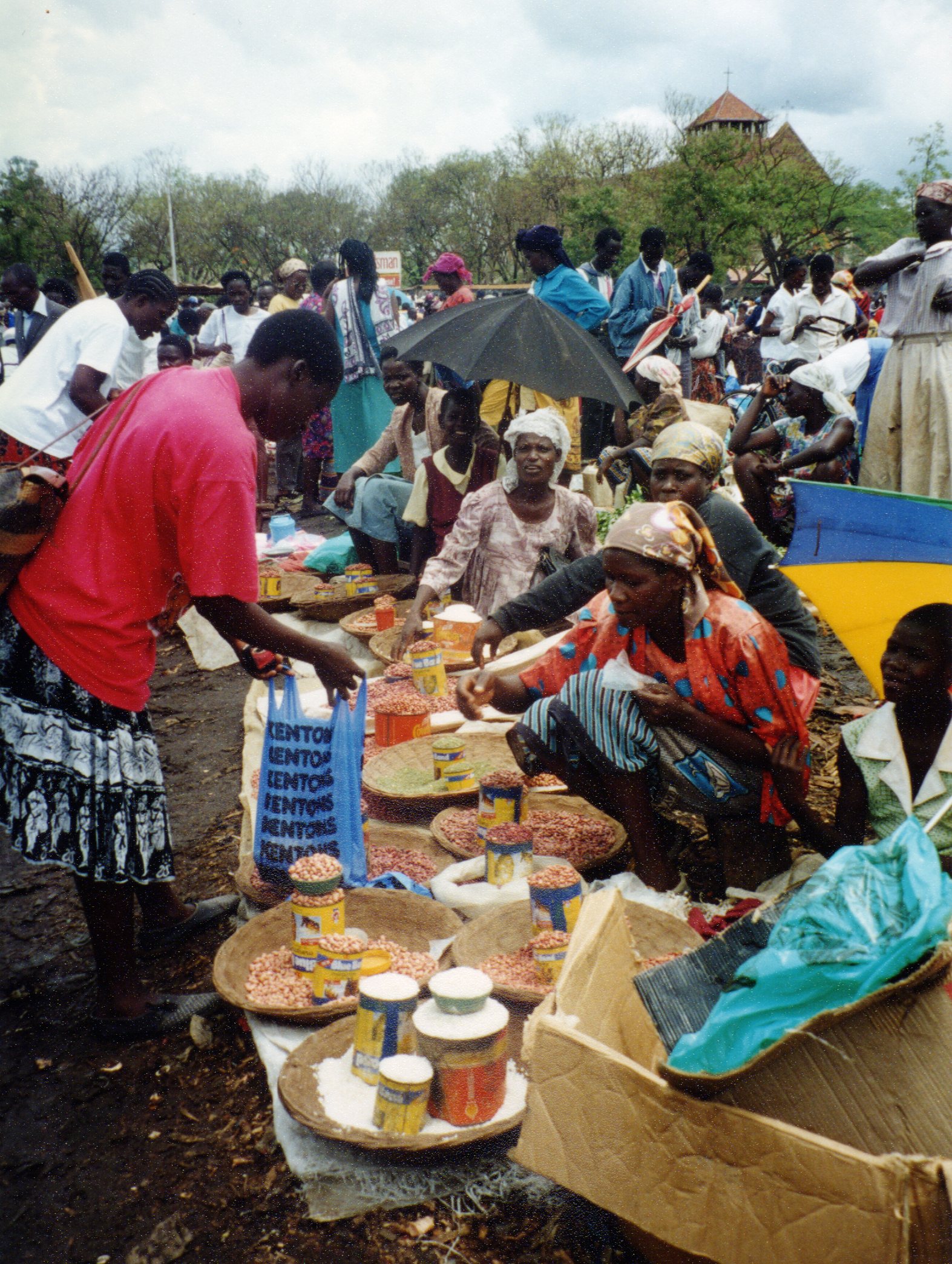
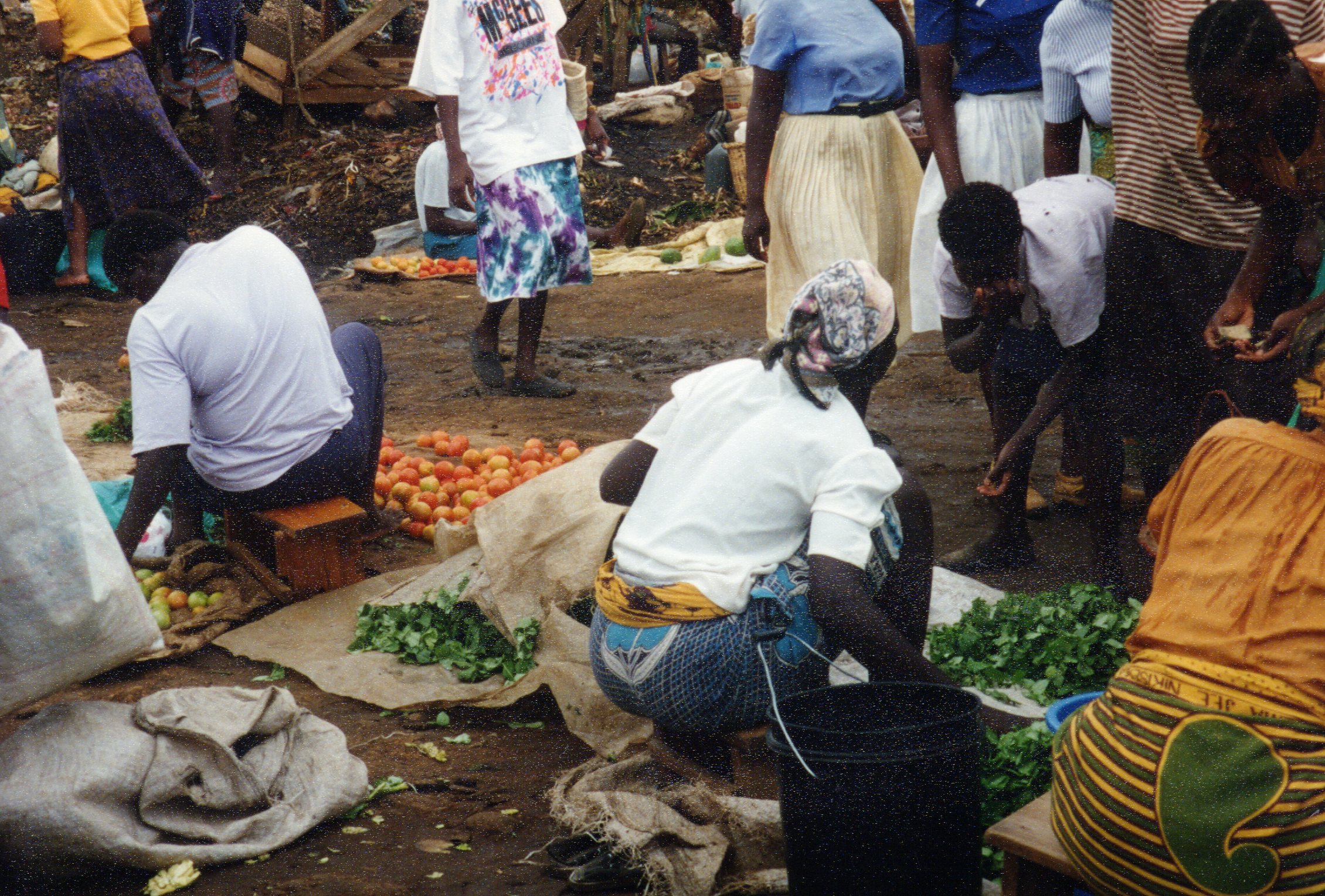
Sunday is market day in Kisumu and Easter Sunday is no exception.  Strolling around among the goods laid out on the ground,  we saw an abundance of bananas and mangoes, maize, and spices galore.  There were shoes made out of old tyres and handsewn clothing.   Dolrosa bought a live chicken for our evening meal.   Purchased goods were carried home by the women in baskets on their heads.  Heavy goods were bundled on top of a matatu, a type of minibus.

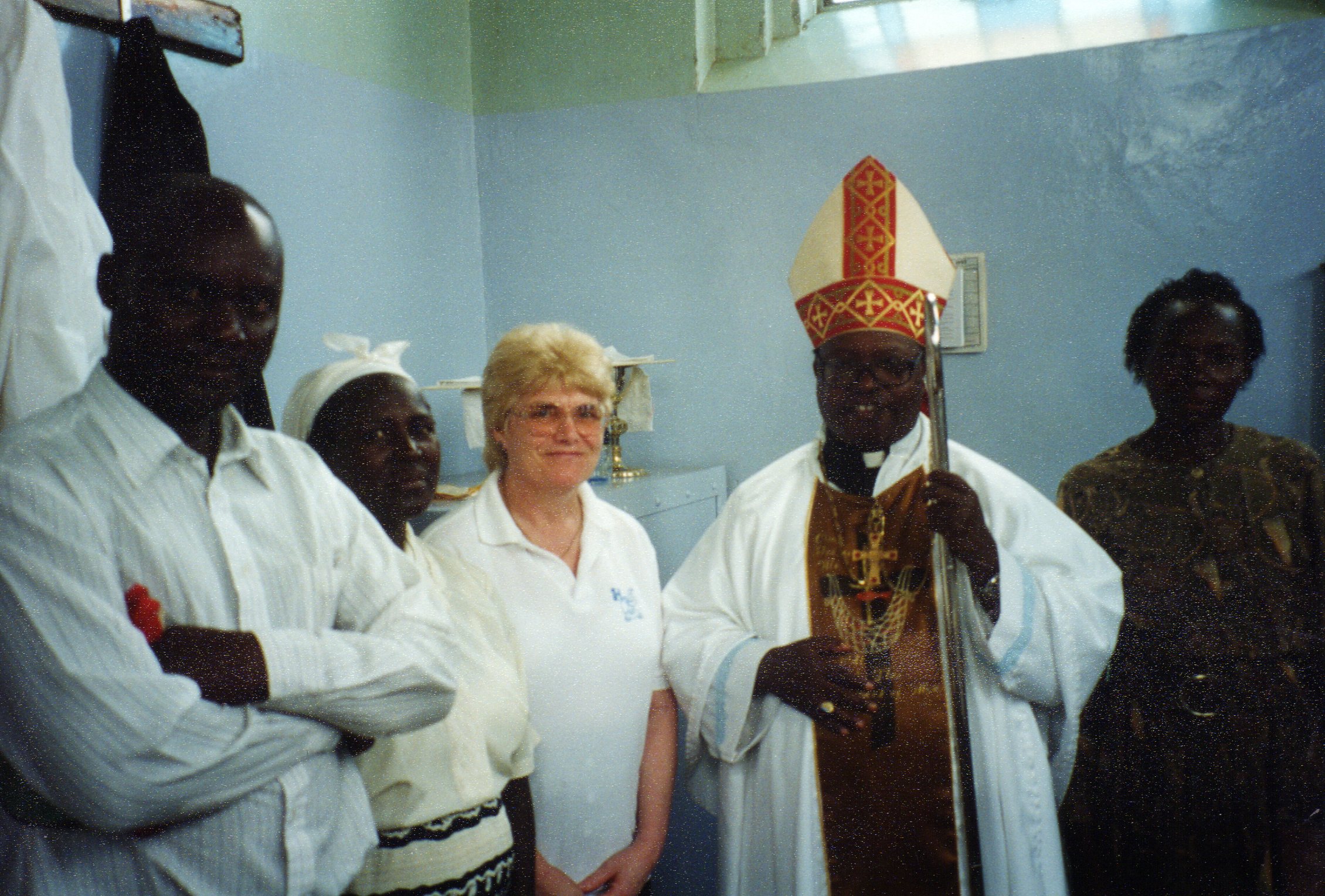
I went off to Mass at St Theresa’s Cathedral where I was due to meet the Archbishop.  I had brought gifts of rosary beads, bibles and prayer books from STM to be distributed among the small churches in the tribal villages.  I also brought a silver Chalice for the Archbishop.  The Mass was a total revelation to me.  The congregation were dressed in the most beautiful and colourful outfits I had ever seen.  The children were adorable and particularly well dressed as they were to make their First Holy Communion.  The Mass was in Swahili which I did not understand but the singing was absolutely wonderful.  It was accompanied by African drumming.

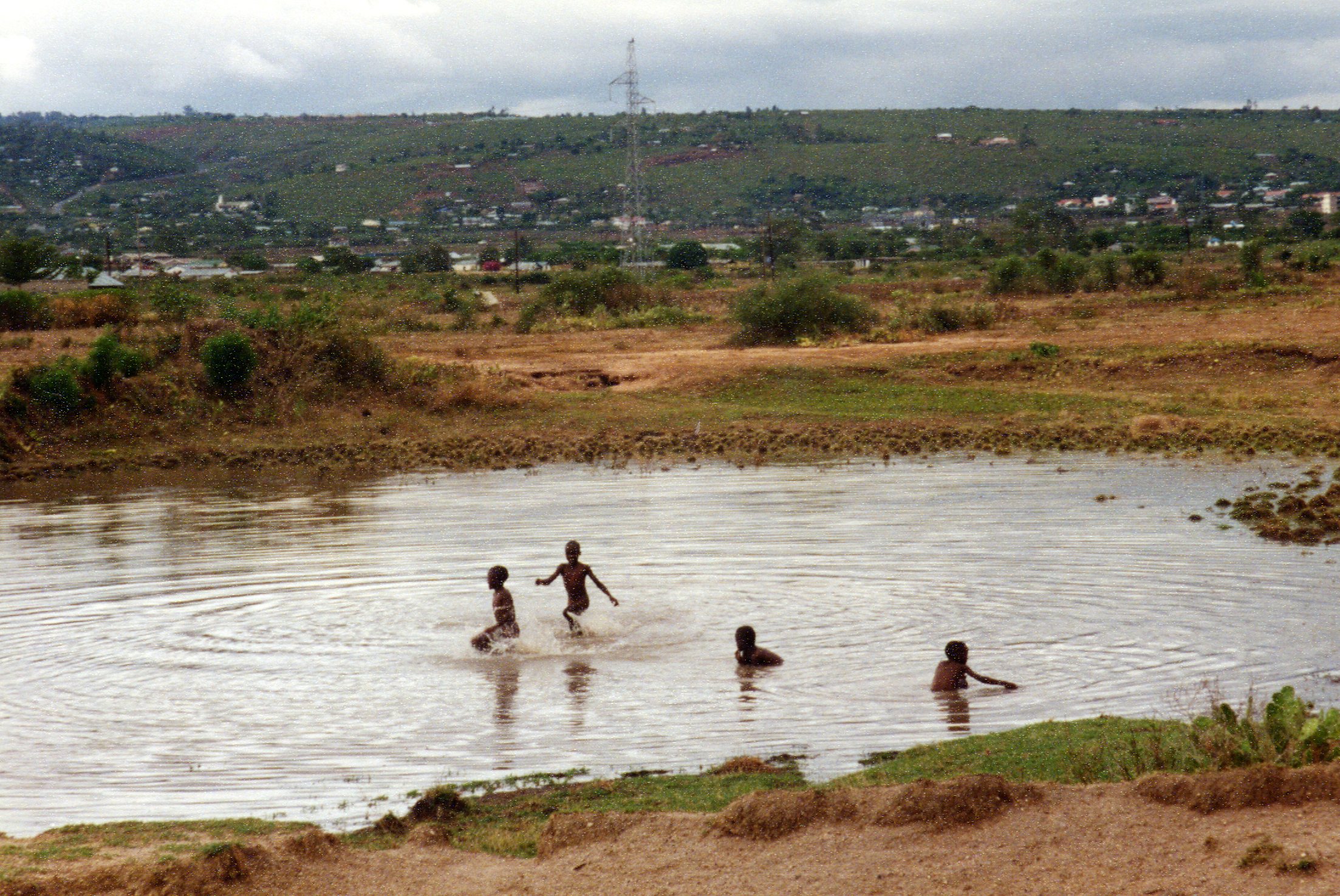
It was cloudy, hot and humid outside but lovely and cool in the Cathedral.  When Mass ended and we walked out, the heavens opened and the rain came down in torrents.  In no time at all the roads were awash and there were puddles appearing by the roadside.   From out of nowhere children appeared stripped to the waste and leaped into the puddles.  They were full of joy and having a whale of a time.  It was great fun to watch them.

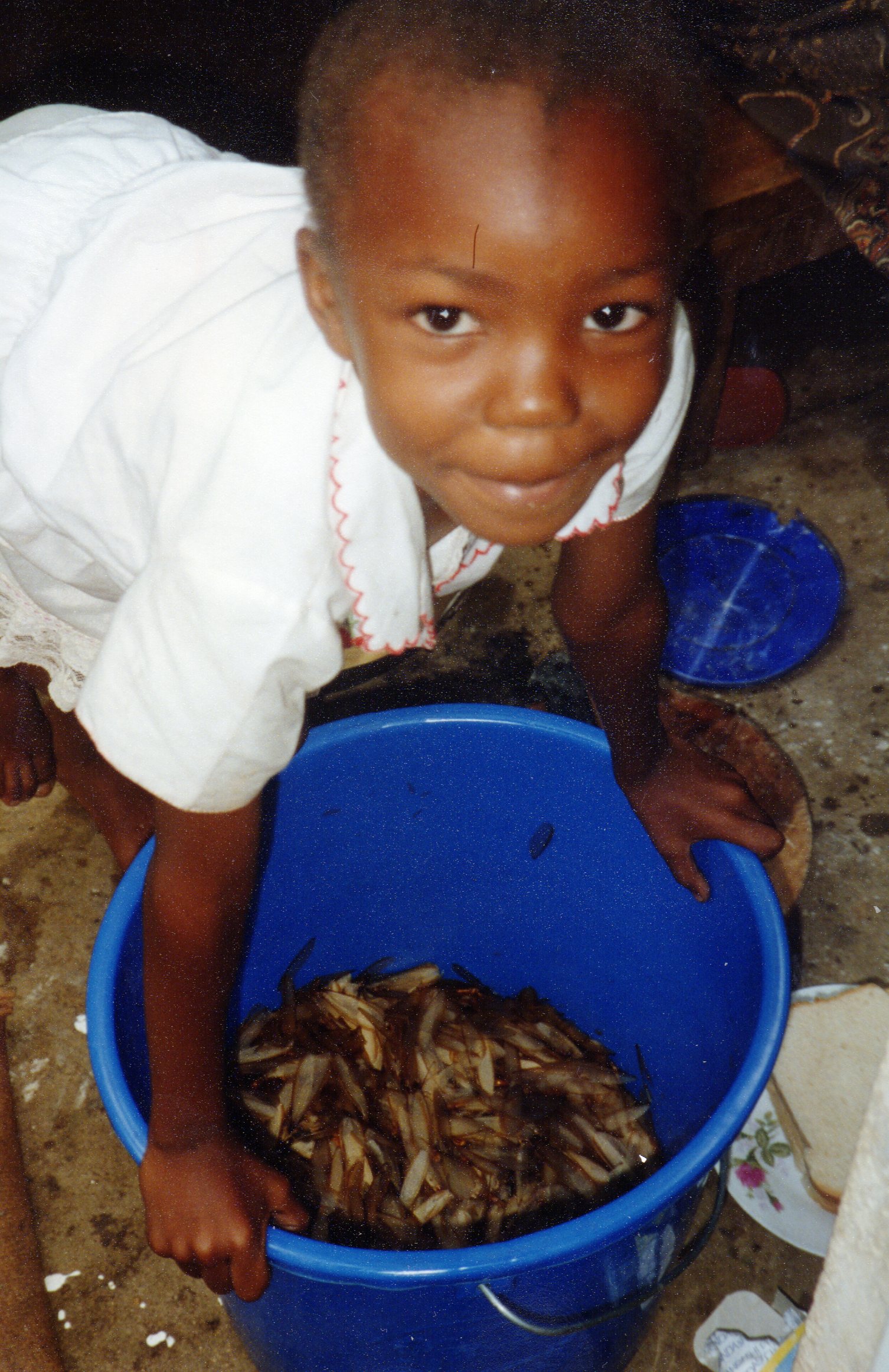
When the rain stopped the children all vanished then reappeared carrying empty tin cups, jugs or buckets.  This fascinated us and we were curious as to what they were waiting to collect.  Within minutes of the ground drying we found out.  Flying termites!!  They crawled out from every nook and cranny and took to the air.  But the children were obviously expert at this and they caught millions of the creatures.  They were so proud of their haul as they showed us how many they had caught.

By the time we reached home we were curious as to why they would want all these termites.  We soon found out when we got back to Dolrosa’s house.  There she was sitting on the kitchen floor over a gas ring with a frying pan full of flying termites.  She was preparing them as a treat for our Easter breakfast after church.

Mangoes on a market stall

Shoes made out of old car tyres

Easter Sunday buying lunch

fruit, vegetables, fish, meat, clothes, shoes, spices, all available at the market

Easter Sunday lunch is fried flying termites after heavy rain ~ nature’s bounty

Easter Sunday Mass in Kisumu

Instant swimming pool after heavy rain

Heading out to fish on Lake Victoria