
Creativity
Shakespeare’s scenes in terracotta
Ballet
Inspired by Haiku-heights September Challenge ~ Day 5 ~ Ballet
In the 1960s I was still living in Stratford on Avon studying A Levels at Shottery Manor, which was the Girl’s Grammar School. I have written a post before about the unforgettable year that was 1964 ~ Shakespeare’s quartercentenary. I was totally immersed in the Shakespeare memorial Theatre at that time and met many very interesting and exciting people. One of those who stands out for me was Rudolph Nureyev. He had only recently begun his life-changing dance partnership with Margot Fonteyn. Who could ever forget their performance of Romeo and Juliet ? It could be that he is responsible for my deep connection with the Russian culture, language, and people.
Devoted to dance
A picture of perfection
Two souls become one

September started off very busy for me so posting my haiku has been a challenge too far! However I think I have caught up now so if you have time you can read my earlier posts here:
http://wp.me/p2gGsd-Ou Shepherd
http://wp.me/s2gGsd-silver Silver
http://wp.me/s2gGsd-guardian Guardian
Silver
Inspired by Haiku-heights’ September Challenge Day 3 ~ Silver
Each night I take my little dachshund Dayna out to wander in the garden before she goes to bed. I love to sit at the end of the garden under the gazebo, where it is very dark and totally quiet, to watch the sky and enjoy the last few minutes of the day. Recently I have been enjoying the tail end of the Perseid shower of shooting stars. Last night I saw a beauty which seemed much higher than the others I have seen.
Silver arrows pierce
The depths of distant darkness,
And faraway fall
~
Meteorites make
Momentary magic, leave
Lasting memories
~
Shooting stars shatter
The celestial stillness
With their final show
~
I can’t resist reposting a haiku I wrote when my grandson was just a few weeks old!
On a soft white cloud
As silver stars surround him
He silently sleeps

Look at him now just 9 months old!

Related articles
- Gallery: 2013 Perseid meteor shower (globalnews.ca)
- Perseid meteor shower to give year’s best show on Sunday (lfpress.com)
My 15 minutes of Fame!

Me on set with Tom Chambers
It has been such an unusual and exciting week for me. While I was on holiday in Cornwall, I got a call from a casting agent about doing some filming as a supporting artist for a BBC production of a TV series. I had not auditioned or even applied for a part so I was very surprised and a little puzzled. However the explanation was simple. Earlier this year, I helped some students at the local university in the making of a short and very moving film, for their degree course. In order to complete the whole project professionally I had to register with an agency which I did. The film, “The Day My Name Changed” was produced, directed, shot and edited successfully. One of the students was kind enough to write a glowing comment on the agency’s website about me, which apparently had been picked up by a casting agent who was looking for people of just my age and type.
So it was that I found myself working this week in the Cotswold countryside alongside professional actors I have admired for years.
The TV series is called Father Brown and it is set in some of the most beautiful Cotswold villages, which is perfect for me as I live nearby. This will be the second series of the 1950’s drama based on stories by the author GK Chesterton, and starring Mark Williams who played Arthur Weasley in the Harry Potter films. The character Father Brown, who wears trademark shabby robes and a misshapen hat, is a bicycle-riding, crime-fighting, Roman Catholic Priest in the series. Sorcha Cusack plays the Parish secretary, Mrs McCarthy.
I can’t tell you the storyline or the other characters in the series we were filming for professional reasons but I can say the whole experience was fascinating and really enjoyable, if a little exhausting!
I was told to arrive on set by 7am prepared to work for up to 12 hours. First I had to go to a costume area where I found everything hung up on hangers or bagged with my name on them. There were underclothes from the 50’s including corsets, petticoat, suspenders and stockings with seams. There was a hat, gloves, shoes, a handbag and a pair of glasses, all genuine 1950’s. There was a dress and matching jacket. Once I had got into all of this on one of the hottest days of the year I was a bit uncomfortable! Next it was into the makeup and hairdressing area. Here there were several superb makeup artists and hairdressers equipped with whole tables of boxes and bags of exciting things ~ brushes of every size and thickness, rollers of every colour and type, hairgrips and combs by the dozen, and more makeup than I had ever seen!
These wonderful artists sat me down and transformed me with heated rollers then pinned on my blue hat. A covering of mat makeup and pink lipstick as per 1950 and I was done!
I hardly recognised myself and I thought I looked ancient and awful but everyone else seemed to think I looked ok so off I went to be photographed by Continuity. The continuity people are amazing and very important when filming. As shots are not necessarily filmed consecutively it is really important that every detail is right. The arm holding the handbag, gloves on or off, the right glasses on, hair still in place, makeup still on ~ the continuity people are checking and photographing constantly.
When everyone had been through costume, makeup, hair and continuity, it was time to line up for more photographs and an inspection for approval by the Director of Costumes. At this point details could be checked and adjustments made. Hats swapped, jewellery dispensed or removed, cardigans and jackets altered on the spot, shoes changed ~ his word was final. Only when he was happy were we allowed to get onto a minibus to be taken to the actual set for the filming.
It was at this point I felt like a real star as we were treated so well. Everyone on the crew from the driver to the director knew each of our names. They have a list of the actors and supporting artists with photographs and are expected to know them by name. We were given bottles of water during breaks, coffee and tea was available at any time, and a lovely cooked lunch was provided from a big catering van, which everyone used from the most important to the least. There were crew buses which everyone sat together on to eat lunch. After lunch everyone had to go through costume, makeup, hairdressing, photographs, continuity and inspection again to make sure nothing had changed. Then off in the bus for an afternoon of filming.
The whole experience was wonderful, and, at the end of the day, 5 of us were asked to stay behind for late filming. I was really excited to be one of the 5 chosen. Suddenly a sleek 1950’s black car drove smoothly down the road and stopped right where we were filming and out stepped one of my favourite stars from Casualty who was also a winner of one of the best shows on TV in the winter, “Strictly Come Dancing” ~ Tom Chambers!
I can’t tell you what he was doing there but I was tickled pink to be on set with him and to have my photograph taken with him.
It was a long day and it was very hot. It was uncomfortable wearing all those 1950’s clothes and the stiletto heeled and pointy-toed shoes were killing me. I still think I looked awful. But I wouldn’t have missed it for the world. I enjoyed every minute and I got to do it all over again on Thursday in a different village wearing a different costume.
I do hope they ask me again!
http://doyouwriteunderyourownname.blogspot.co.uk/2013/01/father-brown-tv-review.html

Me on set with Tom Chambers


Related articles
- “Father Brown” by G. K. Chesterton (jaybin1984.wordpress.com)
Lost Gardens of Heligan
 Original George V postbox at Lost Gardens of Heligan.
Seeing this old post box at Heligan reminded me that the prompt word for haiku-heights this week is “time”. The postbox is from the first world war period and is marked with the plain G R indicating it was from the time of King George V, who reigned for 26 years from 6 May 1910 to 20 January 1936. It seemed fitting to link it with the sad fate of the gardeners who worked on the gardens
Garden abandoned
Young men posted like letters
To fight at the front
I recently wrote about the mysterious Church of Ampney St Mary which had been covered in ivy and lost for years until it was rediscovered in 1913.
Today I visited an equally mysterious garden in Cornwall which had been lost in undergrowth and weed for over 75 years until it was rediscovered quite by accident in 1990. Heligan had been the seat of the Tremayne family since the 16th Century and was surrounded by fabulous gardens which had been designed and added to by successive members of the family. At the beginning of the 20th century there were 22 full time gardeners looking after the estate. But in 1914 when war broke out they all had to go away to fight. Before leaving one of the gardeners scratched a puzzling message into a wall saying, “Don’t come here to sleep or slumber…”. Under the message were the names of the workers and the date August 1914.
W Durnsford
W Guy
William Robins
R Barron
Chaeles Dyer
Charles Ball
Albert Rowe
W Rose
3 Paynters – initials illegible
Vercoe
Vickery
Leonard Warne
D Hocking
Percy Carhart
Others were illegible
16 of the 22 gardeners were killed in the war and the fortunes of the Tremayne family home were altered for ever. During the First World War Britain suffered a terrible decline in its social and economic structures. Many large estates were broken up including Heligan. The house itself was rented out and the gardens became overgrown through neglect until they all but disappeared.
That could have been the end of the story but John Willis, who is a descendent of the Tremayne family who lived in the area visited Heligan with some friends. While exploring he found a tiny room buried under fallen masonry and there on a wall he found the gardener’s sad message. It captured his imagination and along with his friends he decided to restore the gardens to their former glory in memory, not of the great people who had owned the estate, but of the great gardeners who had worked on it.
And so the amazing restoration of the Lost Gardens of Heligan began. It is an ongoing project but the gardens today were magnificent. My favourite bits are the Crystal Grotto, the flower garden and the jungle. My favourite plant was the tree fern. But the whole place is enchanting, atmospheric, mysterious and inspirational. I saw lots of wildlife and half expected to see fairies dancing in the woods!
Do enjoy the photos I took today in the flower garden and take a look at the website for the Lost Gardens of Heligan.


All the world’s a stage
As I drove around the park area of Cheltenham today I noticed a road called Rowena Cade Avenue. I wondered how many residents of our lovely town know who she was, so I thought I would blog about her connection with the town and her amazing legacy. As this year is the centenary of the start of WW1 I thought this was appropriate. Rowena spent her formative years living in Cheltenham where her uncle was Head of the Junior school at Cheltenham College. Rowena herself went to Cheltenham Ladies College for a while. Rowena lived with her father James, and her mother, in a house called Ellerslie, which backed onto Pittville Pump Rooms. When the First World War started she was given the heartbreaking job of selecting and breaking in horses to be sent to the front. Readers may have seen the play or film of Michael Morpurgo’s book, War Horse. This perfectly illustrates the horrors those poor horses were sent to.
After the war Rowena’s father had died and the rest of her family had dispersed, so she moved to Cornwall. It was here she developed her talent for designing and making costume, putting on shows, and ultimately developing the unique and iconic Minack Theatre. The theatre was entirely planned and financed in the 1920s and 30s by this inspirational woman, Rowena Cade. The Minack was her passion and she literally worked on it until she died at almost 90 years of age.
We visited the Minack Theatre while we were on holiday in Cornwall. The weather was spectacularly good which made the setting all the more wondrous. The stage is made of stone set against a backdrop of the cliffs and sea. There is a stone balcony, stone pillars, stone boxes and all the terraced seating is tiered into the cliff face and made of stone. Many of the seats have the year carved into them as well as the title of plays performed in that year. The first play to be performed there was The Tempest in 1932. There is a seat with 1939 carved into it and the next one says “Break for the war”! Some of the stone seats have huge cockle shells carved into them.
Around the theatre is a spectacular garden with plants from all around the globe. The plants were chosen by Rowena to withstand the salty winds coming off the sea, as well as the very wet winters and often hot, dry summers.
Minack theatre is open all year round to visitors. If you are lucky and you visit between in spring or summer months you may see a play, concert or opera. You would be advised to take a cushion and have something warm to wear as the seats are solid stone and it can get very cold.
While we were there, the performance was the Marriage of Figaro. This year there is surely something for everyone, including:
Pygmalion, Tosca, Far From the Madding Crowd, The Producers, Oh What A Lovely War, A Midsummer Night’s Dream. The full programme can be found on the website http://www.minack.com/
I took lots of photos as the weather was so good. I hope they give you an insight into the wonderful achievements of Rowena Cade.


Woodcarving
This post is inspired by the last two prompts from http://haiku-heights.blogspot.co.uk/
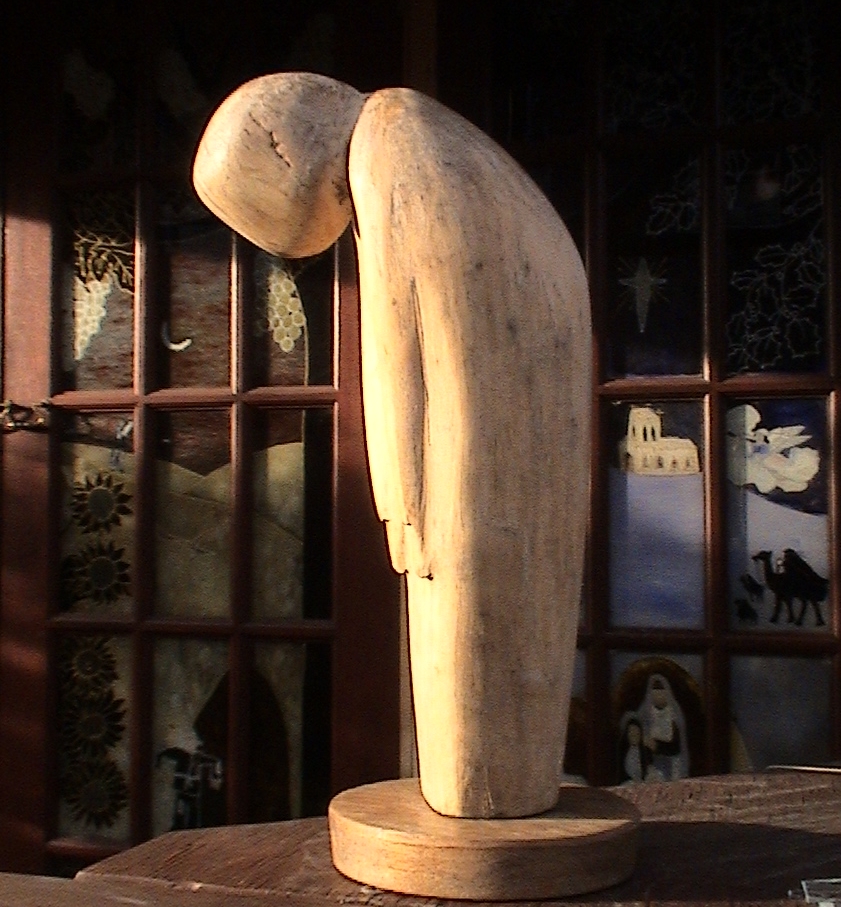
Mum’s woodcarving
Their hands held the tools
As they carved out the figure
That touches my heart
~
She whittled in wood,
Carved, chiselled and sanded.
A figure was formed
~
My parents now gone
Left a lasting impression
Character forming
~
She saw through the wood
A spirit living within
And set his soul free
~
Silent and stooping
The essence of pure sadness
Released from the wood
~
Working with the wood
His chiselled features forming
Smooth-sanded statue
The first prompt “fingerprint”, made me consider how special some things are to me simply because they belonged previously to, and were held by, someone I have loved. I was reminded especially of a figure that my mum carved out of wood many years ago. The wood was hard to work with so my dad helped with the chiselling and carving. I distinctly remember them both working away very happily at this piece of original craftwork, their fingerprints ingrained in the wood.
Gradually the character in the wood was revealed. It was a particularly striking piece I always thought, but my mum thought him a little gloomy for display in the house. So he lived on a plinth in the garden for years. As he stood battered by the weather he gradually looked more and more dejected.
The second prompt word is “sand” which fits nicely into the second stage in the life of this figure.
After my parents had both died the figure came to me. He was battered, discoloured and very rough but very precious to me, having been physically created by my parents. So my lovely husband took the figure off its rotten plinth, cleaned and sanded it down, then fixed the base. He still looks very careworn and dejected ~ the figure that is ~ not my husband, but I love it so much that it now sits on a shelf in my lounge.
I would not part with it at any price.
Paperboat

In a sea of ink
I sail to Oblivion
on a paper boat
Inspired by the haiku heights September challenge. Today’s word is Paperboat.
Island and Lights haiku
Oops I missed a day yesterday in the haiku Heights challenge as I had a dreadful migraine and could not face the computer. However all well today so am sneaking both in together!
Island Haiku
In Ladoga Sea
Russia’s rejected lived, on
Old Valaam Island
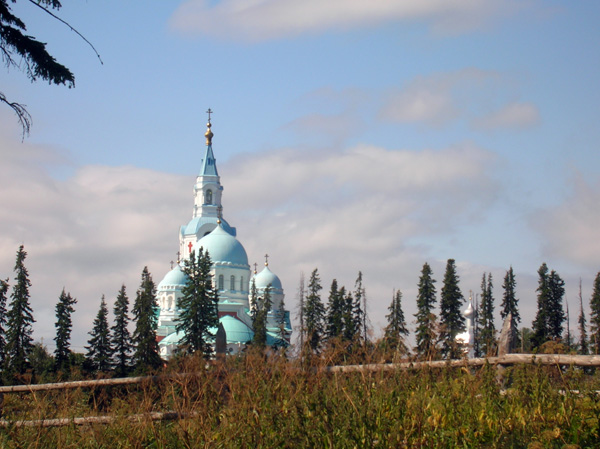


I visited Russian Karelia and Finland in 2001 on a tour of Monasteries and Orthodox Churches when I was studying Icons. It was a totally wonderul trip and I saw some magnificent sights. We stayed at the new Valaam monastery where there is a brilliant iconographer. I learned a lot from him. We also visited the Old Valaam Monastery which is on an island in lake Ladoga. In 2001 the island was a sad and menacing place. The monastery and cathedral were badly damage; with lots of deliberate damage from its troubled past and natural damage from the severe weather. In times past Russia’s disabled soldiers and rejected people, many suffering awful physical and mental problems were sent to this island. They were virtually abandoned there, isolated from the rest of the world and had to fend for themselves as best they could. They had no love for the buildings or the faith of the few monks left there and lived in abject poverty and squalor.
I am thrilled to say that the monastic community is now thriving and the buildings are restored. The website http://valaam.ru is just wonderful and will tell you all about the history of this special ancient place. There is also a wonderful picture gallery so do look at it if you have time.
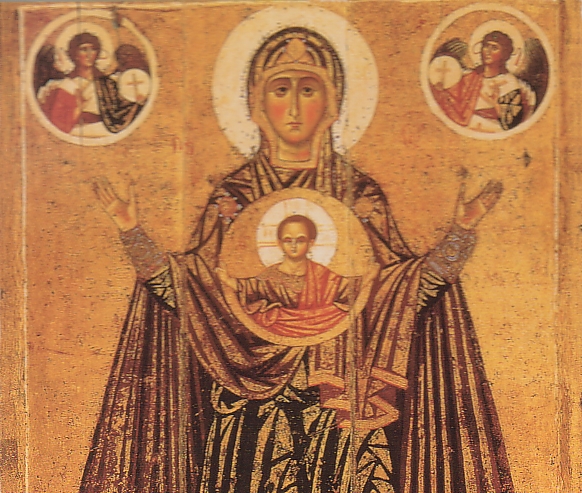
As I mentioned I am very interested in Icons and I loved to travel and take photographs or collect pictures of old icons. My favourites are the Marian or Theotokos (Bearer of God) ones, and I have a collection from all over the world. It fascinates me that every culture has their own take on the Mother of God and I have black ones, Chinese ones, and even an Indian squaw one from a reservation in NW Canada. There seems to be a deep need in every culture to revere a mother figure so that is what my next Haiku reflects:~
Lights haiku
She lights up my life
Motherhood epitomised,
My icon, my rock.
Creation ~ haiku

Illumination
Meditation on the word
Sacred creation
This haiku was inspired by the September Challenge on haiku heights ~ today’s word is Creation.
One of the most beautiful creations I have seen in recent years is an exquisite handwritten St John’s Bible. It is the fulfilment of a lifetime’s ambition for the artist and calligrapher, Donald Jackson. Working with a Benedictine community in Minnesota, USA and with scholars in Wales, UK, he has created over many years “a work for eternity”. Every word is written by hand and every illustration is a modern meditation on the text. Do click on the link ~ you will be amazed by the beauty of the work.
I saw the first edition when it was displayed at St Martin in the Fields Church in London and was lucky enough to buy prints and take photographs. I believe it is on display in USA now and it is well worth seeing.
I could have written lots of haiku on the “Creation” theme ~
Created with care
A harvest in harmony
Floral creation

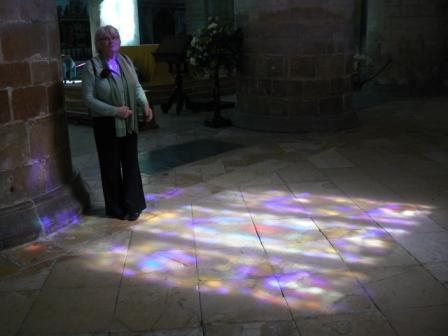
Illumination
Sunlight reveals its beauty
Creation in glass


and the most important one ~ my soon to be born grandchild!
Life is unfolding
In the comfort of the womb
A new creation
Blogging advice
Thought my fellow bloggers might be interested in this bit of advice I had forwarded to me. I am learning all the time!
http://socialmediatoday.com/ginidietrich/696166/eight-common-blogging-mistakes
The Spirit of Our School
Rest not! Life is sweeping by; go and dare before you die. Something mighty and sublime, leave behind to conquer time.
— Goethe
St Thomas More School was a huge part of my life. In the early 1970’s I watched the new school building rise in the middle of an open field that had once been farmland and an orchard. There was an ancient hedgerow all around the site and just one magnificent old oak tree in what would be the playing field. When it was opened in 1975, I was having my third child so was not available for teaching. But, as I drove past the school every day, I vowed that one day I would work there.
I got my wish in 1984 when my youngest child was ready to start school. I was offered a job and jumped at the chance. The next decade was a time of great blessing as I worked in virtually every class, teaching all age groups, then became deputy Head. In 1994 the original Headteacher was due to retire and, to my surprise, I was offered his job. He had been such an inspirational Head that the school was a joy to work in. Taking on his role, I tried to emulate him while making my own mark and bringing my own vision for the school into being.
Due mainly to the quality of the staff and their outstanding teamwork, the school became a strong and successful community, ‘an oasis of excellence’, appreciated by staff, pupils and parents alike.
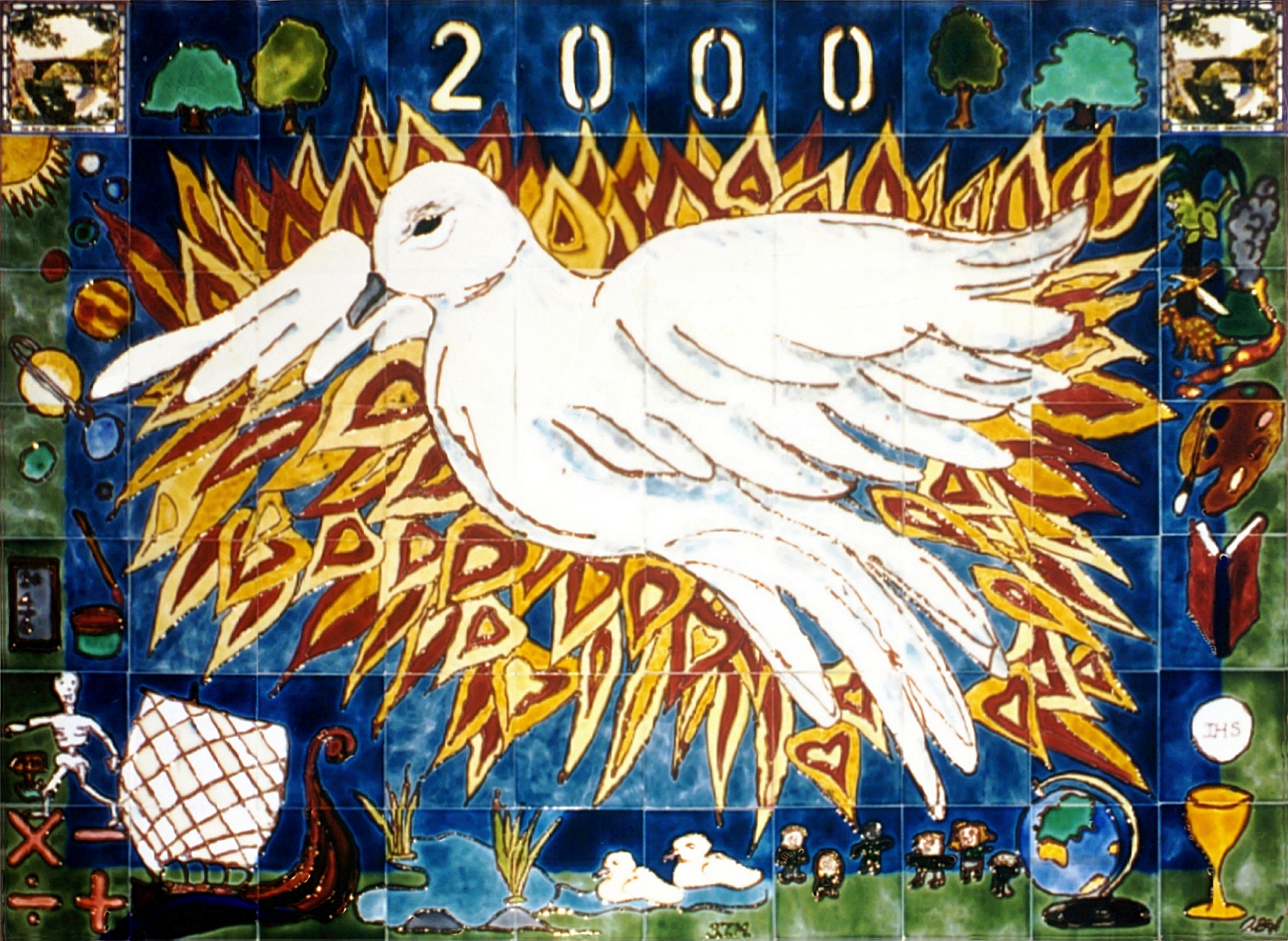
In 1999, as the new millennium approached, the staff wanted to mark the year 2000 with a special feature. We wanted the whole school community to be involved in creating something totally unique and meaningful. We came up with the idea of making a large tile frieze. Each year group was asked to brainstorm their favourite lessons, subjects, or topics, and represent their ideas on paper.
Reception class, the youngest children were just 4 or 5 years old and had only just started school. They had their photographs taken in their shiny new uniforms, so that was their contribution.
The Year 1 class had helped to build a pond and were raising ducklings which they had hatched from eggs in an incubator, so they drew pictures of that. I have a wonderful memory of the day the ducklings hatched out ~ the local policeman had called up to the school on a social visit and he watched as the first duckling struggled to crack open the shell. When it finally succeeded and out popped this beautiful and perfect little bundle of yellow feathers, he was overwhelmed by emotion and had tears in his eyes.
In Year 2 the 7 year olds made their first Holy Communion as it was a Catholic school so they drew a chalice and host. Being the most significant event in the year, that was their contribution.
Year 3 was the first year of juniors and the children enjoyed learning about Vikings and the Human Body, so they drew lovely longboats and skeletons.
In Year 4 things got much more subject focussed so Maths was represented by a calculator and mathematical symbols.
In Year 5, Music, Dance and Art were the main features, so a pot of paint and a brush was drawn. Science too was represented by the planets.
By Year 6 the children were getting ready to move on to secondary school. In order to give them a taste of independence and adventure, it was our tradition to take the class away to Shropshire for a week to stay in a Youth Hostel. Here, in the Ironbridge Gorge, birthplace of the Industrial Revolution, we had a wonderful time. We visited the Iron Museum, The Jackfield Tile Museum, Blist’s Hill Reconstructed Village, River Severn Museum and of course the first Iron Bridge ever built. We also had amazing night hikes, midnight feasts and parties. Altogether it was an incredible opportunity for fun and learning. So naturally the Ironbridge at Coalbrookdale was the emblem of Year 6.
The staff gathered all these pictures and images together and chose the ones that would be painted on to the tiles. The Year 5 teacher, ABW, a wonderfully creative artist and teacher, took on the challenge of putting all the ideas together and creating a design on tracing paper which could be transferred onto numbered ‘green’ tiles. It was agreed that we would go to Jackfield Tile Museum to create the finished work.
A representative group of staff, parents and children spent a weekend at the Youth Hostel and were each given a small area of the tile frieze to paint. ABW had done a magnificent job scaling all the children’s artwork up or down so that the frieze would reflect the life of the school. It was agreed that the year 2000 would go at the top, as well as the 4 trees, oak, ash, poplar and beech, which were the school emblem. In the top corners would be tiles depicting the Ironbridge itself. The children’s artwork would go around the edge, and at the centre would be the Holy Spirit in the form of a dove surrounded by flames.
We painted the tiles in coloured glaze. I will never forget the atmosphere in that studio at Jackfield as we worked on the frieze. There was a stillness and peace in the room which was truly sacramental. While we worked, the Spirit moved in that place and heaven happened.
When we finished, the tiles were left at the Jackfield tile Museum to be fired. A couple of weeks later they were collected and set into a frame made by the reception class teacher’s husband.
Bishop Mervyn Alexander of Clifton RIP came in the year 2000 to celebrate the school’s 25th anniversary and he blessed the tile frieze.
Although most of the staff who worked at the school have retired or moved on now, the frieze is still there in the school hall. And with it is a little piece of all of us who made it.

Staff, Parents and Children helped make the tile frieze at jackfield Tile Museum

Anne Bate Williams Teacher and Artist was responsible for the whole project

Almost ready to paint with glaze, the design has been drawn onto the tiles
Sanctuary ~ a Sacred Space
 My Sanctuary
At WI I received a lovely gift in the lucky dip. It was a silver bag containing a little silver and diamanté heart and 2 bottles of Sanctuary; a brand of luxury bathroom products. It was lovely, although as I only have a shower, it may be passed to someone else!
The word ‘sanctuary’ comes from the Latin root word, sanctus, which means holy. So the primary meaning of the word is, ‘a sacred space’. Following on from this is the idea of a ‘place of refuge’, where someone can escape to and find safety.
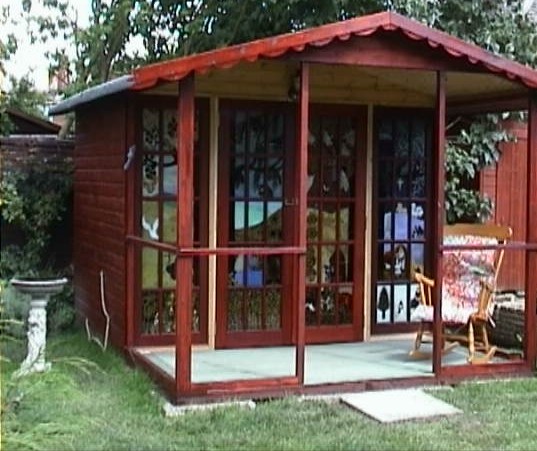
In the year 2000 I retired exhausted from full time working, and spent a year seeking ‘sanctuary’ from a life so busy that it had overwhelmed me. Being too ill to go anywhere, my sanctuary had to come to me, so my wonderful husband built me a summerhouse at the end of the garden where I could find some healing peace.
It was 3metres by 4metres made of solid wood lined with tongue and groove pine panels with a waterproof, pitched roof and 4 doors. Each door had 12 glass panes and I was inspired to paint them with glass paints.
At the time I was reading “Landmarks”, An Ignatian Journey, by Margaret Silf and the book inspired me to consider my faith journey. Knowing that the Domain in Lourdes has been the most formative place in my faith life, and thinking (wrongly) that I might never be well enough to go there again, I decided to reflect its importance in my summerhouse. Each door would have a depiction of the grotto and of water included, as well as images that I love.
I chose the 4 seasons as my theme and decided to paint the doors Spring, Summer, Autumn and Winter. Before the doors were hung I measured out 4 pieces of wall lining paper and sketched my designs
for each door. I used trees, laburnum, wisteria, maple, holly, bending towards each other to form arched shapes. I then drew images from nature related to each season, mice, hedgehogs, robins and anything else that came into my mind. Once the paper design was complete I stuck the paper onto the back of each door and drew over it straight onto the glass with ‘tube lining’. This dries quite quickly so then I started to paint!
I am not an artist so the result was very primitive, but because the glaze comes in such beautiful colours, the overall effect was stunning.
Once the doors were hung we laid electricity cables to the summerhouse so that we could light it from inside or out. This meant that at night we could see the stained glass effect shining down the garden from the house. If I was in the summerhouse on a sunny day with the doors shut, the stained glass effect cast coloured light all over the inside of the summerhouse. If I was in there at night I sometimes turned off the lights and lit candles to gain a different effect.
This was my sacred space, my sanctuary, my still point, my little bit of Lourdes and I loved it. In my summerhouse I looked deep inside my self; I wrote my life story; I restored my spirit; I emerged a different person.
Sadly, I had to move home 3 years ago, and I could not take my summerhouse with me. But I have the photographs and I just have to think of it to find a beautiful stillness.


Glass-Painted Summerhouse Doors My sacred space in winter

Winter Glass-Painted Summerhouse Door

Spring and Summer Glass-Painted Summerhouse Doors

Glass-Painted Summerhouse doors My sacred space in summer
Coin Street Chronicles
Having just celebrated the Queen’s Diamond Jubilee and been amazed by Her Majesty’s strong constitution, sense of humour and resilience, I have been reflecting on all that her generation have lived through.
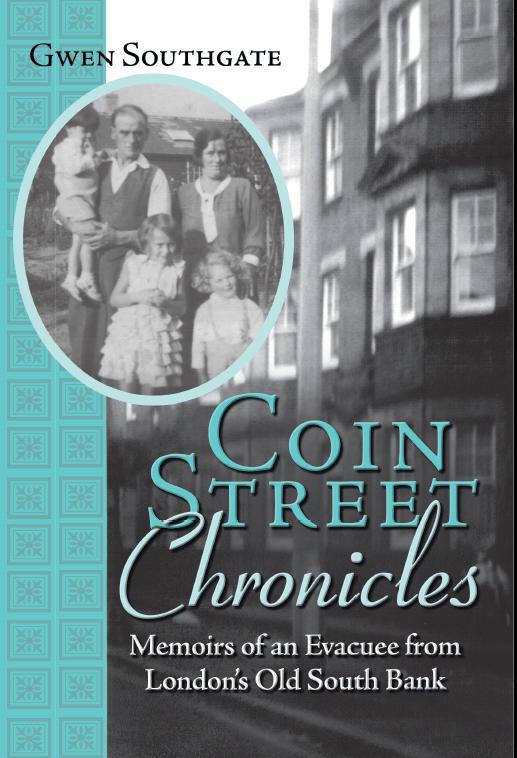
This led me to a book, beautifully written by Gwen Southgate, called Coin Street Chronicles, which was recommended to me by an American friend. Gwen was born in 1929 into a very poor but caring family, and grew up in the Waterloo District of London. By the time she was 10 the World War had started and Gwen, along with all her classmates was evacuated to the Dorset countryside. Gwen moved six times over the next few years and grew in maturity with a very positive attitude to life, despite its hardships. Gwen was a very intelligent girl and devoured books. Her teachers were amazed that, although she spoke with a strong cockney accent, she wrote in beautiful prose.
Eventually Gwen managed to get to London University where she studied Science, and met her future husband! She taught Science in high schools for many years. She married and had 2 children before moving to Chicago. She had two more children before moving finally to Princeton, USA.
When Gwen retired from teaching she started writing her memoir as a legacy for her children. It took her 15 years. Her remarkable memory and the ability to recall every detail from a child’s perspective enabled her to write vividly and with humour and sensitivity. She published her book herself in America through iUniverse and gave readings for friends and book groups. Her book was passed from friend to friend and grew very popular through personal recommendation. In fact it became so popular that it was an Editor’s Choice book from the beginning and won a Star award! On the American Amazon site there are 23 wonderful reviews and everyone gives Coin Street Chronicles a 5 star rating. It has been read by academics, editors, reviewers and has twice been likened to the writing of George Orwell.
My review of Coin Street Chronicles
Coin Street Chronicles was recommended to me by a friend who lives in London. We both thoroughly enjoy wandering the streets of London and finding out about the buildings, streets and boroughs, and what life was like for the residents in years gone by.
The houses in Coin Street are long gone and the area is now part of the very glamorous South Bank with its wonderful riverside walk. But reading the book transports us back to how it was before, during and after the Second World War. The book also covers parts of Wales, Sussex and Dorset where Gwen and her little brothers spent years as evacuees. It is a snapshot of a 20 year period when life was so different from today.
But having read the book, devouring it would be more accurate, I can’t stop thinking about it. This book is so much more than a memoir, although as a memoir it is brilliant. All of life is here in its pages. There is history, humour, pathos, tragedy, wisdom and truth revealed, which is almost Shakespearean. The book is simply written, in a conversational style, but it deals with issues that are relevant to us all whatever our age or personal situation.
There are complex family relationships, childhood confusion and misunderstanding, education problems, teenage angst, marital difficulties and the problems of living with family members with a range of physical, emotional or mental difficulties.
It is fascinating to read a firsthand account of coping with air raids, bombings, food rationing, evacuation, homelessness and poverty. Beneath all that there is the gradual revelation of how misinterpretations or misunderstandings between family members can lead to alienation and lifelong estrangements. My heart breaks for Bertie and Derek and I think Gwen should write another book just about them!
But the part of the book that will stay with me is the complexity of the parent/child relationship. For a variety of reasons Gwen and her mother had a difficult relationship and it was only when writing the book that she felt she truly understood what a wonderful woman she had been.
I think everyone would gain from reading Coin Street Chronicles: the elderly for the memories of a time gone by, the middle aged to truly appreciate what their parents lived through and the young to help them understand themselves and their parents.
I think it would make a wonderful radio play or TV programme and it should be required reading in schools as part of History lessons.
Brenda Kimmins
It is available in the UK to order from various bookstores, or to buy or download online.
Related articles
- Queen’s diamond jubilee: pageants, parties and more – live (guardian.co.uk)
Journaling my Journey number 2
Journaling my Journey
Some years ago when I was feeling very low, my daughter sent me a copy of The Artist’s Way by Julia Cameron. I started writing ‘morning pages’ as Julia suggested. It was just 3 pages of stream of consciousness words, whatever came into my head. Sometimes, if words just would not come, I drew sketches.
I used to get up very early in the morning anyway as I was finding it difficult to sleep. So before I listened to the radio, read the paper, did Sudoku, filled in a crossword, switched on my computer, or had any distraction or outside input I would write my morning pages. I did this religiously (interesting word) every day for the weeks and months that followed. I did not read the pages back and I did not show them to anyone. In fact if I was really down I would wrap the pages round with Sellotape and hide them in a cupboard, figuratively locking away the pain that was revealing itself on the pages.
The Artist’s Way is of course a 12 week programme for creative discovery and/or recovery. However, apart from the urge to draw little sketches alongside my pages I did not discover any hidden artistic talent during those 12 weeks! Nevertheless, I continued writing my morning pages and taking myself off on ‘artist’s dates’ for another couple of years, and my depression lifted.
In Autumn 2011 I saw an advert for a course at the Isbourne Foundation on “The Artists’s Way”. Knowing how much I had enjoyed following the book, I was intrigued and inspired to sign up, which I did. There I met tutor Dr Lesley O’Neill and joined a small group of women whom I immediately felt connected to. So I read the book again and inspired and encouraged by Lesley and the group, I discovered to my joy that I did have some creative talents. Poetry popped up, Haiku hurtled out. I dabbled in drawing, played with Plasticene, discovered Zentangles, started writing stories, and carried my camera everywhere I went. Now, I wrap my pages in pretty ribbon, not Sellotape, and I save them in a beautiful turquoise box with doves all over it. I now live the Artist’s Way. I am part of a small local community of creative and inspiring women and my life is transformed. With them I am free to be myself and express myself, with no pretensions, no explanations and no alibis required. There are never enough hours in the day for all I want to do. I have several writing projects on the go including newsletters, travelogues, competition entries, children’s stories, my blog, and of course my morning pages. But now I realise that they too are transformed into Journal entries. I realised this after seeing a recommendation for the book “Life’s Companion, Journal Writing as Spiritual Practice” by Christina Baldwin on the New Hampshire Writer’s Group blog www.nhwn.wordpress.com that I follow . I bought the book and look forward to continuing my journey of discovery ~ discovering myself!

Rapeseed field ripening in the Cotswolds
Related articles
- Favorite Writing Books (nhwn.wordpress.com)
- On becoming a writer (paulmdonovan.wordpress.com)
- Morning Pages Challenge (candidconcourse.wordpress.com)
- Have you ever kept a diary? (richlingo.com)
 Heavenhappens