Intricate and Artistic

Horse Sculpture at Ellenborough park

Horse Sculpture at Ellenborough park

Intricate Blog

Today I went to a May Bank Holiday Fete in a beautiful Cotswold village.  On the way back I had to pop in to Ellenborough Park, which is a beautiful hotel at the foot of Cleeve Hill near the Cotswold Way.  It is a gorgeous hotel, traditionally built in Cotswold stone.  It dates back to the 16th century and it shows!  It just oozes history.  I have a soft spot for the hotel because my youngest daughter was married there in a most romantic ceremony.

In front of the hotel, facing Cheltenham racecourse, there is a magnificent life-size sculpture ~ of a horse.  It is created from what looks like bronze wire and is very intricate!

I just love wire sculpture, especially natural subjects like horses and hares.  I have added a link to an amazing artist in case you would like to see more. http://www.ruperttill.com/retrospective.html

Cheltenham is famous for horse racing and of course the Cotswold countryside lends itself to lots of equine establishments and pastimes.  In 2011 the centenary of the Racecourse was celebrated with a Horse Parade with a difference.  10 Life size sculptures of horses were created and decorated to reflect their sponsors.  The horses were displayed in prominent places around the town before being auctioned at the racecourse for various charities.

Thousands of pounds were raised for a variety of charities.  Indeed Ellenborough Park raised £4,800 for a local cancer charity.  If you would like to see pictures of all the horses, they are here  http://www.cheltenhamartgallery.org.uk/Docs/horse%20parade%20auction%20leaflet_toprint.pdf

Scale

Fascinated by the photos on the Weekly Photo Challenge, I thought I would join in this week.  The prompt is ‘scale’ and I just had to post a photo of scale model of a hare.

In recent years there has been a spate of large scale ceramic or stone objects appearing in towns and cities of the UK. Having mentioned it to my daughter last night I know that they have been seen in the USA too. The first time I came across it was when my grandchildren, Ben and Rosie went to London and were photographed alongside large colourful elephants. Wallace and Gromit were in Bristol recently too.
Next I heard of a Gorilla festival in Torbay and Exeter. There was also a festival of decorated horses in Cheltenham in honour of the races. Then it was 5 foot tall hares in Cirencester.
Why hares you might wonder?
Well Cirencester was a very important place in Roman times. It was called Corinium and had very good road links to the rest of the UK, such as Ermin Way and the Fosse Way. In 1971 during an archeological dig in Beeches Road near to the River Churn, a Roman mosaic was discovered depicting a hare. The original is now on show in the Corinium Museum.  Hence the theme of hares for the festival. There were about 50 hares around the town. Most of them were 5 foot tall and decorated by local people including schoolchildren, members of the public, celebrities and artists. All of the large hares were named to reflect their sponsors.  One of the most beautiful hares, named Tess, was on display in the Corinium.

Here are some of the others for you to enjoy ~

The simple song that spread around the world

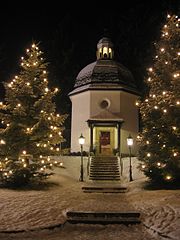
Church at MariapfarrThere are some times, they are rare and they are brief but they happen, when the horizon between heaven and earth melts away and the future is changed forever. It is often those who have suffered the most who experience such revelations.   Their gifts are a profound peace, the knowledge that all will be well, and total clarity about the course they must follow.

I am sure that it was just such an experience that led a young man from a desperately poor background to create the world’s most popular Christmas carol. A carol which caused soldiers to come out of their trenches one Christmas Eve during World War One to share rations and gifts with the ‘enemy’ and even play a game of football together!

It was Joseph Mohr who wrote the words to Stille Nacht, (Silent Night).  He had a very inauspicious start to his life.  Born in Salzburg in 1792, he grew up poor and fatherless.  His godfather was the local executioner and his mother knitted to make a living.  But Joseph was a special boy.  He sang in the church choir and had a gift for music and poetry.  These talents were recognised and encouraged by the local priest who helped Joseph through school, on to university, then to work as a curate, and ultimately to train as a priest.

But times were hard in Europe during his early years.  As well as natural disasters such as flooding, which destroyed livelihoods and infrastructure; the Napoleonic Wars had seen Salzburg and the surrounding towns and villages devastated, occupied, bombarded, defeated and heavily taxed.  The ordinary people were suffering in 1816 when Joseph Mohr found consolation in the church at Mariapfarr.  There he was inspired to write the words to his carol.

It would be two more years before the carol was set to music by Joseph’s friend, the organist and choir director, Franz Gruber in Oberndorf.   They sang the carol together in German at midnight mass with guitars for accompaniment.  The aim was to bring the Christmas spirit of love, peace, comfort and joy to their community in these difficult times.  They surely succeeded then and ever since.

Joseph Mohr died penniless in 1848, having used all his earnings to provide education for the young and care for the elderly in his parish.  He would never know that his little carol would travel the world being performed over and over again.  It would be translated into over 300 languages and become the people’s favourite Christmas carol nearly 200 years after it was written.

Now that is a legacy to be proud of!

Silent Night Memorial Chapel in Oberndorfhttp://www.youtube.com/watch?v=aGA6djLsDgs

A Living Poppy in a Doughnut

A Living Poppy

A Living Poppy

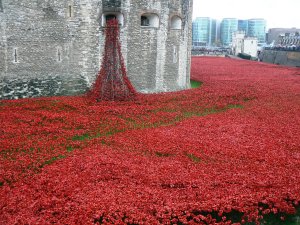
Before Christmas I wrote a post, “Blood Swept Lands and Seas of Red”, about the spectacular poppy installation at the Tower of London to commemorate the centenary of the start of World War 1.  I meant to follow it up with a post about a huge ‘living’ poppy that was created locally at GCHQ.  But 2014 ended as it had progressed, with accidents, emergencies and disasters of a medical, rather than domestic kind!  Now that my own personal Annus Horribilis has ended, and a new year has begun, I am determined to continue with my blog.  So here is my belated post on poppies and peace.

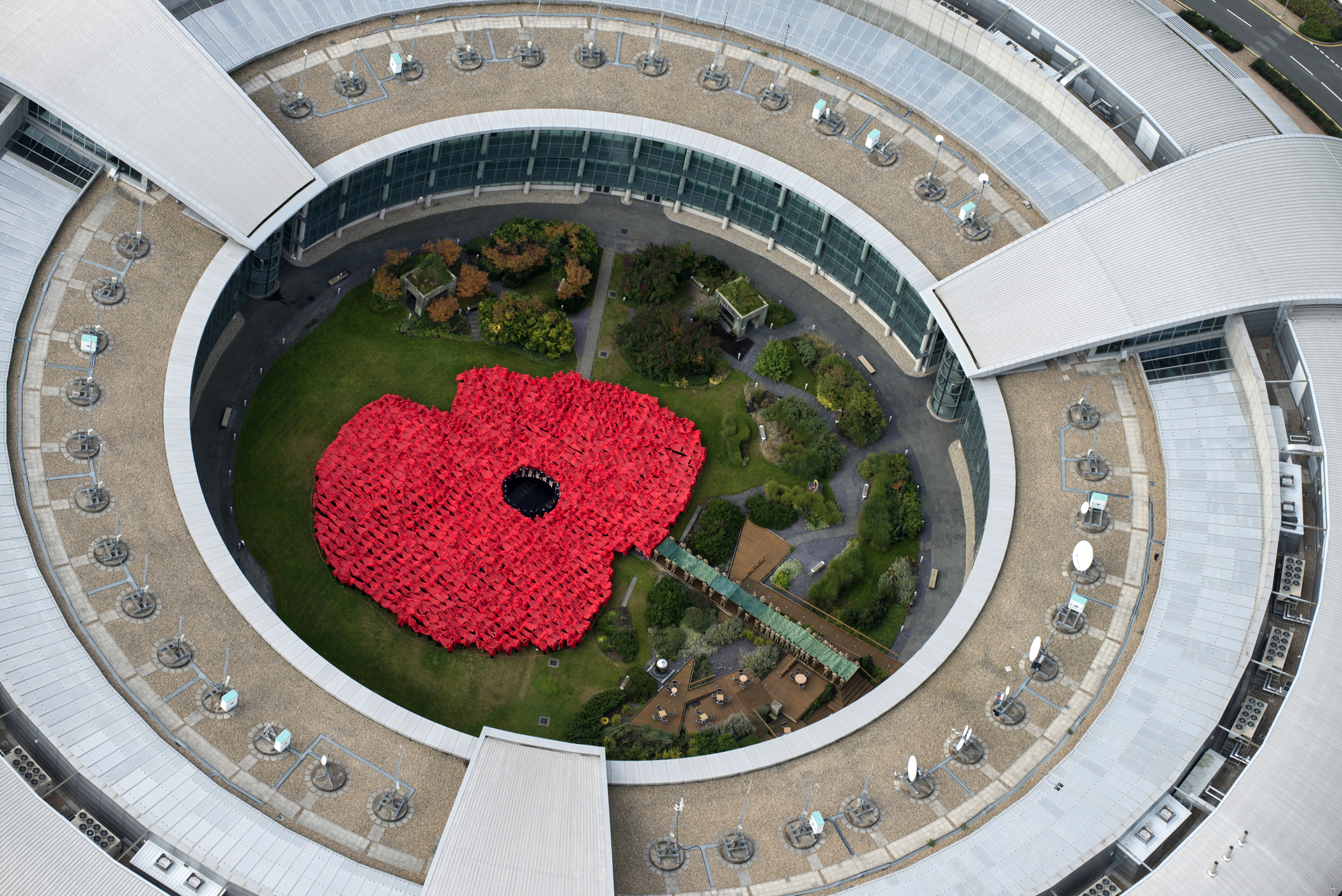
I have mentioned before that I live near ‘The Doughnut’, which is the local nickname for the building which houses the Government Communication Headquarters, GCHQ.   Being an important part of our country’s security service, we rarely find out what is happening inside the building.  They are brilliant at keeping things quiet!   So it was a great surprise to find that many of the workforce, past and present had taken part in what can only be described as a ‘happening’!

The Gloucestershire branch of the Royal British Legion wanted to do something special, unusual and spectacular, to mark the centenary of World War 1 and GCHQ personnel volunteered to help.  What they created was certainly spectacular and got quite a lot of press coverage although, unlike the Tower of London installation, no member of the public actually saw it for real!

A single giant poppy, representing ‘Remembrance of the past and hope for the future’, was created with military precision and great planning.  27 service people from the Royal Navy wore black uniforms to form the centre of the poppy. They were surrounded by 1308  GCHQ staff in red rain ponchos to form the petals.  73 other military personnel wearing green combat dress formed the stalk.  Altogether 100 military and 1308 civilian staff were involved and the completed poppy measured 38 metres in diameter with a 28 metre long stalk.  It took just over an hour to get everyone in position.  I read that the GCHQ’s brass band, ‘Top Secret Brass’, provided rousing music to keep everyone’s spirits up.   Aerial photographs were taken from a helicopter, and I am delighted to say that I have been given permission to use them in my blog.  You can also watch the creation of the poppy here http://www.youtube.com/watch?v=zc5ijfpXwK0

Participants were invited to make a donation to take part and £1730 was raised. The used ponchos were donated to local charities namely a number of scout groups in the local area and Bloodbikes, a charity providing out of hours emergency medical courier service to Gloucestershire and the surrounding counties.

In view of the amount of blood transfusions my husband has had recently, I have to say that is a cause very close to my heart.


“Blood Swept Lands and Seas of Red”

 P1100839

The weather was atrocious when I finally managed to visit the Tower of London with a friend.  After an unseasonably warm October, November has arrived with a splash.  It rained non-stop while we were at the Tower.  Not gentle rain, or refreshing rain, but relentless, heavy, pounding rain, that ran in waves down the sloping entrance, soaking my shoes and the bottom of my trousers.  My daughter has this theory that if it is raining in Barcelona where she lives, it will be dry in London and vice versa.  She happened to ring me just as I was leaving the house clad in wellies and mac.  But as there was a thunderstorm and heavy rain in Barcelona, she said I wouldn’t need them so I changed.  She was wrong.  I got soaked!

Despite the rain, the Tower was packed with visitors and I was impressed by how cheerful and friendly they were.  Most of the people I spoke to in the extremely long queues were from London or nearby counties of Kent and Essex.  Some said they hadn’t been to the Tower since they were children on a school visit.  Others, like me, had made a day trip involving hours on public transport- coaches, trains, buses and the underground.  Travelling, walking, and queuing all in torrential rain.  All had made the effort because they were keen to see the installation officially called, “Blood Swept Lands and Seas of Red”, but generally known by the people as ~ The Poppies!

Poppies of course are an emotive symbol, used since the 1920s by the Royal British Legion to raise funds for their charitable work, ‘to the memory of the fallen and the future of the living’.   Although they are controversial, most people in the UK seem to wear them to show respect for those who fought and died in previous conflicts, and solidarity with those serving in the armed forces today.  The tradition was inspired by the poem, In Flanders Fields, by John McCrae. The story goes that when his friend, Alexis Helmer was killed at Ypres in 1915, the Canadian doctor, Major John McCrae, conducted the burial.  In his grief he was moved by the beauty of the wild red poppies growing amongst the horror of the graves.  The sight inspired McCrae to write this famous poem.

In Flanders fields the poppies blow
Between the crosses, row on row,
That mark our place; and in the sky
The larks, still bravely singing, fly
Scarce heard amid the guns below.

We are the Dead. Short days ago
We lived, felt dawn, saw sunset glow,
Loved and were loved, and now we lie
In Flanders fields.

Take up our quarrel with the foe:
To you from failing hands we throw
The torch; be yours to hold it high.
If ye break faith with us who die
We shall not sleep, though poppies grow
In Flanders fields.

The poppies forming the installation at the Tower, all 888,246 of them, were handmade under the direction of the ceramic artist Paul Cummins to commemorate the centenary of the outbreak of World War One.  The artist reportedly said that he took his inspiration from the words of an unknown soldier from Derby who wrote that all his friends, indeed everyone he cared about, had been killed in that dreadful war.   He described, “Blood swept lands and seas of red, where angels dare to tread”.   The ceramic poppies, each representing a British or Commonwealth fatality in WW1, were ‘planted’ by volunteers in the moat around the Tower of London; not haphazardly, but artistically arranged by the stage designer, Tom Piper.   Now complete, they spill over battlements, around walls and out of windows, covering the grassy moat with a red river of biblical proportions.  There is a very appropriate poem which reflects not only the poppies but how I feel about the whole experience:

London by William Blake

I wandered through each chartered street,
Near where the chartered Thames does flow,
A mark in every face I meet,
Marks of weakness, marks of woe.

In every cry of every man,
In every infant’s cry of fear,
In every voice, in every ban,
The mind-forged manacles I hear:

How the chimney-sweeper’s cry
Every blackening church appals,
And the hapless soldier’s sigh
Runs in blood down palace-walls
.

The Journalist, Jonathan Jones has been criticised in some quarters of the media for his opinion that the poppies at the Tower of London are “fake, trite and inward-looking – a UKIP-style memorial”, theguardian.com, 28 October). I found his comments shocking, but thought provoking.

 My impression was of a river of blood flowing around the tower, but outside of the establishment in every sense of the word.  Inside, the building protects and reflects power, treasures, pomp, ceremony, privilege, and a dark side to our history ~ cruelty, torture, imprisonment and murder.

Significantly, many of the people, probably the majority, who came to see the poppies, stayed outside the Tower.  It costs quite a lot for an ordinary family to go inside!  (Happily almost the whole installation can be seen freely from outside.)  I think this is as it should be.  The ordinary people came, not to see the grandeur of the Tower, but to be a part of something spectacular yet stunning in its simplicity.  They stood good-humoured, all ages and nationalities, helping each other in the pouring rain, humanity at its best, honouring those who died.  It was beautiful.

I did go into the Tower but it felt alien, as if it had nothing to do with the poppies – except for the Beefeaters.  These men have all served at least 22 years in the forces, and must have attained at least the rank of Sergeant Major.  They were larger than life characters who wore their immaculate, gorgeous, yet slightly ridiculous uniforms with evident pride and aplomb.  Their uniforms were drenched.  The rain dripped off them like the tears shed by countless families of the fallen we were there to remember.  Somehow this fitted the mood and made it all real.  Did those young men stand firm and wear their rain-sodden, mud-soaked uniforms with pride on those dreadful battlefields?

There is some talk this week of leaving the poppies in situ for longer.  While I don’t agree with this I think it could be very moving to see them standing through the biting winds, mist, murk and mud of a British November.  They could then represent the poor, the homeless, the jobless and all the disadvantaged in this very unequal world.  If they stayed longer, through the cold, frost and snow of a harsh December, they could represent, the lonely, the sick, the disabled, and the elderly so often at the mercy of exhausted relatives or poorly paid and overworked “carers” in homes and hospitals.   Too many of them look forward to death as an escape from suffering, as so many of those young men must have done during WW1.

The juxtaposition of the simple poppies outside, and the Crown Jewels inside the Tower was revealing.  Considered precious, these ‘priceless’ treasures are displayed in glass cases watched over by security.   With soft lighting and controlled temperatures they are guarded in secure rooms sealed by impenetrable metal doors.  They reminded me of seeing the embalmed body of Lenin in his mausoleum in Red Square!  Would that our young soldiers had been so well cared for on the WW1 battlefields!

Unfortunately we seem to have learned little after a hundred years.  The most incongruous thing I saw during my visit was a sign, which said you could avoid the queues by paying for membership of something or other.  This is exactly what is wrong with our world.  Money can buy advantage in every sphere of life.  Those with money, power and influence can get the best seats in theatres, tables in restaurants, food, education, housing, healthcare, medical treatment, etc. etc.  You name it and you can have it if you have money.

The world is still run by a strange elite, a brotherhood, for they are mostly men, who make and adjust the rules to protect and promote their own interests and to feather their own nests.  The few prosper at the expense of the many who struggle daily to get and keep a home in which to live and raise their family, to feed, clothe and educate them, and try desperately to stay well enough to not need help in their old age.  Only when laws, rules and decisions are made, and actions taken to promote the common good, will the war have been worth it.  We are a long way from that yet.

 There may be no-one living now who actually fought in WW1, but there are countless families who treasure the memory of a relative who did, and this installation has given them an opportunity to remember them and to pass on their history to the next generation.   My own grandfather joined up at the start of the war aged just 14 years 8 months and was sent to France as a bugler in 1917, aged 17.  Thankfully he survived.  But, like many others, he never talked about his wartime experiences.  We found out about them when he died many years later and his comrades spoke at his funeral.  Since then I have researched his war record and it is astonishing what he went through.   To me he was always my lovely granddad who ran a corner shop and let me sit by the fire in the back of the shop eating out of date sweeties and chatting to my much loved granny.  I always respected and loved him, but now I admire him for his strength of character and I am proud to be descended from him.

I will finish by posting some photos taken by myself and friends and by quoting a comment sent in to the Guardian, which I agree with wholeheartedly:

“So perhaps the sea of poppies is not about the war of 1914-18, but about a very different conflict, which is still raging in 2014. I mean, of course, the conflict between those who want us to believe that everything is all right (even if some bad things happen) – that everything that was done in the last 100 years turned out okay in the end, and will continue to do so; and those who know in their hearts and minds that things are not okay – that the events of the past decade, whether about banking, climate change, poverty or war, are signals to us that we need to do things differently. Perhaps a dried-up castle moat full of enormously expensive fake flowers is a very potent symbol after all – just not the one the artist intended.”
Nick Moseley
Chesham, Buckinghamshire

http://www.dailymail.co.uk/news/article-2817086/How-make-888-246-china-poppies-fired-glaze-Meet-unsung-heroes-glorious-artwork-captivating-Britain-Tower-tribute-WWI-fallen.html#v-3868841266001

http://www.youtube.com/watch?v=zc5ijfpXwK0


Stained Glass Window in memory of Ivor Gurney, WW1 Composer and Poet of Gloucestershire

Stained Glass Window in memory of Ivor Gurney, WW1 Composer and Poet of Gloucestershire


Ivor Gurney Window by Denny 3Ivor Gurney Window by Denny 10

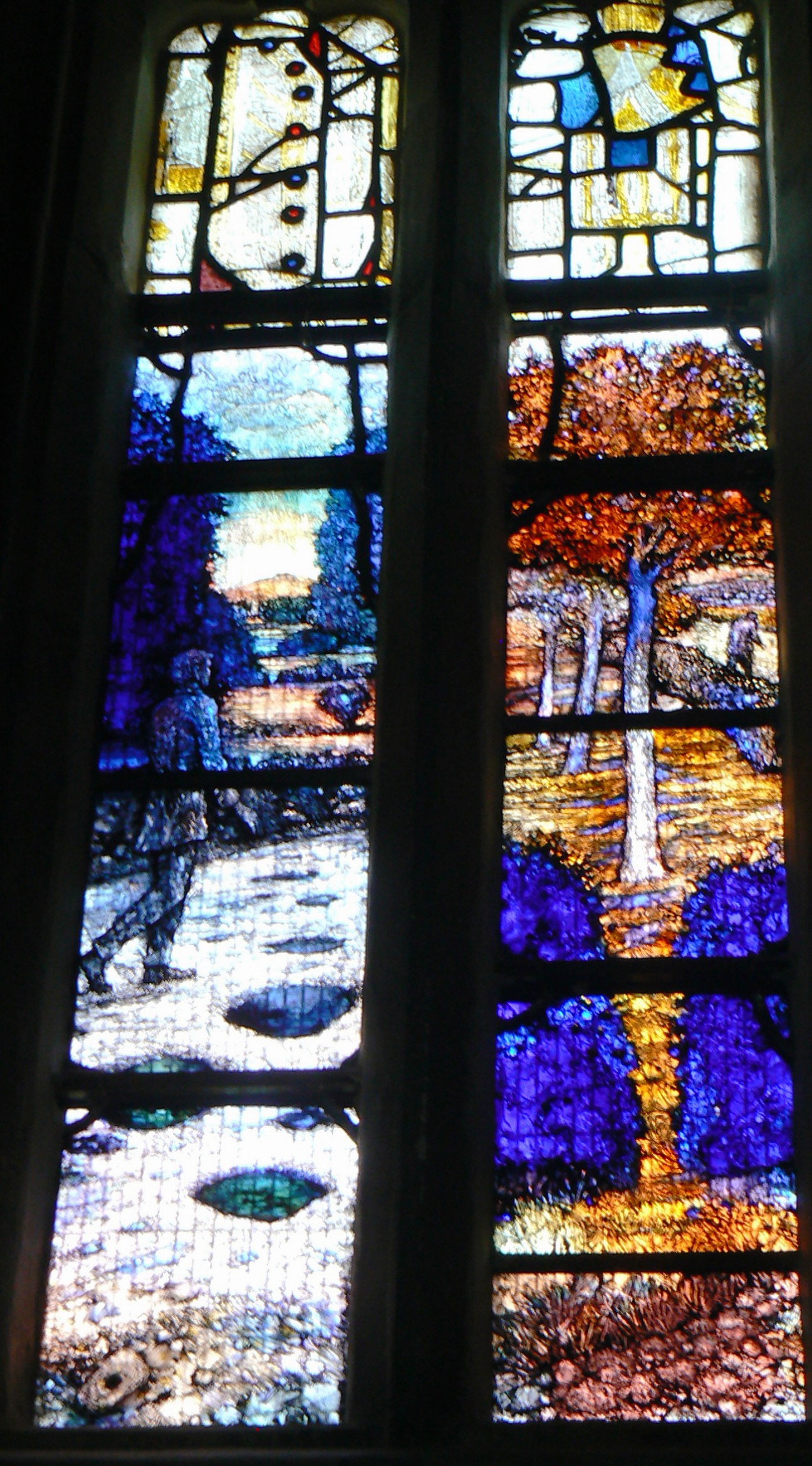
In Gloucester Cathedral there is a new stained glass window created by Tom Denny, which is a memorial to the Gloucestershire poet, Ivor Gurney.  Like Will Harvey, whom I have written about before, he was a pupil and chorister at the Cathedral school before joining the Gloucestershire Regiment to serve in the First World War.  Indeed, they were great friends.  Gurney was a talented musician firstly, but in the thick of war, poetry became his creative outlet.   Like Will Harvey  he survived the war but was drastically changed by it.  So much so that his fragile mental health was totally destroyed, and he spent many years in a mental asylum where he eventually died before he was 50.  Gurney is buried at Twigworth, where his gravestone commemorates him as ‘poet composer of the Severn and Somme’.

Gurney’s poetry is beautiful and reflects his love for the Cotswolds, the countryside and the beauty of nature.  I’d like to share 2 of them with you that touch me deeply for different reasons.

Firstly, To His Love which is a poem thought to be written by Ivor Gurney when he thought his friend Will Harvey had been killed.

To His Love’

He’s gone, and all our plans
Are useless indeed.
We’ll walk no more on Cotswolds
Where the sheep feed
Quietly and take no heed.

His body that was so quick
Is not as you
Knew it, on Severn River
Under the blue
Driving our small boat through.

You would not know him now…
But still he died
Nobly, so cover him over
With violets of pride
Purple from Severn side.

Cover him, cover him soon!
And with thick-set
Masses of memoried flowers-
Hide that red wet
Thing I must somehow forget.

The second is The Bugle, written after Gurney returned from the war, a sadder and wiser man.  I include it as my grandfather was a bugler in WW1, and also because it speaks to me loudly of how ordinary life and commerce still goes on while soldiers suffer and die ‘out of sight, and out of mind.’ 

The Bugle

High over London
Victory floats
And high, high, high,
Harsh bugle notes
Rend and embronze the air.
Triumph is there
With sombre sunbeams mixed of Autumn rare.
Over and over the loud brass makes its cry,
Summons to exultancy
Of past in Victory.
Yet in the grey street women void of grace
Chatter of trifles,
Hurry to barter, wander aimlessly
The heedless town,
Men lose their souls in care of business,
As men had not been mown
Like corn swathes East of Ypres or the Somme
Never again home
Or beauty most beloved to see, for that
London Town might still be busy at
Its sordid cares
Traffic of wares.
O Town, O Town
In soldiers’ faces one might see the fear
That once again they should be called to bear
Arms, and to save England from her own.

There are many learned websites with information about Ivor Gurney, but my wish today is simply to share the beauty and poignancy of the new window and explain a little of its background.

Ivor Gurney Window by Denny 2

There are 8 lights or panes overall and each reflects something from the life and writing of Ivor Gurney.  The notes are a precis of those that appear in the Cathedral by the window.

Light 1 ~ Glimmering Dusk ~ a figure walks at dusk in a Vale landscape.  there are dark pools of rain on the white road and May Hill can be seen in the distance.

Windows 1 & 2

Light 2 ~ The Stone Breaker ~ In Flanders a chance encounter with some road menders reminds Gurney of a much earlier meeting (“Oh years ago and near forgot”), in the fresh beauty of a summer’s early morning, in a landscape of Vale orchards.

Light 3 ~ Brimscombe ~ Gurney remembers a night-time walk through the fir trees of the steep-sided Brimscombe valley near Stroud.  The “pure clemency” of the moment enables him to forget the “blackness and pain” of France.

Windows 3 & 4

Light 4 ~ Severn Meadows ~This was written in March 1917 at Caulaincourt.  As the sun sets over Severn meadows, a figure, in the shadow of a willow, looks back at the river and the willows.

Light 5 ~ Pain ~ Gurney recalls the grey-white Somme battlefield.

“Pain, pain continual; pain unending;….

Grey monotony lending

Weight to the grey skies, grey mud where goes

An army of grey bedraggled scarecrows in rows

Careless at last of cruellest Fate-sending.

Seeing pitiful eyes of men foredone,

Or horses shot, too tired to merely stir,

Dying in shell-holes both, slain by the mud.

…………………………………….

The amazed heart cries out to God.

Windows 5 & 6

Light 6 ~ To His Love ~ Probably drafted on the Somme battlefield, Gurney reacts to the news (false as it turns out) that his great friend, the poet Will Harvey, is presumed killed.  A couple walk on the Cotswold hills as their dead friend lies among the violets.

Light 7 ~ To God ~ In the intense suffering from mental illness, surely aggravated by his experiences on the battlefields, Gurney cries out for death, “I am praying for death, death, death”.

Windows 7 & 8

Light 8 ~ Song and Pain ~ A more optimistic end to the window as a figure emerges from an understanding of pain to enter “The House of Joy”.

As I stood and gazed at these incredibly beautiful but harrowing windows, there were people around me moved to tears by what Gurney had seen and suffered.  Tom Denny is a wonderful artist. He has captured and honoured Gurney’s genius, his love of Gloucestershire, and his suffering in that dreadful war and in his mental distress.

Meditating on a window

https://wordpress.com/post/heavenhappens.me/4977

http://www.ivorgurney.org.uk/biography.htm

http://movehimintothesun.wordpress.com/2011/04/22/to-his-love-ivor-gurney/

Crucible 2 Sculpture Exhibition at Gloucester cathedral

IMG_4321

Today I went to Gloucester with a dear friend, the artist Anne Bate Williams.

We went to see the newly opened Crucible 2 exhibition of sculptures, which is set in and around this beautiful medieval Cathedral.  It was a warm, sunny day which made the experience even more enjoyable.

There were small groups of people around the Cathedral enjoying their lunchbreak.  Some were eating, some taking photographs and some rebellious types sitting on the sculptures!

The first sculpture we saw was a huge arm with a giant hand stretched upwards in a grassy space behind the Cathedral.  This is “Reach for the Stars” by K Armitage.  At the front there were some of confusing sculptures called Battersea 11 and 111.  But the huge “Sitting Couple on bench” by Chadwick was beautiful.

Cleverly placed in the beautiful grounds around the cathedral where children and passers-by can see them, are wonderful lifelike sculptures of animals including a giant bull, a beautiful hippo and its baby,  “Siberian Tiger” by Bugatti, as well as “Tortoise” and “Snail” by Cooper.  It was wonderful to see little children climbing onto the sculptures and I wondered if they expected them to move.

We were already impressed and excited before we even entered the Cathedral.  But once in the entrance, we were greeted by an arresting sculpture called “Pilgrim”, by D Backhouse.  The body is shrouded in white but the face is stunning in its beauty.

I won’t bore you by describing every one of the 100 sculptures, but I will add a link so that you can see some of them yourself. 

If you do live close enough to get to the exhibition, which is free, I would encourage you to come along.  It is on until 31st October and it will be worth the journey.  There are over 60 artists represented here.  Some are world famous like the local Damien Hirst, Henry Moore, Lynn Chadwick, Antony Gormley and Kenneth Armitage.  But there are lots of less well known artists too.

Enjoy my gallery of photos from the exhibition…

Banksy ~ A rebel with a cause?

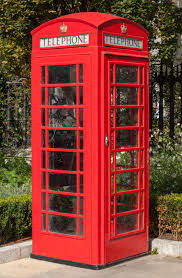
I recently wrote about our concert at the Tuckwell Open Air Theatre.  For several weeks before the concert we rehearsed in a room above a pub in one of the older parts of Cheltenham.  Right opposite the pub, on the corner of Hewlett Road and Fairview Road, was an ugly modern telephone box.    I will never understand why the powers that be got rid of our lovely red telephone boxes and replaced them with these ugly grey plastic things.  But I guess beauty is in the eye of the beholder!

red telephone box modern telephone booth

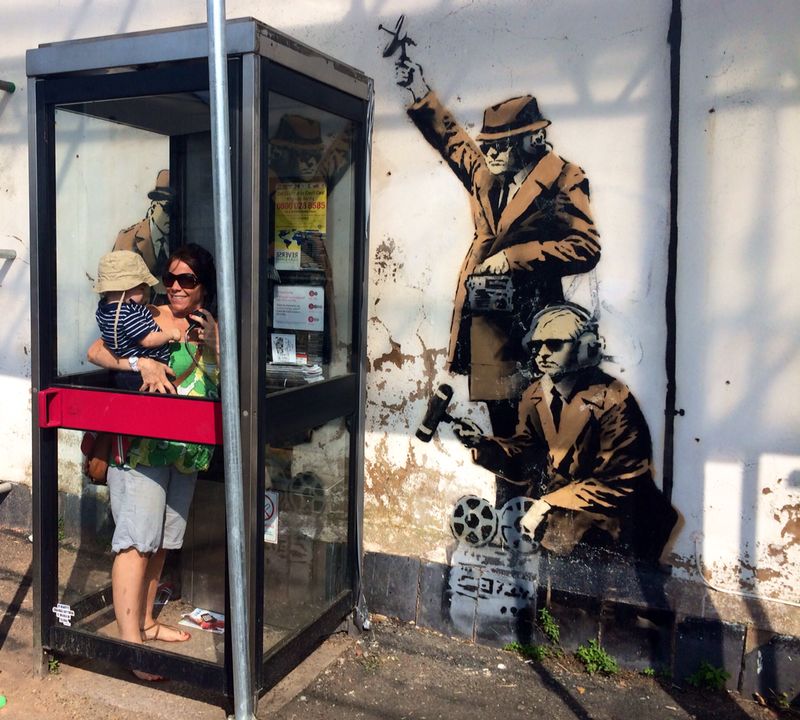
However, I digress.  The telephone box was attached to the side wall of a very insignificant rented house.  Insignificant that is until one Saturday night in April this year when a van turned up and a man covered the wall of the house with tarpaulin.  He then proceeded to paint a mural around the phone box which showed three men apparently using listening devices to hear and record the conversations of people using the phone box.   The trenchcoat-wearing men were obviously meant to be spies.  Now this was clearly a reference to the fact that GCHQ, the Government Communications Headquarters, is based in the town.  GCHQ had been controversially in the news because of Edward Snowdon’s revelation that they listen in to private telephone calls, though quite why anyone is surprised by that I fail to see.  I may be missing something, but if this is done in the quest to prevent terrorism and serious crime ~ isn’t that their job?

When the tarpaulin, the man and the van left, there appeared an amazing piece of very professional street art or graffiti, depending on your point of view.

It was quickly established that the art was the work of the world famous elusive Bristol based artist known as Banksy, which made it extremely valuable to whoever owned that wall.  Banksy owned up to the work, which is now known as Spy Booth

People came from miles around to have their photograph taken inside the Spy Booth including my daughter and my grandson!

Jenny and Stanley in the Spy Booth

Of course all of this attention had negative consequences too.  The painting was very soon badly vandalised, which is tragic, but also rather ironic as it was originally an act of vandalism itself.

Banksy vandalised

The debacle which has rumbled on ever since verges on the ridiculous with the owner, the tenants, the council, local business people, millionaire prospective buyers and art experts all proclaiming their views loudly in the local newspaper.   But most residents agree that it livens up a rather dull area, is a tourist attraction and definitely belongs in Cheltenham.  It would be irrelevant as a political statement if it were not linked to the phone box and the home of the Government communications Headquarters.

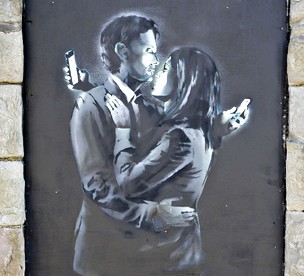
Banksy himself has said, “As a kid I always dreamed of growing up to be a character in Robin Hood”.  It seems now his street art is so valuable that he doesn’t need to steal from the rich.  They are queuing up to buy his work!   Today I heard that another of his paintings, Mobile Lovers, attached to the side of a community building in Bristol has been sold for a six figure sum and all the money is going to secure the future running of the premises as a Youth Club.

Mobile Lovers appeared in April on a doorway by Broad Plain Working With Young People

Pop, Poets and Plays

Community Choir at Tuckwell Community Choir at Tuckwell

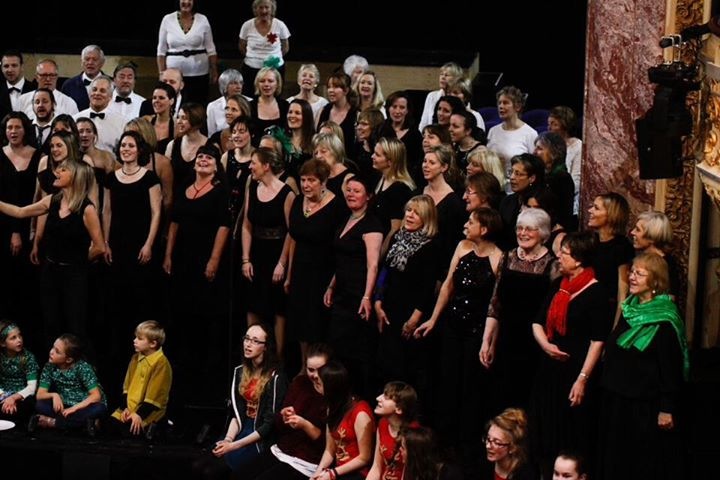
It’s been quite a cultural summer so far for me in the Cotswolds. I sang in a super concert at the local open air theatre, which was amazing. There were 150 of us aged from 5 to 90 singing together in the community choir. Sometimes we split up and sang in individual choirs, and we sang such a variety of songs. It was great to listen to the other choirs, especially the children. The setting was magical. We were in a dell surrounded on 3 sides by trees and with a stream running behind. On the fourth side was a tiered seating area. All the trees were sparkling with lights and there were candles along the paths and down the steps. The theme for dress was ‘festival’ so there were flowers in our hair and lots of pretty dresses. It took me back to my teenage years in the 1960s. I loved every minute of it. Sitting in the audience were two ladies who are direct descendants of a Gloucestershire poet who coincidentally is the subject of the rest of this post, Will Harvey.

There have been all sorts of commemorative events going on to mark the centenary of the start of World War One. Here in Gloucestershire I was involved in a production of a brand new play called Will Harvey’s War at our local theatre, playing the part of a singing farmworker! The play was based on a previously unpublished manuscript written by Will and only recently discovered. It has now been published as a book entitled The Lost Novel of F W Harvey

Will Harvey, better known as Frederick William Harvey DCM (26 March 1888~13 Feb 1957), was a local man, born in a small village called Hartpury in Gloucestershire. I have very fond memories of Hartpury, as my daughter did her degree in Equine Studies there at the college. The setting was perfect. There used to be a great village pub called the Canning Arms where live Jazz was played every Monday night. My husband and I used to go regularly to enjoy the music, the food, and to chat with the great licensees, John and Jean. Sadly, like many country pubs, after Black Wednesday the Canning Arms suffered in the economic downturn and closed. It is now a private house.

Will Harvey moved to Minsterworth and went to the King’s School in Gloucester, where he met Ivor Gurney, a chorister, who went on to become a noted Gloucestershire poet and composer. Along with Herbert Howells they became lifelong friends. Kings school, being a Cathedral school, has a strong music and arts tradition, but it was listening to Elgar’s, Dream of Gerontius that informed Will’s ideas on beauty and creativity. Coincidentally, I worked at King’s School for a time in the 1990’s and have written about it before http://wp.me/p2gGsd-Gp

After school Will trained as a solicitor, but at the age of 26, the First World War intervened in his life. Within days of the war starting in August 1914, Will joined the 5th Battalion of the Gloucestershire Regiment as a private. After a few months training, the battalion was posted to France where Will proved to be quite a hero. He was awarded the DCM or Distinguished Conduct Medal for his bravery. Will was later trained as an officer then sent back to France. Unfortunately, during another brave venture into enemy trenches, he was captured and spent the rest of the war in various prisoner of war camps. Although he made several unsuccessful escape attempts, it was in the camps that Will developed his poetry and writing skills. His most famous poem is Ducks, which he wrote after seeing a picture of ducks on the ceiling of his prison hut, drawn by another prisoner

It is often thought that The Wipers Times was the first trench newspaper, but actually the Fifth Gloucester Gazette came first and Will Harvey was a contributor. It was fortunate that Will was allowed to send his poems home for publication. His first volume was, A Gloucestershire Lad At Home and Abroad, which was soon followed by, Gloucestershire Friends, poems from a German Prison Camp. https://archive.org/details/gloucestershiref00harv

He also wrote about his wartime experiences in Comrades in Captivity. Altogether Will had about 400 poems published. He wrote of war and nature and animals as well as poetry for children.

After WW1 ended, Will came back to Gloucestershire and settled in the Forest of Dean. His poetry was so popular that he was known as “the Laureate of Gloucestershire“. But, now married to a nurse called Anne Kane, Will went back to his career as a solicitor in order to earn a living. To his credit he became known as “the poor man’s solicitor”. Indeed, Will was so compassionate to those facing prison that he often gave his services free. This was great for his reputation but not for his business and eventually it had to be sold. After that, Will joined the BBC and spent years promoting the people of the Forest of Dean, its arts’ scene, culture and heritage. Will’s friends, Ivor Gurney and Howells both set some of Will Harvey’s poems to music. Even today his poetry is set to music by local folk musicians such as Johnny Coppin. He sings of Gloucestershire, its traditions, its people and its culture.

Will Harvey is remembered on a memorial stone at Gloucester Cathedral and a new biography is being published this year.

The whole cast on set at the end of the show The whole cast on set at the end of the show

That’s the way to do it!

Professor Collywobbles 1
Can you guess what links the English Civil Wars (1642–1651) between Oliver Cromwell’s ‘Roundheads’ and King Charles’s ‘Cavaliers’, Samuel Pepys’ Diary, Charles Dickens’ ‘Old Curiosity Shop’, the famous Geordie inventor Robert Stephenson, a pub in London’s Covent Garden, and the Italian clown Joe Grimaldi?
Well, last night at WI we were enlightened and entertained by Professor Collywobbles, who managed to squeeze them all in to his talk on the history of Punch and Judy!
To be honest I was not keen to go. Having never been that keen on this traditional seaside entertainment, I was going to give it a miss. But I am so glad I went.
Now Punch and Judy shows would seem to be as British as fish and chips, but in fact we learned that they hark back to Italy’s commedia dell’arte, a type of improvised comedy based on stock characters. Punch is probably based on the character of Pulcinella, a nasty, aggressive fellow with a long, beaky nose.
We were told that the first reported show was seen on May 9th 1662, and was immortalized by no less than Samuel Pepys in his diary when he wrote about seeing, “an Italian puppet play…the best that ever I saw” in Covent Garden. It was performed by an Italian puppet showman, Pietro Gimonde, known as “Signor Bologna.” But they may well have started even earlier because of Oliver Cromwell. He closed all the theatres during the Civil War apparently, so sketches with puppets or Marionettes were put on at street corners and public places. These anarchic early shows were aimed at adults but children did gather to watch them with their family.
Before long, Punch and Judy shows had sprung up all over London. Judy was at that point known as Joan.
We heard how, by the 19th century, thanks in part to Robert Stephenson, the railways were taking off, and people were travelling to the seaside for days out or holidays. ‘Professors’ saw the opportunity to make money from the crowds and so they began tailoring their shows for children while still retaining some adult jokes. Thus began the tradition of Punch and Judy shows at the seaside.
Professor Collywobbles told us that early Punch plays would have been performed with marionettes, but as the show developed glove puppets were used. They were cheaper to make and easier to carry. Soon mobile booths were designed to carry everything in, and, covered in red and white cloth, these became the stage with the addition of a decorative proscenium arch. The man who operated the puppets was called a ‘professor’ and he often had an assistant who was called a ‘bottler’. The bottler would usually play a musical instrument, warm up the crowds, and collect money in a bottle. Sometimes a live dog, called Toby was used alongside the puppets.
Punch’s screeching voice was, and still is, created with the aid of a swazzle, which sits at the back of the mouth and is pushed to the side when other characters are ‘speaking’. It is quite difficult to understand all the words Punch says so the bottler or other puppet characters often repeat his lines.
I discovered that other countries have long had their own shows with the Pulcinella character. It was very popular in France. In America, George Washington is recorded as buying tickets for a puppet play featuring Punch in Pennsylvania in 1742.
I read that across Europe shows might star Punch himself, or St George and the Dragon, the Spanish Don Cristobal, the German Kasper, the Turkish and Greek shadow puppet star Karagoz, the elaborately costumed French icon Polichinelle, or the pleasant-faced comic, Guignol. Nowadays, In the USA The contemporary fan can see the Sid & Nancy Punk Punch & Judy Show in Brooklyn, or on the West Coast, catch a performance of Punch & Jimmy, which is Punch “with a Gay twist”.
The professor told us that in the UK, the storyline of a Punch and Judy show can be different in every performance, with stock characters ranging from crocodiles to policemen. Changing public taste and social awareness of issues like child abuse however, means that the traditional nature of the show is being adapted. ‘Unsuitable’ characters like the Devil or Pretty Polly, Punch’s mistress, are now less common, while Punch’s unacceptable habit of beating his wife and baby is often left out.
There is an annual gathering of Punch showmen in the grounds of St Paul’s Church, Covent Garden. In 2012 the TV reported that Punch and Judy professors from all over the world gathered at Covent Garden for “the Big Grin”, a celebration of Punch and Judy’s 350th anniversary. They performed in front of the Punch and Judy Pub. Built in 1787, this pub was thought to be named after the puppet show performances that took place in the nearby piazza for the children of flower-sellers – Covent Garden originally being a flower market.
A typical Punch and Judy show today will probably include traditional characters such as:
Mr Punch ~ a violent, rude and not at all politically correct, character who solves his problems by using a ‘slapstick’ which is where the phrase ‘slapstick comedy’ comes from, plus Judy ~ his long suffering wife and the Baby. There may also be a Policeman, a Crocodile, a Skeleton and a Doctor. Often there are props like sausages.
Joey ~ the clown, based on the real life Joseph Grimaldi (1778-1837) who was a tragic character and the world’s most famous clown, is a traditional character.
Other characters, which used to be regular but are now only seen occasionally, include Toby the dog, Hector the horse, Pretty Polly ~ Mr Punch’s mistress; the Devil, the Beadle, the Hangman ~ known as Jack Ketch, and Mr. Scaramouch.
Some characters are now only seen in historical re-enactment performances including the Servant or Minstrel, and the Blind Man.
My Collywobbles told us that he rarely uses other characters including Boxers, Chinese Plate Spinners, topical figures, a trick puppet with an extending neck (the “Courtier”) and a monkey.

Mr. Collywobbles certainly taught me to appreciate this art form and inspired me to go off and search the internet for more information. There is a basic plot or storyline in Punch and Judy which was actually printed in 1828. Prior to that the storylines were handed down and developed orally. But, like most good showmen, Mr. Collywobbles adapted his performance brilliantly to the audience, and kept the humour topical.
And as for Charles Dickens? Well he was a great fan of Joe Grimaldi and he loved Punch and Judy shows. In 1849 he wrote,

In my opinion the street Punch is one of those extravagant reliefs from the realities of life which would lose its hold upon the people if it were made moral and instructive. I regard it as quite harmless in its influence, and as an outrageous joke which no one in existence would think of regarding as an incentive to any kind of action or as a model for any kind of conduct. It is possible, I think, that one secret source of pleasure very generally derived from this performance… is the satisfaction the spectator feels in the circumstance that likenesses of men and women can be so knocked about, without any pain or suffering.

—Charles Dickens, Letter to Mary Tyler, 6 November 1849, from The Letters of Charles Dickens Vol V, 1847–1849
Charles Dickens referred to Punch and Judy shows in several of his books to make a point or draw an analogy. Indeed in the Old Curiosity Shop he introduces a Punch puppeteer and his Bottler in the characters of Short and Codlin. They meet and travel with Little Nell and her grandfather throughout rural England revealing a lot about life on the road.

All in all it was a great evening. True to the WI ethos it was inspiring and educational while being a lot of fun.

Creative writing from the bottom of my memory

I am quite excited today because this evening I am going to the inaugural meeting of our new Creative Writing Group. A couple of months ago I was asked to come along to an Artists Way meeting to chat about my blog and how I got it started.
I was a little daunted but very pleased to be asked as I still consider myself a learner in the blogosphere. In fact, the more I delve into it and the more wonderful bloggers I discover, the humbler I get!
But I went along and found the group to be made up of lovely, enthusiastic and creative people. All of them have a story they want to tell and they were full of stimulating questions. I tried my best to encourage a lively discussion but the evening went far too quickly. So, we agreed that what we need is a writing group. There are some well established groups in our area but they didn’t fit our bill. So we decided to start our own. There is no leader or teacher, just a group of us who will hopefully be encouraging while reading, writing and discussing each others work.

Now if any of my blogging community can give me guidelines or tips that I can pass on I would be very grateful. Perhaps you have been part of a group and found a particular session really useful, I would love to know.

Of course one of the things I had to do before meeting the group is decide what makes my blog tick. I have my lovely quote from Tom Stoppard after my header and I truly believe that. However
the essence of my blog can be expressed in a quote from The Way of the World by Nicolas Bouvier,

“I dropped this wonderful moment into the bottom of my memory, like a sheet-anchor that one day I could draw up again. The bedrock of existence is not made up of the family, or work, or what others say and think of you, but of moments like this when you are exalted by a transcendent power that is more serene than love.”

This is how and why I write, I treasure memories and moments when I felt like heaven happens. I will again reblog something I wrote right at the start when not many people were reading my blog. You have to read right to the end for the little bit of transcendent power though!!
I hope you enjoy it.


Fireworks for Shakespeare’s 450th Birthday

shakespeare1

Tonight there will be the start of the celebrations in honour of William Shakespeare’s 450th Birthday. The celebrations will be spectacular in Stratford on Avon, his birthplace and the home of the Royal Shakespeare Theatre. Resurrecting an old tradition, there will be a massive firework display over the River Avon behind the theatre. The display starts at 10.40 so it will be a late night for me but I am hoping to get a good view from the bridge in the Bancroft Gardens. I used to walk this way to school every day when I was a teenager so it will bring back lots of memories.

In addition to traditional pyrotechnics, the special birthday display will feature an 8 metre high frame (note this is smaller than the 1830 one!) depicting Shakespeare’s face, which will light up in ‘stars’ made of fireworks. It will be based on the Droeshout engraving of Shakespeare from the First Folio, and reminiscent of Juliet’s lines about Romeo~

Take him and cut him out in little stars,
And he will make the face of heaven so fine
That all the world will be in love with night
And pay no worship to the garish sun.

If you haven’t read my blog about the 400th Birthday celebrations you can find it at this link~ http://wp.me/p2gGsd-5c

There is also a wonderful Shakespeare blog here ~ http://theshakespeareblog.com/2014/04/fireworks-for-shakespeare/

Its a Perfect day

Stanley finds pegs fascinating

Stanley finds pegs fascinating


One of the songs sung by the choir I belong to at our recent concert is Perfect Day.
Laughter and Lyrics Choir

Laughter and Lyrics Choir

Today has been just perfect. It is usually called Grandma day as I look after Stanley on Wednesdays and Thursdays. But today it was Turtle Day as I had bought a turtle shaped sand pit for him to play in.
Stanley really is a delight in every way and just spending time with him makes me feel wonderful.
It was especially good today for two reasons
1. We have both been feeling very unwell until today, with chest infections followed by throat infections
2. The sun was shining in a clear blue sky and it was lovely and warm.
Stanley usually arrives at 8am to be greeted by my little dachshund, Dayna who races out of the front door to greet him. They both then race in to get to the best armchair ~ Dayna, and the Chuggington corner ~ Stanley. Now when my children were little it was all Thomas the Tank engine and I do feel a bit disloyal saying this but Chuggington is just so much more exciting! I have collected all the trains ~ wooden and die-cast, some track, two carrying cases, a hard back story book and a floor layout for imaginative play. Now Stanley is only 16 months old but he plays with Chuggington things for hours. He ‘rides the rails’ around, across and under furniture whether or not the dog is sitting on it, he builds tunnels with mega bricks (or grandma’s legs), and he drives the trains in and out of their sheds in the carrying cases endlessly. He just never seems to tire of it. At lunchtime as a special treat he gets to watch an episode of Chuggington which I have pre-recorded while he eats what I have prepared. I have 78 episodes recorded now so that pretty much guarantees peaceful lunchtimes until he starts school!
I jokingly say to my daughter that if I were to go on Mastermind, the BBC high brow quiz show, my specialist subject would be Chuggington ~ I know so much about it I have started creating new storylines as I watch. I also make pictures for Stanley by cutting out the card trains which come with each new toy and building a scene around them with the train names written on. I then laminate them. Stanley loves these and it is how we both learned all the names.
But today, even Chuggington came second to the TURTLE sandpit. I sited it on the patio near a gazebo so that Stanley would have some shade and Grandma would have somewhere to sit. Having forgotten to buy buckets and spades etc., I gathered old plastic containers, a colander and a jug, spatulas and wooden spoons, which worked almost as well. And then the fun started.
When Stanley had enough of that exercise he thoroughly inspected the garden. Being his first Spring at an age where he could make sense of his surroundings it was a joy just to follow him watching and listening. But the highlight for me was sharing the discovery that two of the birdhouses my daughter made for me are occupied by nesting blue tits. Stanley adores watching birds in the trees and bushes, in the sky or on the ground, at the water table or on the feeders. So to show him where they are nesting was a joy.
After that he toddled up to my shed. Now anyone who has read my post “Windows” will know that my sheds are very special places for relaxation and meditation and usually no-one else ventures in there. However, today Stanley looked at the shed, pushed at the locked door and said, “Open, Yea?” in a voice that would totally melt the polar ice cap. Of course I said yes and in no time at all the nicknacks in my sanctuary were all rearranged. There was a moment when I looked at him, ancient toy car in one hand and orange wooden rosary prayer beads in the other and the happiness I felt took my breath away. And I realised that at that moment Stanley and I were both in that place where ‘heaven happens’.

NaPoWriMo 6 ~ A Good hare Day

napo2014button1
For NaPoWriMo on day 6 there was a simpler challenge than Saturday’s thank goodness. We were asked to look out of a window and write a poem using what we observed. Having to be always contrary I decided to look into windows instead.
This is because I went to Cirencester to see the March Hare Festival.

A dreary day in the Cotswolds,
Wind blows and cold rain drizzles down
Stone cottages are looking weathered and worn,
Daunted daffodils and bluebells bend low
Agitated pheasants scurry, flapping over Ermin Way,
Committed we continue, to Cirencester for the day.

Like Brigadoon this market town appears out of the mist,
One of those magic moments, a place by angels kissed.
A colourful celebration reflecting local life is underway;
A Festival of March Hares, some dazzling some restrained,
In windows, doorways, churches and shops creatively displayed

Cultured, cosmopolitan and colourful vignettes,
Cameos of ancient times are captured in mosaic,
Homages to industry, hospitality, trade and faith
Veterans of two world wars amusingly portrayed
Childhoods caught in acrylic, nature, myths and legends true
Captured by artistic celebrities, dignitaries and ordinary people too

Visitors and residents alike, excited and involved
Chat, sharing what they have found, advise, inspire, enthuse
Pubs overflow with merriment, cafes are buzzing too
Music pours from the Brewery Arts, crafters’ skills on show
Working in glass and gold and silver, in wood and pottery and silk,
Local artists interpret the world in paint and pen and ink.

In recent years there has been a spate of large ceramic or stone objects appearing in towns and cities of the UK. Having mentioned it to my daughter last night I know that they have been seen in the USA too. The first time I came across it was when my grandchildren, Ben and Rosie went to London and were photographed alongside large colourful elephants. Wallace and Gromit were in Bristol recently too.
Next I heard of a Gorilla festival in Torbay and Exeter. There was also a festival of decorated horses in Cheltenham in honour of the races. Now there are 5 foot tall hares in Cirencester.
Why hares you might wonder?
Well Cirencester was a very important place in Roman times. It was called Corinium and had very good road links to the rest of the UK, such as Ermin Way and the Fosse Way. In 1971 during an archeological dig in Beeches Road near to the River Churn, a Roman mosaic was discovered depicting a hare. The original is now on show in the Corinium Museum. Hence the theme of hares for this festival. There will be about 50 hares around the town eventually. Most of them will be 5 foot tall and decorated by local people including schoolchildren, members of the public, celebrities and artists. All of the large hares are named to reflect their sponsors. One of the most beautiful hares is on display in the Corinium and it is named Tess.
Apart from the large hares there are lots of smaller hares dotted around the town and there are prizes for discovering and photographing them. I think I will have to go back as I only found 10 large ones! I did however find the solid chocolate one which weighs 10kg in a lovely little chocolatiers called ‘Lick the Spoon’.
The festival does have a serious purpose which is to boost trade and tourism in the town. Judging by how much money I spent yesterday they are going to be very successful!
They are also aiming to raise the £50,000 needed for Gloucestershire Wildlife Trust to begin to develop the Green Hare Churn Walkway around the River Churn in Cirencester. This new trail project will involve schools and community groups and will have lasting benefits for residents and visitors alike. The hares will be auctioned off at the end of the festival to raise the funds.
I hope they do well as we had a wonderful day, and we will certainly be going back. The Festival of Hares is on until 14th September and is well worth a visit at any age. To give you a helping hand I have listed the names of the hares that are on display at the moment and where you can find them. Tomorrow there will be more as phase two will be hidden around the town! Some of them are in schools which won’t be open now til after the holidays.

Bare Hare at the Agricultural College
Harry, King of the Hill at Kingshill School
Mr Harebushes at Organic farm Shop, Burford Road
Via Albatine at Whiteway Workshops
Harebelle at the Twelve Bells
Flame, The Phoenix Wayfarer at Phoenix Way
Hareoh the Phareoh at St John Baptist Church
Whare’s Davey in Davey Law Offices
Haretherop in Waterstones Bookshop
Harriet in Mistral Clothes Shop
Harold O’Hare in Zippy Pix Photo Shop
Hartley in 51 Dyer Street
Harrison in Hampton’s Estate Agents
Daniel George in Bishop’s Walk
Hopportunity Hare in Cirencester opportunity Group
Corina at the Corinium Hotel
Tess at the Corinium Museum
General Lievre at Gardiner Haskins
Harelequin at Beeches House
Miles, the Millionhare at Limes hair Company
Wooly Jumper outside the Fleece
Madame Butterfly at McGill’s Chartered Accountant
Hicarus at Cotswold Airport
Eostra at Rendcomb College
Sign the Hare at Bingham House

NaPoWriMo 5 ~ Golden Shovel

napo2014button1
The prompt for day 5 of NaPoWriMo I found incredibly difficult. The challenge was to write a “golden shovel.” This form was invented by Terrance Hayes in his poem, The Golden Shovel. The last word of each line of Hayes’ poem is a word from Gwendolyn Brooks’ poem We Real Cool. You can read Brooks’ poem by reading the last word of each line of Hayes’ poem! It was a tortuous process but so rewarding as it introduced me to a poet I had not come across before, Terrance Hayes.
I chose a short poem to use for my golden shovel:

Jamesian
Their relationship consisted
In discussing if it existed.
-Thom Gunn

My inspiration was a walk back from town yesterday. I was admiring a beautiful display of daffodils when I was suddenly aware of a group of boys playing football nearby. They suddenly charged after the ball and threw themselves down on the grass with no thought for the flowers, bent, broken and crushed by their bodies. And so my poem was born…

Plodding through fields of daffodils their
Yellow hearts performing, I pondered the relationship
Between plants and poetry.  Concluding it consisted
Of long periods of silent suffering in
Deep, dark soil, alone.  Discussing
This is futile.  But bleak experience can be transformed if
Hidden hurts are buried in fertile soil for long.  It
Results in a joy and beauty we never knew existed.

Phew, I hope day 6 is a little easier!
daffodils by a fallen branch at St Peter's Grange, Prinknash Abbey

Weekly Photo Challenge ~ Threshold

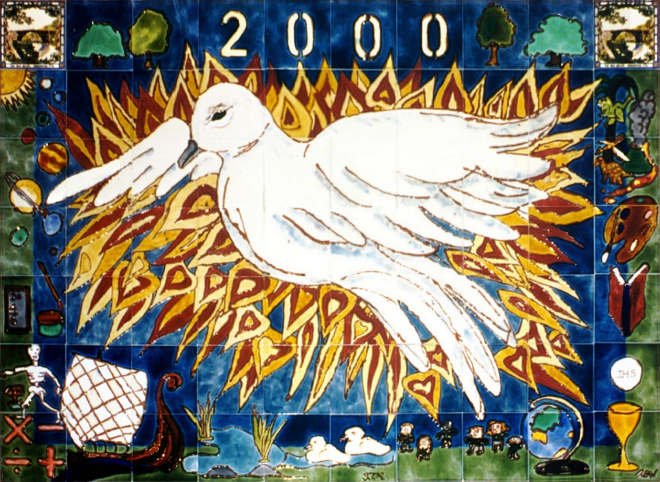
On the threshold of the new millennium On the threshold of the new millennium

Rest not! Life is sweeping by; go and dare before you die. Something mighty and sublime, leave behind to conquer time. — Goethe

The prompt in the Weekly Photo Challenge this week is the word ‘threshold’. Looking through my photos this one of the tile frieze made at the end of 1999 for the year 2000 leapt out at me. It is hard to imagine today just what a big deal it was being on the threshold of a new millennium. There were all sorts of apocalyptic warnings about power failures, planes falling out of the sky, systems not being able to cope etc. No-one really new what would happen at midnight on 31st December 1999 and what the new millennium would mean for civilisation. So I wanted to mark the occasion with something very special and permanent for my school.

St Thomas More School was a huge part of my life. In the early 1970’s I watched the new school building rise in the middle of an open field that had once been farmland and an orchard. There was an ancient hedgerow all around the site and just one magnificent old oak tree in what would be the playing field. When it was opened in 1975, I was having my third child so was not available for teaching. But, as I drove past the school every day, I vowed that one day I would work there.

I got my wish in 1984 when my youngest child was ready to start school. I was offered a job and jumped at the chance. The next decade was a time of great blessing as I worked in virtually every class, teaching all age groups, then became deputy Head. In 1994 the original Headteacher was due to retire and, to my surprise, I was offered his job. He had been such an inspirational Head that the school was a joy to work in. Taking on his role, I tried to emulate him while making my own mark and bringing my own vision for the school into being.

Due mainly to the quality of the staff and their outstanding teamwork, the school became a strong and successful community, ‘an oasis of excellence’, appreciated by staff, pupils and parents alike.

In 1999, as the new millennium approached, the staff wanted to mark the year 2000 with a special feature. We wanted the whole school community to be involved in creating something totally unique and meaningful. We came up with the idea of making a large tile frieze. Each year group was asked to brainstorm their favourite lessons, subjects, or topics, and represent their ideas on paper.

Reception class, the youngest children were just 4 or 5 years old and had only just started school. They had their photographs taken in their shiny new uniforms, so that was their contribution.

The Year 1 class had helped to build a pond and were raising ducklings which they had hatched from eggs in an incubator, so they drew pictures of that. I have a wonderful memory of the day the ducklings hatched out ~ the local policeman had called up to the school on a social visit and he watched as the first duckling struggled to crack open the shell. When it finally succeeded and out popped this beautiful and perfect little bundle of yellow feathers, he was overwhelmed by emotion and had tears in his eyes.

In Year 2 the 7 year olds made their first Holy Communion as it was a Catholic school so they drew a chalice and host. Being the most significant event in the year, that was their contribution.

Year 3 was the first year of juniors and the children enjoyed learning about Vikings and the Human Body, so they drew lovely longboats and skeletons.

In Year 4 things got much more subject focussed so Maths was represented by a calculator and mathematical symbols.

In Year 5, Music, Dance and Art were the main features, so a pot of paint and a brush was drawn. Science too was represented by the planets.

By Year 6 the children were getting ready to move on to secondary school. In order to give them a taste of independence and adventure, it was our tradition to take the class away to Shropshire for a week to stay in a Youth Hostel. Here, in the Ironbridge Gorge, birthplace of the Industrial Revolution, we had a wonderful time. We visited the Iron Museum, The Jackfield Tile Museum, Blist’s Hill Reconstructed Village, River Severn Museum and of course the first Iron Bridge ever built. We also had amazing night hikes, midnight feasts and parties. Altogether it was an incredible opportunity for fun and learning. So naturally the Ironbridge at Coalbrookdale was the emblem of Year 6.

The staff gathered all these pictures and images together and chose the ones that would be painted on to the tiles. The Year 5 teacher, ABW, a wonderfully creative artist and teacher, took on the challenge of putting all the ideas together and creating a design on tracing paper which could be transferred onto numbered ‘green’ tiles. It was agreed that we would go to Jackfield Tile Museum to create the finished work.

A representative group of staff, parents and children spent a weekend at the Youth Hostel and were each given a small area of the tile frieze to paint. ABW had done a magnificent job scaling all the children’s artwork up or down so that the frieze would reflect the life of the school. It was agreed that the year 2000 would go at the top, as well as the 4 trees, oak, ash, poplar and beech, which were the school emblem. In the top corners would be tiles depicting the Ironbridge itself. The children’s artwork would go around the edge, and at the centre would be the Holy Spirit in the form of a dove surrounded by flames.

We painted the tiles in coloured glaze. I will never forget the atmosphere in that studio at Jackfield as we worked on the frieze. There was a stillness and peace in the room which was truly sacramental. While we worked, the Spirit moved in that place and heaven happened.

When we finished, the tiles were left at the Jackfield tile Museum to be fired. A couple of weeks later they were collected and set into a frame made by the reception class teacher’s husband.

Bishop Mervyn Alexander of Clifton RIP came in the year 2000 to celebrate the school’s 25th anniversary and he blessed the tile frieze.

Meditating on a window


Thanks to Sherri’s blog I was led to ‘A Lingering Look at Windows’. If, like me you find windows fascinating you should take a look at the current challenge to post a photo of a window each week.
I am awed by stained glass windows especially, and have an enormous collection of photos from around the world. But very close to home there is a window that fascinates me. It is in Gloucester Cathedral. It is quite a modern window and from a distance with a cursory glance, it can appear to be simply random shapes of blue glass. On closer inspection though, this window draws the viewer in rather as an icon does. It is a meditative experience to sit and really look at this window. Soon the shape of a man appears then you are drawn to the face. It has a haunting expression of deep understanding and empathy. It represents the face of Jesus.

The window was created and installed in 1992 by Thomas Denny.  It is mainly blue and white with splashes of red and yellow.  It is greatly affected obviously by the light coming from outside but it does appear to be in shadow when the viewer is at a distance, then as you get closer it gets brighter and quite mesmerises me!   Doubting Thomas and Jesus are the central characters of the middle window and the two side windows are a song of praise for creation based on psalm 148.

Thomas Denny, was born in London.  He trained in drawing and painting at Edinburgh College of Art. One day a friend asked him to consider creating a stained glass window for a church in Scotland (Killearn 1983).  So began a remarkable career that has produced over 30 stained glass windows in Cathedrals and Churches of this country. (Visit http://www.thomasdenny.co.uk for the full listing.) Tom’s love for painting and drawing, especially the things of nature, is evident in his windows.   All of Tom’s windows depict biblical themes and encourage the viewer to sit in silent meditation.  Look closely, feel the colours, take the time to let the details emerge, then reflect.  It is a spiritual experience.

Even closer to home there is a simple parish church in Warden Hill called St Christopher’s, which has a set of 10 stained glass windows by Thomas Denny.   Each of them is based on a parable from the Gospels.  The windows are linked by colour too with the colours from one window flowing into the next.  They are simply stunning and anyone can visit the church to see them.  If you are too far away you can click on this link to enjoy photos of the windows http://www.tciwh.org.uk/index.php?page=windows

south ambulatory chapel window

Weekly Photo Challenge ~ Windows

Spring and Summer Doors Spring and Summer Doors

A Window on my world
The word ‘sanctuary’ comes from the Latin root word, sanctus, which means holy. So the primary meaning of the word is, ‘a sacred space’. Following on from this is the idea of a ‘place of refuge’, where someone can escape to and find safety.

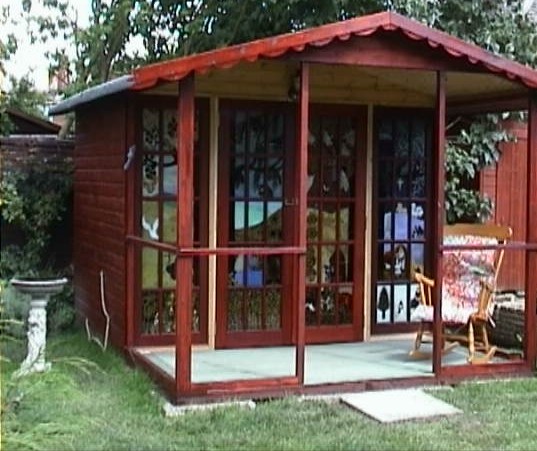
In the year 2000 I retired from full time working, and spent a year seeking ‘sanctuary’ from a life so busy that it had overwhelmed me. Being too exhausted to go anywhere, my sanctuary had to come to me, so my wonderful husband built me a summerhouse at the end of the garden where I could find some healing peace.

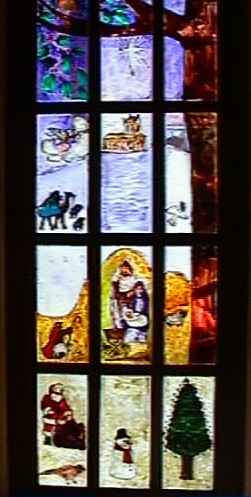
It was 3metres by 4metres made of solid wood lined with tongue and groove pine panels with a waterproof, pitched roof and 4 doors. Each door had 12 glass panes and I was inspired to paint them with glass paints.

Knowing that the Domain in Lourdes had been one of the most inspirational places in my life, and thinking (wrongly) that I might never get an opportunity to go there again, I decided to reflect its importance in my summerhouse. Each door would have a depiction of the grotto and of water included, as well as images that I love.

I chose the 4 seasons as my theme and decided to paint the doors Spring, Summer, Autumn and Winter. Before the doors were hung I measured out 4 pieces of wall lining paper and sketched my designs

For each door. I used trees, laburnum, wisteria, maple, holly, bending towards each other to form arched shapes. I then drew images from nature related to each season, mice, hedgehogs, robins and anything else that came into my mind. Once the paper design was complete I stuck the paper onto the back of each door and drew over it straight onto the glass with ‘tube lining’. This dries quite quickly so then I started to paint!

I am not an artist so the result was very primitive, but because the glaze comes in such beautiful colours, the overall effect was stunning.

Once the doors were hung we laid electricity cables to the summerhouse so that we could light it from inside or out. This meant that at night we could see the stained glass effect shining down the garden from the house. If I was in the summerhouse on a sunny day with the doors shut, the stained glass effect cast coloured light all over the inside of the summerhouse. If I was in there at night I sometimes turned off the lights and lit candles to gain a different effect.

This was my sacred space, my sanctuary, my still point, my little bit of heaven and I loved it. In my summerhouse I looked deep inside my self; I wrote (and then shredded) my life story; I restored my spirit; I emerged a different person.

Sadly, I had to move home some years ago, and I could not take my summerhouse with me. But I have the photographs and I just have to think of it to find a beautiful stillness.

Winter door Winter door
My Sanctuary My Sanctuary

Writing and reading tips

Gosh what a useful and entertainng post I just read. It kept me fascinated so I have pasted it below for you. Honestly there is so much in it.
I’m in hospital at the moment and likely to be stuck in bed for a couple of weeks so thank goodness for the blogging community! I will have time to read every word! I am also enjoying books by Sally Vickers – I have meant to read them for a long time but now I can. Just finished The Cleaner of Chartres and am enjoying Miss Garnet’s Angels x will hunt out more online !
They are gently mysteries set in beautiful places such a Venice and Chartres, with a spiritual angle, lots of psychological insight and history as well – all written in glorious prose x magnificent!

Saturday Edition – What We’re Writing and Reading