2012 in review

The WordPress.com stats helper monkeys prepared a 2012 annual report for my blog.  I only started it in March so i am very pleased that it has been read by so many people.  I treasure every comment and appreciate every view so please carry on reading in 2013.  Happy New year to you all x

Here’s an excerpt:

600 people reached the top of Mt. Everest in 2012. This blog got about 4,100 views in 2012. If every person who reached the top of Mt. Everest viewed this blog, it would have taken 7 years to get that many views.

Click here to see the complete report.


New baby

Inspired by haiku heights prompt “New”

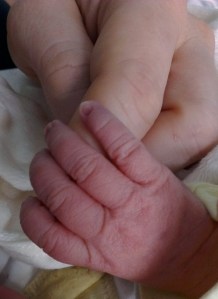
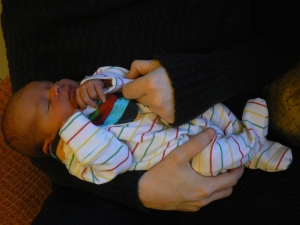
Clutching my finger

Stanley captures my heart with

Love overwhelming.

Stanley's hand

Stanley’s hand

Hunger satisfied.

Swaddled in safety he sleeps,

Surrounded by love

Swaddled in safety

Swaddled in safety

Little innocent

In loving arms enfolded

His life in her hands

Loving arms

Loving arms

The word ‘new’ conjures up all sorts of memories for me.

I was born in Newcastle/Gateshead in the North of England.  It is a wonderful city with 2000 years of history behind it, and I still think of it as home.  Famous in the past for coal mining and ship building, glass making and steel works, it is now more famous as a city of culture, shopping and tourism.  It also has some of the best beaches in the UK nearby and the beautiful Northumberland National Park on the doorstep.

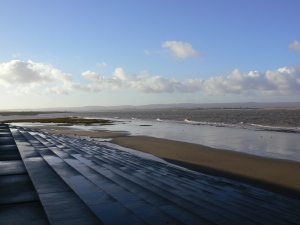
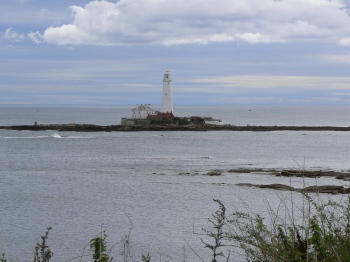
North Sea at Whitley bay

North Sea at Whitley bay

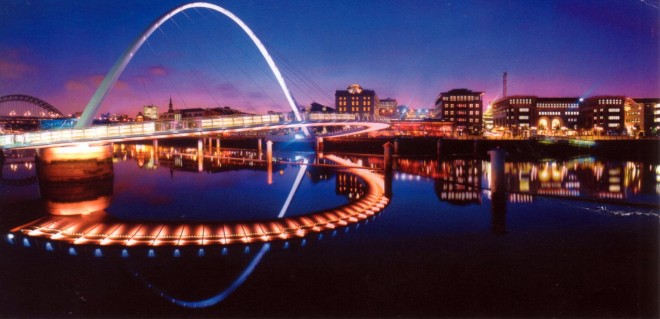
The area around the Quayside and the River Tyne has been transformed in recent years into a contemporary scene that buzzes with activity, in the Baltic Art gallery (which used to be a flour mill), and the Sage which is a breathtaking venue for world class music events.  Then of course there are the famous bridges!  The ‘new’ bridge was built to celebrate this millennium.  It is known locally as the “Winking Eye” because of the way it opens to let ships through.  The cycle path and footpath on the bridge literally opens like an eyelid.  It is a most spectacular bridge which is a superb backdrop for all sorts of events such as the Tall Ships race.  The City Council never run out of ideas for decorating or lighting the bridge to make it even more of an attraction.

Millennium Bridge Illuminated

Millennium Bridge Illuminated

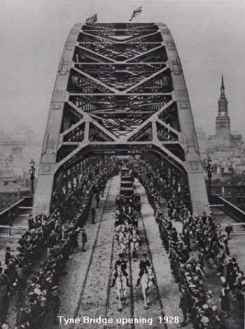
Behind the new bridge is a much older one known as the Tyne Bridge, which was opened on 10th October 1928 by King George V.  My late mum was 3 years old then and she remembered sitting on her uncle’s shoulders watching this event.  This bridge carried the Great North Road (A1) from the South of England to Scotland.  It also carried buses – and trams when I was a child!  Many ships have passed under this bridge over the years.

Tyne Bridge Opening 1928

Tyne Bridge Opening 1928

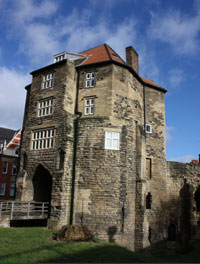
The name ‘Newcastle’ was adopted in Norman times when Robert Curthose, the eldest son of William the Conqueror, built a castle on the site of the old Roman Fort of Pons Aelius.  The original castle was built of earth and timber.  But in 1172, in the reign of King Henry 11 the castle was rebuilt in stone.  Near the river, the original castle keep still stands as well as narrow medieval streets and 14th century staircases.

Blackgate

Blackgate

The Blackgate was photographed by David Simpson

Snow

sunset over snowy mountain in Chile

The prompt for this week at haiku heights is the word ‘snow’.  This set me off thinking of the many places I have been where there is always snow on the mountain tops, the “Everlasting Snows”.  I think of the North West Explorer trip I did many years ago visiting Seattle, Vancouver and the wonderful national parks in USA and Canada.  I will never forget the breathtaking views we saw as we drove along the route through the glaciers to Banff and beyond.

I also remember the trip to the top of the Caucasus mountains at Krasnapolyana in Russia which I have written about before.  This beautiful place will be the setting for many of the events of the 2014 Sochi Winter Olympics.

I remember the very first time I went to Russia.  I arrived in Moscow in the evening having left the UK on a crisp Autumn morning.  The first thing I did in Moscow was go for a walk to Red Square.  As I turned into the square it started to snow gently and there I was at last, totally captivated by the sight of the magnificent multi coloured onion domes on St Basil’s cathedral.  Red Square has been the scene of some dreadful ~ and some impressive events ~ over the course of its history, but I defy anyone to see it without being instantly awed by the sheer magnificence of the whole square and its buildings, especially in the snow!

St Basil's in Red Square in the snow

St Basil’s in Red Square in the snow

Soft flakes fall gently

On sumptuous St Basil’s

White snow on Red Square

Another place with “Everlasting Snows” is the Pyrenees.  These mountains are steeped in history.  For century after century pedlars and merchants, crusaders and warriors, troubadours, shepherds and pilgrims have trekked across these mountains.   The village of Gavarnie was known as “the last village in France” in the Middle Ages on the old pilgrim route to the tomb of St. James at Santiago de Compostela.  It is a great centre for winter sports as well as summer walking now.  I have often travelled to Lourdes with groups or with friends and I have always taken a trip up the mountains to Gavarnie.  I have written about it in a previous post.  The route to Gavarnie from Lourdes takes in the Lavedan Valley, Argeles Gazost, St. Savin de Lavedan, the Chateau of Miremont, the Valley of Luz, Pic du Midi and Luz.   These are all fascinating places in their own right and St Savin is a must see village and church which seems unchanged by time.  The Cirque de Gavarnie is the most famous place in the Pyrenees, with 1,400 metres (4,400 feet) and is home to the highest waterfall in Europe.  Near Gavarnie there is an amazing statue of Our Lady of the Snows.  We often stopped to say mass there with the VIPs in our group, using a spare wheelchair as an altar!  (In Lourdes the sick, disabled or terminally ill are the VIPs.)

Our Lady of the Snows

Our Lady of the Snows

Mass in Gavarnie

A wheelchair for an altar

Snow capped sacristy

Souce of River gave at Gavarnie

Source of River gave at Gavarnie

River Gave is born

In the Everlasting Snows

Of Haute Pyrenees

Tour guides will tell you that the statue was erected by airmen after the Second World War in gratitude for making their escape across the mountains from occupied France into Northern Spain.  However, this statue was visited and blessed by Pope Pius 12th when he came to Lourdes in 1935, so I guess it might have been erected by grateful resistance fighters in earlier times.   There are many mountain passes in the Pyrenees, known as Le Chemin de la Liberte, which were secret escape routes during WW11 and one of them does pass the spot where Our lady of the Snows statue stands.  This route was taken by hundreds of Frenchmen and Jews fleeing from the Germans as well as RAF and American airmen who had either crash landed or parachuted to safety after being shot down over occupied Europe.  There was a chain of local people who hid, fed and clothed these men, at great personal risk, until the time was right for them to make their escape under cover of darkness over the mountains.  Official statistics tell us that between the years 1940 and 1944, there were 33,000 successful escapes by Frenchmen along the entire length of the Pyrenean chain.  It seems strange that we can now picnic there in the summer sun admiring the snow-capped mountains!

English: Cirque de Gavarnie gripped by frozen ...

English: Cirque de Gavarnie gripped by frozen snow in the Pyrenees (Photo credit: Wikipedia)

Trudging through spring snows

Escaping occupation

‘Cross the Pyrenees

Pyrenees by the River Gave

Pyrenees by the River Gave

Trek through history

On high Pyrenees, scene of

trade and tragedy

Last but not least, I think of Stratton Mountain in Vermont near where my daughter lives and her husband works.  We won’t be seeing him this Christmas as he will be on the mountain as usual preparing the next generation of winter Olympians.  So I dedicate this series of haiku to him as he lives for the snow!  Jointly they run the superb ski camps known as US Elite Camps.

Stratton Mountain

Stratton Mountain

Bobsleigh, Downhill, Pipe,

Ski-jump, Slalom, Speed and Luge,

Snow capped Olympics.

slalom

Scary snow

Scary snow


Blog of the Year Award 2012

Blog of the Year Award 1 star jpeg

I am thrilled to have been nominated for this award by positiveboomer.net And here are the rules:

1 Select the blog(s) you think deserve the ‘Blog of the Year 2012’ Award.

Write a blog post and tell us about the blog(s) you have chosen – there’s no minimum or maximum number of blogs required – and ‘present’ them with their award.

Please include a link back to this page ‘Blog of the Year 2012’ Award – http://thethoughtpalette.co.uk/our-awards/blog-of-the-year-2012-award/and include these ‘rules’ in your post (please don’t alter the rules or the badges!)

Let the blog(s) you have chosen know that you have given them this award and share the ‘rules’ with them

You can now also join the award’s Facebook group – click ‘like’ on this page‘Blog of the Year 2012’ Award Facebook group and then you can share your blog with an even wider audience if you choose to

6 As a winner of the award – please add a link back to the blog that presented you with the award – and then proudly display the award on your blog and sidebar … and start collecting stars…

Yes – that’s right – there are stars to collect!

Unlike other awards which you can only add to your blog once – this award is different!

When you begin you will receive the ‘1 star’ award – and every time you are given the award by another blog – you can add another star!

There are a total of 6 stars to collect.

Which means that you can check out your favorite blogs – and even if they have already been given the award by someone else – you can still bestow it on them again and help them to reach the maximum 6 stars!

6-stars-image

There are so many wonderful blogs out there which I love reading.  Some I dip in and out of and some I would not miss.  From my desk I can travel to India, USA, Canada, Australia and all the places in between.  I can see fabulous photos and read wise words.  I can enjoy newsletters, magazines, unpublished stories and a wealth of poetry.  I can be stunned by haiku and warmed by appreciative comments.  I can even say that I have made friendships as some bloggers give and receive advice, tips and encouragement freely.  I am constantly amazed by the talents, wisdom and sincerity that exists and I feel privileged to share in it through blogging.  I have a long list of blogs that I would not miss and I have nominated some of them for awards before.  So I am deliberately choosing some that I have only recently discovered and enjoyed as well as some of my favourites and I hope you will seek them out too.

Here are the nominees  I have chosen for the ‘Blog of the Year 2012:

If you do not accept Awards I understand, just know you are appreciated by https://heavenhappens.wordpress.com

professionsforpeace

purpleinportland

poetrymyfeelings

readinpleasure

wabisabi

http://wordcoaster.wordpress.com

annahergert.wordpress.com

miracleshappen13.blogspot.co.uk

unfetteredbs

susanspoetry

foralovelything

On this post you will find the thumbnails of the ‘Star Awards’.  ‘Blog of the Year 2012’ Award – http://thethoughtpalette.co.uk/our-awards/blog-of-the-year-2012-award/

Frozen fixtures

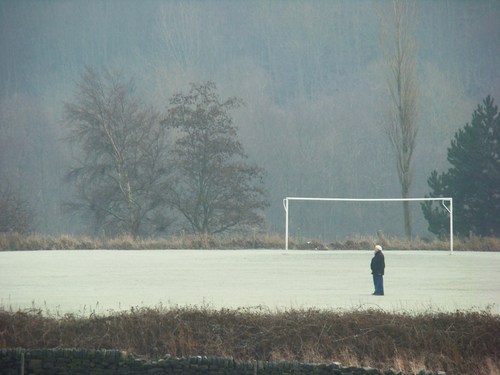
I took my little dog, Dayna, for a walk in my favourite sports field the other day.  Recently it has been too muddy to walk on the grass but today it was frozen rock hard.  The trees around the field looked amazing, their bare branches covered in frost.  There was also a heavy mist which gave the whole place a surreal quality.   Great for dog walking but no good for playing football!

Hoar frosted pitches

on a frozen field; fog bound

fixtures abandoned

frosty football pitch

Wishes and a quilt for Stanley

I have updated my post about the quilt as it fits in perfectly with the Haiku Heights theme for this week which is ‘Wish’  I have added a few extra haiku!
Stanley Jack

Stanley Jack

A shooting star streaked

‘Cross a cloudless sky, my wish

Was granted that night

 shooting star xmas

Wishes are woven

Round the world, on a web of

Wisdom and wonder

frosty spiders web

 I wanted something special and personal for my new grandchild, baby Stanley. It should be something useful that he could keep. I decided that a quilt was a good idea. Quilts are great in the pram, on the cot, as a changing mat, or on the floor as a play mat. In my former life as a teacher I loved the book “A Quilt for Baby” by Kim Lewis ~

“There is a farm far away from the town, in a valley in the hills where
a river runs. . . . This is home, my little one. This is where we live.”

quilt for baby kim lewis
In the book the new mother makes a quilt for her baby appliqued with farmyard images ~ sheepdog, sheep, grass, stream and trees. Jenny and Simon have decorated their nursery with beautiful star wallpaper in ivory and grey so that was my starting point. I wanted a shooting star to feature and wanted a material that would be safe, warm and lovely to the touch. So I bought some ivory Calico and padding. My middle daughter, Anna who lives in Barcelona, found coloured silk ~ a silvery blue/grey ~ perfect for the large stars. I had saved a piece of ivory silk from Jenny’s wedding dress for just this sort of occasion ~ that would be perfect for small stars.
Now I am no great seamstress but I have a friend who is! She has a sewing machine which does everything, including star shaped stitches, and she offered to help me. So I designed the quilt and cut out the material arranging the silk stars on the calico.
My friend then used her magic to put it all together with ivory silk thread.
The result is a lovely unique quilt for my precious grandchild. Of course I have to write some haiku about it!

Weaving good wishes,

In blue silk and ivory,

Starburst for Stanley

shooting star xmas

Shooting stars of silk,

On creamy soft calico,

Each stitch holds a wish

shooting star xmas

In spun golden threads,

I stitch my wishes for him,

Health and happiness

shooting star xmas

My love is wrapped up,

In soft silk and calico,

A wish in each stitch

A quilt for Stanley

A quilt for Stanley

Pain

I am moved and inspired by haiku heights word prompt this week, which is ‘Pain’.

On Saturday  my daughter went through the pain of childbirth and produced a wonderful son, Stanley Jack.  That pain was worth going through.

A cold winter’s day

An arrow of agony

A baby is born

On Sunday my husband bent down to pick up a basket of logs for the stove and his back gave way.  That pain was definitely not worth going through!  By Thursday my husband’s pain was so bad he was kept in hospital where he still is.  Although he is very brave it must be a pain to have so many pills, injections, procedures and tests when he is already on dialysis 3 times a week and chemotherapy alternate days for an existing condition!  He has a  very high pain threshold but this back has beaten even him.

Advancing in age

Every movement is torture

Unbearable pain

On Monday I saw a homeless person sitting in a doorway in the bitter cold and wet.  I feel for him in his physical discomfort but also in the pain of alienation from the community and rejection by society that he must feel.

Hopeless and homeless

Shivering in the shadows

Harbouring his hurts

Looking round the town decorated for Christmas, I am struck by the contrast between the glitzy shop windows, the festive decorations, the singing of the choirs in the streets ~ and the horror of homeless young people, male and female, huddled in doorways.

Two thousand years on

Young mums still search for shelter

Crisis at Christmas

On Tuesday I was reminded of a child I once took to Lourdes.  She was 10 years old and gravely ill.  She needed a heart and lung transplant, which she eventually received.  sadly she died before the year was out and her funeral took place on Christmas Eve.  I will never forget her bravery.  She wrote her own funeral mass sheet and drew pictures of rabbits on it.  She chose the music from Watership Down to be played at the service.

When treatment has failed

And the torment is over

Bright eyes close in pain.

Today sitting at home alone I am reflecting on the pain of having family scattered all over the world.  But how lucky I am to have email, facebook, mobile phone and text messaging.  My family are instantly updated on my husband’s condition and they instantly respond with supportive calls and texts.

Tender the ties that

bind families together

Hearts bleed when they break

It was not so easy to stay in touch in the 19th century.  I have been researching my family tree and discovered a tragic tale about my great grandfather, William Patrick Roche, who suffered from the pain of losing his birth family for the whole of his life.  According to an old letter written by his granddaughter, my Aunty Nancy, William was born in Ireland in County Cork in 1840. His mother and father had 8 children, but after the last baby his mother died. The Irish Potato Famine was in full swing so William’s father could not manage all of the children on his own so he remarried.    His new wife did not get on with William. So a sea captain friend was paid 40 guinees to take William Patrick to sea and train him. William was 12 years old.  The rest of the family went on one of the ‘Famine Ships’ which sailed from Cobh to America.

Bound for a new life

But crammed into coffin ships

No comfort nor hope.

I searched the records at the National Archives in London and traced the original document which William’s father, James Roche signed.  The date was 2 February 1855.  The ship was HMS Conway and it was a Royal Navy flagship.  The commanding officer was John Fulford.  William’s birthdate was given as 17 March 1839!  Whether this was a true birthdate to make him look old enough, and because it was St Patrick’s Day, I don’t know but it makes him 16 when he signed up not 12 as the family history has him!  He was contracted as “Boy 2nd Class” to serve in the Royal navy for 10 years from his 18th birthday plus the time before he was 18 so that means 12 years, or up to 1867.  I believe I have traced him on the 1861 census serving on a ship called “Victor Emmanuel” in the Meditterranean.  I have not managed to trace him on the 1871 census so it may be that he was on a merchant vessel, sailing overseas on tea clippers at this time.

After William went to sea in 1855 he never saw his family again because their father and new wife emigrated to USA with the other children.

Fleeing the famine

Fragmented Families sailed

To an Isle of Tears

William eventually became 1st mate on Tea Clippers that sailed between China and UK. One day he sailed into Glasgow and decided to take a trip to the highlands of Scotland. Near Inverness he saw a young girl sitting on a farm gate. her hair was so long she could sit on it. He thought she was beautiful and decided there and then that he would come back when she was older and marry her. Jessie Miller (born Munro) was her name. Her mother had died when she was 9 years old so she and her sister had gone to live with an aunt who had a farm for them to work on. 3 years later William Patrick came back for Jessie and they married and went to live in Sunderland. He became an optician and Jessie had 8 children. One of them was Lizzie Roche who was my grandmother. Sadly Jessie died in 1907 when she was just 50. William went on to reach the age off 76 dying in the Newcastle Royal Infirmary in 1916. He often travelled to Dublin to try and trace where his family had gone. He also put adverts in American newspapers.  But he never did find any of them again. Today with the internet I am hoping to continue the search on his behalf.

“O the tender ties

Close twisted with the fibres of the heart,

Which broken break them, and drain off the soul

Of human joy; and make it pain to live.” 

by Young

I am a grandma!

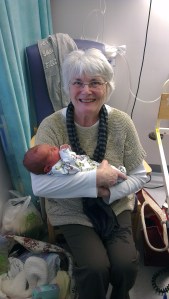
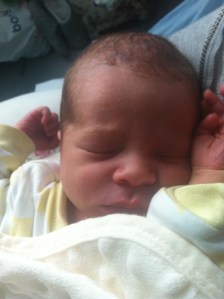
Just had to post my news ~ my youngest daughter Jenny had a beautiful baby boy at 6pm on Saturday 1st December.  He is 6lb 12oz and is called Stanley jack.  He is totally adorable and I had my first cuddle with him today.   I think I might just burst with joy and pride.

StanleyJack Jervis on his first day.

StanleyJack Jervis on his first day.

Stanley and Grandma

Stanley and Grandma

Stanley Day 1

Stanley Day 1

Storm Haiku

On far distant hills

Dark storm clouds are gathering

Threatening thunder.

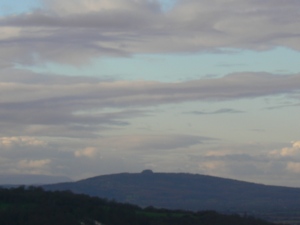
May Hill seen from Prinknash Abbey grounds today

May Hill seen from Prinknash Abbey grounds today

Today’s haiku prompt at haiku heights is ‘Storm’.  It brought to mind the time when I worked at St Peter’s Grange, Prinknash Abbey, which I have described in earlier posts.  The view from Prinknash is amazing as the Abbey is set high in the hills near Cranham and Painswick.  Although there are wonderful woods behind the Abbey, the front has a clear view over the vale towards Gloucester City with its beautiful Cathedral.  One day I will write about my time working at the King’s School in Gloucester (founded by Henry V111) while Harry Potter was being filmed in the Cathedral.  However, today I will stick to the point of my blog!  On a clear day there is a wonderful view from Prinknash, of May Hill, with its clump of trees on the summit.  They were planted in celebration of Queen Victoria’s Diamond Jubilee in 1897 and are visible for miles around.  Beyond that there are the Brecon Beacons and the Black Mountains.

Having observed that view on a daily basis, the monks were very good at forecasting the weather merely from looking at May Hill.  If the hill looked a misty blue they knew there would be rain at Prinknash later.  If the crown of trees was lost in cloud there would be a storm.

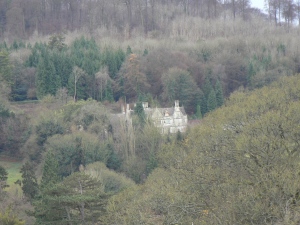
Interestingly, I discovered while working at St Peter’s Grange that it was built in this position, sheltered by the hills and trees, as protection from the plague.  There is documentary evidence, as well as internal evidence in the Grange, that some parts were built in the 14th century.  In 1339 the Bishop of Worcester granted a licence “For the Abbot of Gloucester and his fellow monks to celebrate Mass or to have it celebrated by a suitable chaplain in an oratory within their manor of Princkenasch.”  So we know that there was a chapel on the site then.  By the time the Grange was built the Black Death had already swept through England and people thought it was carried on the wind.  Wealthy people therefore built their homes on the side of a hill sheltered from the wind in the hope that this would protect them.

St Peter's Grange at Prinknash Abbey on the side of the hill, sheltered by trees

St Peter’s Grange at Prinknash Abbey on the side of the hill, sheltered by trees

One of my jobs at the Abbey was to polish the Parker room.  This room was named after William Parker who was Master of the Works in the Abbey before he was elected Abbot in 1515.  He was responsible for many improvements to the building.  In July 1535 Abbot Parker entertained King Henry V111 and Anne Boleyn for a week.  They used St Peter’s Grange as a hunting Lodge as there were many deer around – as there are today nearby.  One fascinating snippet that appeals to me is that Abbot Parker had windows put in positions from which he could watch the monks about their work.  He used to spy on them.  I believe, contrary to what Wikipedia says, that this is where the phrase “Nosey Parker” comes from.

St. Peter's Grange, Prinknash

St. Peter’s Grange, Prinknash (Photo credit: Wikipedia)

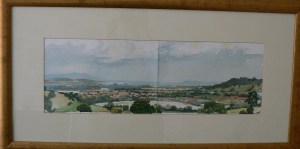
At Prinknash the monks have long been known for their art and craft work.  They made beautiful pottery for many years from the local clay.  They still make Incense that is exported all over the world.  One of the monks who has sadly passed away created a wonderful painting for the millennium which was displayed in the Abbey Church.  he also painted and created stained glass.  Many of his pictures were made into lovely cards which were sold in the Abbey Shop.  Today there is a gallery displaying the artwork of a prolific painter monk, Fr Stephen Horton.  I was fortunate enough to buy some of his original paintings while I worked at the Grange.  They are my pride and joy.  The one I love especially is a watercolour of the Vale of Gloucester as seen from the roof of the Abbey.   When inspiration struck him for this painting he had no suitably sized paper on which to paint the panorama.  Being a monk and used to making use of whatever is available, he used two pieces of A4 paper side by side.  This painting speaks to me of so much more than the view.  It is creativity at its most basic I feel.  The painting had to be painted there and then using whatever was to hand.  The muse could not wait for a trip to the art suppliers!  It also speaks to me of the way of life of the monks.  They waste nothing and ask for nothing.  They live such a simple life yet produce beauty all around them from whatever is there to be used.

Painting by Fr Stephen Horton OSB

Painting by Fr Stephen Horton OSB

One of the saddest things that happened at Prinknash was the theft of  a statue of Our Lady of Prinknash in 2002.  There are many statues at Prinknash but this one was extremely beautiful and so special.  It was about 20 inches tall, carved of Flemish Oak, and had belonged to St Thomas More. After the Reformation, it was taken abroad but returned in 1925 when the Benedictine monks founded their new abbey at Prinknash.  Of course this means it was hundreds of years old and priceless in the truest sense.   The Abbey Church was always open for visitors and those who wished to pray, and the statue used to stand on a shelf to the left side of the church.  One day it just disappeared while the monks were at tea, stolen to order presumably as nothing else was taken.  It devastated the community in the abbey and the wider community, including myself, who attended mass there.  I almost believe it took the heart out of some of the monks and the community itself.  I have a picture of that statue and I often think that one day it will return to its rightful home.  Maybe when the current unrightful owner dies he will leave it in his will to be returned to Prinknash ~ after all he can’t take it with him!

  • Prayer (heavenhappens.wordpress.com)

Desert

Sahara Marathon ~ ultra long distance race in the desert’.

We had a great speaker at WI who fits in beautifully with our Haiku Heights prompt word for this week, Desert.

Tortuous terrain,

Melancholy Marathon,

Desert of Despair

Celia Hargrave, talked about her experience of running in The Marathon Des Sables.  No British woman had ever taken part in the race and it was advertised as “The Toughest Footrace on Earth”.  Both of these factors were a challenge to Celia so she decided to sign up!
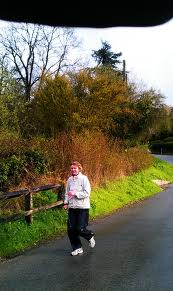
Celia running near her home

Celia is quite an amazing woman.  She is over 60, a former head teacher of a large Birmingham school, and a member of Sheepscombe WI.  Like many WI members, Celia contributes hugely to her community.  She is a magistrate, a fundraising co-ordinator for Sheepscombe Village Hall, and she and her husband open their garden for the National Garden Scheme.  Her garden is about 3 acres set in small woodland with panoramic views.  She has a variety of herbaceous and mixed borders, a rose garden, extensive vegetable plots, and wild flower areas, plantings of spring bulbs with thousands of snowdrops and hellebores, a woodland walk, 2 small ponds, a waterfall and a larger conservation pond.  There are also wooden sculptures in the garden, which is all grown on organic principles.
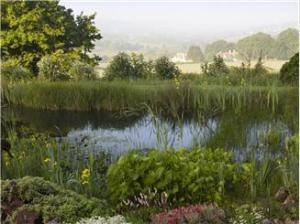
Panoramic View from Celia’s garden ~ Trench Hill

And, as if that were not enough, Celia co-ordinates a club for the elderly and housebound in her area!

Celia had run before competitively in the Stone Masters Marathon, The Chelmsley Wood 24 hour track Race, the London Marathon in 2 hours 46 minutes, London to Brighton Race and Lands End to John O’Groats so she was no novice!  Her longest distance was over 120 miles for which she was ranked sixth in the world. However the Sahara Marathon or MDS is a 6 day 243 km or 151 mile endurance race in which all competitors have to carry everything they need for their survival.  So this was to be an enormous challenge.

Celia sought medical advice and drew up a training programme which involved running every day.  She did some 50 mile races for charity and started to raise money for her challenge.  Fortunately Celia’s own WI at Sheepscombe organised her fundraising and got TV, radio and press coverage for her.  In order to adapt to running in extreme dry heat conditions, Celia started running in her local sauna!  This caused some consternation among other spa users but helped Celia get used to taking in fluids while running.

Eventually Celia took off for Casablanca in Morocco and travelled to Ouarzazate to meet the other competitors.  The majority seemed to be French that year but there were 20+ from the UK.  Other competitors came from all over the world.  They spent one wonderful night in a 5 star luxury Moorish hotel before setting off on a coach out into the desert.  After several hours they had to get off the coach and walk the rest of the way to their campsite.  Two things that impressed Celia there were the desert orchids and a woman in red high heeled shoes both of which seemed incongruous!

The campsite seemed to be in two halves: one for the competitors, which was very basic; and one for the non-competitors, which was comparatively luxurious.  Celia was sharing a ‘tent’ with 12 to 14 men and women competitors and they had very little space.  In the tent they had to store everything they had brought and carry it on their backs in a rucksack daily.  The rucksack was to be no more than 7 kilos in weight when filled.  Celia had reduced her packing to a minimum but still had to carry her map, day book, compass, medical kit, sleeping bag and food.  Each competitor was allowed 9 litres of water a day which was rationed and given out at each checkpoint along the way.  The 9 litres was for everything ~ drinking, washing clothes and self!

When at last the first day of the race proper arrived, the tent was removed at 6.30am ready to be transported to the next stopping point 15 miles away.  As the temperature can quickly reach 120°F Celia was hoping for an early start, and was not happy to be kept hanging around for hours in the heat.

The Marathon Des Sables is run in sections over 6 days, or 7 for some slower runners.  This is the equivalent of 5½marathons.  That is a speed of between 3 and 14km an hour.  Competitiors can be aged between 16 and 78 years old.

Day 1 ~ 25 km, Day 2 ~ 34km, Day 3 ~ 38km, Day 4 ~ 82km, Day 5 ~ 42km, Day 6 ~ 22km

Celia described the terrain on the first day as ‘dunettes’ and the second day as much higher dunes.  Over the course of the race she would run on sand, rock, dried river beds, oases and dunes. She remembered the wind as well as the heat; but her abiding memory was of the horizon which never seemed to get any closer, and the breathtaking vision of a huge sky where every star was visible because of the total darkness.

By the third day Celia had developed a blister which was treated with iodine in the medical tent.  This was so painful that she determined not to go back there again.  The heat and rubbing really takes its toll on the feet.  Some competitors lost nails or got infections in blisters which can put them out of the race.

Day 4 was a rest day. Then day 5 was the toughest day.  It took Celia 13 hours of non stop running/walking to cover the 50 miles of barren wilderness.  Some competitors had to run right through the night, some taking 32 hours altogether to cover the 50 miles.  Celia had the deepest admiration for these slower runners for their self discipline, determination and sheer perseverance.  Those who know reckon that, while physical fitness is really important,  mental stamina constitutes at least 50% of whether competitors finish the race or not.

By this time Celia was on a high and pleased to be coping so well.  She was way ahead of some competitors, male and female.  But on day 6 all that changed.  Instead of relying on her compass, Celia took a route that others seemed to be following.  This led her to high rocky ground and a precipice which she fell over.  Amazingly her rucksack got wedged in the rocks.  Celia became disorientated, being in pain and in shock.  She began hallucinating.  However she managed to release her bag and carried on a further 11 miles to the end of the stage.  All the time she was worried and anxious in case she could not finish.  But at last she arrived on the tarmac road which marked the last kilometre leading to the finish at the small town of Tazzarine.  Here Celia kissed everybody she met with sheer relief.  She was then taken by jeep to a mud house with a fireplace in the wall and a wellspring of hot water.  This she played in, delighting in being clean for the first time in a week.  She then had some food and was taken by coach back to a hotel for a celebratory Gala Dinner.  It turned out that Celia was 1st among the UK entrants, beating all the men as well as the women.

It was later discovered that the fork in Celia’s rucksack had stuck in her back during her fall over the precipice causing the injury which was causing her so much pain.

Celia has done two other desert events since then, one being the Trans 333, a 208 mile race which she did in 86 hours with only two lots of two hours sleep.86 hours!

She truly is inspirational.
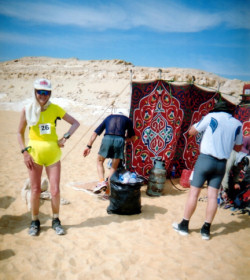
Celia at a checkpoint in the desert
Trees Haiku

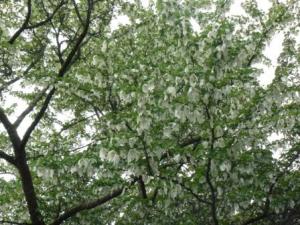
A Handkerchief tree at Minterne Gardens in Dorset

I am fascinated by trees, not only for their beauty, but for the stories they could tell.  Some trees have lived through amazing times and been part of the lives of such interesting people.  If only they could talk!

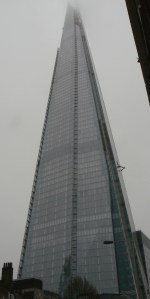
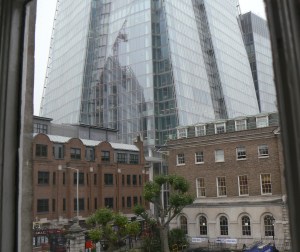
This week I went to the city with a couple of friends. We visited two wonderful museums and wandered along the streets of London where the trees are at their glorious Autumn best.  We strolled along the Embankment beside the River Thames and marvelled at the changing skyline.  I was struck by the juxtaposition of old buildings and new, especially the magnificent Shard which is so close to the old St Thomas’s.  It is a breathtaking sight and a brilliant feat of engineering.  Yet even in front of this awesome glass building my eyes were drawn to a row of trees nearby.

Consumed by the clouds

Engineered to perfection

A giant in glass

The Shard with trees in the foreground

The enormous Shard disappearing into the clouds

Sheer face of the Shard

Glass monument to mammon

Shatters the skyline

View of the Shard from St Thomas’s

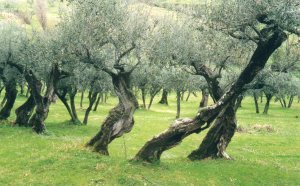
One amazing tree I have seen is an ancient olive tree at the site of St Francis of Assissi’s remote hermitage, the Eremo delle Carceri on Mount Subasio.   Olive trees are the longest living trees.  Indeed in good conditions some live to a thousand years old.  This tree is one of them.  It is protected and propped up by poles.  I find it breathtaking to think that St Francis actually touched this tree, walked by the stream and slept in the cave, all of which can still be seen.  I found it very moving when I visited in 2000 and I have to admit to picking some leaves from the tree.  I have pressed them and kept them in my travel journal from Rome and Assissi.  St Francis lived a simple life and slept in the cave on a bed of stone and a pillow of wood.  Some of his followers lived there as hermits too in prayer and meditation.  The warren of caves still exists in a clearing with a stream and lots of trees.

The ancient Olive Tree that St Francis would have seen

Birds stopped to listen

As the humble hermit preached

At one with the trees.

Leaves from the Olive Tree on Mount Subasio

An early picture of St Francis of Assissi

St Francis’s cell in the cave at Mount Subasio

Olive Trees in Italy

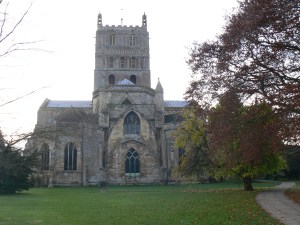
Another tree that inspires me is the Mulberry tree which was in the garden of St Thomas More’s home when he was Lord Chancellor in the time of King Henry V111.  Sir Thomas More, as he was then, bought some land in Chelsea and Kensington in 1524 in order to build his Great House.  Sadly his house is long gone, but the Mulberry tree he planted is still there.  On the site today is Allen Hall, the Seminary of the Roman Catholic Archdiocese of Westminster.  Visitors can visit the seminary by appointment and walk to the secluded walled garden where Thomas More’s Mulberry Tree still stands.  Outside and nearby is a beautiful statue of St Thomas More in a garden facing the river Thames.  In the grounds of Tewkesbury Abbey near where I live there is a Mulberry tree grown from a seed from St Thomas More’s tree.  I often visit this tree and sometimes pick the delicious fruit.

Mulberry Tree at Tewkesbury Abbey

Tewkesbury Abbey and Trees

Portrait of St Thomas More

He planted his tree

And dreamed of Utopia

In turbulent times

The Yew trees in the beautiful village of Painswick in the Cotswolds are also very interesting.  There are 99 of them in the grounds of St Mary’s Church and many of them are hundreds of years old.   They lived through the English Civil War (1642-1645).  There is evidence of Royalist cannonballs high up on the walls of the church to this day.  At times people have tried to establish more Yew Trees in the churchyard but a hundredth will never grow.  It seems as if 99 is the maximum for some reason.  There is an old story that if a hundredth tree ever grows, the devil would pull it out.  It is one of our old Cotswold mysteries!

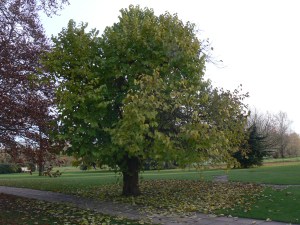
Last but by no means least, is a historic small-leaved Lime tree at Westonbirt which is unbelievably ancient.  It is reputedly 2000 years old!  It is so big that it seems as if it is many trees.  However, it is actually a clump of around 60 trees all growing from one original.  This was the result of coppicing which was a way of managing woodland for fuel established in Anglo-Saxon times.  Over hundreds of years of repeated cutting, the stump gradually spreads outwards in a ring until it reaches enormous proportions.  My photo does not do it justice!

Ancient Lime tree at Westonbirt

Remembrance Sunday

Poppy Day in UK

Remembrance Day falls on the same day as Armistice Day this year, Sunday 11th November.  This will not happen again until 2018.  Somehow as I get older it seems more special.  I listened to the BBC Radio 4 Remembrance Service at the Cenotaph in London today.  It was very moving.  There were 2 veterans of the Battle of El Alamein speaking.  They were only 21 in 1942 when the battle occurred.  It is recognised as a turning point in the war.   After this victory at El Alamein, Winston Churchill would write in “The Hinge of Fate”, his famous verdict: “Before Alamein we never had a victory. After Alamein, we never had a defeat.”

Field Marshal Montgomery and Rommel

Grandad
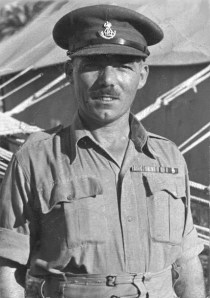
With Durham Light Infantry in the Western Desert

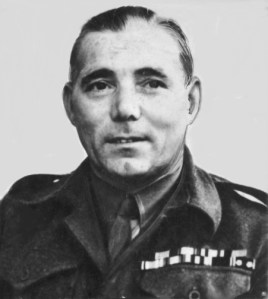
My grandfather, Frederick Charles McCluskey was in the Durham Light Infantry with the Eighth Army and fought in this battle.  He was one of the lucky ones, he survived.   But he had a tough time in this war and it left him with Malaria, which recurred throughout his life, and dreadful foot problems from his long trek through the desert.  He was part of the long march through the Western desert and told me that he wore out the soles of his shoes, then the soles of his feet on this trek.  His friends wrote an obituary in the local newspaper after he died in 1988:-
“Tyneside war hero, Major Frederick Charles McCluskey who played a leading role in a legendary desert trek to freedom, has died at the age of 88.  In June 1942, he and 200 men from The Durham Light Infantry’s 9th Battalion evaded fierce enemy fire to escape after being surrounded by a division of Rommel’s desert army at Gazzala, North Africa.  They travelled 350 gruelling miles to safety.   Major McCluskey, who lived in Newcastle fought in both world wars.”
Grandad
Major F C McCluskey

I also found out that my grandfather who was born in 1900 enlisted in the army for the First World War.  He was just 14 years 8 months when he joined as a Bugler with the Yorkshire Regiment.  He served right through the First World War.  After the war he joined the Durham Light Infantry and was with them throughout his career, ending it as a Major with a commendation for the MBE.  He only left the army in 1952 when my much loved grandmother, his wife, was dying of stomach cancer.

Grandad as a young bugler in the First World War

In 1952 he bought a general store in Newcastle where I spent many happy childhood hours sitting by the fire in the back of the shop, or helping myself to sweeties.

I am very proud of my granddad and it is lovely to remember him today and all he did for our country.

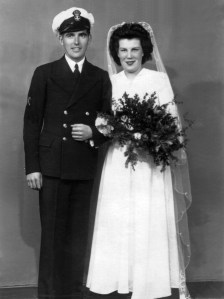
I also remember my dad who was in the Royal Navy.  My mum and he were married during the war in 1945

Mum and Dad’s Wedding 1945

Silence

My blog today is inspired by Haiku Heights prompt word for this week which is ‘Silence’

For many years I have had a quote on my shelf and I have no idea who said it but it brings me great comfort . . .

Let thy soul walk softly in thee

As a saint in Heaven unshod

For to be alone with silence

Is to be alone with God

My son used to say the most peaceful places are under the sea or on top of a mountain.  He used to dive and he still climbs,  so the first Haiku is for him . . .

Seeking solitude

In an underwater world

Stilled by silence

Any new mother will tell you that the most peaceful time is when her child is sleeping peacefully.  As a grandmother this is still true . . .

Nestled in shadows,

In silence I watch her sleep,

An angel at rest

Sometimes, when there are no words that can help, only ‘time out’ will soothe the broken heart or the troubled mind . . .

Silence speaks softly

Solicitous to sorrow

Soothing suffering

Having travelled to Lourdes many times, I am constantly amazed that there can be 40,000 emotional people gathered in the underground basilica for a service but a gentle “Shhh!” will bring total silence . . .

Soft shushed to silence

In sickness and suffering

They stream into Lourdes

2am in the grotto at lourdes, a time for silent prayer

Studying Icons

In silent contemplation

Wisdom is revealed


The Dangers of Cycling

Pat at Christmas just a few short weeks before she died

What a strange coincidence, UK’s top cyclist, Bradley Wiggins and head coach for the GB cycle team, Shane Sutton both had cycling accidents within 24 hours. Fortunately, both men survived their accidents. Bradley Wiggins, the Tour de France winner, was discharged last night with broken ribs and a bruised hand according to the news.

British Cycling reported that,

Shane was taken into hospital where it was identified he has suffered bruising and bleeding on the brain. Shane was wearing a helmet. He is set to undergo more tests, and is likely to stay in hospital for the next few days. It is extremely rare that our riders and coaches are hurt while out cycling on the road, even rarer that two incidents should occur in a short space of time, and we wish Shane and Bradley a speedy recovery

Sadly, cycling accidents don’t always have this outcome. On Saturday 15th January 2011 my dear friend from college days was killed cycling on an organised 100 km club run for charity in the Severn valley. It was a foul morning, windy and pouring with rain. But Pat was a very experienced cyclist who used to be a racing cyclist and had cycled in France. I clearly remember my 60th birthday when Pat turned up in full cycle racing gear although she was a bit older than me, having ridden all the way from Berkeley to Cheltenham.

On the day she died, Pat was almost home when she was in collision with a van towing a trailer beneath a narrow railway bridge. It was no-one’s fault, simply a tragic accident. It happened near Old Westfield Farmhouse and there was a retired doctor at lunch there. He gave Pat CPR immediately; the emergency services arrived quickly, and Pat was airlifted to Hospital. It was comforting to hear from that kind doctor that Pat would not have suffered at all.

Pat was definitely one of life’s great characters and we used to have a lot of fun at college and afterwards when we shared a flat in Cheltenham. Before she came to college Pat had been a riding instructor and she continued with this in holidays from college. In the first year at college we shared a tiny bedsit behind Coventry Football Club. We had a wonderful time causing havoc in the local area with our practical jokes and outrageous (but very innocent) behaviour. We had our own favourite corner in the local pub and used to tease the local shopkeeper by asking him for exotic foodstuffs that he had never heard of.

In our second year we moved into college at Newbold Revel (the middle of nowhere) in Warwickshire, and again shared a room. Here we had more fun than ever, breaking every rule we safely could, and bending the rest. Pat loved all animals and our room was soon home to all sorts. We had snakes, guinea pigs, gerbils and hamsters, all of which Pat hid and bred from. On one hysterical occasion I remember, we had a young novice nun visiting our room ~ did I mention our college was a convent? She saw a lovely fur hat on the bed and without asking picked it up and put it on her head. Unfortunately for her, the hat was a nest full of gerbil babies. I’m not sure who got the biggest fright ~ the nun or the gerbils.

Pat’s most adventurous pet was a very young, tiny and absolutely adorable Shetland pony. I remember going to collect the pony. Pat borrowed a car and took out the back seats to put the pony in. We drove it back to college and installed it in the grounds. This Shetland pony was called Rupert and it went almost everywhere Pat went, except the Bahamas. Rupert eventually moved to Berkeley where Pat settled with her husband John and children, Lindsey and Robbie. Rupert lived for over 30 years, joined later by Old English Sheepdogs which Pat bred, and a goat called Fosbury.
After College Pat and I decided we would look for teaching jobs together. We applied in Gloucestershire because Pat had been born here in Cheltenham. Her father was the Chest Consultant at Salterley Grange when it was a TB hospital. We got a flat together and started our careers. Pat taught in a secondary school and I taught in a primary school. Every evening after school we would meet for malted milk in a Montpelier café before going back to our flat to work. We loved Cheltenham and again had a very good time and lots of fun.

Eventually we both got married. Pat’s husband went off to teach in the Bahamas and as Pat was expecting a baby, she came to live with me again. She stayed for a few months until her beautiful baby, Lindsey was born. As Pat’s husband, John, was in the Bahamas, I was allowed to be with her at the birth. Typically for Pat, the delivery started dramatically. Pat was at the dentist having her wisdom teeth out when she realised her contractions had started. When the dental treatment had finished she said we ought to go straight to the maternity hospital as she was in labour. In those days I had no car so we caught a bus!! While I got dressed in a gown and green willies.  Pat was whisked off to the labour room. Before long the baby arrived. It was the most moving thing I have ever been privileged to see. When Lindsey was a few weeks old she and Pat set off for the Bahamas to join John. They were there for 5 years altogether and Robbie was born there. When they came back they lived in Cheltenham for a while before moving to Berkeley. They bought a lovely old cottage which they set about restoring. Pat was often to be found up a ladder as she personally reroofed the house. There was a large garden where Pat grew her fruit and veg. There was also a little paddock where she kept Rupert and later Fosbury. Indoors she bred her Old English Sheepdogs. Pat was an outdoor person so although she taught for a while in Gloucestershire she soon gave teaching up and became a Postwoman. This was when Pat discovered her love of cycling. She was never happier than when cycling around the villages delivering mail and chatting to people.
When Pat was killed both of her children were expecting babies. Lindsey, who already had 3 children, gave birth to a little boy called Isaac and Robbie’s wife had a little boy called Ollie. They were both born in March 2011 so Pat did not see them. But she would have been so thrilled with them, as she was with Lindsey’s other children. The boys are delightful and I am sure they have a lot of Pat in them.

 Pat’s cycling friends said she brought a touch of eccentricity into cycling. She did time-trials with Dursley RC for many years as well as road racing and taking part in numerous cycle-cross meetings. She also joined the Stroud Valleys Cycling Club competing in time trials and races as well as fun events such as ‘man versus horse’ in Wales. Pat was a brave lady, a regular Hard Rider and particularly enjoyed the hill climbs. Her forte was as a cross-country mountain biker, and she regularly featured in the national results. One season she took the National Lady Veteran’s title. The fun touch, though, was never far away.

I remember Pat once did the 58 mile London to Brighton race on a unicycle! My children had great fun learning to ride her unicycle when they were young. In later years she took up bog-snorkelling and of course won at the Llanwyrtyd Wells mountain bike event. Pat’s determination stood her in good stead some years ago when she fell out of a fruit tree in her garden and broke her back. When the ambulance men arrived she told them not to move her as she knew she could be paralysed. She made them put her on a spinal board and drive at 4mph all the way to Bristol Hospital. Once there it was confirmed that her spine was indeed broken and she had a permanent metal framework inserted around her spine. One of her party tricks after she had recovered, which of course she did, was to put magnets on her back to amaze people. In a few months bionic Pat was back in the saddle doing what she loved most, riding her bike.

Pat she taught herself to ski and to speak French so that she could join a cycling club in France where she and John had a second home.

She was a great friend and she is sorely missed.  Today’s news just brings it all back for me as I am sure it does for all her cycling friends, and especially her lovely family.  The world is a sadder and duller place without her.

Pat on her much loved bike.

Nature

Having just come back from a restorative week in the log cabin by the fishing lakes, I am full of the sights and sounds of nature. So I have written for this week’s Haiku Heights prompt word which very conveniently is Nature!

Alone with my thoughts

Recharging my batteries

Immersed in nature

Sunset at Hillview

Walking in woodland

I catch glimpses of heaven

Revealed in nature

Butterfly in the Forest of Dean

Cormorants circle

Round reservoir full of fish

And herons hover

A cormorant resting

In ancient woodland

Birch, Rowan and Oak survive

And sweet chestnuts thrive

Forest of Dean at Lindors Country retreat House

Mosses and lichens

Green carpeted forest floor

Celtic rainforest


The Forest of dean

Is a haven for wildlife

As nature intended

Tears

Today’s haiku is inspired by carpe Diem prompt word “tears”.  It reminded me of the magnificent waterfalls in the Caucasus mountains where hundreds of prisoners lost their lives hacking a way through the mountain to build a road.  One of the waterfalls is called “Lady’s Tears”

From steep mountainside

The Lady’s tears waterfall

Weeps for past sorrows

Image

Haiku for Carpe Diem

This haiku is inspired by a wonderful haiku by Basho, a haiku master.
This one he wrote in Spring 1687 and it had a title. In that time a title for a haiku was a commonly used practice. The title of this haiku was: ‘Mourning over the death of Priest Tando’.

chi ni taore ne ni yori hana no wakare kana

falling to the ground
a flower closer to the root
bidding farewell

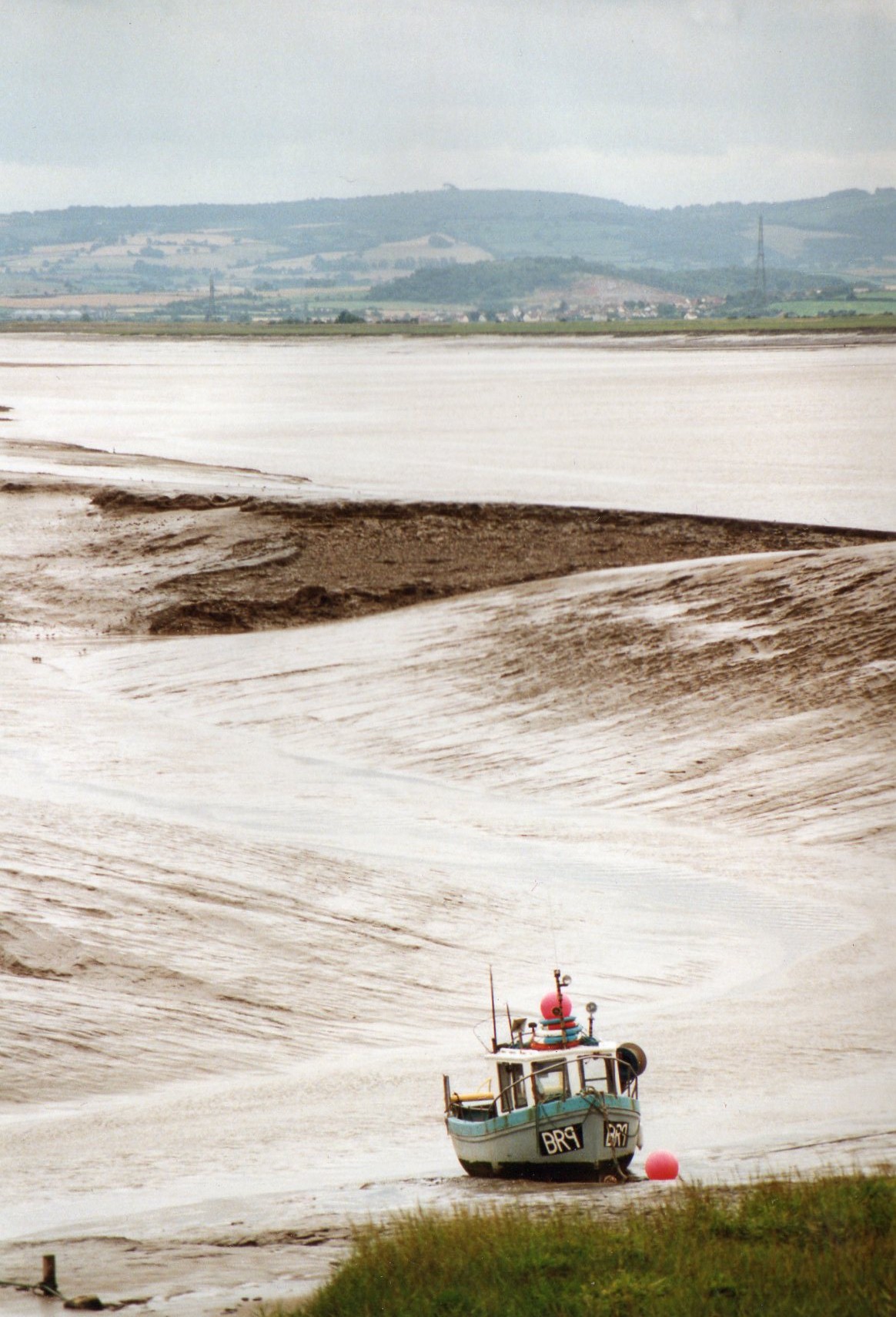
Mired in the mud

Moored to bright  orange buoys

Awaiting the tide

 Image

Caught fast in the thorns

Bleeds a bright splash of colour

Autumn accident

Image

Prayer

This post is inspired by the Carpe Diem Haiku prompt for today, “Prayer”

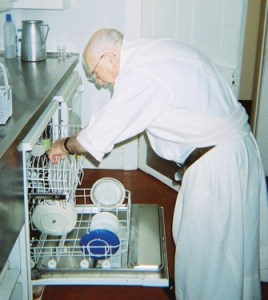
When I first retired from my work in education, I went to work as a housekeeper at Prinknash Abbey This was a labour of love and I learned a great deal about the prayerful life from the Benedictine monks who live and work there.  I learned from Fr Alphedge that every single thing you do can be a prayer if it is done with reverence and joy.

Fr Alphedge at work and prayer

Peaceful and prayerful

monks, masters of mindfulness

sacramental lives

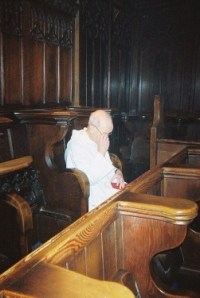
Fr Adhelm in the chapel at prinknash

Meaningful moments

Of quiet contemplation

simple and sincere.

Incense is made at Prinknash

Alone with your thoughts

humbly open your heart, and

Let healing begin

Stained glass window from Gloucester cathedral

Drowning in despair

from the core of your being

you cry to the Lord

Peace dove made of tiles

Simple and sincere

the sorrowful supplicant

speaks softly to God

Pieta from polish church in Torun

Fragile, the faithful

cry out in consternation.

Consolation comes.

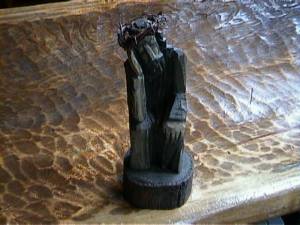
sorrowful statue

Studying Icons

In silent contemplation

Wisdom is revealed

An icon from Russian Karelia

Autumn haiku

These haiku are inspired by Haiku Heights prompt ~ Conscious

Conscious commitment

Finding fulfilment

Committed to following

A creative path


Conscious of time passing

Dog days are over

Awesome autumn has arrived

Attracting the crowds

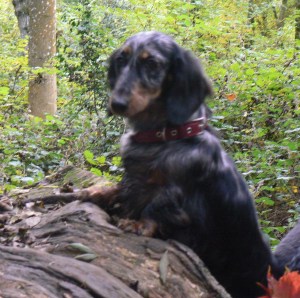
Dayna ther dachsund

Conscious of colours

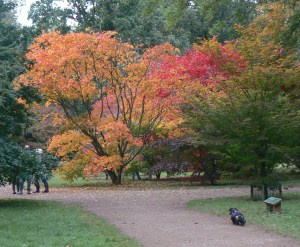
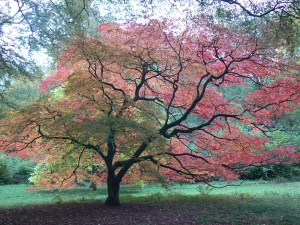
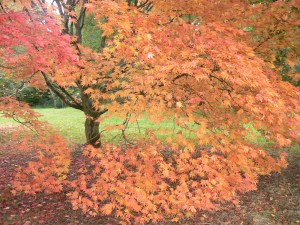
Japanese jewels

Seasonal spectacular

Autumnal Acers


Conscious of nature

Conscious of nature

Arboretum in autumn’s

cascading colours