I am in the Gloucester Mystery Plays this Easter , which will be performed in Gloucester and Worcester Cathedrals. While I only have a small part I have found the whole experience extremely moving. Indeed the professional and semi professional actors involved are so good that they have brought the whole story to life for me and given my faith a much needed boost. It is mainly down to the professionalism and commitment of Sheila Mander, the producer.
Mystery plays were the foundation of the modern theatre. Developing between the 10th and 16th century, they portrayed key stories from the Bible in an accessible way for people who had not heard or read the stories before. The dramatic productions appealed to all types and ages of people.
Gloucester mystery Plays have taken these stories to a new level with a modern interpretation of the ancient texts. The language is modern while the actions and rhythms of the original are faithfully captured. There is also wonderful original music and singing.
These Mystery Plays will be bold, colourful, joyful, sad, dramatic, thought provoking and challenging. They tell the story of the life of Jesus as an adult right up to the Last Judgement. Hopefully they will leave the audiences deeply moved.
I can’t wait to tell you how good it was after Easter!
Gloucester Mystery Play
Mystery Play at Worcester Cathedral
Worcester Cathedral (Photo credit: JmGpHoToS)
Gloucester, England (Photo credit: Nigel’s Europe)
This post is inspired by the Haiku Heights prompt “Origami”.
When I was a child I was really impressed by the string of paper dolls my dad could make by cutting or tearing a folded newspaper.
Fondly he folded
Paper people holding hands
Fragile family
patterns to cut out for a chain of paper people
And, when I was teaching I used to love making paper shapes with the children as part of maths lessons. By the time they were in top juniors as it was then, the children had progressed to making dodecahedrons which they decorated beautifully and hung from the ceiling.
Dodecahedron
But never in my wildest dreams could I have imagined that it was possible to make houses, garages and even a church out of paper. However, that and more, has now been done.
You may remember the dreadful earthquake that hit the Kobe region of Japan in 1995. 6,434 lost their lives. After the earthquake there were literally thousands of people made homeless. They needed shelter which could be erected quickly and cheaply. The architect Shigeru Ban designed a paper church/community centre. Made entirely out of paper donated by companies, it was erected in 5 weeks by about 160 volunteers from local churches. The church was called Takatori after the original church which had been destroyed by the earthquake.
The church measured 10 metres by 15 metres and had 58 paper tubes in an elliptical pattern inside an outer skin of corrugated polycarbonate sheets.
The church was intended to be temporary but it was used as a homeless shelter and church for 10 years before it was dismantled and moved to Taiwan in 2005.
Takatori Church
Shaken and shattered
Kobe’s homeless sought shelter
In a paper church
Takatori Church
Kobe Luminarie
Silent and serene
A city of lights springs up
And hope shines out
Takatori Catholic Church, Hyogo, Japan. Designed by Shigeru Ban. (Photo credit: Wikipedia)
The most useful, insightful and intelligent essay on the art and practice of writing that I have ever read. Hope you enjoy it and agree that it is a must read!
One Year as a Blogger with WordPress and 144 posts
I am really pleased to say I have been blogging for 1 year. I have posted 144 items and enjoyed every minute of it. I have come across such interesting people and some amazing creative talents. I have learned so much and had such fun reading other people’s blogs.
The weather is so beautiful today and Spring is so exquisite that I just have to repeat a quote from Thomas Traherne the 17th century Poet & Mystic
“Heaven! is not that an Endless Sphere
Where all thy Treasures and thy Joys appear?
If that be Heaven it is Evrywhere
…
Heaven surely is a State and not a Place
To be in Heaven’s to be full of Grace
Heaven is wherever we see God’s face.”
I recently took a walk in Painswick to see the snowdrops at the Rococo Gardens. By the lake children were playing and birds were singing. The sky was blue and the soft breeze blowing through the trees was chilly but welcome. The snowdrops were beautiful and the company was great. It is one of those special places, a sacred space filled with peace and natural beauty, which justify Traherne’s words.
This post is inspired by haiku Heights prompt word “Breeze”.
On of my favourite places is London. There is nothing so inspiring as the city skyline viewed from the South Bank of the Thames on a summer’s evening. Imagine feeling a gentle breeze drifting over the river at sunset and listening to the birds singing in nearby trees ~ magical! Do click on my link to hear the fabulous Glenn Miller Band playing one of my favourite songs ~ the inspiration for this haiku ~ with a nod to one of my favourite poets too ~Thomas Hardy.
One of my favourite times of year in the Vale of Evesham and generally in the Cotswold, is Spring, when the blossom covers the fruit trees and the ornamental cherry is out.
Boughs bend to the breeze
Covering the earth in a
Blanket of blossom
Ornamental cherry
Watching butterflies
Their beauty borne on the breeze
Children barely breathe
Butterfly in captivity
There are times when a gentle breeze can have a powerful effect, as can a still small voice.
Gazing on Taize
Sunflowers bow to the breeze
And my spirit soars
I will never forget the time I went to Taize. In the 1940s Roger Schutz was appalled by the violence and suffering he saw across Europe. Throughout the war years, he sheltered political refugees, especially Jews, whom he helped cross the border into Switzerland from the occupied region of France. He began to develop the idea of a community based on mutual understanding and respect for all. He found a suitable site at Taize near Cluny in the Burgundy region of France and on Palm Sunday of 1948, seven men took monastic vows. They dedicated their lives to working and praying for ‘outsiders’ of all kinds; especially those living in extremes of poverty, hunger, or disease. Taize is now famous for its gentle and powerful worship built on meditation through repetitive chants, a model of worship which has spread around the world. Brother Roger’s work continues; to bring reconciliation, unity and peace to all the peoples of the world. www.taize.fr
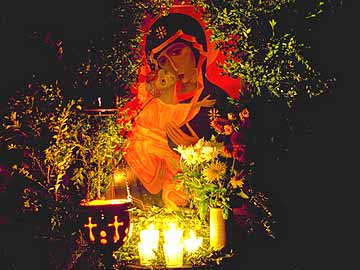
There is a beautiful icon of Mary in the Church of Reconciliation in Taize. I would recommend anyone who travels to France to make a detour so that they can spend some time there and see this Icon.
Icon of Madonna and child from the chapel at Taize
When I went to Taize one summer I had an amazing experience. I stood alone in a field full of sunflowers, at the foot of the hill looking up towards the church, as a gentle breeze blew. The wind caused the flowers to bend and the sound they made was so strange. It reminded me strongly of the beautiful words of one of my favourite hymns:
Be still for the presence of the Lord
Be still for the presence of the Lord The holy one is here
Come bow before him now With reverence and fear
In him no sin is found We stand on holy ground
Be still for the presence of the Lord The holy one is here
Be still for the power of the Lord Is moving in this place
He comes to cleanse and heal To minister his grace
No work too hard for him In faith receive from him
Be still for the power of the Lord Is moving in this place
I realised that for me it is, and has been for many years, an important part of coping with my journey through life. Like everyone I have had ups and downs, good experiences and bad. Probably the worst time of my life was when I was only 5 years old in the early 1950s. After a serious illness and a long spell in hospital I was considered too weak to go home, so was sent to a convalescent home miles away from the city in which I lived. It was in the depths of the countryside during the worst case of Myxomatosis this country has ever seen. There were dead rabbits everywhere with their eyes bulging. A terrifying sight for a 5 year old on our daily compulsory constitutional walks in the forest. In those days it was not considered a good idea for parents to visit their children in case it distressed them, so I was effectively abandoned for months on end to what I considered to be hell on earth.
I am sure the staff were only doing their jobs; but some were quite sadistic and the cruel discipline and force feeding I endured there will stay with me forever, and is still the stuff of my nightmares. I had to develop an alternative, inner life in order to stay sane and survive. So I became adept at switching my feelings off and pretending to be somewhere else as I went through those long winter months. When I eventually was taken home I discovered that my mother had a new baby, my adored grandmother had died, and I was a totally different person to the child I had been before my illness and convalescence. I felt as if I didn’t fit in to the family any longer, and I have felt pretty much like a fish out of water ever since.
As an adult I started going on pilgrimages to find healing and peace, which I did. But I also found a great deal more. I found acceptance from the people I met, and I learned how to find deep joy in the simplest of things. This has been my salvation and is the reason I call my blog “heavenhappens”. It really does! I look for the sacred in the everyday things around me and I find it; I wonder at the variety and beauty in all the different parts of the world; I look for and believe in, the essential goodness at the heart of most people. Then I write poems, stories, haiku, or make drawings or collages about it. They give my life meaning and purpose now that I am retired, and bring me a great deal of pleasure.
This is the closest I have ever got to explaining myself to the world and I don’t think it will happen again so thank you merlinspielen for the opportunity!
Just today I have been given the opportunity to go on a pilgrimage to the Holy Land, if I am meant to go I will be there in May this year. Maybe I will write another post about some of the places I have been on Pilgrimage but for now I will finish with some photos which to me show that heavenhappens x
Poppies in my garden
Daffodils in the College grounds at Glos Uni
Hailes Abbey Ruins
Sheep in the ground of Hailes Abbey
Sheep in the grounds of Hailes Abbey
Sunflower in my garden
My daffodil plot and Easter flowers
Spring water gushing at Compton Abdale in the Cotswolds
Bird house made by my daughter
Lake in barcelona
Bakewell in Yorkshire
Autumn trees outside my home
A birds eye view of Lourdes
Our Lady of the Snows
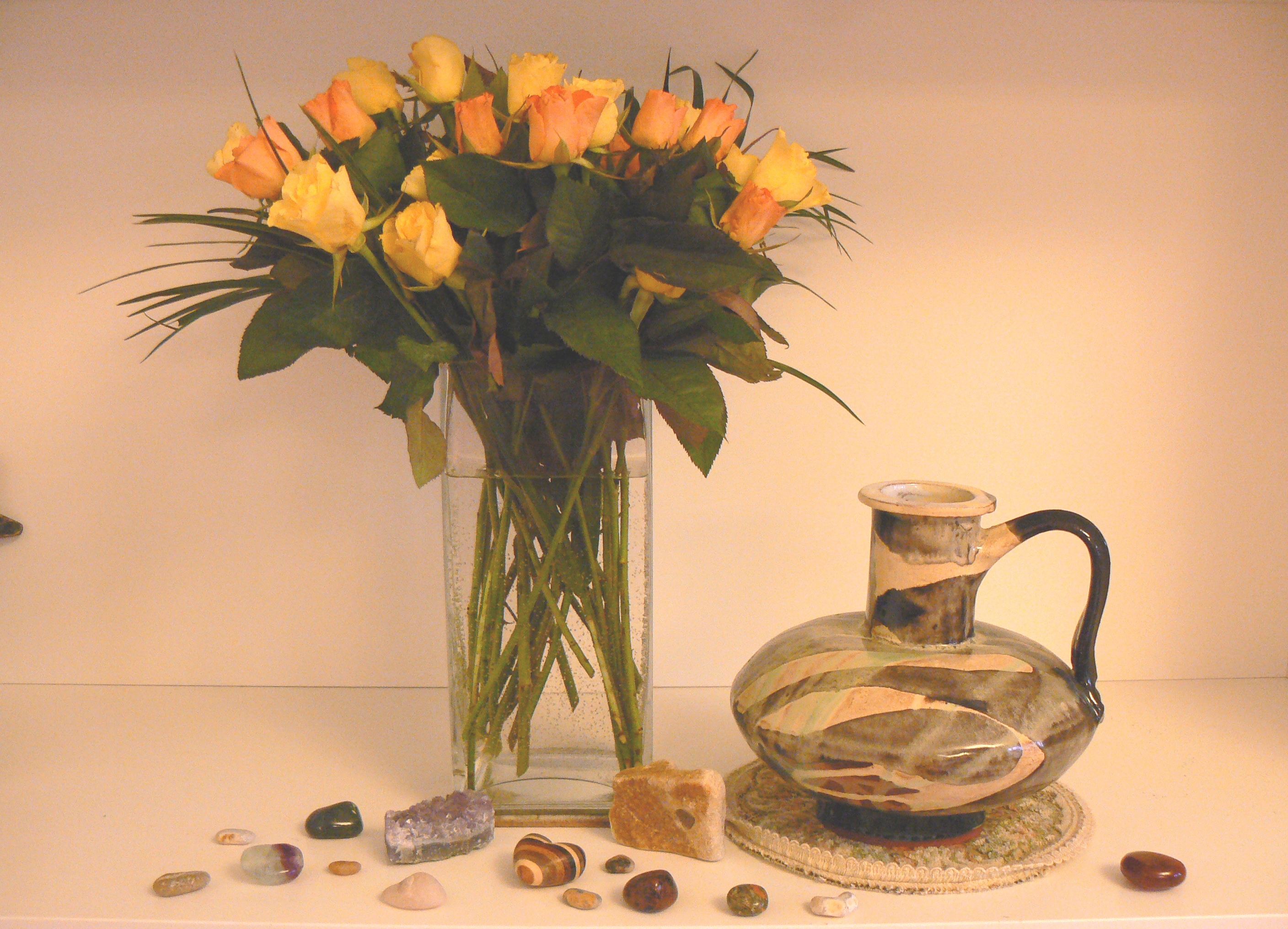
My favourite flowers, vase and small stones
Gloucester Cathedral
Icon of Madonna and child from the chapel at Taize
Barred spiral galaxy NGC 1300 photographed by Hubble telescope (Photo credit: Wikipedia)
Sparkling stars spiral
In glittering galaxies
Bleak blackness beyond
Sugar sprinkled stars
On a blue velvet background
Heaven happens here
Last week I went with some WI friends to a talk entitled “A Universe of Stars”. Dr Paul Olver FGS FRAS gave a fascinating talk with slides and photographs as snowflakes fluttered down outside Bromsberrow’s beautiful village hall. Being one of the many people who cannot comprehend the size and scale of the universe and all that is in it, I found the talk very educational and enlightening.
When I was a little girl my father used to take me for night time walks and tell me all that he knew about constellations but I never really understood any of it! Now I can honestly say thanks to Dr Olver I do ~ well I understand a lot more anyway: Black Holes, White Dwarfs, Galaxies, Supernova, Dying Stars, Nebula, Light Years, Constellations, Big Bang Theory ~ these things now make (some) sense to me. If the sky had been clear we would have gone outside with Dr Olver’s range of telescopes, but although it was cloudy we were not deprived, as he had brought along a range of photos taken from the Hubble Space telescope which were absolutely astounding. With all the new digital photography and space technology it is almost possible to take photographs at the edge of the universe where our wonderful world began.
Some of the galaxies looked like sugar spilled on a dark linen tablecloth and they set me off writing haiku.
My camera does not do justice to what we saw but I have added a few photos that I took to give you a taste of the evening.
The inspiration for my blog this week is the Haiku Heights prompt word “Sugar”. My readers know that my mind moves in mysterious ways so please bear with me on these haiku ~ they truly are connected to sugar!
Memories caught in
spun sugar clouds, on sticks
At the Spanish City
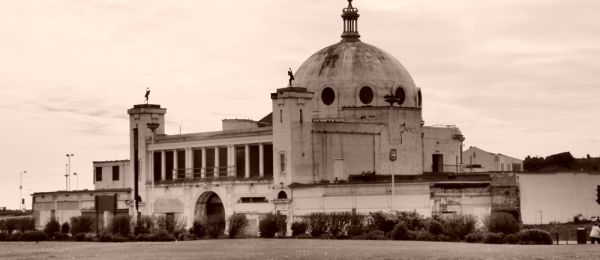
When I was a little girl I lived in the North of England. Holidays were unheard of, but days out were de rigeur. As we had no car we used to catch the train from Newcastle to the coast, usually South Shields or Whitley Bay. They were equally wonderful. South Shields had sand dunes and miles of white beaches while Whitley Bay had the “Spanish City”. It was actually named the “Whitley Bay Pleasure Gardens”, but to us and everyone else who went there, it was the “Spanish City”. It was the most exotic and exciting place in the world with carousels, coconut shies, waltzers, ghost trains, magic mirrors, and any number of other ways to lose what little money we had.
Spanish City with Dome restored
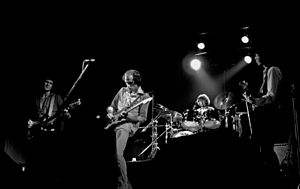
I was obviously not the only person bewitched by the Spanish City as Mark Knopfler and Dire Straits had a hit record called “Tunnel of Love” in 1980 which is all about the place. They too had their origins in Newcastle. If you listen carefully you will hear it mentioned many times. This is the chorus
And now I’m searching through these Carousels and the carnival arcades
Searching everywhere from steeplechase to palisades
In any shooting gallery where promises are made
To rockaway, rockaway…. Rockaway, rockaway
From Cullercoats and Whitley Bay out to rockaway
And girl it looks so pretty to me just like it always did
Like the Spanish City to me when we were kids
And girl it looks so pretty to me just like it always did
Like the Spanish City to me when we were kids
Mark Knopfler with Dire Straits
The link with sugar comes from the Candy Floss which is forever in my memory. Made of spun sugar, it was huge and soft and fluffy, like a cloud on a stick. So here are my Haiku
Capturing childhood
In pink and white sugar, spun
Into candy floss
Memories meld, of
Days by the coast, sea-mist and
Fairground fantasies
Sadly the Spanish City is no more. The last I heard the dome had been restored and there were plans for a four star boutique hotel, a care home, new public spaces and an outdoor performance areas on the 7 acre seafront site.
Number 24 London Bus from Pimlico to Hampstead Heath
This week’s prompt for haiku Heights is the word ‘Red’. I considered red roses as it is nearly St Valentine’s Day but then I thought of the iconic red buses in London and I was off!
One of the great things about being over 60 in the UK is that we get a bus pass for free travel on local buses. This pass can be used anywhere in the country, not just in your own city. So when I go to London I can travel all over the city on the red buses for absolutely nothing.
My favourite bus, and the one I use most often, is the number 24 from Pimlico to Hampstead Heath. I usually take a coach to London Victoria then get on the 24 near there. The bus then takes an hour or so to get to Hampstead where my journey ends.
The route the 24 travels is as good as any tourist bus as it takes in some of the greatest sights of London:
On the way you can see world famous galleries, inns, hospitals, statues, universities, monuments, museums, Cathedrals, and lots of buildings marked with blue badges where famous people once lived or worked.
Another delightful aspect of travelling on London’s Red buses is the cosmopolitan nature of the passengers. People come from all over the world to live and work in London and I just love to hear the different languages and see the different styles of clothes. By the time I arrive in Hampstead I feel as if I have had a mini trip around the world.
My post today is inspired by Haiku Heights prompt word ‘Pride’. It took me back to my childhood in the 1940s when women were expected to go back to being proud housewives so that the men returning from the war could do the ‘real’ jobs, which women had done perfectly well while they were away fighting. The housewives did this for a while, taking pride in spotlessly clean washing hanging on the line, and beautifully kept homes, which took all day to clean.
Lines of white sheets hung
over cobbled stone streets, when
Monday was washday
Reckitt’s Blue
Do you remember Reckitt’s Blue?
I do as I grew up in the North of England in the 1940s when every woman worth her salt would boil wash her sheets to within an inch of their lives every Monday morning. There were no washing machines, and no kitchen in our houses. We had a tiny scullery with a sink and a gas cooker, a couple of cupboards and a copper for doing the washing. The sheets, always white in those days, would be boiled in a ‘copper’ and agitated with a ‘dolly’ before being rinsed in Reckitt’s Blue to make them gleam. They then had to be wrung out in a hand operated mangle or wringer as there were no spinners then. The earlier you got your washing out, and the whiter it was, the better housewife you were considered to be. It really was a source of pride, and the housewives were terribly competitive! Women used to get up really early to start the washing as it took ages to boil the water. Washing could take all day so lunch was a quick scratch affair. In our house it was usually Sunday’s left overs and chips. These were a real treat and to this day I can’t hear a tune played by Mantovani without thinking of chips as he was always on the wireless on Monday lunchtimes.
Living in a ‘back to back’ terraced house, we didn’t have a garden, just a yard with a coal house and lavatory in it. So washing was hung out to dry on lines stretched across the cobbled front street with poles to hold it up. I remember clearly as a child that whenever a doctor’s car, or an ambulance, wanted to visit a neighbour, all the women had to get their washing in and take down the lines so the car could pass! No-one else in our area had a car so the only time we saw one was when a doctor came to the street. For years I thought only doctors had cars and telephones.
The history of Reckitt’s Blue is fascinating and if you want to read all about it click on this link.
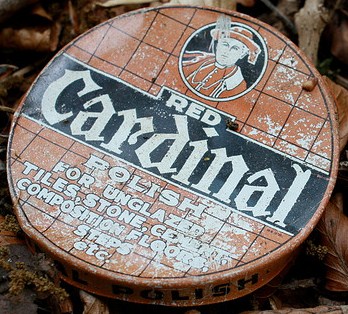
Cardinal Red Polish was another thing I remember my mum using. She would paint it on the tiles on our front doorstep and polish it thoroughly ‘til it shone. It had to be really well polished and dry otherwise it would be walked into the house if you stepped on it.
Painted pebbles from Russia and beach pebbles from Spain
A small stone is a short piece of writing (prose or poetry) that precisely captures a fully-engaged (mindful) moment. The process of finding small stones is as important as the finished product – searching for them will encourage you to keep your eyes, heart and mind open.
ilovesmallstones
Cтарик on the streets
Scrapes a living by painting
And the stones cry out
When I first went to Southern Russia in 1995 it was a very different place to what you see today. The area around the border with Georgia was very tense. There were Russian tanks along the main road to the Caucasus mountains to protect the border and to stop refugees from the Abkhazia/Georgia conflict from coming into Russia. But many were seen walking into Sochi with all the worldly goods that they could carry. When they needed money for food they would set up little stalls along the roadside and sell their china, clothes or any household goods they could spare. It was very sad to watch.
In the town these refugees were not the only people struggling for survival. The value of the ruble had been fluctuating wildly for years. In Soviet times, the value of the currency could change overnight as a result of government edict as was the case in 1947 and 1961, when citizens woke to find that new rubles would replace old at a rate of 1 to 10, effective immediately! During the last days of Soviet rule and immediately after, the ruble suffered from severe inflation and people’s life savings and pensions were now almost worthless. In 1988, hundred-ruble notes were a rare sight. But by the mid-1990s, they were only worth a few pennies and the Kopek disappeared from circulation for a while. In 1996, the ruble began to stabilize, and in 1997, the Russian government unveiled a four-year-long switchover to the new deflated currency. New Ruble notes were introduced in January 1998. They looked like the old ones, but with three zeroes gone! Five-thousand ruble notes became five-ruble notes. One-thousand ruble notes were replaced by ruble coins and smaller denominations were issued as kopeck coins. By 2002 the fifty ruble note shown here was worth just £1.
50 rubles, about £1 in 2002
In the absence of a welfare state this hit the older generation hardest. Those with families could survive, but those without were often destitute and reduced to selling all they owned. When all their possessions were gone they lived on their wits.
I met an old man in one of Sochi’s beautiful parks. He had gathered stones around him and was painting scenes on them. They were exquisite. He was obviously a very talented artist. He was selling his painted stones for a few Kopeks. I would have given him a lot more but he was a proud man so I just bought 3 for what he asked. I have treasured these stones ever since. старик means ‘old man’ in Russian and is pronounced (stah-REEK)
Cтарик on the streets
Scrapes a living by painting
And the stones cry out
I keep these painted stones in my glass cabinet with some very treasured small pebbles from a beach in Spain. On a whim I gathered up these pebbles from the spot where my dad had stood gazing out to sea. I took a photo of him too as he was so lost in his own thoughts that I wondered what he was dreaming of. Unbeknown to me, this was to be his last holiday, so those pebbles hold wonderful memories. I literally treasure the ground he walked on.
We recently rescued a moth that had fallen in the sink. Gently picking it up so as not to damage those delicate wings. We placed it on the garden table to dry out. Within seconds a robin swooped and ate it! Fleeting freedom, poor thing.
Trapped in the water
Translucent winged moth, rescued
Fleeting freedom tastes
In Somerset the beaches are sandy but there is always the hidden danger of quicksand. Lifeboats are of no help when people or animals are stuck in the quicksand so the coastguard service has two Hovercraft. They are often called out to rescue children, adults, animals, jetskis, fishing boats ~ and even each other! Read my previous post for more on this!!
Sinking in quicksand
Real danger of drowning as
High tide rushes in
My fear of swimming stems I believe from the time I fell in the North sea. I was 10 years old walking along the cliffs when I just slipped in the mud, fell down the cliff and straight into the sea. I still remember the feeling of sinking deeper and deeper into the dark water where I got tangled up in the weeds. My brave uncle saved me, but I have never liked being out of my depth since then!
Ropes and weeds held me
In the depths and the darkness
Before rescue came
I watched Life of Pi recently and thoroughly enjoyed it in 3D. With a bit of poetic licence I added in icebergs!
Iceberg splintered wood
Cast adrift from the wreckage
Praying for rescue
There is carnage on our roads in the Cotswolds; badgers, foxes, deer, pheasants, hedgehogs ~ and tragically, sometimes children or cyclists. We have wonderful rescue services to deal with the aftermath.
Written for the Haiku Heights prompt word “Rescue”
High tide rushes in
trapping cows in the mudflats
Call in the coastguard
The cows got stuck in the mud
Stuck in sinking sand
In danger of drowning, cows
unable to move
We watched this drama unfold on a day at the seaside and I just had to write a little account of it for the grandchildren. I used to write little stories down for them with photos to encourage them to read. Now they write stories of their own and are fluent readers at 7 and 9 years old.
Ben and Rosie’s adventure at the seaside
In the Easter holidays Ben and Rosie came to stay at the caravan in Burnham on Sea with grandma and grandad. The weather was bad and it rained a lot but they still went to play on the beach.
Rosie built a sandcastle with her bucket. Ben dug 99 holes with his spade. Grandma caught a shrimp. Grandad looked for crabs. We were having fun. Then Ben saw a little boat and he said, “That boat is sinking grandad”.
Grandad said, “I found a crab but it is dead”.
Again Ben said, “That boat is sinking grandad”.
Grandma and grandad looked but they could not see the boat.
Just then a small rescue hovercraft came along and Ben saw it. Then a big rescue hovercraft came along and Ben saw it. They were both orange and black. The big one was called Light of Elizabeth and the small one was called Spirit of Lelaina. The small hovercraft started to make a loud noise and a cloud of smoke came out of it. Then it stopped moving.
Ben said, “The rescue boat is sinking grandad”.
This was getting very exciting so grandma said, “If we hurry along the beach we will see what happens”.
Ben let Rosie ride on his orange two wheeled bike, because she could not run very fast. But the bike was too big and Rosie could not work the pedals, so grandma pushed her along on it. Ben and grandad walked quickly along the sand, up the steps, over the slipway and down onto the other beach. Then we all stood at the edge of the water and watched the big hovercraft, the little hovercraft, and the white fishing boat that was sinking. It was very exciting!
The black rubber skirt around the bottom of the little orange hovercraft had torn.
The belt that drives the big fan on the little orange hovercraft had snapped.
The engine on little orange hovercraft had flooded.
The little orange hovercraft could not move!
First the big hovercraft rescued the little white fishing boat and helped the fishermen get their boat onto a trailer. Then a 4 wheel drive car towed the trailer and boat safely away.
Then the big rescue hovercraft went to help the little hovercraft. They put on a new fan belt and tried to start the engine but it would not work because the engine was flooded. So they tied a long rope to the little hovercraft and pulled it slowly to the beach. Then all the rescue men pushed and pulled until the little hovercraft was put on a trailer. Another 4 wheel drive car came to tow the little orange hovercraft away to be repaired. Ben and Rosie were sorry to see the little hovercraft so damaged and covered in mud.
At last the big orange rescue hovercraft was ready to get out of the water and go back to its home next to the coastguard station in Burnham. It sailed right to the edge of the beach and the men and a little white dog climbed out. They tried to get the hovercraft onto its trailer. They pushed and pulled but it would not move. Ben said, “The men need help grandad”. So grandad took hold of the hovercraft and pushed with all his might. The men pushed, grandad pushed and the little white rescue dog barked. Then the big orange hovercraft slowly moved onto the back of the trailer. The men were so pleased that they all cheered and patted each other on the back. The little white dog was so pleased that he jumped up and down wagging his tail. Ben, Rosie and grandma were very pleased, and proud of grandad for helping to save the big orange rescue hovercraft.
The rescue men told us they had just rescued a herd of cows that had wandered out of their field and into the River Parrett which flows into the Severn Estuary! The poor cows were frightened and got stuck in the mud. That is why the rescue men were covered in mud.
Everyone went home for tea very wet and very muddy ~ but very happy.
The cows were safe.
The little white fishing boat was safe.
The little white dog was safe.
The rescue men were safe.
The little orange hovercraft was safe.
The big orange hovercraft was safe.
Ben can tell his friends at school about it. Rosie can tell her friends at nursery about it. And grandma can tell the story to Ben and Rosie over and over again ~ and the story will get better and better!






























 Heavenhappens