Cotswold Stone

dry stone wall in the cotswolds

dry stone wall in the cotswolds

This post is inspired by the Haiku heights prompt word “Stone”

Golden meadows bound

With dry stone walling.  Built by

Cotswold craftsmen

The Cotswolds, where I live, is a very beautiful area in the heart of England, which covers the counties of Gloucestershire, Oxfordshire, Wiltshire, Worcestershire and Warwickshire.

Beyond the hedgerows

As far as the eye can see

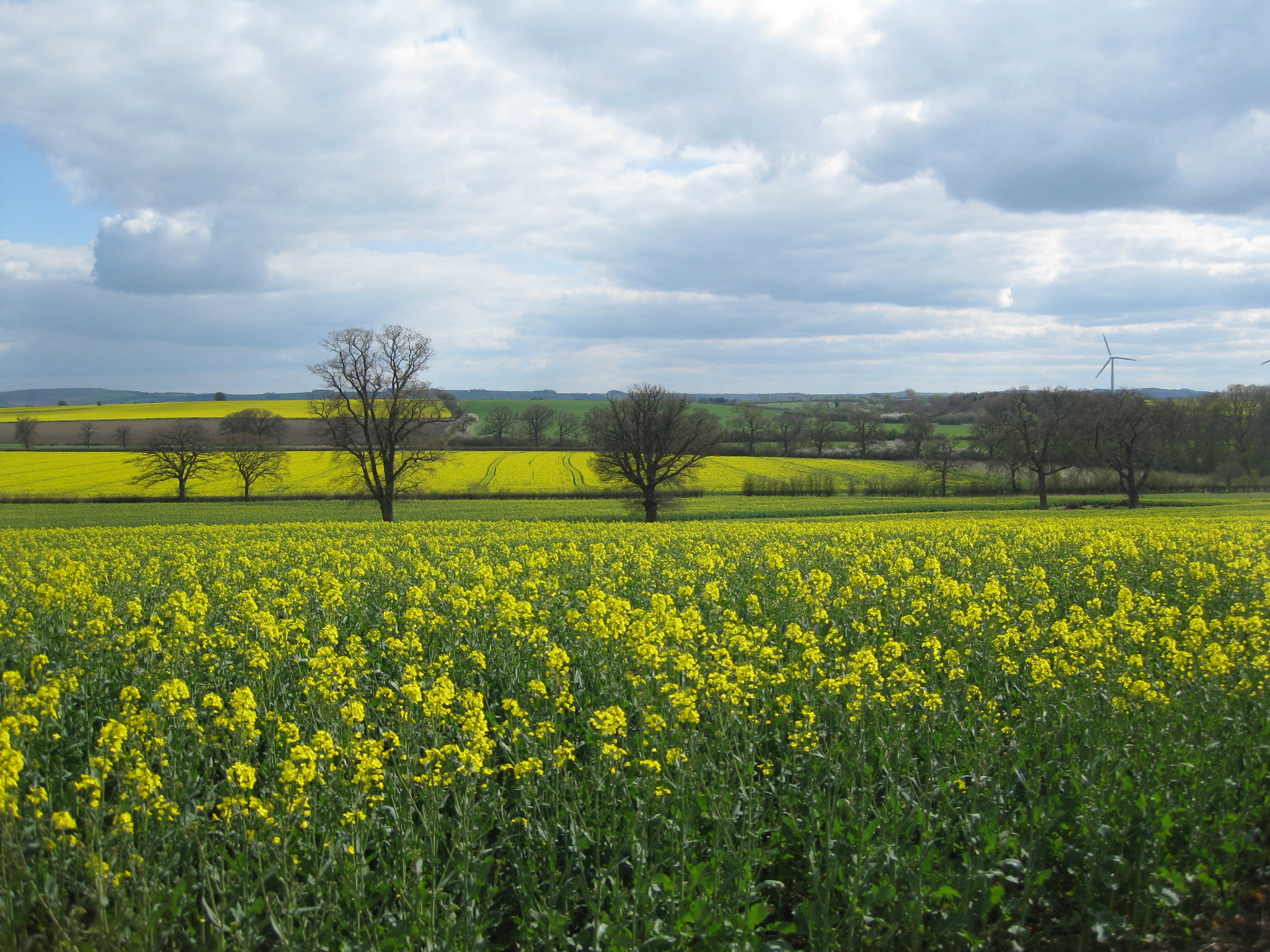
Yellow rapeseed glows

Rapeseed field

Rapeseed field

There are gentle hills and wolds, meandering rivers rich with salmon, trout, roach, bream and eels, a coastline along the Severn Valley, ancient woodland in the Forest of Dean complete with wild boar and roaming deer, beautiful market towns and unspoilt villages,  gorgeous thatched cottages, magnificent country houses, fertile farms, and even several castles!

One of the outstanding features of the Cotswolds is the beautiful stone which is used for building.  During the time of the enclosures act in Britain it was cheaper for farmers to enclose their land with dry-stone walls than to plant hedges, and to this day one of the special features of the Cotswolds is the golden dry-stone walls about a metre in height which border country lanes and lush farmland

The limestone found in the Cotswolds is from the Jurassic period about 150 million years ago, a time when dinosaurs roamed over the earth and the area was once below the sea.  It is still possible to find fossils in the rocky cliffs and quarries.  In fact Huntsman’s Quarry has a superb collection of large fossils that were unearthed during quarrying.

Fossilised features

Of prehistoric creatures

In limestone preserved

You can download a fascinating fact sheet about the quarry here

Quarrying has been carried out in the Cotswolds for many years, for sand, gravel and clay as well as stone.  Some of the old quarries have been turned into the Cotswold Water park which covers an area of  40 square miles and has 150 lakes.  All sorts ofwater sports go on here and it is a beautiful area to walk around enjoying the nature and wildlife.  You can read all about it here

At the weekend I took my grandchildren to Warwick castle to enjoy the Horrible Histories.  It was a great day out in wonderful weather.  The castle was sold by the Greville family in 1978 and is now owned by the business group that owns Madame Tussauds.  This has enhanced the visitor’s experience as every room is filled with models of the famous people who lived in or visited the castle.  It must cost millions to maintain the structure of this impressive building.  The walls are so think and the building so huge, that the bedrock is groaning under the strain.  But there is 1000 years of history oozing out of every stone.

Stone steeped in stories

Of secrets and scandals in

High society

Bedrock is cracking

Sinking under centuries

Of blood-soaked conflict

Enjoy my pictures from the weekend…

Eggs ~ Haiku

This post is nspired by Haiku Heights prompt word which is Egg.

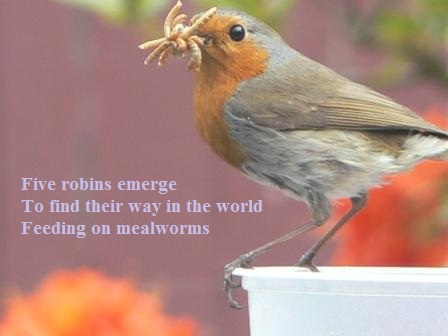
Fast food for fledgelings

Nesting under bleeding heart

Five healthy chicks hatched

robin gathering mealworms to feed its young

robin gathering mealworms to feed its young

Naturally at this time of year there are birds nesting and I am lucky enough to have a variety of birds in my garden.  We have watched fascinated as a pair of robins burrowed a nest into a large plant pot where they successfully reared 5 chicks.  We have also seen Blue Tits nesting in one of our bird boxes.  I am very lucky to have a variety of bird boxes all hand made by my clever daughter.  She adapts them to different species of birds and they seem very popular!

Vacant possession

A luxury detached home

Built for a blue tit

My Blue Tit's Bird House

My Blue Tit’s Bird House

The first thing that popped into my head was not the birds nesting in my garden!  It was the Russian Christmas at Chatsworth House that I went to a couple of years ago.  Chatsworth is a gorgeous stately home set in beautiful Derbyshire countryside.  It is beautiful to see at any time of year, but especially so at Christmas when every room is transformed according to a theme.  The Russian Christmas appealed to me as I love Russian culture and crafts.  The photo shows a room filled with hanging eggs decorated by local school children.  It is a Russian tradition to decorate eggs, usually at Easter, as a celebration of life and a promise for the future. The eggs are called, ” Pisanki”

In coldest winter

Celebrating life and hope

Pretty pisanki

Decorated eggs at Chatsworth

I Decorated eggs at Chatsworth

Bridge ~ Haiku

Today’s post is inspired by Haiku Heights prompt ‘Bridge’.  Bridges have always held a fascination for me.   My father worked all his life in the steel industry and I loved listening to him explain the engineering behind the iconic structures that fascinated him.  There was no shortage of inspiration in Newcastle on the River Tyne where I grew up as a child.  Having 7 bridges in less than a mile close to my home on that great river, each one totally different yet perfectly suited to their task,  there was always something to look at and learn about.

River Tyne god

River Tyne god

It is recorded that Hadrian built the first bridge on the Tyne in AD 122 before he built his wall.  He named the bridge Pons Aelius in honour of the his family name.  The family crest was a Goat’s head which is where the name ‘Gateshead’ is thought to derive from.  From then on records show there was a crossing at this point over the centuries until 1248 when it was destroyed by fire.  But in 1250 a medieval bridge was built with turreted guard towers, a chapel, shops and houses on it.    In 1771 that bridge was virtually destroyed by a great flood but in 1778 a Georgian bridge replaced it.  This bridge made navigation difficult at times and dredging impossible upriver so an opening  bridge was proposed in 1851

The seven bridges at the heart of the city are

Gateshead Millennium Bridge, known as the ‘Blinking Eye’ because of the way it opens, was opened in 2001

The Tyne bridge, was opened by King George V in  October 1928.  My mother was 3 years old then and remembered sitting on her uncle’s shoulders on the bridge actually watching the ceremony!

The Swing Bridge was opened in 1876 to enable ships to pass along the Tyne.  At its peak the bridge swung open 30 times a day.  In 1924, 6000 vessels were said to have passed through.  The opening mechanism is still in full working order and the bridge still opens on special occasions.

The High Level Bridge was needed when the railways came to town!   Originally trains had to stop in Gateshead and passengers were then ferried across the Tyne to Newcastle where they were faced with a very steep climb up steps to the city.  This bridge was designed by Robert, son of George Stephenson.  It is double decked with rail lines above and a road beneath.  It was the first bridge of its kind (double deck rail/road) in the world and was made of 5000 tons of local wrought iron and cast iron.  It was opened by Queen Victoria in September 1849.

The Metro Bridge is officially called Queen Elizabeth II Metro Bridge as our Queen opened it with Prince Philip in 1981.  This was designed and built to cater for the new integrated transport system from Newcastle to the coast at South Shields.  Believe it or not when I was a child in the 40s and 50s in gateshead/Newcastle we still travelled on trams or trolley buses!  The Metro was after my time, but I have been on it in recent years and it is a superb system, being fast, clean and efficient.

The King Edward Bridge was opened in 1906 by the then King Edward VII.  It was desperately needed as railway travel was now so popular that the High level Bridge could not cope with the traffic.

Lastly on this short and busy stretch of my favourite river is the Redheugh Bridge.  To be honest this is the third Redheugh Bridge as the original two were unfit for purpose.  But the final one was a triumph of pre-stressed concrete with 4 lanes for traffic and one path for pedestrians.  This bridge was opened by the Diana, Princess of Wales in 1984.

Any Geordie will tell you that the view from the train as it crosses the Tyne is enough  to set the heart racing.  Just the word, ‘Bridge’ set my muse going so I am posting some of my haiku here for you.

Captured on canvas

The city of my childhood

A lifetime abridged

~

Train carries me back

Beyond landmarks unchanging

Loved city unfolds

~

From the bridge I see

My family’s history

Slip away from me

~

Poor men paid a toll

A penny from a pittance

To cross the ‘Coaly Tyne’

~

Painted bridge belies

Oily blackness deep below

Hidden history

~

Under the arches

The homeless shelter each night

In cardboard boxes

~

Standing on the edge

She saw no life before her

Flowers lie there still

~

bridges on the Tyne painted in watercolour by Ron Thornton.jpg

bridges on the Tyne painted in watercolour by Ron Thornton.jpg

The 1781 stone bridge, with the High Level Bri...

The 1781 stone bridge, with the High Level Bridge in the background, from an 1861 illustration (Photo credit: Wikipedia)

English: The Queen Elizabeth II Metro Bridge t...

English: The Queen Elizabeth II Metro Bridge that carries the Tyne and Wear Metro over the river Tyne, viewed from Forth Banks in Newcastle. (Photo credit: Wikipedia)

Gateshead Quays across the River Tyne at night...

Gateshead Quays across the River Tyne at night – Gateshead Millennium Bridge and the Sage Gateshead (Photo credit: Wikipedia)

Daredevil ~ Haiku

Inspired by this week’s prompt from haikuheights which is the word Daredevil I was reminded of my nephew who is in the Metropolitan Police.  He faces possible danger on a daily basis but manages to stay calm and positive in the face of it all.

Lured into their trap

Alone he stands his ground as

Gang gathers round him

My son too is unflappable whether riding his motorbike across the world, diving deep under the oceans or climbing up devilish rockfaces.

Devil rock lures him

into death defying deeds

He claws at its face

rich climbing


Splashes of sunshine

Golden rapeseed spread
Thickly on the countryside
Fields splashed with sunshine

On a coach trip to London yesterday for one of Gerry’s hospital appointments it was a joy to see fields of Rapeseed bursting into bloom. I know lots of people find that rapeseed gives them headaches or breathing problems, but it made my heart sing to see the countryside spread thickly with golden sunshine.

Rapeseed fields high up in the Cotswolds

A Haiku inspired by The 33 Waterfalls

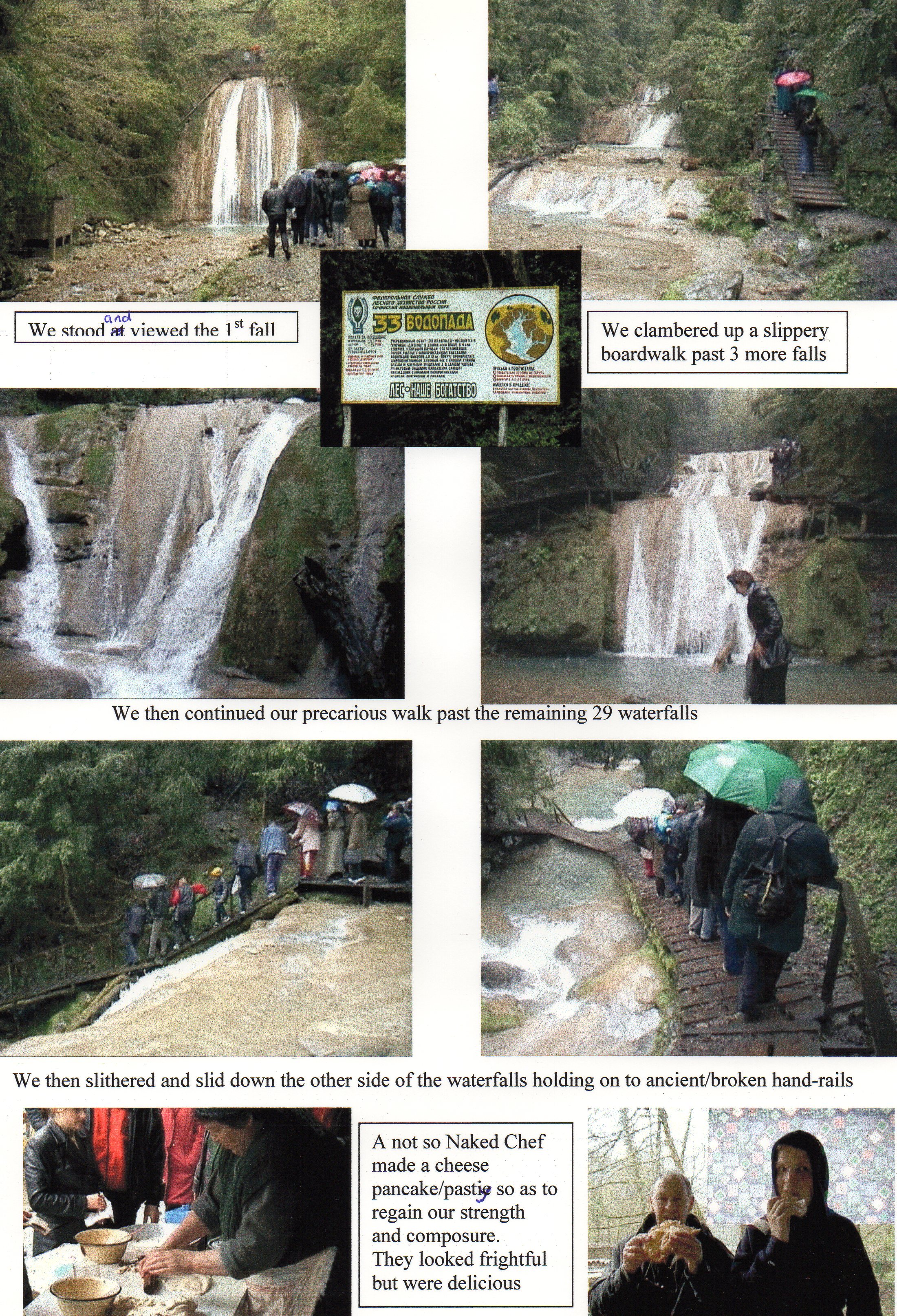
33 Waterfalls in Dzhegosh gorge, Sochi 33 Waterfalls in Dzhegosh Gorge near Sochi

On one of my many trips to Russia, I was taken to an area of outstanding natural beauty in the  Shakhe river valley.  We travelled by coach through rustic villages, stopping along the way at small wineries and family businesses selling home made crafts and furniture. The river flows through the Dzhegosh Gorge, where the 33 waterfalls are to be found, as well as rapids, 13 cascades and countless streams!  In order to get to the gorge you have to walk through a dense forest of ancient Oak, Maple, Alder and Hornbeam trees. There are also some exotic plants as well as mosses and tiny box trees growing wild there.

Once you arrive at the 33 waterfalls there is a steep and rather treacherous climb up a slippery wooden walkway to the top. From there the views are truly breathtaking. It really is a magical place.  Once you have braved the rapids and been soaked by the waterfalls on the way down, you can buy the most amazing pastie type food which is prepared by a local Babushka who cooks them expertly in an old oil drum in the forest.  It looked, and was, rough and ready and I did not see a Food Hygiene certificate, but her food tasted wonderful!

Cascading river

Fragments and falls, crashing through

Walkways of wonder

April 23rd 1964 ~ 400th Anniversary of the birth of William Shakespeare

As it is Shakespeare’s birthday celebrations in Stratford this weekend I thought I would reblog a post I wrote when I first started blogging.

heavenhappens's avatarHeavenhappens

William Shakespeare was born on April 23rd 1564 and died on 23rd April 1616.  1964 was the 400th anniversary of his birth and I was living in Stratford on Avon, which was certainly the most exciting place to be at that time for a theatre mad teenager.

The highlight of my acting career had been the part of Mole in Toad of Toad Hall at St Gabriel’s Convent in Carlisle.  Cardinal Heenan was the honoured guest in the audience.  My part was memorable as it involved a tea party at Toad Hall.  We had real cakes and biscuits.   I had never seen those pink and white marshmallows with a biscuit base and coconut all over the top.  I became so engrossed in examining and eating them that I forgot where I was and had to be prompted to continue my lines.  “Oh, you silly ass, Mole”…

View original post 724 more words

Breeze

This post is inspired by haiku Heights prompt word “Breeze”.

On of my favourite places is London.  There is nothing so inspiring as the city skyline viewed from the South Bank of the Thames on a summer’s evening.  Imagine feeling a gentle breeze drifting over the river at sunset and listening to the birds singing in nearby trees ~ magical!  Do click on my link to hear the fabulous Glenn Miller Band playing one of my favourite songs ~ the inspiration for this haiku ~ with a nod to one of my favourite poets too ~Thomas Hardy.

Nightingales

Nightingale Nightingale

As gentle breezes blow

Nightingales in bushes sing

Sublime serenade

P1080455 Tower bridge 1

 One of my favourite times of year in the Vale of Evesham and generally in the Cotswold, is Spring, when the blossom covers the fruit trees and the ornamental cherry is out.

 Boughs bend to the breeze

Covering the earth in a

Blanket of blossom


Watching butterflies

Their beauty borne on the breeze

Children barely breathe


There are times when a gentle breeze can have a powerful effect, as can a still small voice.

Gazing on Taize

Sunflowers bow to the breeze

And my spirit soars

I will never forget the time I went to Taize.  In the 1940s Roger Schutz was appalled by the violence and suffering he saw across Europe.  Throughout the war years, he sheltered political refugees, especially Jews, whom he helped cross the border into Switzerland from the occupied region of France.  He began to develop the idea of a community based on mutual understanding and respect for all.  He found a suitable site at Taize near Cluny in the Burgundy region of France and on Palm Sunday of 1948, seven men took monastic vows.  They dedicated their lives to working and praying for ‘outsiders’ of all kinds; especially those living in extremes of poverty, hunger, or disease.  Taize is now famous for its gentle and powerful worship built on meditation through repetitive chants, a model of worship which has spread around the world.  Brother Roger’s work continues; to bring reconciliation, unity and peace to all the peoples of the world. www.taize.fr

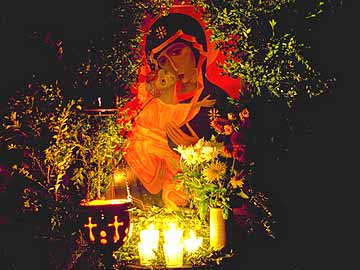
There is a beautiful icon of Mary in the Church of Reconciliation in Taize.  I would recommend anyone who travels to France to make a detour so that they can spend some time there and see this Icon.
Icon of Madonna and child from the chapel at Taize Icon of Madonna and child from the chapel at Taize
When I went to Taize one summer I had an amazing experience.   I stood alone in a field full of sunflowers, at the foot of the hill looking up towards the church, as a gentle breeze blew.  The wind caused the flowers to bend and the sound they made was so strange.   It reminded me strongly of the beautiful words of one of my favourite hymns:
 Be still for the presence of the Lord
Be still for the presence of the Lord  The holy one is here
Come bow before him now  With reverence and fear
In him no sin is found  We stand on holy ground
Be still for the presence of the Lord  The holy one is here
Be still for the power of the Lord  Is moving in this place
He comes to cleanse and heal  To minister his grace
No work too hard for him  In faith receive from him
Be still for the power of the Lord  Is moving in this place

The Spanish City

The inspiration for my blog this week is the Haiku Heights prompt word “Sugar”.    My readers know that my mind moves in mysterious ways so please bear with me on these haiku ~ they truly are connected to sugar!

Memories caught in

spun sugar clouds, on sticks

At the Spanish City

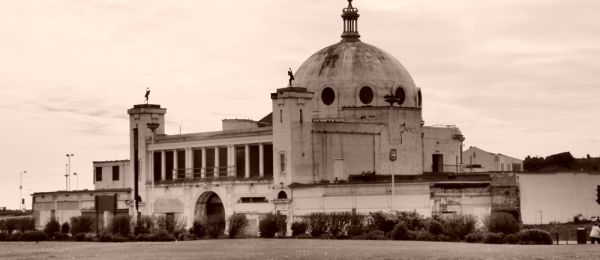
When I was a little girl I lived in the North of England.  Holidays were unheard of, but days out were de rigeur.  As we had no car we used to catch the train from Newcastle to the coast, usually South Shields or Whitley Bay.  They were equally wonderful.  South Shields had sand dunes and miles of white beaches while Whitley Bay had the “Spanish City”.  It was actually named the “Whitley Bay Pleasure Gardens”, but to us and everyone else who went there, it was the “Spanish City”.  It was the most exotic and exciting place in the world with carousels, coconut shies, waltzers, ghost trains, magic mirrors, and any number of other ways to lose what little money we had.

Spanish City with Dome restored

Spanish City with Dome restored

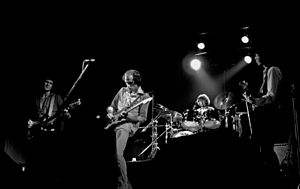
I was obviously not the only person bewitched by the Spanish City as Mark Knopfler and Dire Straits had a hit record called “Tunnel of Love” in 1980 which is all about the place.   They too had their origins in Newcastle.   If you listen carefully you will hear it mentioned many times.  This is the chorus

And now I’m searching through these Carousels and the carnival arcades

Searching everywhere from steeplechase to palisades

In any shooting gallery where promises are made

To rockaway, rockaway…. Rockaway, rockaway

From Cullercoats and Whitley Bay out to rockaway

And girl it looks so pretty to me just like it always did

Like the Spanish City to me when we were kids

And girl it looks so pretty to me just like it always did

Like the Spanish City to me when we were kids

Mark Knopfler with Dire Straits

Mark Knopfler with Dire Straits

The link with sugar comes from the Candy Floss which is forever in my memory.  Made of spun sugar, it was huge and soft and fluffy, like a cloud on a stick.  So here are my Haiku

Candy floss

Capturing childhood

In pink and white sugar, spun

Into candy floss

spanish city

Memories meld, of

Days by the coast, sea-mist and

Fairground fantasies

Sadly the Spanish City is no more. The last I heard the dome had been restored and there were plans for a four star boutique hotel,  a care home, new public spaces and an outdoor performance areas on the 7 acre seafront site.

Red London Bus ~ Number 24

Number 24 London Bus from Pimlico to Hampstead Heath

Number 24 London Bus from Pimlico to Hampstead Heath

This week’s prompt for haiku Heights is the word ‘Red’.  I considered red roses as it is nearly St Valentine’s Day but then I thought of the iconic red buses in London and I was off!

One of the great things about being over 60 in the UK is that we get a bus pass for free travel on local buses.  This pass can be used anywhere in the country, not just in your own city.  So when I go to London I can travel all over the city on the red buses for absolutely nothing.

My favourite bus, and the one I use most often, is the number 24 from Pimlico to Hampstead Heath.  I usually take a coach to London Victoria then get on the 24 near there.  The bus then takes an hour or so to get to Hampstead where my journey ends.

The route the 24 travels is as good as any tourist bus as it takes in some of the greatest sights of London:

Westminster Abbey, Houses of Parliament, Whitehall, Downing Street, Horseguards Parade, Admiralty Arch, Trafalgar Square, National Gallery, St Martin in the Fields, Haymarket and Theatreland, Charing Cross Road, Camden Town with its famous Market, Lock and Canal, and finally Hampstead itself with its famous Heath.

On the way you can see world famous galleries, inns, hospitals, statues, universities, monuments, museums, Cathedrals, and lots of buildings marked with blue badges where famous people once lived or worked.

Another delightful aspect of travelling on London’s Red buses is the cosmopolitan nature of the passengers.  People come from all over the world to live and work in London and I just love to hear the different languages and see the different styles of clothes.   By the time I arrive in Hampstead I feel as if I have had a mini trip around the world.

Culture’s condensed in

Our capital city on

A red London bus

Winchcombe in the Cotswolds

Winchcombe in the Cotswolds

Phone box, post box, brake

Lights and barriers brightened

up Broadway today

Small Stones ~ The stones cry out. . .

Painted pebbles from Russia and beach pebbles from Spain

Painted pebbles from Russia and beach pebbles from Spain

A small stone is a short piece of writing (prose or poetry) that precisely captures a fully-engaged (mindful) moment. The process of finding small stones is as important as the finished product – searching for them will encourage you to keep your eyes, heart and mind open.

ilovesmallstones

ilovesmallstones

Cтарик on the streets

Scrapes a living by painting

And the stones cry out

When I first went to Southern Russia in 1995 it was a very different place to what you see today.  The area around the border with Georgia was very tense.  There were Russian tanks along the main road to the Caucasus mountains to protect the border and to stop refugees from the Abkhazia/Georgia conflict from coming into Russia.  But many were seen walking into Sochi with all the worldly goods that they could carry.  When they needed money for food they would set up little stalls along the roadside and sell their china, clothes or any household goods they could spare.  It was very sad to watch.

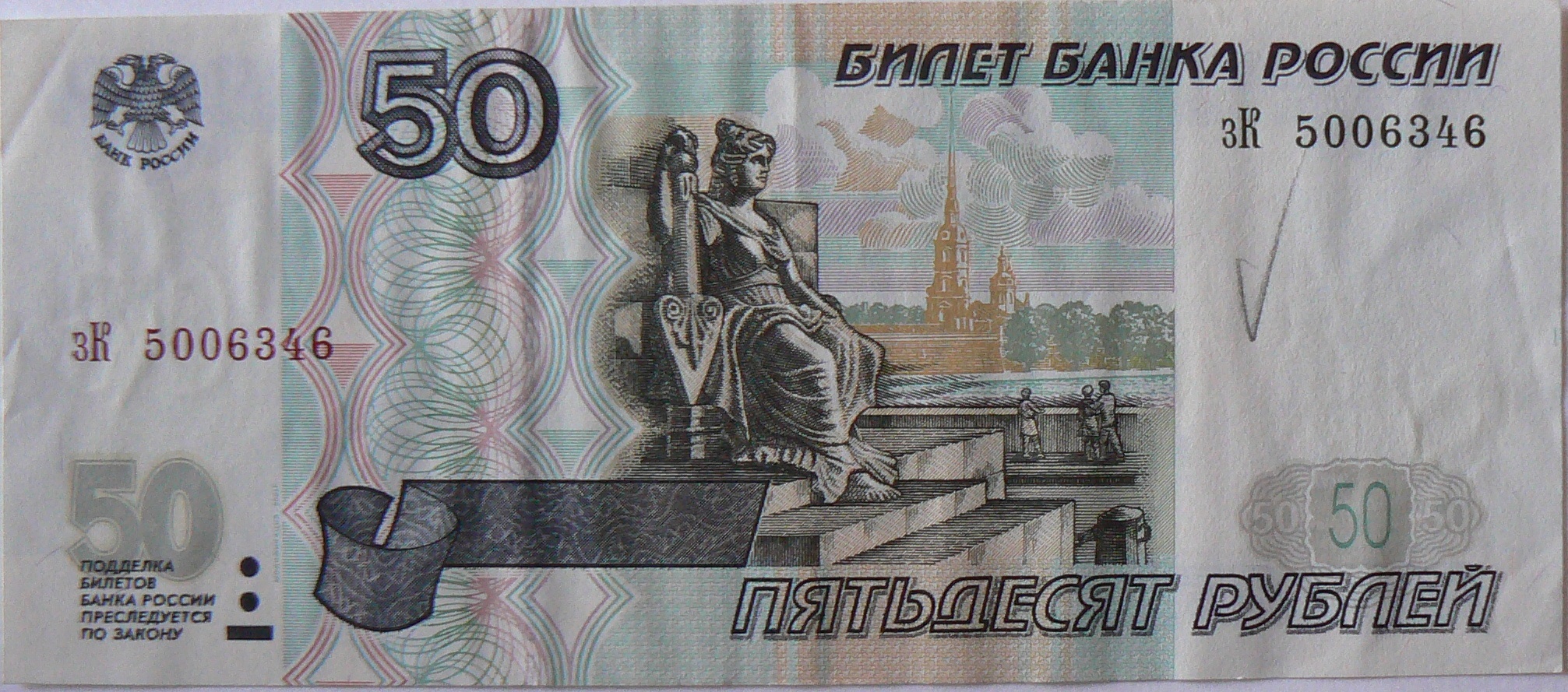
In the town these refugees were not the only people struggling for survival.  The value of the ruble had been fluctuating wildly for years.  In Soviet times, the value of the currency could change overnight as a result of government edict as was the case in 1947 and 1961, when citizens woke to find that new rubles would replace old at a rate of 1 to 10, effective immediately! During the last days of Soviet rule and immediately after, the ruble suffered from severe inflation and people’s life savings and pensions were now almost worthless.  In 1988, hundred-ruble notes were a rare sight. But by the mid-1990s, they were only worth a few pennies and the Kopek disappeared from circulation for a while. In 1996, the ruble began to stabilize, and in 1997, the Russian government unveiled a four-year-long switchover to the new deflated currency.    New Ruble notes were introduced in January 1998.  They looked like the old ones, but with three zeroes gone! Five-thousand ruble notes became five-ruble notes. One-thousand ruble notes were replaced by ruble coins and smaller denominations were issued as kopeck coins.  By 2002 the fifty ruble note shown here was worth just £1.

50 rubles, about £1 in 2002

50 rubles, about £1 in 2002

In the absence of a welfare state this hit the older generation hardest.  Those with families could survive, but those without were often destitute and reduced to selling all they owned.  When all their possessions were gone they lived on their wits.

I met an old man in one of Sochi’s beautiful parks.  He had gathered stones around him and was painting scenes on them.  They were exquisite.  He was obviously a very talented artist.  He was selling his painted stones for a few Kopeks.  I would have given him a lot more but he was a proud man so I just bought 3 for what he asked.  I have treasured these stones ever since.  старик means ‘old man’ in Russian and is pronounced (stah-REEK)

Cтарик on the streets

Scrapes a living by painting

And the stones cry out

I keep these painted stones in my glass cabinet with some very treasured small pebbles from a beach in Spain. On a whim I gathered up these pebbles from the spot where my dad had stood gazing out to sea.  I took a photo of him too as he was so lost in his own thoughts that I wondered what he was dreaming of.  Unbeknown to me, this was to be his last holiday, so those pebbles hold wonderful memories.  I literally treasure the ground he walked on.

I gathered the stones

From the beach where you walked, to

The back of beyond


Rescue

“Photo by courtesy of Shirley Betts, www.castoncameraclub.co.uk “ “Photo by courtesy of Shirley Betts, http://www.castoncameraclub.co.uk

Written for the Haiku Heights prompt word “Rescue”

High tide rushes in

trapping cows in the mudflats

Call in the coastguard

The cows got stuck in the mud The cows got stuck in the mud

Stuck in sinking sand

In danger of drowning, cows

unable to move

We watched this drama unfold on a day at the seaside and I just had to write a little account of it for the grandchildren.  I used to write little stories down for them with photos to encourage them to read.  Now they write stories of their own and are fluent readers at 7 and 9 years old.

Ben and Rosie’s adventure at the seaside

In the Easter holidays Ben and Rosie came to stay at the caravan in Burnham on Sea with grandma and grandad.  The weather was bad and it rained a lot but they still went to play on the beach.

Rosie built a sandcastle with her bucket.  Ben dug 99 holes with his spade.  Grandma caught a shrimp.  Grandad looked for crabs.  We were having fun.  Then Ben saw a little boat and he said, “That boat is sinking grandad”.

Grandad said, “I found a crab but it is dead”.

Again Ben said, “That boat is sinking grandad”.

Grandma and grandad looked but they could not see the boat.

Just then a small rescue hovercraft came along and Ben saw it.  Then a big rescue hovercraft came along and Ben saw it.  They were both orange and black.  The big one was called Light of Elizabeth and the small one was called Spirit of Lelaina. The small hovercraft started to make a loud noise and a cloud of smoke came out of it.  Then it stopped moving.

Ben said, “The rescue boat is sinking grandad”.

This was getting very exciting so grandma said, “If we hurry along the beach we will see what happens”.

Ben let Rosie ride on his orange two wheeled bike, because she could not run very fast.  But the bike was too big and Rosie could not work the pedals, so grandma pushed her along on it.  Ben and grandad walked quickly along the sand, up the steps, over the slipway and down onto the other beach.  Then we all stood at the edge of the water and watched the big hovercraft, the little hovercraft, and the white fishing boat that was sinking.  It was very exciting!

The black rubber skirt around the bottom of the little orange hovercraft had torn.

The belt that drives the big fan on the little orange hovercraft had snapped.

The engine on little orange hovercraft had flooded.

The little orange hovercraft could not move!

First the big hovercraft rescued the little white fishing boat and helped the fishermen get their boat onto a trailer.  Then a 4 wheel drive car towed the trailer and boat safely away.

Then the big rescue hovercraft went to help the little hovercraft.  They put on a new fan belt and tried to start the engine but it would not work because the engine was flooded.  So they tied a long rope to the little hovercraft and pulled it slowly to the beach.  Then all the rescue men pushed and pulled until the little hovercraft was put on a trailer.  Another 4 wheel drive car came to tow the little orange hovercraft away to be repaired.  Ben and Rosie were sorry to see the little hovercraft so damaged and covered in mud.

At last the big orange rescue hovercraft was ready to get out of the water and go back to its home next to the coastguard station in Burnham.  It sailed right to the edge of the beach and the men and a little white dog climbed out.  They tried to get the hovercraft onto its trailer.  They pushed and pulled but it would not move.  Ben said, “The men need help grandad”.  So grandad took hold of the hovercraft and pushed with all his might.  The men pushed, grandad pushed and the little white rescue dog barked.  Then the big orange hovercraft slowly moved onto the back of the trailer.  The men were so pleased that they all cheered and patted each other on the back.  The little white dog was so pleased that he jumped up and down wagging his tail.  Ben, Rosie and grandma were very pleased, and proud of grandad for helping to save the big orange rescue hovercraft.

The rescue men told us they had just rescued a herd of cows that had wandered out of their field and into the River Parrett which flows into the Severn Estuary!  The poor cows were frightened and got stuck in the mud.  That is why the rescue men were covered in mud.

Everyone went home for tea very wet and very muddy ~ but very happy.

The cows were safe.

The little white fishing boat was safe.

The little white dog was safe.

The rescue men were safe.

The little orange hovercraft was safe.

The big orange hovercraft was safe.

Ben can tell his friends at school about it.  Rosie can tell her friends at nursery about it.  And grandma can tell the story to Ben and Rosie over and over again ~ and the story will get better and better!

The End x

Picture Perfect Painswick

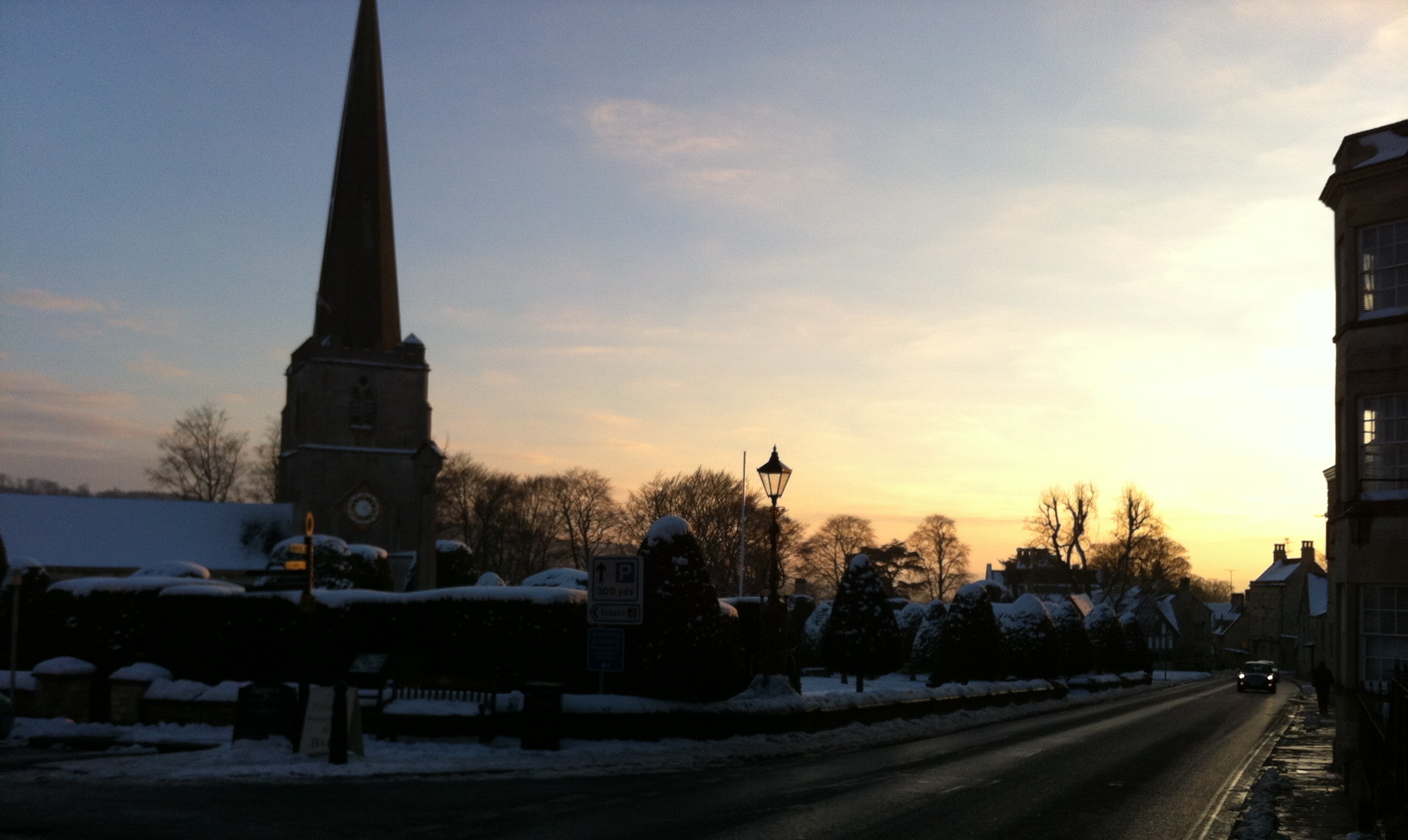
I went to Painswick yesterday to eat carrot cake and to see the snowdrops at the Rococo gardens ~ failed on both counts but had a great time enjoying spectacular scenery in wonderful company.  Painswick is quite high up in the Cotswolds so the snow is much deeper there and lasts far longer than down in the town.  But we had a lovely time, so here for my friends are my impressions in picture and haiku.  Apologies for the poor quality of the photos, I forgot my camera and had to use my phone!  ~

Ice daggers dangle

from ancient lead gutters on

St Mary’s lych gate

St Mary's Lych gate

St Mary’s Lych gate

Snow covered Yew trees

in picture perfect Painswick

Christmas card village

St Mary's Churchyard

St Mary’s Churchyard

Sun sets on Painswick’s

 honeyed stone cottages, and

cold Cotswold churchyard


Rococo gardens at Painswick

Rococo gardens at Painswick

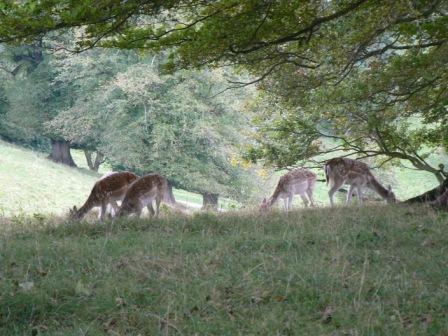
White winter woodland,

following in the footprints

of the fallow deer

Strictly Come Dancing ~ Live Show

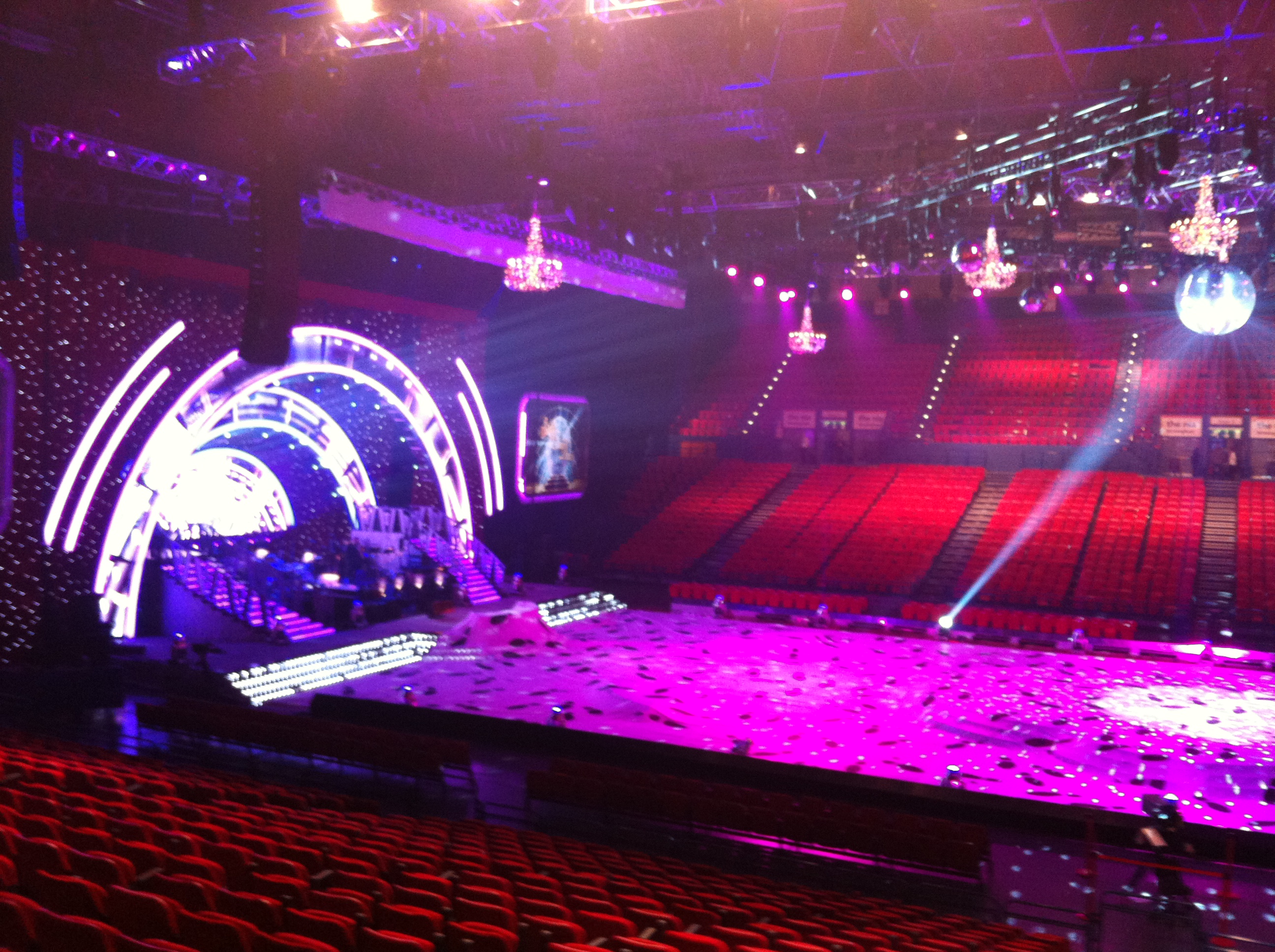
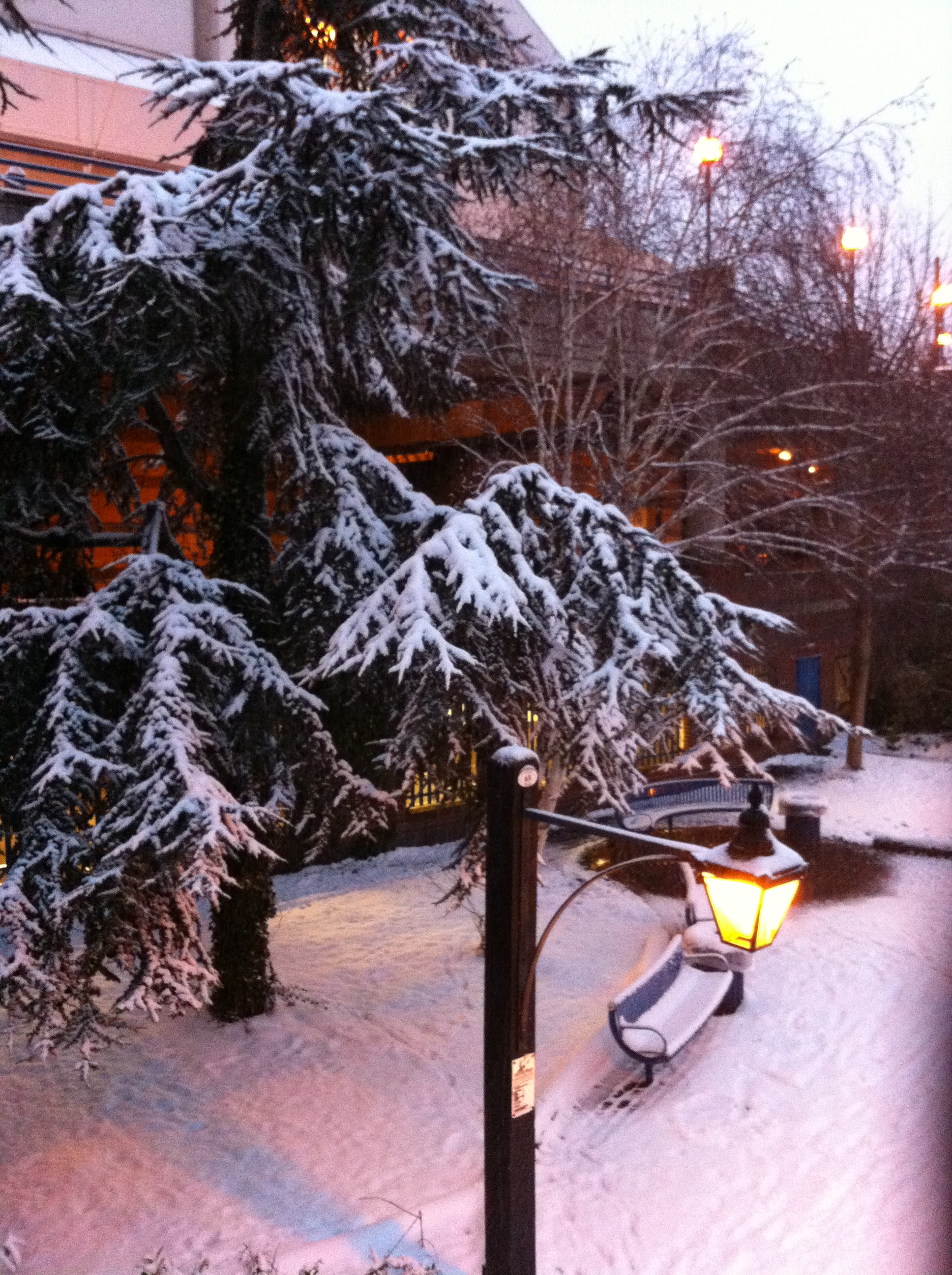
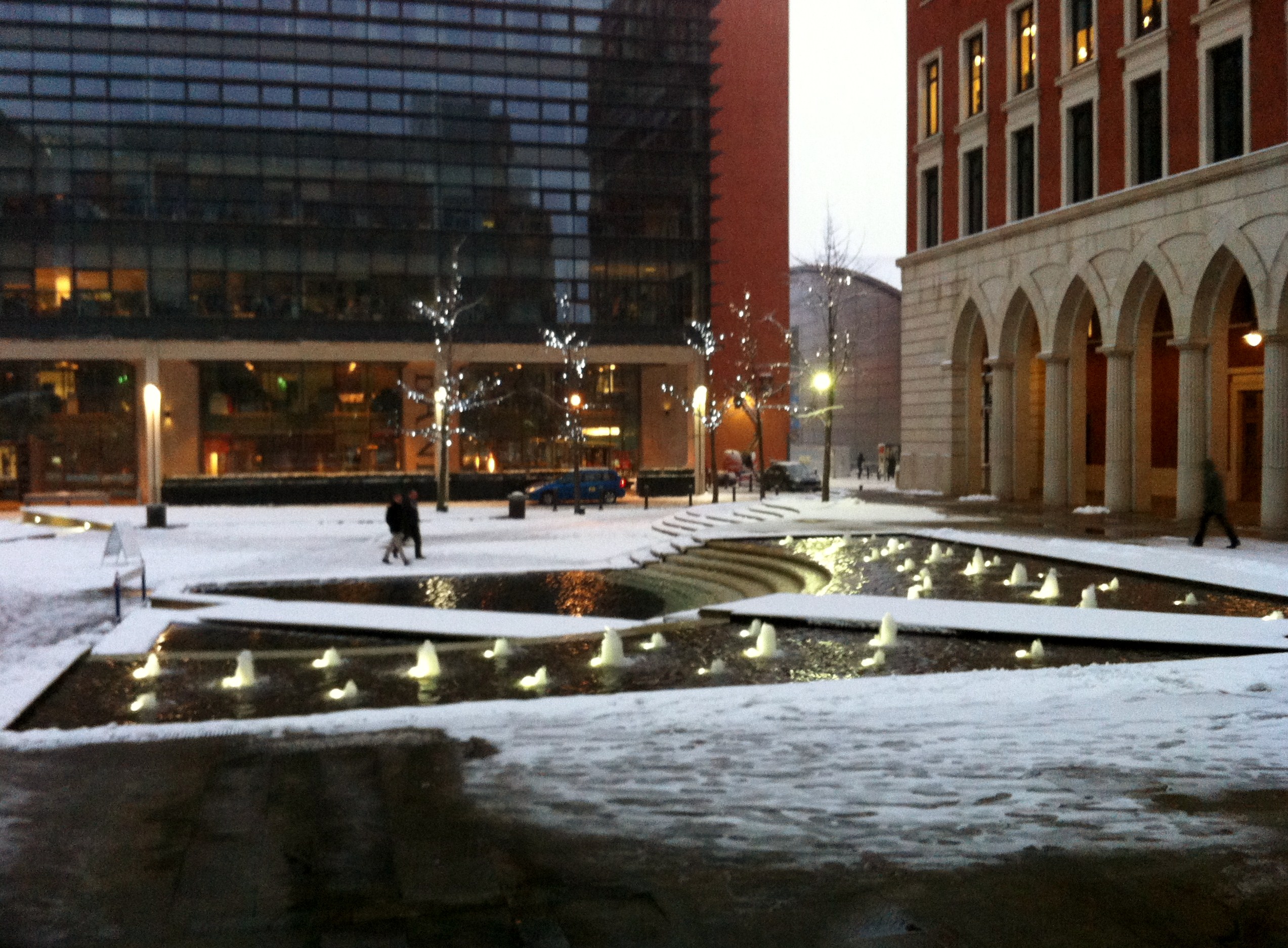
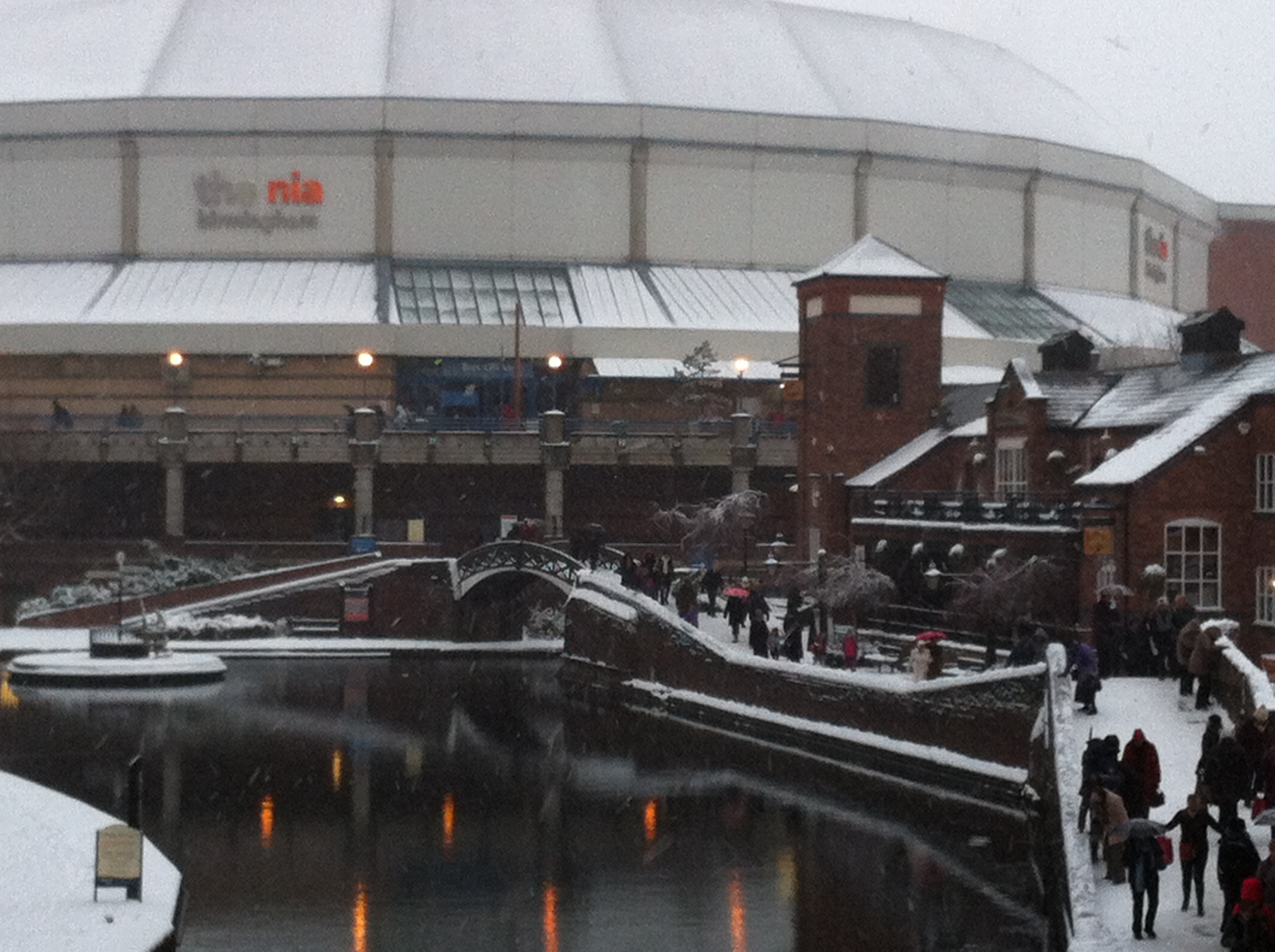
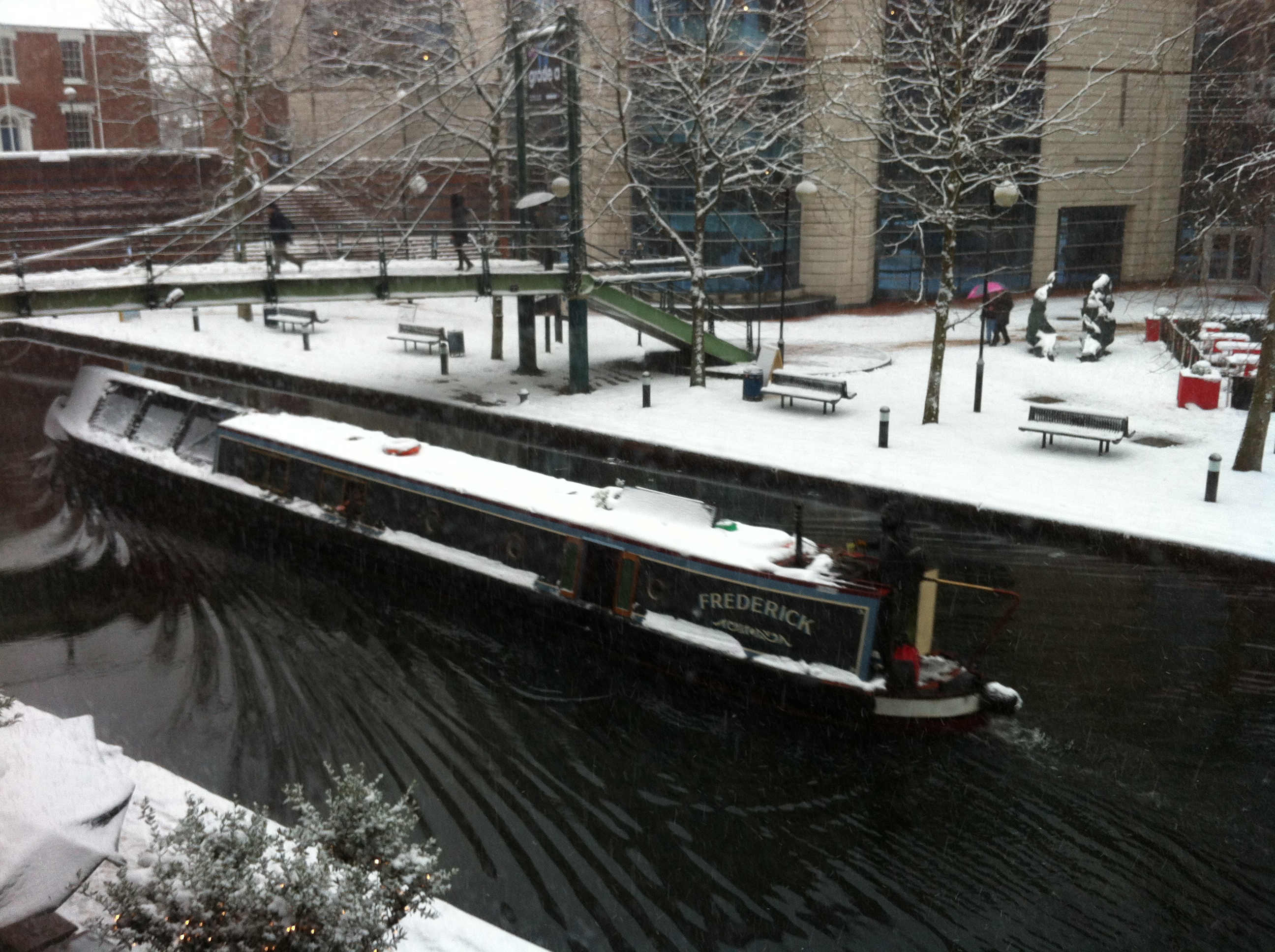
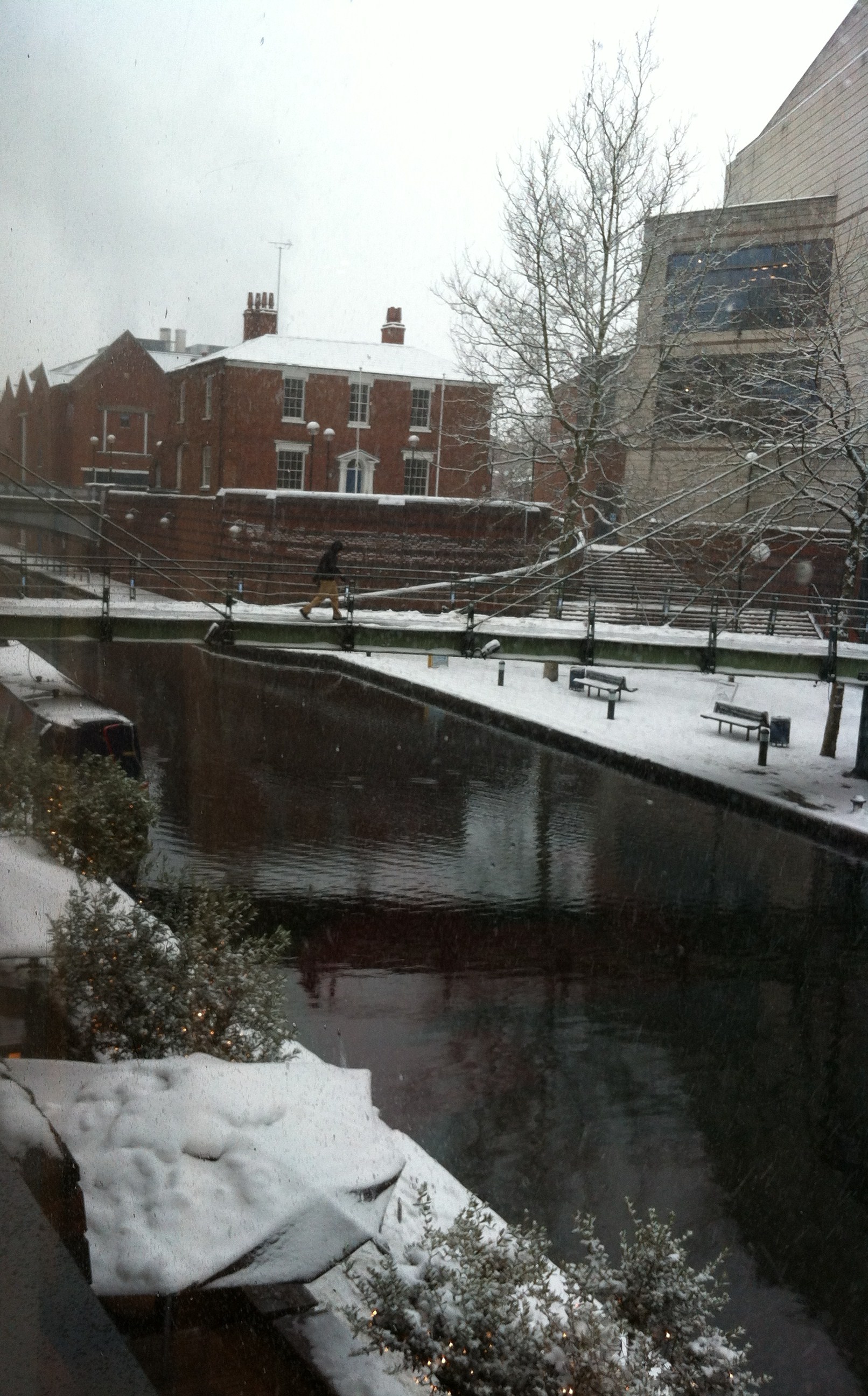
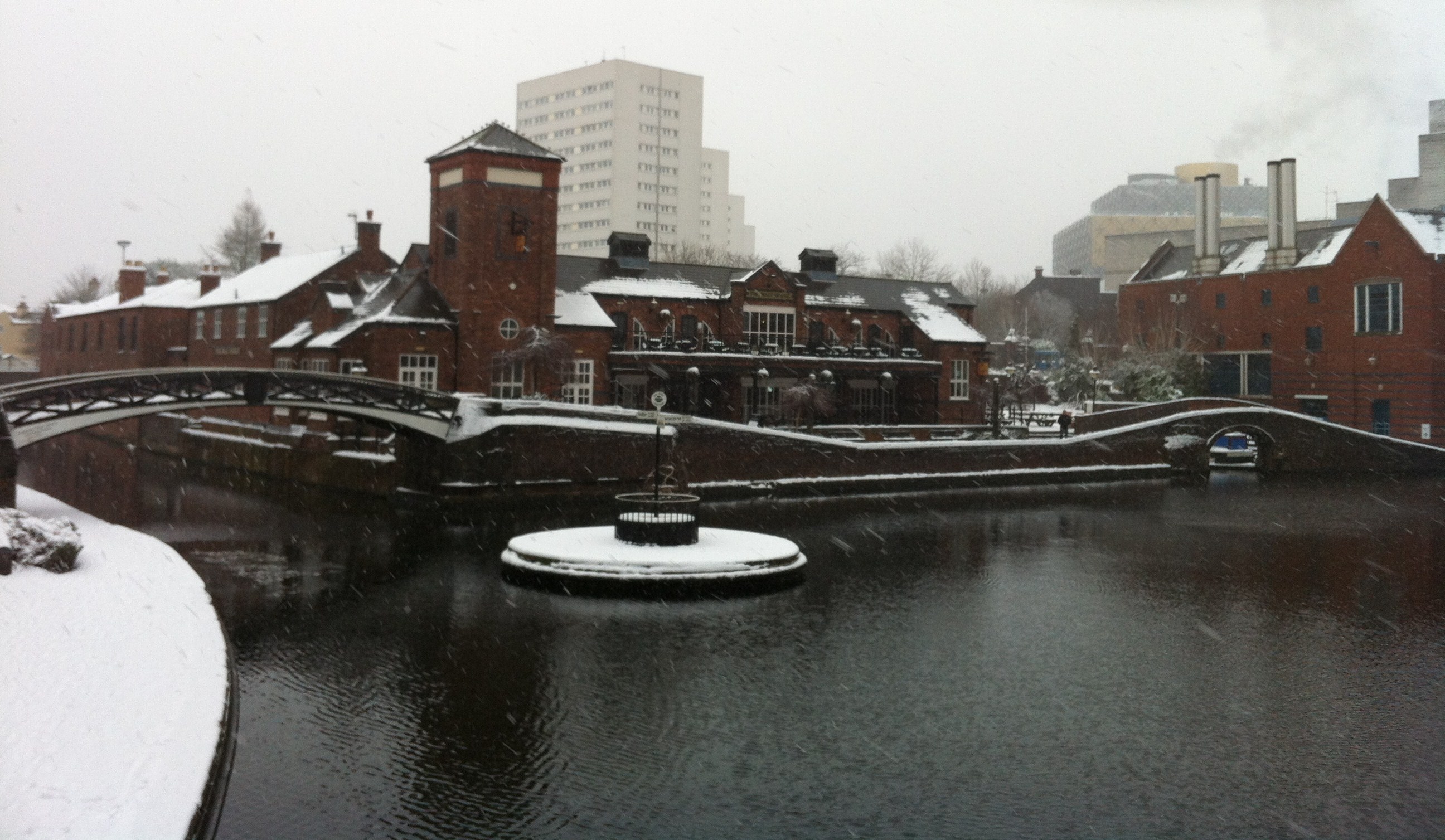
Went to Birmingham at the weekend for the live performance of my favourite TV Show ~ Strictly Come Dancing.  The tickets were an inspired and very thoughtful Christmas present from my children.  The show was at the National Indoor Arena in Birmingham.  The whole day was wonderful.  The NIA is set in the most beautiful part of Birmingham, Brindley Place, where the canals meet.  The setting is always beautiful with trees , water and lighting, but on Sunday it was amazing as the whole scene was set off beautifully by an iced covering of crisp white snow.

Once inside the arena, the performance was truly spectacular.  The costumes, choreography and lighting were breathtaking.  The professional dancers were fabulous and the celebrity contestants were superb.  My favourite of course was the Olympic Gymnast ~ silver medal winner ~ Louis Smith.  he really should be the next James Bond as he has looks, style, physique and boy can he dance!

Judging time at Strictly Live Show

Judging time at Strictly Live Show

Inside the NIA

Inside the NIA

Amazing lighting

Amazing lighting

Before the show

Before the show

IMG_0041

Snow covered fir trees

Snow covered fir trees

IMG_0038 IMG_0036 IMG_0034 IMG_0033 IMG_0032 IMG_0031 IMG_0030 IMG_0027 IMG_0025 IMG_0024 IMG_0019

New Year’s Day 2013

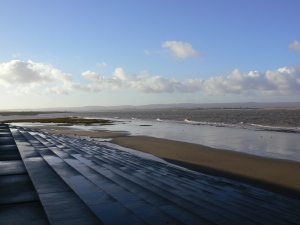
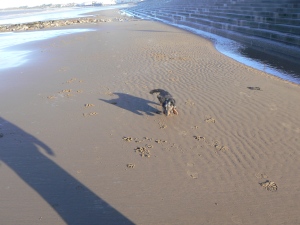
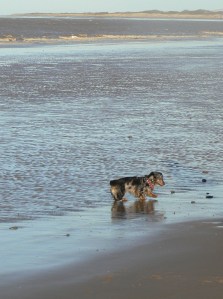
The Christmas holiday is over and my children have all gone home to their various exciting lives.  On New Year’s day we drove to the airport in Bristol and as I was sad to see them all go, so we decided to have a day at the seaside.  This always cheers me up and blows the cobwebs away.  Burnham on Sea may not be exotic but I love it!  It has miles of sand and is almost deserted out of season, so that is where we headed.  My little dog, Dayna, seemed totally confused at first so I imagine she has never seen the sea before.  However in no time at all she was having fun chasing the waves and shaking the sand off her tiny legs.  As the wind blew her tail and ears waved in the air.  Instant laughter and a dreaded day reworked into a blessing.

New Year's Day on Burnham Beach in Somerset

New Year’s Day on Burnham Beach in Somerset

Soaring and screeching

Seagulls over sinking sand

On Somerset shore

So much fun on a deserted beach

So much fun on a deserted beach

Storm in a rockpool

weaving waves into whirlpools

Miniature maelstrom

First taste of the sea for Dayna

First taste of the sea for Dayna

On a New Year’s day

Windy beaches are deserted

To Dayna’s delight


I am starting 2013 by clearing space for beauty and joining the Mindful Writing Challenge entitled Small Stones.  A small stone is a short piece of writing (prose or poetry) that precisely captures a fully-engaged (mindful) moment. The process of finding small stones is as important as the finished product – searching for them will encourage you to keep your eyes (and ears, nose, mouth, fingers, feelings and mind) open.

Why don’t you go out and buy yourself a gorgeous notebook, start writing your small stones, and you’ll be in the river too.

New baby

Inspired by haiku heights prompt “New”

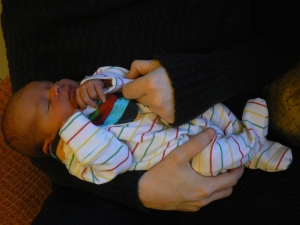
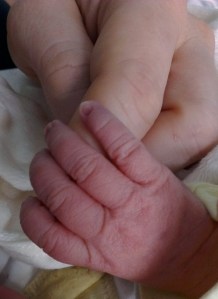
Clutching my finger

Stanley captures my heart with

Love overwhelming.

Stanley's hand

Stanley’s hand

Hunger satisfied.

Swaddled in safety he sleeps,

Surrounded by love

Swaddled in safety

Swaddled in safety

Little innocent

In loving arms enfolded

His life in her hands

Loving arms

Loving arms

The word ‘new’ conjures up all sorts of memories for me.

I was born in Newcastle/Gateshead in the North of England.  It is a wonderful city with 2000 years of history behind it, and I still think of it as home.  Famous in the past for coal mining and ship building, glass making and steel works, it is now more famous as a city of culture, shopping and tourism.  It also has some of the best beaches in the UK nearby and the beautiful Northumberland National Park on the doorstep.

North Sea at Whitley bay

North Sea at Whitley bay

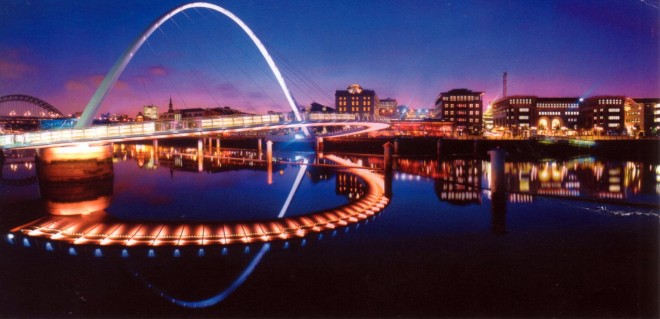
The area around the Quayside and the River Tyne has been transformed in recent years into a contemporary scene that buzzes with activity, in the Baltic Art gallery (which used to be a flour mill), and the Sage which is a breathtaking venue for world class music events.  Then of course there are the famous bridges!  The ‘new’ bridge was built to celebrate this millennium.  It is known locally as the “Winking Eye” because of the way it opens to let ships through.  The cycle path and footpath on the bridge literally opens like an eyelid.  It is a most spectacular bridge which is a superb backdrop for all sorts of events such as the Tall Ships race.  The City Council never run out of ideas for decorating or lighting the bridge to make it even more of an attraction.

Millennium Bridge Illuminated

Millennium Bridge Illuminated

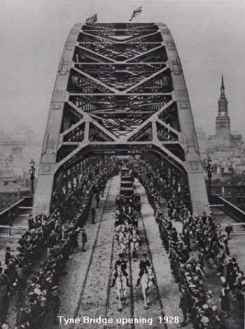
Behind the new bridge is a much older one known as the Tyne Bridge, which was opened on 10th October 1928 by King George V.  My late mum was 3 years old then and she remembered sitting on her uncle’s shoulders watching this event.  This bridge carried the Great North Road (A1) from the South of England to Scotland.  It also carried buses – and trams when I was a child!  Many ships have passed under this bridge over the years.

Tyne Bridge Opening 1928

Tyne Bridge Opening 1928

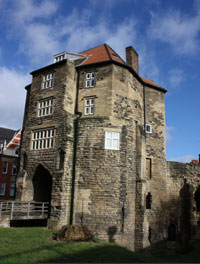
The name ‘Newcastle’ was adopted in Norman times when Robert Curthose, the eldest son of William the Conqueror, built a castle on the site of the old Roman Fort of Pons Aelius.  The original castle was built of earth and timber.  But in 1172, in the reign of King Henry 11 the castle was rebuilt in stone.  Near the river, the original castle keep still stands as well as narrow medieval streets and 14th century staircases.
Blackgate

Blackgate

The Blackgate was photographed by David Simpson

Snow

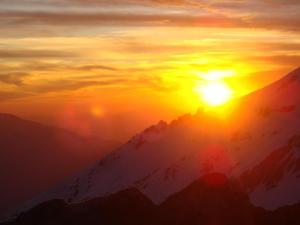
sunset over snowy mountain in Chile

The prompt for this week at haiku heights is the word ‘snow’.  This set me off thinking of the many places I have been where there is always snow on the mountain tops, the “Everlasting Snows”.  I think of the North West Explorer trip I did many years ago visiting Seattle, Vancouver and the wonderful national parks in USA and Canada.  I will never forget the breathtaking views we saw as we drove along the route through the glaciers to Banff and beyond.

I also remember the trip to the top of the Caucasus mountains at Krasnapolyana in Russia which I have written about before.  This beautiful place will be the setting for many of the events of the 2014 Sochi Winter Olympics.

I remember the very first time I went to Russia.  I arrived in Moscow in the evening having left the UK on a crisp Autumn morning.  The first thing I did in Moscow was go for a walk to Red Square.  As I turned into the square it started to snow gently and there I was at last, totally captivated by the sight of the magnificent multi coloured onion domes on St Basil’s cathedral.  Red Square has been the scene of some dreadful ~ and some impressive events ~ over the course of its history, but I defy anyone to see it without being instantly awed by the sheer magnificence of the whole square and its buildings, especially in the snow!

St Basil's in Red Square in the snow

St Basil’s in Red Square in the snow

Soft flakes fall gently

On sumptuous St Basil’s

White snow on Red Square

Another place with “Everlasting Snows” is the Pyrenees.  These mountains are steeped in history.  For century after century pedlars and merchants, crusaders and warriors, troubadours, shepherds and pilgrims have trekked across these mountains.   The village of Gavarnie was known as “the last village in France” in the Middle Ages on the old pilgrim route to the tomb of St. James at Santiago de Compostela.  It is a great centre for winter sports as well as summer walking now.  I have often travelled to Lourdes with groups or with friends and I have always taken a trip up the mountains to Gavarnie.  I have written about it in a previous post.  The route to Gavarnie from Lourdes takes in the Lavedan Valley, Argeles Gazost, St. Savin de Lavedan, the Chateau of Miremont, the Valley of Luz, Pic du Midi and Luz.   These are all fascinating places in their own right and St Savin is a must see village and church which seems unchanged by time.  The Cirque de Gavarnie is the most famous place in the Pyrenees, with 1,400 metres (4,400 feet) and is home to the highest waterfall in Europe.  Near Gavarnie there is an amazing statue of Our Lady of the Snows.  We often stopped to say mass there with the VIPs in our group, using a spare wheelchair as an altar!  (In Lourdes the sick, disabled or terminally ill are the VIPs.)

Our Lady of the Snows

Our Lady of the Snows

Mass in Gavarnie

A wheelchair for an altar

Snow capped sacristy

Souce of River gave at Gavarnie

Source of River gave at Gavarnie

River Gave is born

In the Everlasting Snows

Of Haute Pyrenees

Tour guides will tell you that the statue was erected by airmen after the Second World War in gratitude for making their escape across the mountains from occupied France into Northern Spain.  However, this statue was visited and blessed by Pope Pius 12th when he came to Lourdes in 1935, so I guess it might have been erected by grateful resistance fighters in earlier times.   There are many mountain passes in the Pyrenees, known as Le Chemin de la Liberte, which were secret escape routes during WW11 and one of them does pass the spot where Our lady of the Snows statue stands.  This route was taken by hundreds of Frenchmen and Jews fleeing from the Germans as well as RAF and American airmen who had either crash landed or parachuted to safety after being shot down over occupied Europe.  There was a chain of local people who hid, fed and clothed these men, at great personal risk, until the time was right for them to make their escape under cover of darkness over the mountains.  Official statistics tell us that between the years 1940 and 1944, there were 33,000 successful escapes by Frenchmen along the entire length of the Pyrenean chain.  It seems strange that we can now picnic there in the summer sun admiring the snow-capped mountains!

English: Cirque de Gavarnie gripped by frozen ...

English: Cirque de Gavarnie gripped by frozen snow in the Pyrenees (Photo credit: Wikipedia)

Trudging through spring snows

Escaping occupation

‘Cross the Pyrenees

Pyrenees by the River Gave

Pyrenees by the River Gave

Trek through history

On high Pyrenees, scene of

trade and tragedy

Last but not least, I think of Stratton Mountain in Vermont near where my daughter lives and her husband works.  We won’t be seeing him this Christmas as he will be on the mountain as usual preparing the next generation of winter Olympians.  So I dedicate this series of haiku to him as he lives for the snow!  Jointly they run the superb ski camps known as US Elite Camps.

Stratton Mountain

Stratton Mountain

Bobsleigh, Downhill, Pipe,

Ski-jump, Slalom, Speed and Luge,

Snow capped Olympics.

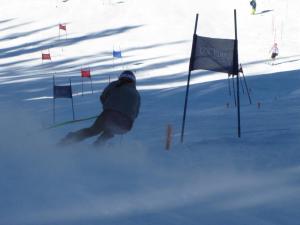
slalom

Scary snow

Scary snow