I am starting 2013 by clearing space for beauty and joining the Mindful Writing Challenge entitled Small Stones. A small stone is a short piece of writing (prose or poetry) that precisely captures a fully-engaged (mindful) moment. The process of finding small stones is as important as the finished product – searching for them will encourage you to keep your eyes (and ears, nose, mouth, fingers, feelings and mind) open.
Why don’t you go out and buy yourself a gorgeous notebook, start writing your small stones, and you’ll be in the river too.
I am starting 2013 by clearing space for beauty and joining the Mindful Writing Challenge entitled Small Stones. A small stone is a short piece of writing (prose or poetry) that precisely captures a fully-engaged (mindful) moment. The process of finding small stones is as important as the finished product – searching for them will encourage you to keep your eyes (and ears, nose, mouth, fingers, feelings and mind) open.
Why don’t you go out and buy yourself a gorgeous notebook, start writing your small stones, and you’ll be in the river too.
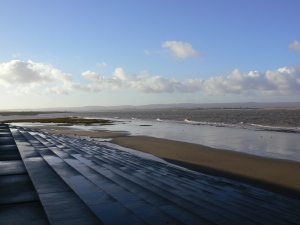
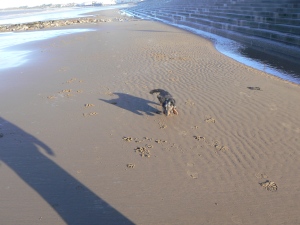
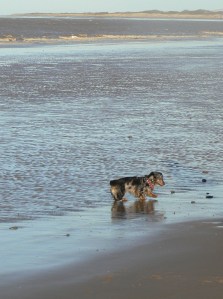
The Christmas holiday is over and my children have all gone home to their various exciting lives. On New Year’s day we drove to the airport in Bristol and as I was sad to see them all go, so we decided to have a day at the seaside. This always cheers me up and blows the cobwebs away. Burnham on Sea may not be exotic but I love it! It has miles of sand and is almost deserted out of season, so that is where we headed. My little dog, Dayna, seemed totally confused at first so I imagine she has never seen the sea before. However in no time at all she was having fun chasing the waves and shaking the sand off her tiny legs. As the wind blew her tail and ears waved in the air. Instant laughter and a dreaded day reworked into a blessing.
New Year’s Day on Burnham Beach in Somerset
Soaring and screeching
Seagulls over sinking sand
On Somerset shore
So much fun on a deserted beach
Storm in a rockpool
weaving waves into whirlpools
Miniature maelstrom
First taste of the sea for Dayna
On a New Year’s day
Windy beaches are deserted
To Dayna’s delight
I am starting 2013 by clearing space for beauty and joining the Mindful Writing Challenge entitled Small Stones. A small stone is a short piece of writing (prose or poetry) that precisely captures a fully-engaged (mindful) moment. The process of finding small stones is as important as the finished product – searching for them will encourage you to keep your eyes (and ears, nose, mouth, fingers, feelings and mind) open.
Why don’t you go out and buy yourself a gorgeous notebook, start writing your small stones, and you’ll be in the river too.
The word ‘new’ conjures up all sorts of memories for me.
I was born in Newcastle/Gateshead in the North of England. It is a wonderful city with 2000 years of history behind it, and I still think of it as home. Famous in the past for coal mining and ship building, glass making and steel works, it is now more famous as a city of culture, shopping and tourism. It also has some of the best beaches in the UK nearby and the beautiful Northumberland National Park on the doorstep.
North Sea at Whitley bay
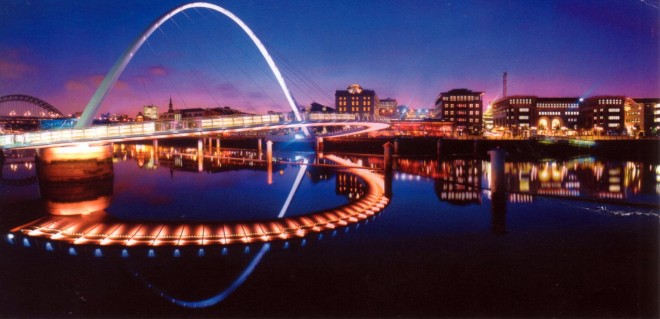
The area around the Quayside and the River Tyne has been transformed in recent years into a contemporary scene that buzzes with activity, in the Baltic Art gallery (which used to be a flour mill), and the Sage which is a breathtaking venue for world class music events. Then of course there are the famous bridges! The ‘new’ bridge was built to celebrate this millennium. It is known locally as the “Winking Eye” because of the way it opens to let ships through. The cycle path and footpath on the bridge literally opens like an eyelid. It is a most spectacular bridge which is a superb backdrop for all sorts of events such as the Tall Ships race. The City Council never run out of ideas for decorating or lighting the bridge to make it even more of an attraction.
Millennium Bridge Illuminated
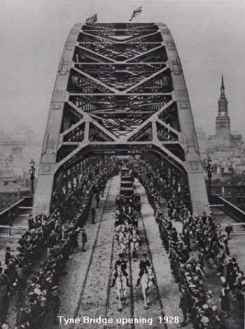
Behind the new bridge is a much older one known as the Tyne Bridge, which was opened on 10th October 1928 by King George V. My late mum was 3 years old then and she remembered sitting on her uncle’s shoulders watching this event. This bridge carried the Great North Road (A1) from the South of England to Scotland. It also carried buses – and trams when I was a child! Many ships have passed under this bridge over the years.
Tyne Bridge Opening 1928
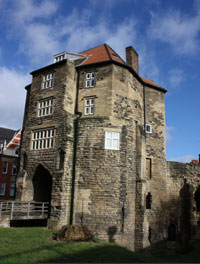
The name ‘Newcastle’ was adopted in Norman times when Robert Curthose, the eldest son of William the Conqueror, built a castle on the site of the old Roman Fort of Pons Aelius. The original castle was built of earth and timber. But in 1172, in the reign of King Henry 11 the castle was rebuilt in stone. Near the river, the original castle keep still stands as well as narrow medieval streets and 14th century staircases.
The prompt for this week at haiku heights is the word ‘snow’. This set me off thinking of the many places I have been where there is always snow on the mountain tops, the “Everlasting Snows”. I think of the North West Explorer trip I did many years ago visiting Seattle, Vancouver and the wonderful national parks in USA and Canada. I will never forget the breathtaking views we saw as we drove along the route through the glaciers to Banff and beyond.
I also remember the trip to the top of the Caucasus mountains at Krasnapolyana in Russia which I have written about before. This beautiful place will be the setting for many of the events of the 2014 Sochi Winter Olympics.
I remember the very first time I went to Russia. I arrived in Moscow in the evening having left the UK on a crisp Autumn morning. The first thing I did in Moscow was go for a walk to Red Square. As I turned into the square it started to snow gently and there I was at last, totally captivated by the sight of the magnificent multi coloured onion domes on St Basil’s cathedral. Red Square has been the scene of some dreadful ~ and some impressive events ~ over the course of its history, but I defy anyone to see it without being instantly awed by the sheer magnificence of the whole square and its buildings, especially in the snow!
St Basil’s in Red Square in the snow
Soft flakes fall gently
On sumptuous St Basil’s
White snow on Red Square
Another place with “Everlasting Snows” is the Pyrenees. These mountains are steeped in history. For century after century pedlars and merchants, crusaders and warriors, troubadours, shepherds and pilgrims have trekked across these mountains. The village of Gavarnie was known as “the last village in France” in the Middle Ages on the old pilgrim route to the tomb of St. James at Santiago de Compostela. It is a great centre for winter sports as well as summer walking now. I have often travelled to Lourdes with groups or with friends and I have always taken a trip up the mountains to Gavarnie. I have written about it in a previous post. The route to Gavarnie from Lourdes takes in the Lavedan Valley, Argeles Gazost, St. Savin de Lavedan, the Chateau of Miremont, the Valley of Luz, Pic du Midi and Luz. These are all fascinating places in their own right and St Savin is a must see village and church which seems unchanged by time. The Cirque de Gavarnie is the most famous place in the Pyrenees, with 1,400 metres (4,400 feet) and is home to the highest waterfall in Europe. Near Gavarnie there is an amazing statue of Our Lady of the Snows. We often stopped to say mass there with the VIPs in our group, using a spare wheelchair as an altar! (In Lourdes the sick, disabled or terminally ill are the VIPs.)
Our Lady of the Snows
Mass in Gavarnie
A wheelchair for an altar
Snow capped sacristy
Source of River gave at Gavarnie
River Gave is born
In the Everlasting Snows
Of Haute Pyrenees
Tour guides will tell you that the statue was erected by airmen after the Second World War in gratitude for making their escape across the mountains from occupied France into Northern Spain. However, this statue was visited and blessed by Pope Pius 12th when he came to Lourdes in 1935, so I guess it might have been erected by grateful resistance fighters in earlier times. There are many mountain passes in the Pyrenees, known as Le Chemin de la Liberte, which were secret escape routes during WW11 and one of them does pass the spot where Our lady of the Snows statue stands. This route was taken by hundreds of Frenchmen and Jews fleeing from the Germans as well as RAF and American airmen who had either crash landed or parachuted to safety after being shot down over occupied Europe. There was a chain of local people who hid, fed and clothed these men, at great personal risk, until the time was right for them to make their escape under cover of darkness over the mountains. Official statistics tell us that between the years 1940 and 1944, there were 33,000 successful escapes by Frenchmen along the entire length of the Pyrenean chain. It seems strange that we can now picnic there in the summer sun admiring the snow-capped mountains!
English: Cirque de Gavarnie gripped by frozen snow in the Pyrenees (Photo credit: Wikipedia)
Trudging through spring snows
Escaping occupation
‘Cross the Pyrenees
Pyrenees by the River Gave
Trek through history
On high Pyrenees, scene of
trade and tragedy
Last but not least, I think of Stratton Mountain in Vermont near where my daughter lives and her husband works. We won’t be seeing him this Christmas as he will be on the mountain as usual preparing the next generation of winter Olympians. So I dedicate this series of haiku to him as he lives for the snow! Jointly they run the superb ski camps known as US Elite Camps.
I am fascinated by trees, not only for their beauty, but for the stories they could tell. Some trees have lived through amazing times and been part of the lives of such interesting people. If only they could talk!
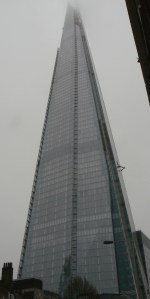
This week I went to the city with a couple of friends. We visited two wonderful museums and wandered along the streets of London where the trees are at their glorious Autumn best. We strolled along the Embankment beside the River Thames and marvelled at the changing skyline. I was struck by the juxtaposition of old buildings and new, especially the magnificent Shard which is so close to the old St Thomas’s. It is a breathtaking sight and a brilliant feat of engineering. Yet even in front of this awesome glass building my eyes were drawn to a row of trees nearby.
Consumed by the clouds
Engineered to perfection
A giant in glass
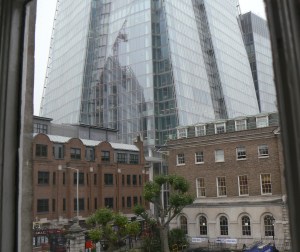
The Shard with trees in the foreground
The enormous Shard disappearing into the clouds
Sheer face of the Shard
Glass monument to mammon
Shatters the skyline
View of the Shard from St Thomas’s
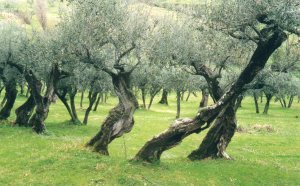
One amazing tree I have seen is an ancient olive tree at the site of St Francis of Assissi’s remote hermitage, the Eremo delle Carceri on Mount Subasio. Olive trees are the longest living trees. Indeed in good conditions some live to a thousand years old. This tree is one of them. It is protected and propped up by poles. I find it breathtaking to think that St Francis actually touched this tree, walked by the stream and slept in the cave, all of which can still be seen. I found it very moving when I visited in 2000 and I have to admit to picking some leaves from the tree. I have pressed them and kept them in my travel journal from Rome and Assissi. St Francis lived a simple life and slept in the cave on a bed of stone and a pillow of wood. Some of his followers lived there as hermits too in prayer and meditation. The warren of caves still exists in a clearing with a stream and lots of trees.
The ancient Olive Tree that St Francis would have seen
Birds stopped to listen
As the humble hermit preached
At one with the trees.
Leaves from the Olive Tree on Mount Subasio
An early picture of St Francis of Assissi
St Francis’s cell in the cave at Mount Subasio
Olive Trees in Italy
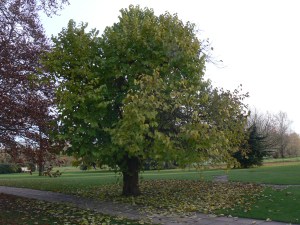
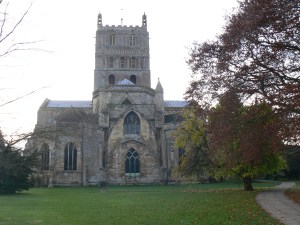
Another tree that inspires me is the Mulberry tree which was in the garden of St Thomas More’s home when he was Lord Chancellor in the time of King Henry V111. Sir Thomas More, as he was then, bought some land in Chelsea and Kensington in 1524 in order to build his Great House. Sadly his house is long gone, but the Mulberry tree he planted is still there. On the site today is Allen Hall, the Seminary of the Roman Catholic Archdiocese of Westminster. Visitors can visit the seminary by appointment and walk to the secluded walled garden where Thomas More’s Mulberry Tree still stands. Outside and nearby is a beautiful statue of St Thomas More in a garden facing the river Thames. In the grounds of Tewkesbury Abbey near where I live there is a Mulberry tree grown from a seed from St Thomas More’s tree. I often visit this tree and sometimes pick the delicious fruit.
Mulberry Tree at Tewkesbury Abbey
Tewkesbury Abbey and Trees
Portrait of St Thomas More
He planted his tree
And dreamed of Utopia
In turbulent times
The Yew trees in the beautiful village of Painswick in the Cotswolds are also very interesting. There are 99 of them in the grounds of St Mary’s Church and many of them are hundreds of years old. They lived through the English Civil War (1642-1645). There is evidence of Royalist cannonballs high up on the walls of the church to this day. At times people have tried to establish more Yew Trees in the churchyard but a hundredth will never grow. It seems as if 99 is the maximum for some reason. There is an old story that if a hundredth tree ever grows, the devil would pull it out. It is one of our old Cotswold mysteries!
Last but by no means least, is a historic small-leaved Lime tree at Westonbirt which is unbelievably ancient. It is reputedly 2000 years old! It is so big that it seems as if it is many trees. However, it is actually a clump of around 60 trees all growing from one original. This was the result of coppicing which was a way of managing woodland for fuel established in Anglo-Saxon times. Over hundreds of years of repeated cutting, the stump gradually spreads outwards in a ring until it reaches enormous proportions. My photo does not do it justice!
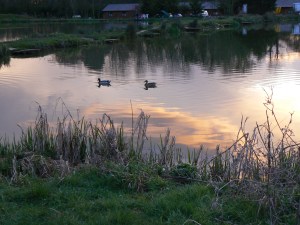
Having just come back from a restorative week in the log cabin by the fishing lakes, I am full of the sights and sounds of nature. So I have written for this week’s Haiku Heights prompt word which very conveniently is Nature!
Today’s haiku is inspired by carpe Diem prompt word “tears”. It reminded me of the magnificent waterfalls in the Caucasus mountains where hundreds of prisoners lost their lives hacking a way through the mountain to build a road. One of the waterfalls is called “Lady’s Tears”
This haiku is inspired by a wonderful haiku by Basho, a haiku master.
This one he wrote in Spring 1687 and it had a title. In that time a title for a haiku was a commonly used practice. The title of this haiku was: ‘Mourning over the death of Priest Tando’.
chi ni taore ne ni yori hana no wakare kana falling to the ground a flower closer to the root bidding farewell
The departure lounge at Sheremetova 1 set the tone for our trip to Sochi. It was packed. There were babushkas who had been on major shopping trips and had huge parcels wrapped in brown paper and tied with string. There were business men returning from wheeling and dealing, looking very smart and slightly sinister, carrying impenetrable briefcases. There were older men who looked like farmers carrying crates of chickens. All were dressed in dark colours except our group. We stood out like sore thumbs as foreigners because of our brightly coloured clothes.
We walked to the Aeroflot (Аэрофлот—Российские авиалинии) plane blissfully unaware that this would be a flight like no other we had been on. The plane was a very old Boeing 737, and unusual. Getting into the plane was fine but it seemed to be 2 storeys high. Most of the baggage was left loose below and the seating was accessed by climbing up a wooden ladder. At the back of the plane was what can only be described as a huge wooden wardrobe. Here people hung their coats and left their hand luggage, including the chickens. There was free seating so we were scattered around but settled down quickly, fastening our seat belts. A rather severe looking air stewardess came round immediately and gave everyone a plastic cup ~ empty. The engine roared and the plane started taxiing. Another severe and very blonde stewardess came round and filled all our plastic cups with Coca Cola. Just then the plane lifted off steeply, the cups tipped over, and we were all soaked in said Coca Cola! Not the ideal way to start a 4 hour journey.
When we reached the correct altitude the plane levelled out sharply causing the ‘wardrobe’ and its contents to topple forwards. Fortunately the rear seats stopped it from falling on the passengers and the chickens survived too.
The rest of the journey was uneventful and we arrived safely at our destination, the Riviera of the Black Sea, Sochi. It was cold and raining but the warmth of our welcome party made up for everything. A couple of minibuses soon whisked us along the coast road to the town of Sochi. We were all booked into single rooms on the fourth floor at the Hotel Moskva.
The rooms looked like those in Moscow, very basic, but the bathroom was much worse. There was a sink, a toilet, a shower, and a cockroach running across the floor. The drain for the shower was just a hole in the floor. This hole served to allow everything emptied from the sink, which had no plug, to overflow onto the bathroom floor. But at least the toilet flushed, but constantly!
Managing to get washed after a fashion, I dressed in my best clothes for our formal welcome dinner. The meal consisted of two courses, firstly, raw fish from Georgia which is a local delicacy. Unfortunately I don’t eat fish, as it brings me out in a rash, so I waited for the main course of Chicken Kiev. There were lots of toasts and speeches in Russian which were translated for us. After dinner we met our hosts, the Headteachers from the schools we had been partnered with. My host was Natalya who spoke no English. As Head of a kindergarten, she is responsible for 270 pupils aged 2 to 10. We got on very well from the start and soon found out a lot about each other and our families. The evening was a great success and we went back to the hotel feeling very positive.
Our welcome meal in Sochi
I decided to skip the shower and went to bed fully covered and with a light on to keep the cockroaches at bay.
I slept quite well and woke to find that Sochi’s famous ‘Mediterranean’ climate had turned quite cold and it looked like rain. Unfortunately, at our briefing back in Gloucestershire, we had been told it would be quite sub-tropical, so we only brought light summer clothes! Feeling a bit despondent I went down to breakfast to find everyone else shivering too. The raw fish was having another outing so I skipped breakfast altogether as did my friend Liz, a vegetarian.
Things looked up when we were picked up by minibuses and taken to the Education offices. Here we met the Chief Education Officer and his Assistant CEO, Irina. There were also some Education advisors and all of the Headteachers from our partner schools. There were interesting and informative talks for 4 hours and we learned a great deal at this meeting about the education philosophy and practice in Sochi. We returned to our hotel for lunch which was very lavish, and very familiar, consisting of fish soup, raw fish, and Chicken Kiev, after which we went for a guided tour of Sochi.
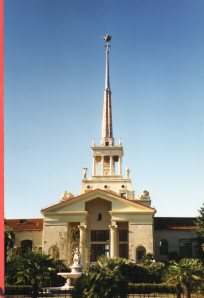
This was wonderful as we got to see the sea (complete with lighthouse and huge model dinosaurs), the parks, the gardens, the street market, and the Outdoor Education Centre. This facility was most impressive. We were shown slide shows and video of field study trips undertaken by children as young as 10. They travel enormous distances to go hiking, mountain climbing, orienteering, and white-water rafting. It all looked very exciting but hair-raisingly dangerous.
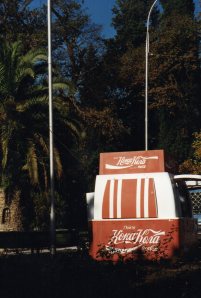
Coca Cola stalls in the park Bus at the bus stop Customs building in Sochi on the Black sea memorial in the park reflecting the fact that Sochi is a Sanatorium town or Health Spa Museums, theatres and art gallery in Sochi ~ 1995 Our hotel Moskva, the shopping mall, statue of Lenin and a writer and the theatre in Sochi ~ 1995 Sochi’s Catholic Church Sochi’s old buildings
I am following Haiku Heights’ weekly prompts in October. Last week’s word was Home and this week’s word is Shroud. As I was in London last week I thought I would combine the two and put my musings here with a few photographs.
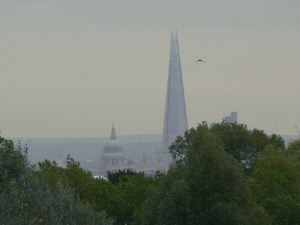
The first photos are from Hampstead Heath in London. In the distance is the ancient St Paul’s Cathedral, once the most illustrious feature of the skyline, but now overshadowed by the Shard.
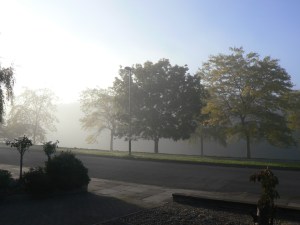
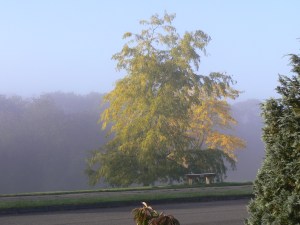
Next are some very misty views from my bedroom window at home. When I woke up this morning the field opposite my home was shrouded in mist. The beauty of the trees is enhanced by the Autumn colours and the mist just makes them more beautiful in my opinion.
I also squeezed in a photo of Dayna, my little Dachsund lying at my feet in the front bedroom. She is never far away and I am happy to say she has settled into her new home beautifully.
My mum and I in days gone by. It is 6 years since my mum died, it has gone by so quickly in some ways, yet so slowly in others. I reckon I think about her more now than ever before. Today I visited her grave and put her favourite pink flowers there. It is in a perfect setting near the hills above Cheltenham, ina lawned garden. The trees are all golden, orange and red now that Autumn is here and they look so beautiful. She would have enjoyed that.
As We Look Back ~ unknown
As we look back over time
We find ourselves wondering …..
Did we remember to thank you enough
For all you have done for us?
For all the times you were by our sides
To help and support us …..
To celebrate our successes
To understand our problems
And accept our defeats?
Or for teaching us by your example,
The value of hard work, good judgement,
Courage and integrity?
We wonder if we ever thanked you
For the sacrifices you made.
To let us have the very best?
And for the simple things
Like laughter, smiles and times we shared?
If we have forgotten to show our
Gratitude enough for all the things you did,
We’re thanking you now.
And we are hoping you knew all along,
How much you meant to us.
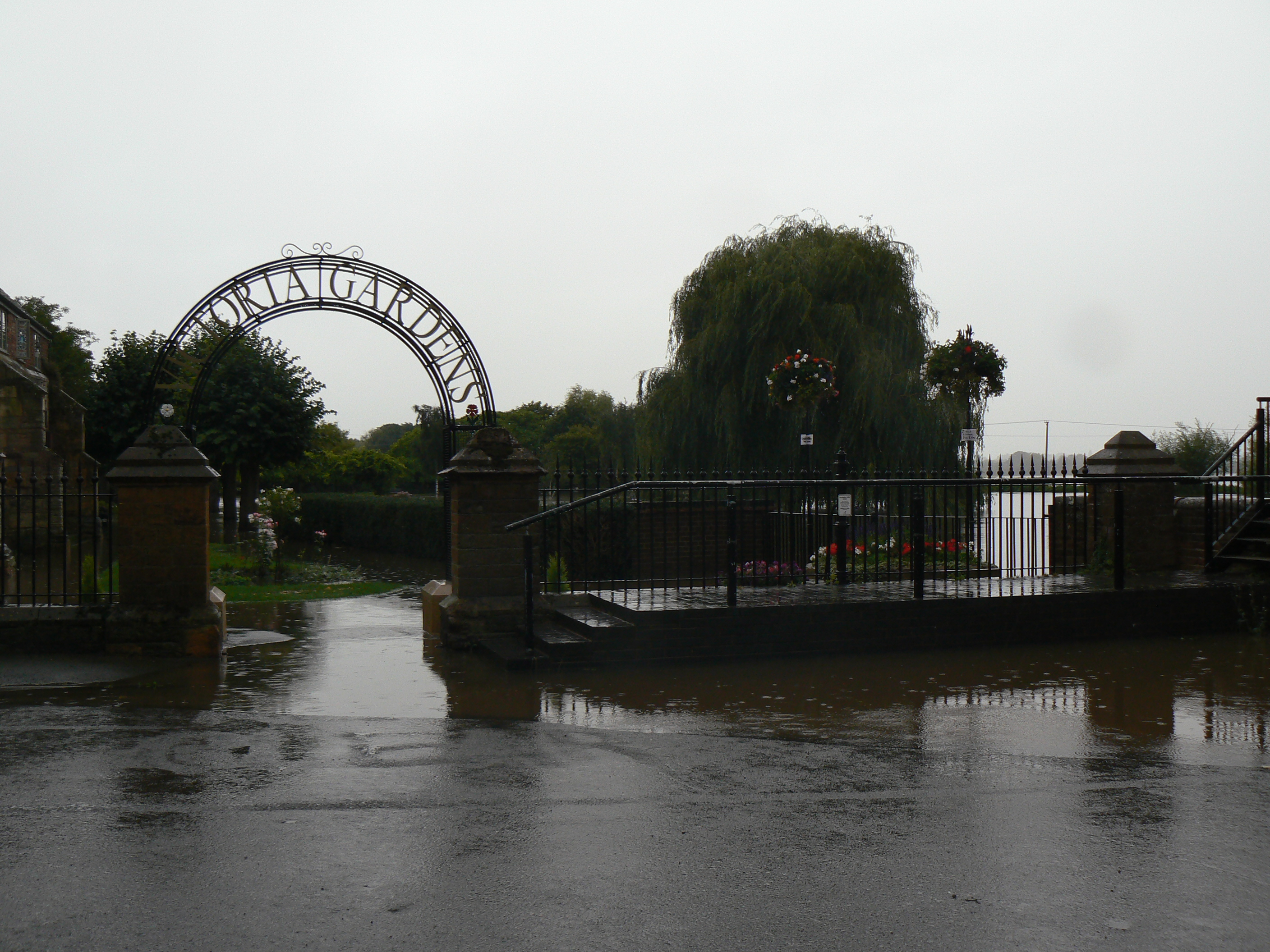
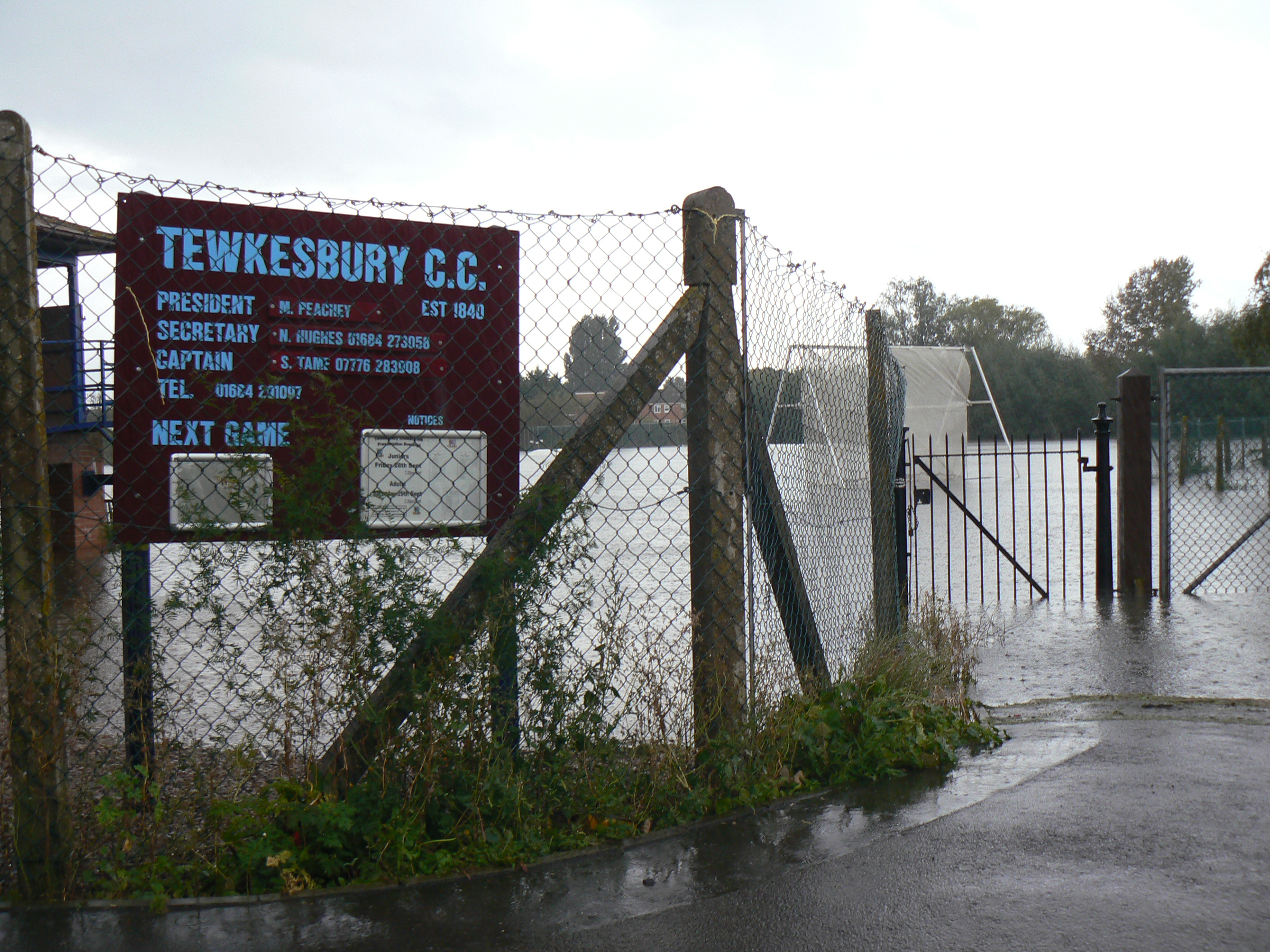
I took my little dog for a walk yesterday in Pershore and Tewkesbury. The Rivers Avon and Severn were both flooding. Although both Abbeys were still safe, the surroundiing areas were flooding ominously as my photographs show.
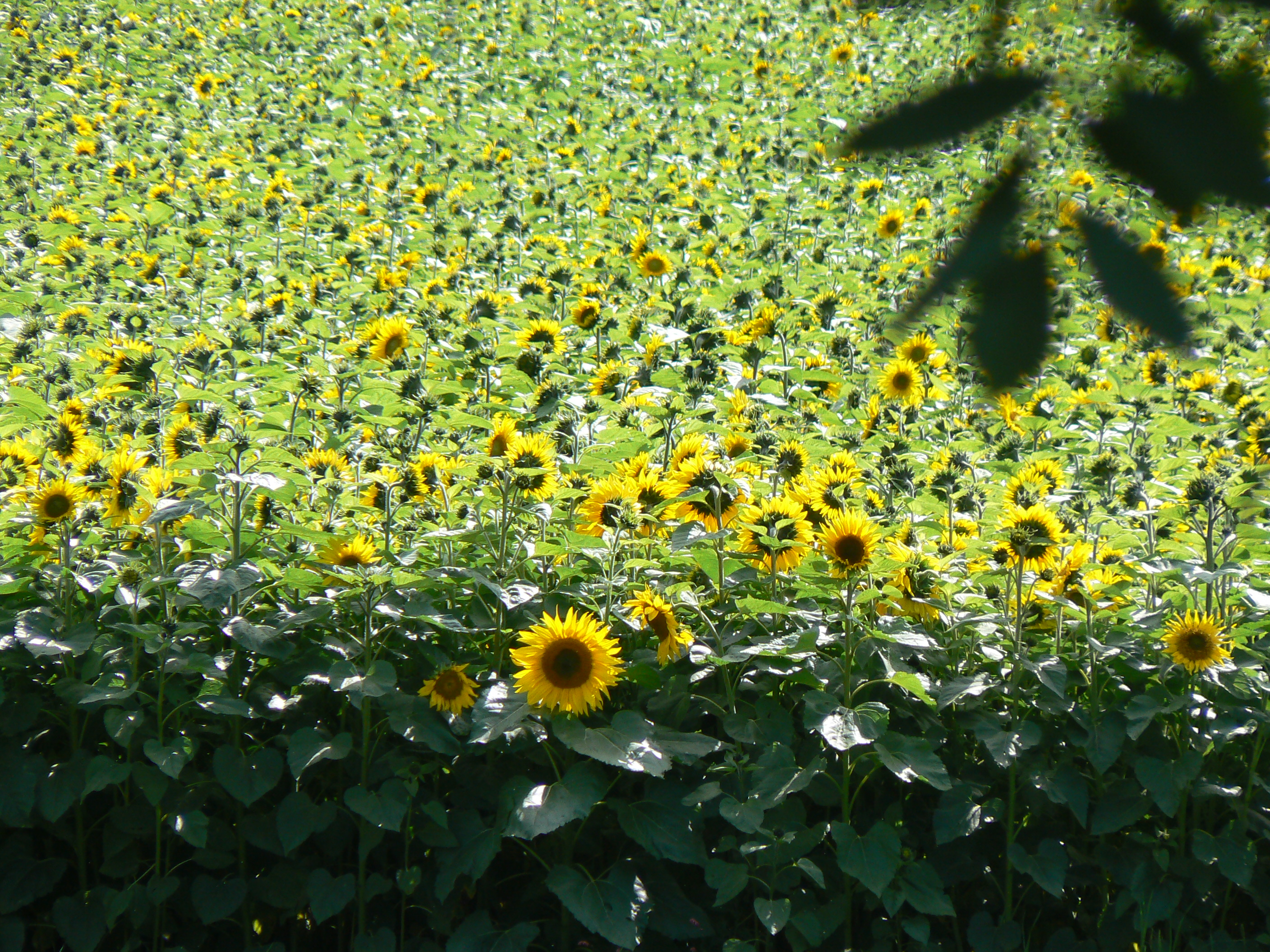
The sunflowers have been washed out this year in some parts of the Cotswolds due to the dreadful wet summer. At Snowshill most of the young plants died as their roots rotted in the rain=soaked earth. But there are still some sunflowers around and I delight in them. The ones in my garden have just come into bloom and they are magnificent.
In Cheltenham ladies College there is a beautiful stained glass window depicting sunflowers ~ in Victorian times they were considered a symbol of faith in God as the sunflowers appear to be turning their heads to face Him.
I painted sunflowers on my summerhouse doors as for me they signify the arrival of Autumn, my favourite season.
At WI I received a lovely gift in the lucky dip. It was a silver bag containing a little silver and diamanté heart and 2 bottles of Sanctuary; a brand of luxury bathroom products. It was lovely, although as I only have a shower, it may be passed to someone else!
The word ‘sanctuary’ comes from the Latin root word, sanctus, which means holy. So the primary meaning of the word is, ‘a sacred space’. Following on from this is the idea of a ‘place of refuge’, where someone can escape to and find safety.
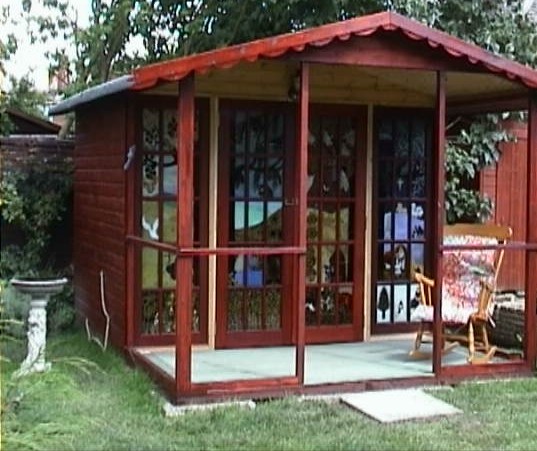
In the year 2000 I retired exhausted from full time working, and spent a year seeking ‘sanctuary’ from a life so busy that it had overwhelmed me. Being too ill to go anywhere, my sanctuary had to come to me, so my wonderful husband built me a summerhouse at the end of the garden where I could find some healing peace.
It was 3metres by 4metres made of solid wood lined with tongue and groove pine panels with a waterproof, pitched roof and 4 doors. Each door had 12 glass panes and I was inspired to paint them with glass paints.
At the time I was reading “Landmarks”, An Ignatian Journey, by Margaret Silf and the book inspired me to consider my faith journey. Knowing that the Domain in Lourdes has been the most formative place in my faith life, and thinking (wrongly) that I might never be well enough to go there again, I decided to reflect its importance in my summerhouse. Each door would have a depiction of the grotto and of water included, as well as images that I love.
I chose the 4 seasons as my theme and decided to paint the doors Spring, Summer, Autumn and Winter. Before the doors were hung I measured out 4 pieces of wall lining paper and sketched my designs
for each door. I used trees, laburnum, wisteria, maple, holly, bending towards each other to form arched shapes. I then drew images from nature related to each season, mice, hedgehogs, robins and anything else that came into my mind. Once the paper design was complete I stuck the paper onto the back of each door and drew over it straight onto the glass with ‘tube lining’. This dries quite quickly so then I started to paint!
I am not an artist so the result was very primitive, but because the glaze comes in such beautiful colours, the overall effect was stunning.
Once the doors were hung we laid electricity cables to the summerhouse so that we could light it from inside or out. This meant that at night we could see the stained glass effect shining down the garden from the house. If I was in the summerhouse on a sunny day with the doors shut, the stained glass effect cast coloured light all over the inside of the summerhouse. If I was in there at night I sometimes turned off the lights and lit candles to gain a different effect.
This was my sacred space, my sanctuary, my still point, my little bit of Lourdes and I loved it. In my summerhouse I looked deep inside my self; I wrote my life story; I restored my spirit; I emerged a different person.
Sadly, I had to move home 3 years ago, and I could not take my summerhouse with me. But I have the photographs and I just have to think of it to find a beautiful stillness.
Glass-Painted Summerhouse Doors My sacred space in winter
Winter Glass-Painted Summerhouse Door
Spring and Summer Glass-Painted Summerhouse Doors
Glass-Painted Summerhouse doors My sacred space in summer
 Winter vegetables







































 Heavenhappens