Nature in Motion

My friendly long tailed tit landing

My friendly long tailed tit landing

This photo is a fluke but I love it.  I had been hoping to get a photo of my cheeky, but very friendly, fledgling long tailed tit as he pays his daily visit to my door.  I snapped quickly with my phone and this is the result.  It is literally as he is landing and it looks as though his feathers are screeching to a halt.  He is still learning how to fly after all ~ And I’m still learning about photography!

One of the things I love about blogging is communicating with fascinating people who enjoy the same things as I do.  Recently, through various posts, I have discovered that Sarah Longes who blogs “One Day at a Time” at Mirador Design, loves garden birds as much as I do. Recently we were conversing in the comments section about all the fledging birds we have in our gardens.  In mine there are robins, blue tits, blackcaps, blackbirds, pigeons, sparrows, chaffinches and a very cheeky long tailed tit.  This little bird is a bit of a rebel.  While all the others are happy to hop about under the apple trees or sit on the fence, this sociable little bird gets very close and personal on a daily basis.  His mother must despair of him. He shows no fear, but great curiosity, as he flies right up to my french windows and perches on the door handle.  He seems to enjoy watching me as I potter about the house and when I sit down by the window he stares straight into my eyes.  It truly is amazing and I have got so used to it that I look forward to seeing him now.  I will be really sad when he grows up a bit and flies off to pastures new. I promised Sarah I would take some photos of him so here they are.  They qualify in a post on ‘Motion’ as they show my little bird landing and getting ready for take off.  I love the blurred one as it literally caught him as he landed and it looks like he had to do an emergency stop!

My last group of photos are from a day out by the lake yesterday.  While my husband was enjoying his fishing I was amused by a family of ducks.  There was a mother and father and 9 ducklings which were obviously very young.  8 of them were very adventurous and wandered off all over the lake but one seemed quite nervous and often stayed very close to mum.  It was charming to watch so i took lots of photos of the ducklings in motion.

A Fresh Lead

As always I found this week’s photo challenge fascinating in where it leads me.  If you manage to read to the end I think you will be as amazed as I was!

The word ‘Fresh’ immediately led me to photographs I had taken of my adorable granddaughter picking fresh fruit and vegetable from my garden.  I love to do this in season and then cook with the children, soups, pies and crumbles.

But then yesterday was rather special in many ways, not least a solar eclipse!

It was also officially the first day of Spring yesterday here in the UK; a fresh season with fresh delights.  This is when I switch from sauntering through the Gloucestershire countryside seeking out snowdrops, to heading for the Herefordshire borders hunting out wild daffodils.  The best place to see these beautiful fresh flowers is in what is known locally as the ‘Golden Triangle’, namely the villages of Dymock, Kempley and Oxenhall.

wild daffodils native to the golden triangle

wild daffodils native to the golden triangle

I have mentioned before that snowdrops were picked commercially by the local women and children of Sherborne to be whisked off by train to London and sold for 6d a bunch in flower markets like Covent Garden.  Similarly, daffodils were picked commercially in the golden triangle.  You can read about the daffodils and see some beautiful photographs on the Glos Oracle website if you would like to know more.

And enjoy this poem by A. A. (Alan Alexander) Milne (1882-1956), famous for his stories about Winnie the Pooh and Christopher Robin, Tigger, Piglet and the rest, who wrote that, ‘winter is dead’ in his poem Daffodowndilly

Daffodils in my garden

Daffodils in my garden

She wore her yellow sun-bonnet,

She wore her greenest gown;

She turned to the south wind

And curtsied up and down

She turned to the sunlight

And shook her yellow head,

And whispered to her neighbour:

“Winter is dead.”

As is often the way on my days out I got totally sidetracked and ended up in a fascinating little place called Upleadon.  Named after the river Leadon, this is a small village with a fascinating history and some superb buildings.  But what struck me as I drove over the hill in glorious sunshine was what looked like snow covered fields in the distance.  As I got closer I realised it was actually a vast expanse of farmland covered in polytunnels.

Having explored, investigated then googled I discovered that Upleadon has been a fruit growing area for hundreds of years.

Cider orchards were cultivated next to many of the farmsteads including Middletown before 1700. In 1627 a garden was known as the cherry hay and in 1678 an arable close was called perry grove field.In 1739 it was reported that Thomas Hammond’s estate included several thousand fruit trees from which one tenant had made 100 hogshead of cider in a year and in the late 1770s it was said that the fruit from orchards in Upleadon made excellent cider. Among orchards planted in the corn fields by the early 19th century were several of squash pears and in leasing Lower House farm in 1817 the landowner James de Visme reserved pear but not apple windfalls. Both apple and pear trees were also cultivated at Middletown which was one of the farmsteads with its own cider mill.

(Victoria History of Gloucestershire XIII, draft text by John Juřica: © University of London 2011)

I was really struck by the juxtaposition of the ancient church of St Mary the Virgin which has a thousand years of history, and the really modern cultivation methods.  It appears that polytunnels have caused some controversy as they can be rather unsightly when they cover large areas of farmland.  However, as a consumer I have to say I am delighted that I can buy (or pick) fresh local strawberries, raspberries, gooseberries, Victoria plums and blackcurrants from mid-June to August and different varieties of apples and pears from September to Christmas.  An added bonus is that growers use much less herbicides and insecticides on fruit grown in polytunnels as they are not as prone to rot or disease.

Church of St Mary the Virgin, Upleadon

Church of St Mary the Virgin, Upleadon

Now here is the bit that just took my breath away literally and gave me a fresh lead in my family history search.

As I was searching online for the history of Upleadon I came across a fascinating document held by the Gloucestershire Archives.  It was the file of documents re: Thackwell Roche estate.  The former Roche estate at Aghada (in county Cork, Ireland) came into the possessionof the Thackwell family in the second half of the 19th century.  The Thackwells were related to the Roche family of Trabolgan.  Another document describes how the Thackwell Roche estate comprised Norman’s Land estate near Old Rock, Dymock, (here on the Gloucestershire/Herefordshire border in the Golden Triangle) as well as lands in Ireland.  Believe it or not my great grandfather William Roche was the son of James Roche and he comes from that very area.  I have searched for years for information on his family.  I know his mother died when he was young so his father remarried and took his new wife and the other children to America in the second half of the 19th century.  William, being 15 was old enough to join the Royal Navy as a boy sailor so he was left behind.  he joined a training ship, HMS Conwy in 1855 and spent the next few years rising through the ranks.  By 1861 he was sailing on the Victor Emmanuel, and thereafter he sailed the China seas on tea clippers as First Mate.  He never saw any of his family again and I have searched for clues as to their home and their destination.

Who would have thought that a trip to take photographs of daffodils in Gloucestershire would throw up a fresh lead for me to follow in the archives.  It is just amazing and I am thrilled.

Poets Paths

Early Bird

Reward 10

This early bird got more than one worm!


Goodness this weeks photo challenge was a nightmare for me.  I’m often awake early but the thought of getting out before dawn with a camera or anything else for that matter is anathema to me.

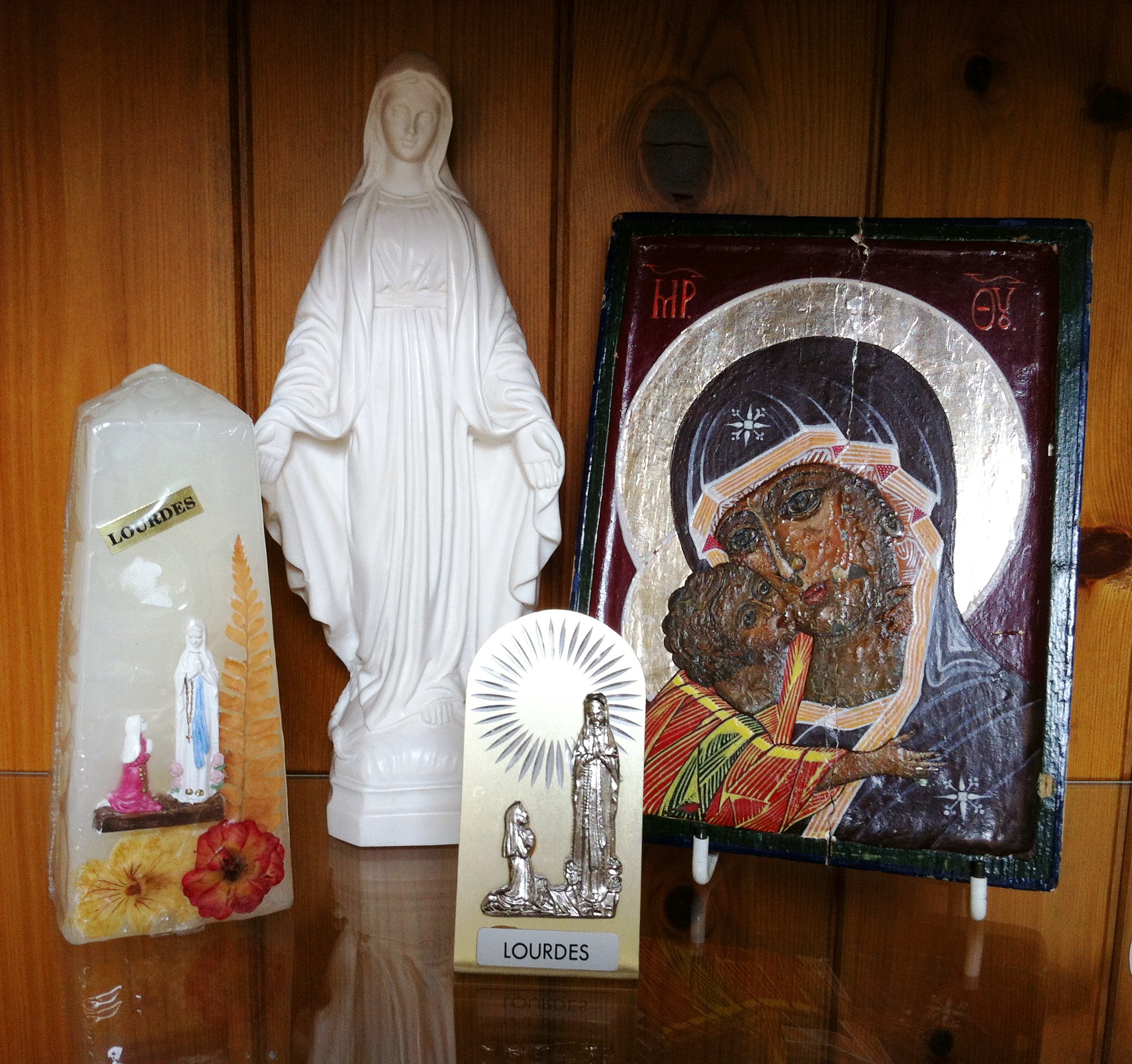
There have been times of course when travelling, that early starts have been enforced.  You can read about my trips to Lourdes or America by clicking the links.  But I am really an evening person.  I would happily do housework at midnight or write poetry and my journal at 2am.  But I don’t really come back to life before 8.30 in the morning.

However, I did make a special effort just for the challenge and was rewarded, not by a visual revelation as it was quite dull, but by the dawn chorus of birds.  There was an owl hooting plaintively in the woods over the road and countless little birds singing their hearts out in the bushes in my garden.  I know their song is just a warning to competitors to stay away but it does sound delightful.  I wish you could hear it!

5.20am from my front window

5.20am from my front window

I did however want to make my day worthwhile by taking more photographs so I am posting photographs of the early apple and cherry blossom in my garden.  A bit of a cheat I know but I hope you enjoy them.  We are having a wonderful spring, warm, sunny and dry so the blossom is perfect.

A blur of exotic dancing


Ann Blagdon at WI

Ann Blagdon at WI

When I saw that the prompt for the weekly photo challenge was the word ‘blur’, I was instantly transported back to a dance festival I attended in Russia some years ago.  It was the most amazing experience and included traditional dance from various ethnic groups which have settled in Russia over the centuries.  There was Greek dancing as well as Armenian, and both were wonderful.  But the most memorable was the cossak dancing.  With their boots, blousy shirts and billowing trousers, the dashing cossaks perform a truly acrobatic dance full of jumps, kicks and bends.  They really are a blur and photos are hard to take.  However, I have some super photos of a dancer that I watched closer to home.  Her name is Ann, and she gave up her day job to pursue the art of Egyptian Belly Dancing.

Ann came to our WI and gave a fascinating talk about the history, myths, legends and meanings associated with this type of dance.  She also told us about the costumes and how “Belly Dancing” got its name.  Her fascination with the dance started when her Lebanese friends in London inspired her to find a teacher.  She was learning classical Indian dance at the time. Over the last twenty years Ann has perfected her craft and she is now a very talented dancer as well as an inspirational teacher.  When Ann dances it is spellbinding, beautiful, graceful and charming. Every movement is significant and tells a story.

Her costumes were ravishing, colourful and exotic.  To cover up she wears the traditional Egyptian Galabeya.  She buys her costumes when she attends the Soukh or market at the Egyptian Hafla or party.  Most of her costumes are made in Thailand or Turkey.  According to Ann, Egypt is considered the birthplace of belly dancing, but there are variations in different regions.  She certainly takes her dance seriously.  In order to get to know and feel the spirit of the dance, she spent time living in a Bedouin tent in the Sinai desert!

She is an amazing woman and a beautiful dancer so I have picked her to illustrate this week’s post.


The Ephemeral and Ethereal Quality of Childhood

Rosie's 3rd Bithday Rosie’s 3rd Bithday

This photo captures a fleeting moment so fulfils the brief for this week’s photo challenge.   The definition of the word ‘ephemeral’ is ‘fleeting, transient, short-lived’,  and for me that epitomises childhood.

This is a photo of my granddaughter at her third birthday party, which was 6 years ago.  The blurred quality expresses the fleeting nature of childhood I think; so brief it is to be treasured.

But it also brings to mind the word, ‘ethereal’, and captures what I think and feel about children in general, and my grandchildren in particular.   Children are such precious, fragile things; innocent, trusting and dependent.  They seem to belong to another, more heavenly world.

The light shining on Rosie gives the photo a deeply spiritual quality for me.  It reminds me of the beautiful poem, Desiderata written by Max Ehrmann 1927

She is just one tiny child, but ‘she is a child of the universe, no less than the trees and the stars’, and she has a right to be here.  Like every child she also has other rights:~ to love, shelter, health, education, equality, protection, and to be treated with humanity, respect and compassion.

I worked with children all my life but now that I am retired my time, energy and funds are limited.  However I have found one small, local charity with minimal administration costs that punches well above it’s weight in working with children who are less fortunate for one reason or another.  It is called Hands Around the World and I would urge you to click on the link, find out what they do, and see if there is anything you could do to support their work.  Or look them up on Facebook if you are a member.


Travel; Dymock Woods, Gloucestershire and the wild Daffodils

I finally managed to get to the ‘Golden Triangle’ I mentioned in a previous post to see the wild daffodils, also known as Lent Lilies. I got some lovely photos and had a wonderful time but because of heavy mud I couldn’t get deep into the woods and fields. However I can recommend Eddie Oliffe’s blog for his beautiful photos. My much less dramatic ones from the weekend are above!

eddieolliffe's avatarEddie Olliffe's Blogspot

Dymock Woodsare made up of 17 separate woodlands on the UK’s Gloucestershire and Herefordshire county border, close to the Forest of Dean. Probably the best known of these woodlands is Shaw Common, registered also as a special ‘seed-stand’ (where acorns are collected in the autumn for use as seedlings) for the Sessile Oak, one of two species of oak tree native to Britain.

Around Eastertide each year, these woodlands are the scene of intense visitor activity as people come to view surely one of the most beautiful – and increasingly rare – sights in Britain; the diminutive and lovely wild daffodil. These were once relatively common in damp woodlands and undisturbed grassland. The countryside around Newent, Ledbury and Dymock constitutes such an area, known locally as the ‘Golden Triangle’ containing as it does large numbers of these exquisite little daffodils. Nowadays loss of habitat and cross…

View original post 146 more words

Glorious Gloucestershire

I have written about the Gloucestershire poet, FW Harvey before but today I was reminded of him strongly when I visited Hartpury, which is the village where he was born on 26th March 1888. Harvey was a contemporary of the great War Poets, Siegfried Sassoon, Wilfred Owen, Ivor Gurney and Rupert Brooke; indeed he became a close friend of Ivor Gurney and his fellow composer Herbert Howells while he was at King’s School in Gloucester before the First World War.

As I have written in a previous post, Will Harvey fought in the trenches of Flanders in that horrific war and was a prisoner for some time.  As I wandered through the churchyard of St Mary the Virgin in Hartpury on this idyllic afternoon in beautiful Spring sunshine, I couldn’t help but think of him.  How dreadful it must have been for Will and all the other young men to leave their homes and be transported to a living hell in the trenches.  No wonder Will Harvey wrote so fondly of Gloucestershire and the beautiful English countryside, as in this moving poem.

After Long Wandering:
I will go back to Gloucestershire,
To the spot where I was born
To talk at eve with men and women
And song on the roads at morn.
And I’ll sing as I tramp by dusty hedges
Or drink my ale in the shade
How Gloucestershire is the finest home
That the Lord God ever made.

I’ll drink my perry and sing my song
Of home and home again,
Pierced with the old miraculous pleasure 
Keen as sharpest pain;
And if I rise to sing on the morrow
Or if I die in my bed,
‘Tis all the same: I’ll be home again,
And happy alive or dead.

I went to Hartpury to see the Bee Wall or shelter that was moved some years ago from Hartpury College to the graveyard at the village church.  It was in a dreadful state the last time I saw it, but now it has been beautifully restored to its original state.  It is a truly unique structure built by a bee-keeping stonemason named Paul Tuffley in the mid19th century, using  locally quarried Cotswold stone.  The bee shelter was meant to house wicker hives or skeps in which the bees would lay down their honey.  It is incredibly decorative with carvings on both sides.  7.3 metres long, 2.5 metres tall and 75centimetres deep, it has 28 sections or ‘boles’ for the hives or ‘skeps’ to go in.

Today there were just 2 skeps in the boles but there were plenty of bees buzzing around the beautiful churchyard.  According to the Domesday Book, Gloucester paid 12 sesters, or 24lbs, of honey every year to King Edward.  And in 1260 it is recorded that tenants from Hartpury Manor held land in return for payments in honey.  So bee-keeping has been a feature of Gloucestershire life for a very long time, and still is.

I hope you enjoy my photos of the Bee Shelter which I took today and find it as fascinating as I do.

Wall ~ Weekly Photo Challenge

The cheek of this little Blue Tit!  I thought he was building a nest in my house wall but actually he was just helping himself to my cavity wall insulation to feather his nest in a nearby tree!

This week’s Photo Challenge is a great one for me living in the Cotswolds as one of the defining features of our area is the ancient dry stone walling that lines the sides of roads and divides fields.  In the 18th and 19th centuries there was a law passed called ‘The Enclosures Act’, which literally required areas of land to be separated or ‘enclosed’.  In the Cotswolds plentiful supplies of stone meant it was cheaper to enclose the Cotswold fields by walls than to plant hedgerows.  Although there have been stone walls here since Neolithic times most of the walls we see today are from the last 300 years.  But there are some magnificent buildings around which have stood for much longer, including churches, pubs and grand houses.

The ‘Oolitic’ limestone found in the Cotswolds is from the Jurassic period about 150 million years ago,  This was a time when dinosaurs roamed over the earth.   There have been periods when most of the Cotswolds was under water and some fascinating fossils have been found during quarrying for stone.  There is evidence that people have lived and worked in the Cotswolds since prehistoric times, with Iron Age Forts and Neolithic Barrows having been excavated by archeologists.

The Cotswolds is a huge area that stretches over the counties of Gloucestershire, Oxfordshire, Wiltshire, Worcestershire and Warwickshire.  It is defined by gentle hills, rolling pastures where sheep graze, and deep wooded river valleys.  The stone is of different shades from warm gold to deep grey depending on where it is quarried.  It also has different qualities, the best being used to build some exquisite houses that will stand for hundreds of years.  I have often written about the beautiful unspoilt town of Painswick, which has some of the best preserved Cotswold stone buildings around.  Parts of the church date back to the 1300s and there are holes in one wall reputedly made by cannon balls fired during the English Civil War.

I could go on and on about the beauty and history of the Cotswolds but as this is a photo challenge, I will just add some photos!

Some very old Cotswold stone buildings

Next the beauty to be found in dry styone walls and beyond them.

The next two photos show the walls of the Tower of London during the recent installation called Blood Swept lands and Seas of Red. which I wrote a blog about previously.

And lastly some pictures of walls which appeal to me.  You can read captions by hovering over the photo or read about the wall painting on the ivy covered church here

Punchy Pops of Orange ~ Weekly Photo Challenge

Oh my goodness this Weekly Photo Challenge was fun but it was really hard not to overload the gallery.  I have countless photos of Autumn trees, Icons and Flowers which would have fit the theme, but I was a bit ruthless and just picked a random selection.  I hope you like them.  I do know that the amber ship is an atrocious photo as it was taken through a shop window but I did so crave that ship that it had to be included!

Reward ~ Weekly Photo Challenge

I enjoyed this Weekly Photo Challenge!

Fry's Five Boys

Fry’s Five Boys

I was what was known as a sickly child in the 1940s and 50s.  It turned out that I had Rheumatic Fever which left me with a variety of problems and no appetite (how times have changed!).  Because of this I was often unwell and my mum would get me Lucozade and a bar of Fry’s Five Boys Chocolate with Five Centres.  I guess it could be called a reward because 60 years later I remember every sensory detail!

Five Centres was produced from 1934 to 1992.  It was similar to today’s Fry’s Chocolate Cream in that it had a dark chocolate coating, with fondant inside.  But instead of peppermint cream there were five different flavoured fondant centres. In the early days they were strawberry, orange, raspberry, lemon and pineapple, all of which I loved.  In later years coffee, lime, and blackcurrant replaced strawberry, lemon and pineapple but I don’t remember ever having those.

The wrapper was deep blue and it had what looked like 5 boys’ photos on it.  But really they were just one boy in a sailor suit who was photographed with five different facial expressions.  The photo was taken in 1885 and the boy was called Lindsey Poulton.  He was, appropriately, 5 years old.  His father and grandfather took the photos and Fry’s chocolate company in Bristol paid them the considerable sum of £200 for exclusive use of the set.  The photos appeared in adverts and in shop windows for years.  As my grandfather had a little general store in Newcastle on Tyne in the 1950s the enamelled metal sign on the outside wall was very familiar to me.

I’m very grateful to pocketbookuk for explaining the facial expressions and I would urge you to take a look at their fascinating blog.

The five faces of Fry’s Five Boys chocolate on an enamelled metal sign. Desperation – no chocolate, Pacification – the promise of chocolate, Expectation – the prospect of chocolate, Acclamation – happiness at receiving chocolate, and Realization – eating the chocolate, and discovering that it is a Fry’s milk chocolate bar!


I can’t really leave out a couple of photos of my grandson and his rewards.  He is such an active lad, 11 now and always busy so he is used to getting rewards for his labours.  He is a boy scout and his uniform is covered in the badges he has earned.  He also plays football for his school team and a local team.  He sometimes plays in goal and is often man of the match, receiving cups and plaques as his reward.

Being a nature lover I have to include a few photos of rewards in the natural world.  Firstly there is Jock, the silver backed gorilla who lives in a family of 6 at Bristol Zoo and is a very popular animal.  He is so magnificent and such a good role model for his youngsters that he deserves lots of fruit as his reward.

The robin created a grand residence in a large plant tub in my garden.  He and his made laid one egg then disappeared.  I was really worried that they had abandoned their nest with this egg in it.  But weeks later they returned and more eggs appeared.  Apparently this is quite normal and the first egg hatched out with the others which surprised me.  I was so pleased to see the robins back that I overcame my squeamishness and rewarded them with a daily quota of live mealworms.

The beautiful carp was the first fish I ever caught ~ reward for my hours of patient fishing

Lastly the basket of apples were a reward for finding a beautiful open orchard in a church yard.  No-one seemed to be collecting these gorgeous fruits so i helped myself to as many as I could carry after checking with the vicar!

I have to say one of my favourite rewards after a day out is a whippy ice cream.  I share this passion with my husband and grandchildren!

Reward for walking all day in the heat at Bristol Zoo

Reward for walking all day in the heat at Bristol Zoo


A beautiful sight but a terrible day! What an understatement…

I recorded a TV programme this week entitled “Cosmonauts: How Russia Won the Space Race”, because it is a subject that intrigues me.

I find Russia fascinating:  The architecture, music, language, iconography, culture, and history, are all so different from what is familiar to me.  It appears exotic and intriguing.  I have been lucky enough to visit different parts of Russia several times and it never disappoints.  You can read about these visits by following these links to previous blogposts.

http://wp.me/p2gGsd-ne  http://wp.me/p2gGsd-p2  http://wp.me/p2gGsd-pp  http://wp.me/p2gGsd-m9

The reason that this particular programme appealed to me was because of something I stumbled upon during a visit to St Petersburg in 2003.   But before I explain, do let me tell you a little about my trip to this fabulous city.

By rights I should not have been in St Petersburg at all!  President Putin was meeting the leaders of the G8 and the European Union countries for a summit meeting and to celebrate the city’s Tercentenary.  Apart from VIPs, dignitaries and invited pop stars like Paul McCartney and Elton John, no foreigners were supposed to go to St Petersburg during the celebrations so that Russians could take pride of place.  Of course I didn’t know that when I made my arrangements!

St Petersburg is built on land reclaimed from the sea and made up of 101 islands linked by canals.  Its unofficial symbol is, appropriately for a great shipping port ~ a ship, while Russia’s symbol is an eagle.

The city has changed its name several times since 1703 when it was built by Peter the Great.  During the First World War it was called Petrograd.  It was here that the October Revolution started when a cannon was fired from the battleship “Aurora” ~ accidentally I was informed.  I saw the ‘Aurora’ which was still on the River Neva.  In 1924 after the death of Lenin the city was renamed Leningrad.  Then in 1991 after Perestroika, the first democratically elected mayor of the city, Anatoly Sobchak, returned the city to its original name of St Petersburg.

Many of the people in St Petersburg live in communal apartment blocks.  Indeed the first place I stayed in was a tiny flat in one of these buildings.  It was reached by going off the main street, behind some shops and up a very dark and dingy staircase to a door which, like all the others, was padlocked, chained and reinforced with steel! Not quite the self contained apartment I was expecting!  But as I went to put my cases away it got worse – I found a strange old man sitting on a dining chair – in the wardrobe!  This is the absolute truth.  I never found out why he was there and I moved out as soon as I could.

Despite this I found St Petersburg as a city incredibly beautiful.  I was there during the period of the “White Nights” when the sun never really sets and the night is as light as daytime.

I was spellbound by the beauty and grace of the canals, rivers and bridges; I was overawed by the beauty of the churches, the cathedrals, and the mosque; I was impressed by the well-kept parks and gardens; I was overwhelmed by the sheer scale and grandeur of the architecture; And I was mesmerised by the Hermitage and countless other museums stuffed with cultural treasures. To me St Petersburg seems to have the best bits of London, Rome and Bruges all rolled up in one great city.

The Hermitage Museum is of course world famous for its outstanding collections which cover every aspect of art, history, geology and culture. I was overwhelmed to see Rembrandt’s masterpiece, “Return of the Prodigal Son”.  This painting is huge and it was placed just inside a vast room but facing double doors so that as the visitor steps into the room through the doors, it seems as if she is stepping into the painting to be welcomed and forgiven by the loving father.  It was truly an emotional experience.

Having asked a Russian friend to rescue me from the tiny flat with the ‘lived-in’ wardrobe, I stayed in a luxurious apartment block next door to where Alexander Pushkin, Russia’s best-loved poet, lived and died after being shot in a duel.  Daily I walked up and down the worn stone stairs which Pushkin himself would have climbed.  I also visited the flat where Fyodor Dostoevsky lived and wrote Crime and Punishment.

By default I got to enjoy St Petersburg at its best with a full programme of activities planned for the 300th anniversary.  The Festivities started in earnest during the last week in May, the 27th being the official birthday, and continued throughout June.  Celebrations included a parade of ancient ships on the Neva, folk festivals, sculpture projects, orchestral concerts, fireworks on the river, sailing competitions, sports events, laser shows, a carnival procession, and art and history exhibitions.  Most of the events were outdoors and free!  There were new gardens being planted with countless trees, and rose bushes specially bred to withstand the very low winter temperatures.

Huge stages were erected in Palace Square for Alexander Rozenbaum and Elton John’s concert, and while I was there Paul McCartney and his then wife, Heather Mills, arrived to launch a new children’s charity.  Very appropriately Heather Mills announced she was expecting her first baby!  Sir Paul also received an honorary doctorate from the University.

Now to get closer to the point of my blogpost I will tell you about my visit to the St Peter and Paul Fortress where the first stone was laid for the foundations of the new city.  It was a memorable visit in many ways.  Firstly, I didn’t realise until I saw the blue and white flag flying on the fortress, that St Andrew is the patron saint of St Petersburg as we’ll as Scotland!  This fascinated me, especially as I know that our St George is also the patron saint of Moscow!  It’s a small world isn’t it?

The weather was also very memorable, as there was the most amazing storm while I was at the fortress.  Following a lovely start to the visit in glorious sunshine, there was torrential rain, thunder and lightning, then hailstones to follow!  I got soaked to the skin and took refuge in a deserted low building,  a sort of museum that was unknown to my Russian friends, and was not advertised or publicised in any way.  It turned out to be a real gem full of information, photographs and technology about early space exploration.  It was the actual building where the solid and liquid fuels were first developed for the rockets which enabled space travel.  Inside this museum, which surely would have been secret until very recently, we saw the actual Sputnik artificial satellite and all the technology that went into developing it.  I was amazed by how small and cramped it was.  There was also a display dedicated to Laika, the first dog to go into space and the preserved bodies of Belka and Strelka, the first two dogs who survived being in orbit.  Among many other fascinating displays of capsules, docking vehicles, probes, rockets, and space shuttles, there were the remains of the Luna and Soyuz spacecraft, and a display about Yuri Alexseyevich Gagarin (1934-1968) who was a Russian cosmonaut and the first man to orbit the earth, in 1961.  There was also the actual St Petersburg flag that had been on the Mir Space Station for 161 days.  The flag was returned to earth in time for the tercentenary.

Sadly there was no printed material about this museum and we were not allowed to take photos or film so it was just another wonderful moment to drop into the bottom of my memory.  But the thing that struck me most and has puzzled me since, was that it displayed in great detail the co-operation that had existed between the USA and USSR since the early days of space exploration.  I always thought that there was deep rivalry between the two superpowers but it seems there was actually a lot more co-operation than people generally knew.

So I watched the programme and it was confirmed!

I learned that rockets were being built as early as the 1930s but it was the 1945 Hiroshima bomb that kick started the Russian drive to build a rocket as a weapon because they felt threatened.  The Russian Sergei Korolev was part scientist, part engineer, part manager of the project.  By 1957 he had developed the R7 rocket which was 9 times more powerful than the Hiroshima bomb but hopeless as a missile because it was too big, too heavy and too slow.  But it was kept for space exploration which was Korolev’s passion.  In October 1957 this rocket would carry and launch the first satellite to orbit the earth.  It was named Sputnik, which means ‘fellow traveller’.  It travelled at 18000 miles an hour and beamed radio messages back to earth.  Nikita Kruschev was president of USSR as it was then and he asked Korolev to develop and launch another satellite for the 7th November holiday.  To everyone’s surprise this was Sputnik 2 and it carried a passenger, the ill-fated stray dog Laika.  Although she had a capsule with food and water, the cooling system failed and poor Laika died of overheating within 6 hours of take-off.

By 1961 a man was prepared to be launched into space.  As everyone knows, his name was Yuri Gagarin and he must have been incredibly brave.  It took him just 11/4 hours to circle the earth.  His re-entry was alarming with flames rushing past the windows and a burning smell in the capsule followed by ejecting at 7000 metres above the earth.  However he landed, off target but alive, and he became a world hero.

In 1965 another satellite, Voskhod 2 was launched by the R7 rocket, this time with two men squeezed into the capsule.  Once in orbit around the earth one of the cosmonauts went through the air lock and drifted in space 500km above the earth.  He was almost lost as his space suit expanded due to the greater air pressure inside it.  His hands and feet were tingling and he knew he would not fit back through the air lock unless he took drastic action. So risking being starved of oxygen, he had to release air from his suit and get back into the raging hot air lock as fast as possible.  He did it but lost 6kg in that one day through sweating.  On the return trip the cosmonauts again had to eject and landed in a forest where they had to wait for 2 days to be found ~ no GPS or mobile phones then!

Unfortunately things started to go badly wrong in USSR after these triumphs.  The genius Sergei Korolev died in 1966 aged 59 after a routine operation.  In 1967 the cosmonaut, Vladimir Komarov, in Soyuz 1 was killed on re-entry. Yuri Gagarin was killed in a plane crash in 1968.  And in 1969 an explosion wrecked the N1 rocket and the entire launch complex.  The worst disaster happened in 1971 when 3 Russian cosmonauts were asphyxiated on re-entry due to a technical failure.

Meanwhile the USA was forging ahead realising a successful moon landing in 1969.  This was a great achievement but did not lead to further exploration, whereas the USSR was working towards manned space stations where people could live, work and carry out research in space.  By mid 1980s the first permanent orbital station was ready.  It was called MIR which was taken to mean peace, world or village; but actually “the word “mir” referred to a Russian peasant community that owned its own land”.   On MIR cosmonauts could live and work for over a year.  In 1991 as the MIR space station orbited successfully overhead the USSR disintegrated here on earth.  Money for the space programme was cut, indirectly causing another near disaster.  The cargo ship bringing supplies to the MIR space station crashed into it knocking out the electricity.  For a while the cosmonauts observed the sheer beauty of countless stars, polar lights and a spectacular aurora, from a position of the total darkness and absolute silence that can only be found in space.  One of the astro-physicists on board that day was an Anglo/American called Michael Foale, who recently retired.  In the TV programme he repeated the comment that it was “a beautiful sight but a terrible day”.  After this the MIR space station was abandoned to its fate and it burned up eventually when it re-entered the earth’s atmosphere after 15 years orbiting the earth.  It is amazing to think that over 100 cosmonauts or astronauts, male or female, from 12 different countries visited MIR.  MIR brought together two superpower adversaries from a long “Cold War” and taught them how to co-operate.  Mir also showed that we can live and work in space if needs must.  Men and women of courage can overcome terrible problems, and survive life-threatening situations by working together.

The International Space Station ISS, was launched in 1998 to replace MIR.  This is a collaboration between the USA, Russia, Canada, Japan, Italy, France, Germany, Belgium, Netherlands, Sweden, Brazil, Malaysia, South Africa, South Korea and Spain.

I don’t pretend to understand the work that is done on this space station, and I may be very naïve, but I do think that this peaceful collaboration can only be a positive thing.


Weekly Photo Challenge ~ Rule of Thirds part 2

Weekly Photo Challenge ~ Rule of Thirds part 2

I am still learning about this Weekly Photo Challenge ~ Rule of Thirds and it has made me go back over some old photos which I love to see if they fit into the rule.  I am finding it hard but maybe if I draw the grid on some clear cellophane I could put it over my photos and judge them that way.  I guess it is going to take some time to learn to see with a photographer’s eye but I am enjoying learning from all the brilliant photographers on wordpress.

Visual of the Rule of Thirds

Visual of the Rule of Thirds


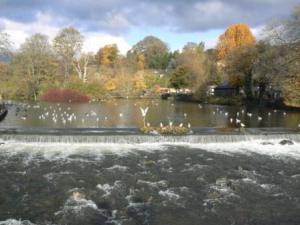
Weir at bakewell in Yorkshire

Weir at bakewell in Yorkshire

Deer at Dyrrham park

Deer at Dyrrham park

Black faced lambs in the Cotswolds

Black faced lambs in the Cotswolds

Memorial to the Unnamed Soldier near Red Square, Moscow

Memorial to the Unnamed Soldier near Red Square, Moscow

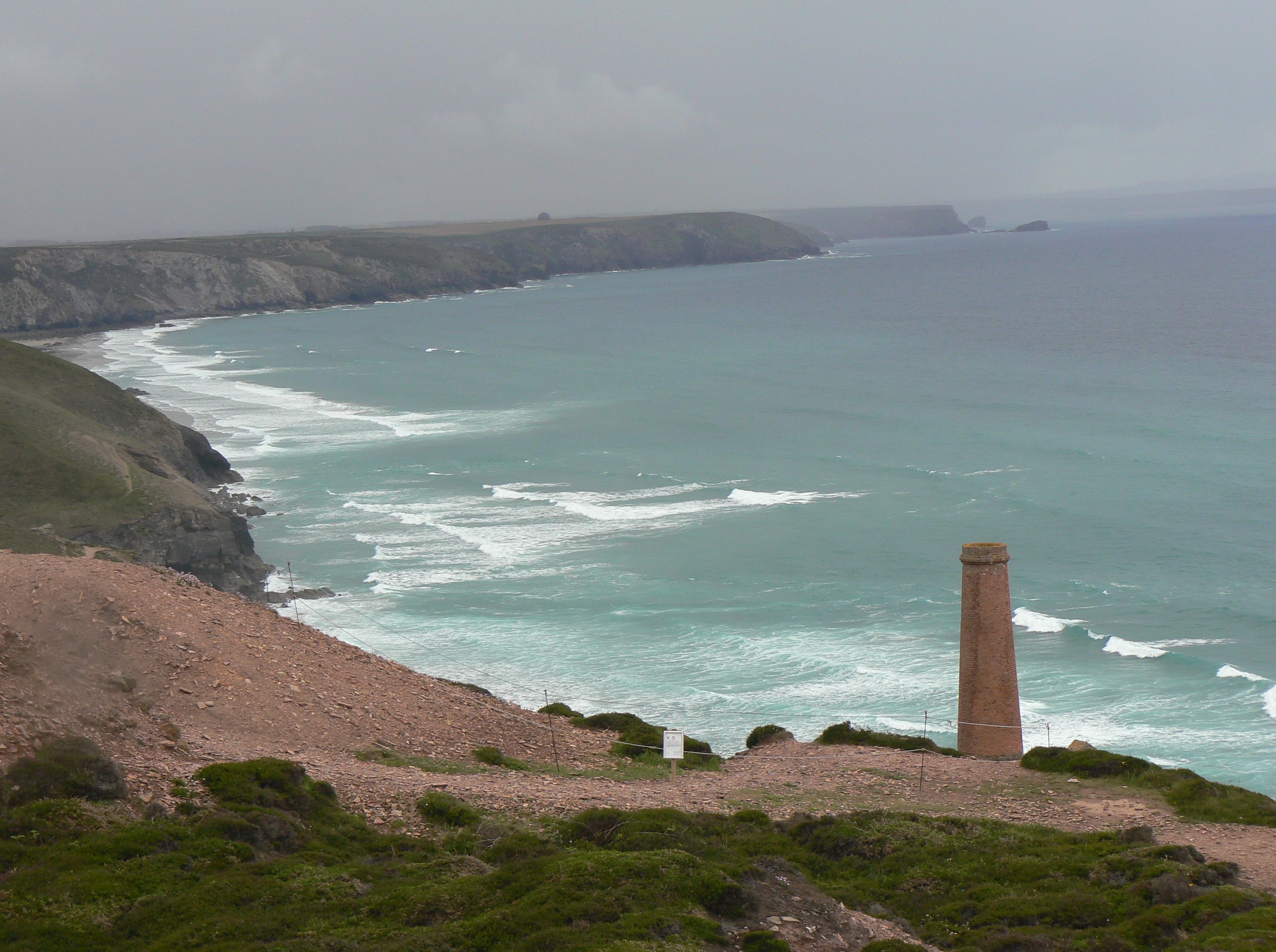
Storm Clouds Gather over Wheal Coates

Storm Clouds Gather over Wheal Coates

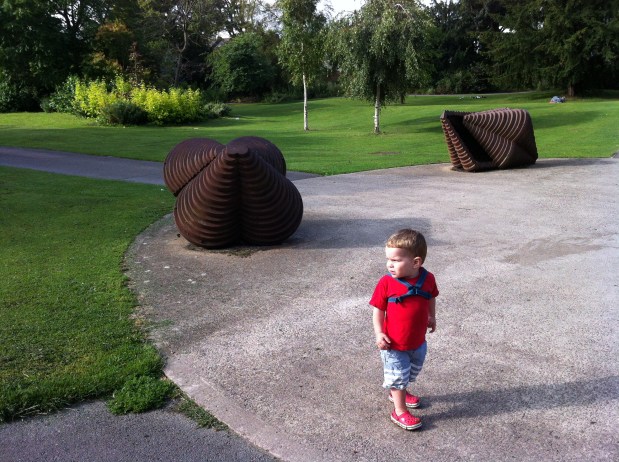
grandson in Sandford Park

grandson in Sandford Park

Feeding the geese at Mary Arden's House

Feeding the geese at Mary Arden’s House

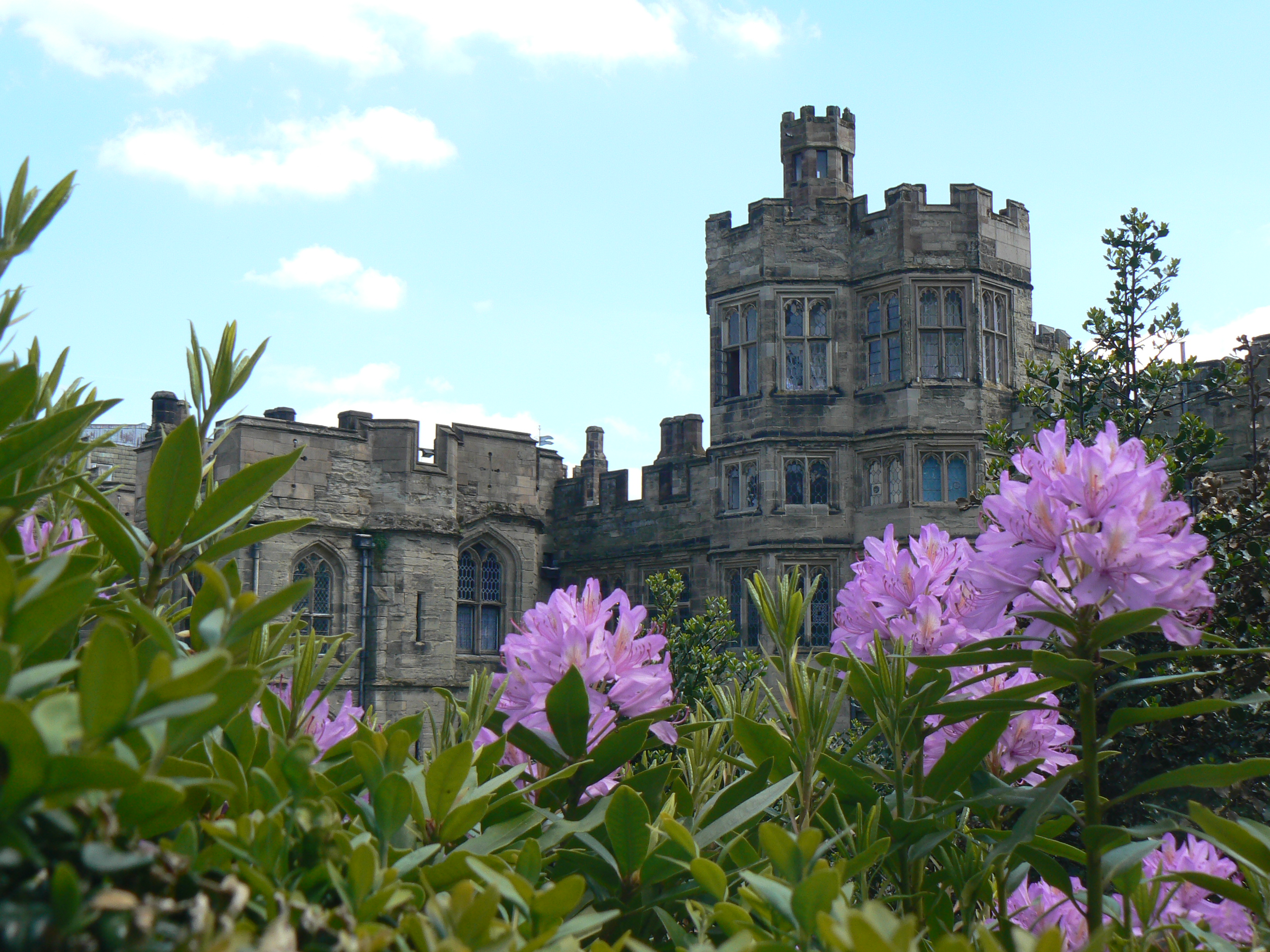
Rhododendrons at Warwick Castle

Rhododendrons at Warwick Castle

Sunsets over the sea  at Findhorn, Scotland

Sunsets over the sea at Findhorn, Scotland

Wet and Windy in Wiltshire

Weekly Photo Challenge ~ Rule of Thirds

Ben and Rosie set out on a treetop adventure

Ben and Rosie set out on a treetop adventure


This week was half term for the local schoolchildren.  As often happens, the weather, which had been mild for February, decided to turn nasty, wet, windy, and very cold.  Now I know from my daughter who is snowed up in Vermont that we have nothing to moan about in the Cotswolds, but I did feel sorry for the families who had planned to have days out during the holiday.  As I take my grandmother duties very ‘seriously’, I had planned all sorts of exciting things to do with my own adorable grandchildren.  There are lambs being born at the farm park, there is a baby rhino at the wildlife park, and the woods are full of snowdrops.  Oh what fun we could have ~ if it would only stop raining!  Undeterred we opted to go to Lydiard Park early to see if we could have some fun.

Having never been there before I decided to let the SatNav direct me.  This caused great hilarity as I had set it to stay off the motorways and we ended up on some of the tiniest country lanes with the weirdest names.  We made up a game of seeing who could find the funniest or strangest name.  I kid you not we found a house called Tadpole cottage, at the end of Tadpole Mews, in Tadpole Lane in a place called Tadpole Garden Village!  It is a new village built on the site of… you guessed it…. Tadpole Farm!

At last, and in a very cheerful mood, we reached our destination.  Lydiard Park is a beautiful historic estate in Wiltshire.  Back in medieval times, there was a deer park and manor house on the land as well as St Mary’s Church.  The estate as we see it today dates back to Elizabethan times and was owned by the same family for over 500 years until 1943.  There is a beautiful Palladian House, the medieval church and a restored walled garden, set in 260 acres of parkland.  In the grounds there is a lake, woods, sweeping avenues which are great for walkers and cyclists, and a superb ice house.

Despite the rain we had a great time.  The children braved the treetop adventure course which has over 50 hair-raising activities including zip wires, cargo nets, Tarzan swings, see-saws, rocket slides, wobbly logs, and tree trekking.  We warmed up and drip-dried in the café drinking hot chocolate before setting off to take photos of the snowdrops and the ice house.


I wanted to use my photos for the Weekly Photo Challenge but I really am not sure that I have the skills.  I could blame the weather, or my iphone camera but really I just haven’t understood the Rule of Thirds.  I took some photos of my garden hellebores and tried to crop them to the rule of thirds. Did it work?  Do let me know how I could improve.


Symmetry

Weekly Photo Challenge Symmetry

Happy Valentine Day

Happy Valentine Day

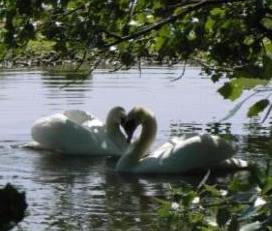
As I am posting this on valentine’s day I decided to use a photo I took in Dorset.  I was at the Abbotsbury Swannery on Chesil Beach and it was a wonderful experience.  The photo is not brilliant but it captures a beautiful moment shared with two swans that have mated for life.  Ahh x x x

I’m also quite partial to a few other photos taken a while ago showing symmetry of sorts

All Lives Matter

I was very moved this morning by the news that over five thousand people had gathered yesterday for the funeral of the three students who were murdered on Tuesday in a brutal attack at Chapel Hill, North Carolina.  This is on top of the three thousand who attended a candlelit vigil for them on Wednesday night.

I didn’t know these young people, but they were clearly much loved and respected by their community.  The people who did know them best, their friends, relatives and fellow students, describe them as inspirational, happy, caring people.

Deah Barakat, aged just 23, was known for his charitable work and volunteering which inspired others to do the same.  Yusor Mohammad Abu-Salha  was his 21 year old wife and they were described as very much in love and recently married.  Razan Mohammad Abu-Salha was Yusor’s sister and was devoted to the couple.  She was only 19.

A neighbour has admitted killing them apparently.  How and why someone could do such an awful thing is beyond my comprehension.   Maybe he is mentally ill.  Maybe he is evil.  Maybe he was jealous of their youth, happiness and popularity.   Or, maybe he was prejudiced because of their religion, they were Muslims.  Whatever the reason, he is in the minority of wicked people who are destroying our world, and our ability to live together with peace, justice and compassion.  And today the world is a sadder place because of his actions.  As John Donne said in his famous poem

“Each man’s death diminishes me, for I am involved in mankind”

But the crowds of people who gathered to pay their respects and honour their memory are, in my opinion, the normally silent majority who, though usually powerless to make change, are prepared to stand in solidarity when something is clearly wrong.

This is the mark of a caring community and a civilised society.

It is up to each individual of whatever age or background to decide whether they wish to be anti-society, or part of the silent majority who want to make the world a better place for all; not just for the people who look, think, dress and act like themselves.

I would ask today that we think about it.  And, in recognition of the tragedy that has befallen these lovely young people and their families, let us all do something, however small, to make our bit of the world a better place; a place where everyone is respected for their humanity, and is treated with dignity.  Find someone who needs your kindness, a child, a young parent, a teenager, a troubled adult, a carer, a frail, disabled or elderly person, and give them your time and attention.  Listen to what they are saying and make them feel that they are valued.  That their lives, however different matter to someone.


No man is an island,

Entire of itself.
Each is a piece of the continent,
A part of the main.
If a clod be washed away by the sea,
Europe is the less.
As well as if a promontory were.
As well as if a manor of thine own
Or of thine friend’s were.
Each man’s death diminishes me,
For I am involved in mankind.
Therefore, send not to know
For whom the bell tolls,
It tolls for thee.

John Donne

http://gu.com/p/45nm4

http://www.theguardian.com/us-news/2015/feb/13/thousands-funeral-muslim-students-north-carolina-shooting

https://embed.theguardian.com/embed/video/us-news/video/2015/feb/12/chapel-hill-vigil-muslims-north-carolina-university-video


Scale

Fascinated by the photos on the Weekly Photo Challenge, I thought I would join in this week.  The prompt is ‘scale’ and I just had to post a photo of scale model of a hare.

In recent years there has been a spate of large scale ceramic or stone objects appearing in towns and cities of the UK. Having mentioned it to my daughter last night I know that they have been seen in the USA too. The first time I came across it was when my grandchildren, Ben and Rosie went to London and were photographed alongside large colourful elephants. Wallace and Gromit were in Bristol recently too.
Next I heard of a Gorilla festival in Torbay and Exeter. There was also a festival of decorated horses in Cheltenham in honour of the races. Then it was 5 foot tall hares in Cirencester.
Why hares you might wonder?
Well Cirencester was a very important place in Roman times. It was called Corinium and had very good road links to the rest of the UK, such as Ermin Way and the Fosse Way. In 1971 during an archeological dig in Beeches Road near to the River Churn, a Roman mosaic was discovered depicting a hare. The original is now on show in the Corinium Museum.  Hence the theme of hares for the festival. There were about 50 hares around the town. Most of them were 5 foot tall and decorated by local people including schoolchildren, members of the public, celebrities and artists. All of the large hares were named to reflect their sponsors.  One of the most beautiful hares, named Tess, was on display in the Corinium.

Here are some of the others for you to enjoy ~

Am I the ‘lunatic fringe’?

Alex Polizzi says I belong to the “Lunatic Fringe”.  Little old me?  Really?

I’ve been called many things in my time, drama queen and nervous wreck spring to mind and I hold my hands up to both.  But this week I fell into a whole new category ~ the Lunatic Fringe!

Now if you know me, or think you do from reading my blog, this may come as a bit of a surprise, so let me explain.

I watch very little television as a rule, although I have to say currently I am spoilt for choice.  I could not miss Wolf Hall, Broadchurch or Mr Selfridge!  I am also tempted to watch anything with George Clarke, the restoration man in, as his beautiful Sunderland accent reminds me of my Geordie roots.  Another presenter I admire is Alex Polizzi.  She is the sort of feisty, intelligent, successful, call a spade a spade businesswoman/celebrity, I enjoy watching.  On her programme she goes into failing businesses, be they hotels, cafés, shops, or entertainment venues, and gives practical help and advice on how to turn them around.  It makes for fascinating TV.

This week Alex visited a children’s play barn.  These are the sort of places I frequent with my grandchildren when it is too wet for the park! Of course these businesses are not so popular in the summer when children can play for free out of doors.  I have to say Alex did not suggest the improvements which to me were blindingly obvious.  I would install air conditioning to make it inviting on hot summer days and dedicate an area to sand and water play with a whippy ice cream maker nearby!  It would be like going to the seaside but without the sunburn and crowded motorways.

Alex’s suggestions of course were practical, doable and great ~ new space-themed murals and paintwork, a much needed deep clean, and more nutritious, appealing and varied menu options.  I did think that with the owner’s love of baking he could have been a bit more adventurous.  My daughter makes wonderful little cupcakes for her son with grated vegetables or fruit in as well as mini tortillas packed with goodness.  They are so cheap to make yet much healthier than the sugary cakes and biscuits the owner was lovingly preparing.

It was then that Alex explained that ‘normal’ customers who are dissatisfied don’t complain, they just never return!  She said only the ‘lunatic fringe’ bothers to complain.  What?  Is this true? If so I am definitely a paid up member of the ‘Lunatic Fringe’.  Who knew?  Well just maybe Pets at Home, Greene King Inns, Gloucester Royal Hospital, the County Council and our local MP did.  These have all been the recipients of complaints from me over the last few years.  And, I have to say my complaints all achieved positive outcomes.

I could tell you about the explicit posters that were displayed outside our local pub advertising a ‘ladies night’ with male striptease.  My complaint was that children on their way to school would see these posters, which I think is inappropriate.  I also felt that a local pub was not the place for male strippers!  My complaint succeeded because the landlords did not have a license for this type of entertainment so the posters were removed and the event cancelled.

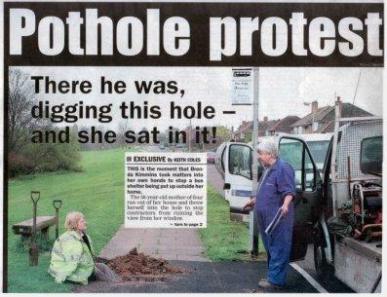
I could tell you about my rather embarrassing but successful run in with the council over their attempt to site a hideous green bus shelter right outside my front window. (Does that make me a NIMFY?)  I won’t go into detail about all of my complaints but if you read my blogpost Bus Stop Brenda you will get my drift.

If something is wrong in my opinion, I will usually write a letter of complaint in the hope that the person, company or service will put it right.  I am polite, I use nice cards or paper, and I often search the internet for the name of the person at the top who makes the decisions.  Is that lunatic?

My current grumble is with Sainsbury’s.  I dread to think how much of my hard earned cash has passed through their tills over the years.  I don’t have time to shop around, I never did, and so Sainsbury’s has fed my family and kept my household going for as long as I can remember.  But they are risking all this loyalty for points worth pennies, and vouchers which drive me insane.

I have a Nectar card with Sainsbury’s and for every pound you spend you get points ~ so far so simple.  You save up the points which equate to cash off your shopping.  But recently the value of the points has been halved.   You now need to jump through all sorts of hoops to get ‘bonus’ points or double points.  This just takes you back to where you would have been originally but they pretend it’s a great deal for the customer.  Next there are the confounded vouchers which come through the post or pour out of the till.  They are not just simple money off vouchers, they are date restricted, product linked or just for fuel.

I also get vouchers from Pets at Home, Waitrose and M&S, sometimes for food, or clothing, pet stuff, or for household goods.   It’s a nightmare trying to use them.

Nowadays, no-one calls me a domestic goddess, organised I am not.  I used to be.  When I was younger and working full time, a parent of 4 children with a dog and a cat to consider, I could manage to work efficiently for 60 hours a week, ferry my children to their various activities, attend to most of the domestic chores and provide nutritious food on a regular basis as well as keeping the animals happy, fed and exercised.  But since I retired my organisational skills have dwindled to the point where cutting out and collecting the relevant vouchers and actually taking them in my purse to the right shop for the specified items between the appropriate dates is totally beyond me.

Bemoaning this to a couple of friends who still qualify as domestic goddesses they advised me to:

  1. a) sort out vouchers into date order
  2. b) buy a plastic zippy pouch to keep vouchers in
  3. c) keep the zippy pouch with your purse in the reusable shopping bags
  4. d) take the bags, purse and pouch to the shops
  5. e) go through the vouchers at the checkout and present the relevant vouchers

So I tried this last week and failed miserably.  Going shopping with a 2 teenagers, a small child and a baby in a pushchair may have been difficult but it was a doddle compared to going shopping with a 6 foot hubby currently in a wheelchair, which goes something like this:~

  1. Convince hubby that shopping needs to be done
  2. Explain to hubby that he needs to get out of the house
  3. Find his shoes, coat, scarf, hat, wallet, hanky, drinks bottle in case he gets thirsty, sweets in case he gets dry throat
  4. prise hubby out of comfy rise and recline chair
  5. help him on with previously mentioned items
  6. use indoor, 4 wheeled mobility aid to get to front door
  7. use outdoor, 3 wheeled, foldable mobility aid to get to car
  8. help hubby into car
  9. put outdoor walker in garage
  10. get wheelchair out of garage
  11. fold up wheelchair and lift into boot
  12. drive to Sainsbury’s
  13. dodge the car washers who want to charge me £8 to put wax on my driver’s window with a dirty rag so that I can’t see out of it
  14. get wheelchair out of boot
  15. help hubby into wheelchair
  16. ask staff to unlock store’s mobility scooter
  17. help hubby into mobility scooter
  18. take wheelchair back to car, fold and lift into boot
  19. do the shopping, carefully adding a bit extra because we have vouchers
  20. find a checkout wide enough for mobility scooter
  21. unload all shopping onto conveyor belt
  22. look for reusable bags, purse and zippy pouch bursting with vouchers worth £12 and hundreds of nectar points
  23. Realise they are still at home on the indoor mobility aid
  24. Ask hubby for his wallet
  25. Pay for shopping
  26. Replay 1 to 18 in reverse order
  27. Go home and have a little cry

Now the end to this tale of woe is that I kept my receipt and went in the next day with the voucher for £12 off having fulfilled all the criteria, but the computerised till would not accept the voucher because it ran out at close of business the night before.  My complaint is that my shopping was done within the specified time so the voucher should be honoured.  What would Alex Polizzi say?  Would the shareholders of Sainsbury’s rather I acted like a ‘normal’ customer and just voted with my feet or would they prefer to get a letter giving them the opportunity to honour my voucher and keep my custom?

Answers on a postcard please …

pothole-protestjpeg

The simple song that spread around the world

Church at MariapfarrThere are some times, they are rare and they are brief but they happen, when the horizon between heaven and earth melts away and the future is changed forever. It is often those who have suffered the most who experience such revelations.   Their gifts are a profound peace, the knowledge that all will be well, and total clarity about the course they must follow.

I am sure that it was just such an experience that led a young man from a desperately poor background to create the world’s most popular Christmas carol. A carol which caused soldiers to come out of their trenches one Christmas Eve during World War One to share rations and gifts with the ‘enemy’ and even play a game of football together!

It was Joseph Mohr who wrote the words to Stille Nacht, (Silent Night).  He had a very inauspicious start to his life.  Born in Salzburg in 1792, he grew up poor and fatherless.  His godfather was the local executioner and his mother knitted to make a living.  But Joseph was a special boy.  He sang in the church choir and had a gift for music and poetry.  These talents were recognised and encouraged by the local priest who helped Joseph through school, on to university, then to work as a curate, and ultimately to train as a priest.

But times were hard in Europe during his early years.  As well as natural disasters such as flooding, which destroyed livelihoods and infrastructure; the Napoleonic Wars had seen Salzburg and the surrounding towns and villages devastated, occupied, bombarded, defeated and heavily taxed.  The ordinary people were suffering in 1816 when Joseph Mohr found consolation in the church at Mariapfarr.  There he was inspired to write the words to his carol.

It would be two more years before the carol was set to music by Joseph’s friend, the organist and choir director, Franz Gruber in Oberndorf.   They sang the carol together in German at midnight mass with guitars for accompaniment.  The aim was to bring the Christmas spirit of love, peace, comfort and joy to their community in these difficult times.  They surely succeeded then and ever since.

Joseph Mohr died penniless in 1848, having used all his earnings to provide education for the young and care for the elderly in his parish.  He would never know that his little carol would travel the world being performed over and over again.  It would be translated into over 300 languages and become the people’s favourite Christmas carol nearly 200 years after it was written.

Now that is a legacy to be proud of!

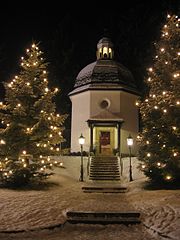
Silent Night Memorial Chapel in Oberndorfhttp://www.youtube.com/watch?v=aGA6djLsDgs

Snowdrops

At last the snowdrops, hellebores and crocuses have made an appearance in the Cotswolds where I live. Rather than repeat myself I will reblog my post about them here

heavenhappens's avatarHeavenhappens

Thanks to reading one of my favourite blogs I remembered that the flower of the day is the snowdrop. I already have snowdrops and hellebores appearing in my garden as the weather is so mild here so I thought I would repost some of the photos I have taken of these flowers in the past. I live near the Rococo gardens at Painswick, a place I have blogged about several times. According to The Independent Newspaper in 2008,

The Rococo Garden has one of the largest naturalistic plantings of snowdrops in the country and is in many ways the spiritual home of Galanthus Atkinsii.

Although many believe the Romans introduced snowdrops they are more likely to have been brought to England in the early 16th Century. Galanthus nivalis is native to a large tract of mainland Europe from the Pyrenees in the west, through France and Germany to Poland in…

View original post 55 more words

2014 in review

I would like to take this opportunity to thank everyone who has read, liked or commented on my posts throughout 2014.  I wish you all a very happy, healthy, inspirational and creative 2015.  Here is my end of year report compiled by WordPress!

Here’s an excerpt:

The concert hall at the Sydney Opera House holds 2,700 people. This blog was viewed about 15,000 times in 2014. If it were a concert at Sydney Opera House, it would take about 6 sold-out performances for that many people to see it.

Click here to see the complete report.