Trying to relax
I hear the blackbird singing
Balm for my spirit
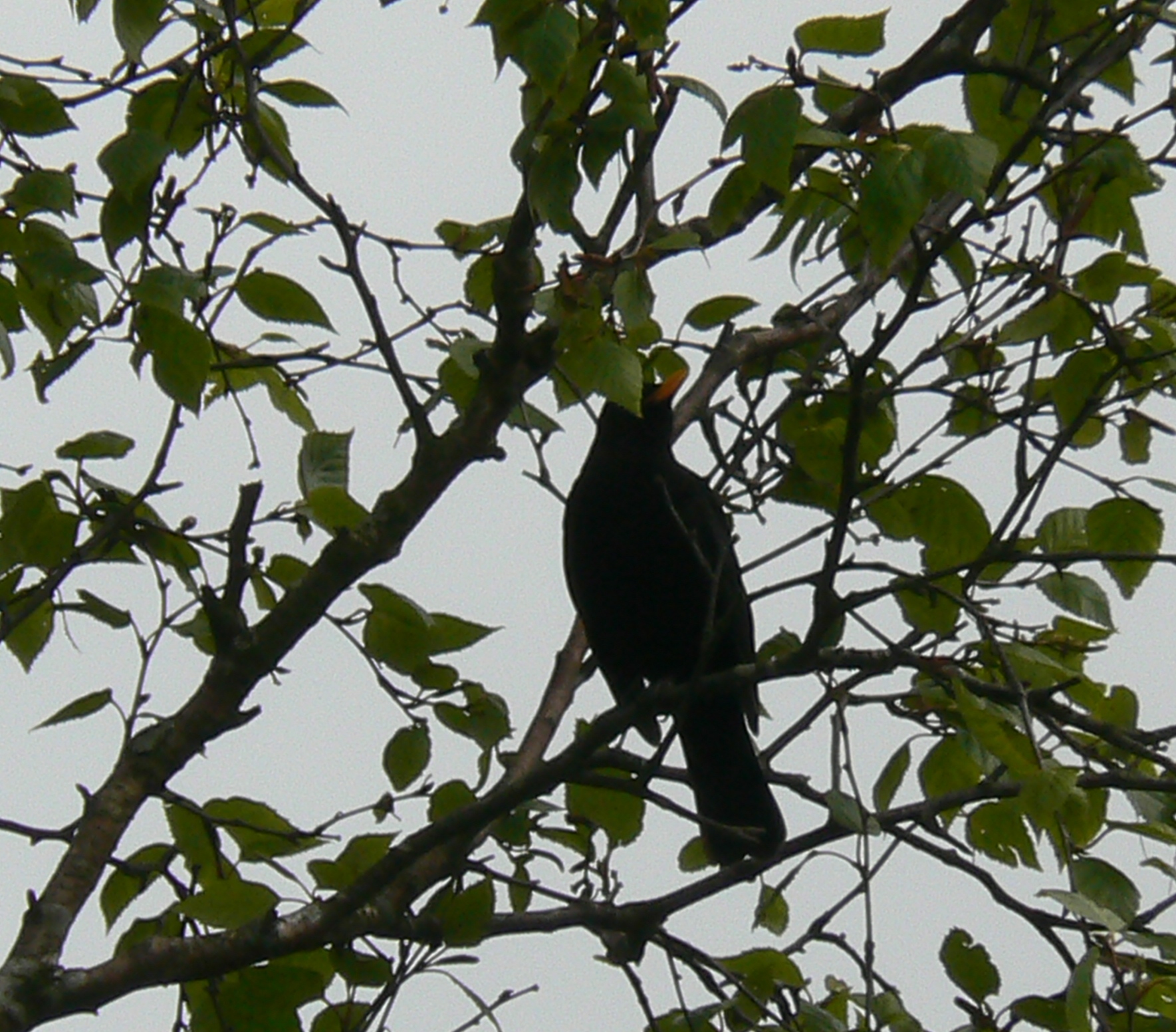
Trying to relax
I hear the blackbird singing
Balm for my spirit
I went to a memorial service today for a young man of 36 whom I used to teach. He was a beautiful soul who saw through life’s shams. One of his tributes was from his brother who remembered him saying
“you know bro the trouble with the world is people love things and use people, and we are meant to use things and love people”. I was deeply touched by this and some of his poetry. I have reproduced one of his poems here for you as a tribute to him.
I believe in magic
©Ashley Cassin
Notes from Ashley. It’s about everything in life being connected, containing spirit. From the trees to the flowers to the birds & the bees to you & me to the stars in the sky & the one that keeps us alive, I’m trying to explain that peace & harmony is love or love is peace & harmony or love is god or god is love, I believe it as I write & this whole world could benefit from not abusing love (calling it their own ) as it is in so many differing ways, what if love is the energy of life, & people are fighting -killing for it, then it becomes the opposite of what it is. We should always be thankful, accepting, respecting everything everybody. we’re all individuals, but we’re all just atoms in this energy, so why can we just live with it.
Pebble path leads me
Blue blossom bursts into bud
Garden glows anew

Blue bush is blossoming
Wow I am overwhelmed! One of the great blogs I follow has nominated my blog for an award! I am so excited and however humble the award it is great to know someone enjoys my writing enough to nominate me. It means so much to know that someone is reading and enjoying my musings. So thank you!
I have been nominated for the One Lovely Blog Award, by http://merlinspielen.com
8 things about me
1. I like to eat caramel in any shape or form.
2. I am addicted to Sudoku.
3. My old and much loved camera goes with me everywhere.
4. I am secretary of Benhall WI www.benhall-wi.org.uk
5. I love creating soups and casseroles and I contributed to a Cookbook.
6. I have 3 of the most beautiful daughters in the whole world and a handsome son.
7. I love wine but can’t drink it!
8. I live in the Cotswolds which is awash with blossom at the moment.
Here are my nominees for the One Lovely Blog Award:
I know the last 2 are cheating but really I can’t get enough of the New hampshire Writers’ group – everyone on it is worth following!
Thank you MerlinSpielen I really appreciate the recognition X
Journaling my Journey
Some years ago when I was feeling very low, my daughter sent me a copy of The Artist’s Way by Julia Cameron. I started writing ‘morning pages’ as Julia suggested. It was just 3 pages of stream of consciousness words, whatever came into my head. Sometimes, if words just would not come, I drew sketches.
I used to get up very early in the morning anyway as I was finding it difficult to sleep. So before I listened to the radio, read the paper, did Sudoku, filled in a crossword, switched on my computer, or had any distraction or outside input I would write my morning pages. I did this religiously (interesting word) every day for the weeks and months that followed. I did not read the pages back and I did not show them to anyone. In fact if I was really down I would wrap the pages round with Sellotape and hide them in a cupboard, figuratively locking away the pain that was revealing itself on the pages.
The Artist’s Way is of course a 12 week programme for creative discovery and/or recovery. However, apart from the urge to draw little sketches alongside my pages I did not discover any hidden artistic talent during those 12 weeks! Nevertheless, I continued writing my morning pages and taking myself off on ‘artist’s dates’ for another couple of years, and my depression lifted.
In Autumn 2011 I saw an advert for a course at the Isbourne Foundation on “The Artists’s Way”. Knowing how much I had enjoyed following the book, I was intrigued and inspired to sign up, which I did. There I met tutor Dr Lesley O’Neill and joined a small group of women whom I immediately felt connected to. So I read the book again and inspired and encouraged by Lesley and the group, I discovered to my joy that I did have some creative talents. Poetry popped up, Haiku hurtled out. I dabbled in drawing, played with Plasticene, discovered Zentangles, started writing stories, and carried my camera everywhere I went. Now, I wrap my pages in pretty ribbon, not Sellotape, and I save them in a beautiful turquoise box with doves all over it. I now live the Artist’s Way. I am part of a small local community of creative and inspiring women and my life is transformed. With them I am free to be myself and express myself, with no pretensions, no explanations and no alibis required. There are never enough hours in the day for all I want to do. I have several writing projects on the go including newsletters, travelogues, competition entries, children’s stories, my blog, and of course my morning pages. But now I realise that they too are transformed into Journal entries. I realised this after seeing a recommendation for the book “Life’s Companion, Journal Writing as Spiritual Practice” by Christina Baldwin on the New Hampshire Writer’s Group blog www.nhwn.wordpress.com that I follow . I bought the book and look forward to continuing my journey of discovery ~ discovering myself!

Rapeseed field ripening in the Cotswolds
There are some things that are just too sad to write stories about and so I write Haiku.
Scored in syllables
Sharp shards of sorrow spill out
solaced by sharing.
One of these is the auction of of my parents’ possessions, relics of my past. The setting was ironic ~ an old school, and the weather was in tune with my feelings ~ the heavens hurling their hurt on the deserted playground.
The timing could not have been worse, viewing on what would have been my father’s 89th birthday. There is no happy ending here, a family stripped of its history under a hammer, and the grieving just goes deeper.

Some of the antique dolls mum lovingly collected over the years
I love doing affirmations and have used them for many years. My recent Hay House Radio show (Monday 30th April 2012) was on ‘The Power of Affirmations’, where I went into the science of how they work and their impact upon the brain and body.
Near the end of the show, I read out my Top-Ten list of affirmations and several people have since got in touch to ask if I could put them down on paper. So here they are:
My TOP TEN AFFIRMATIONS
1. I am grateful for all that I am, for all that I have, and for all that I experience.
2. I live each day with happiness and joy, trusting that only good things come to me.
3. I love and accept myself just as I am.
4. I love to cultivate thoughts that enrich my life and my relationships
5. I let go of blame and I speak my truth authentically – without judging myself or others.
6. I love to focus on the good things in my life and I love that doing this brings me more blessings.
7. I have the inner strength to handle any situation that I find myself in.
8. My mind and body are healthy and strong and I nourish them with my spirit, which is infinite.
9. I am flexible. I welcome changes in my life and adapt with courage and ease.
10. I allow myself to feel happiness and joy for no reason at all. Simply because I deserve it.
Why not write a list of your own? I bet each of us have a reservoir of untapped wisdom that only ever comes out when people need our help. Think of your list as advice for people who need it. 
Have you got a favourite affirmation?

A Trip to Torun in Poland ~ June 2004
On a chilly June morning we caught the National Express coach to Victoria with some friends from Global Footsteps. On arrival in London we caught the ‘Orbis’ coach to Torun in Poland. The bus was not full so there was plenty of room and it was very comfortable. The friendly hostess, Isabella, served tea and coffee and we had a pleasant journey to Dover where we caught the Ferry to Calais. The weather was lovely and we had an enjoyable crossing. The channel was unusually busy because it was the 60th Anniversary of the D Day Landings. Old soldiers were gathering for a memorial service.
We got back onto the coach and set off northwards through France, Belgium, Netherlands and Germany, crossing the River Oder at the Polish border town of Slubice. We were expecting long delays at the border but were astonished to be met by smiling customs officers who briefly checked our passports and waved us through with no problems. This is a very encouraging development since Poland joined the European Union this year. Already the scenery was fascinating me and the weather was beautiful. I noticed the narrow cobbled roads in the towns, the many shrines by the roadside in the country and lots of churches. There was an abundance of pine tree forests and masses of poppies on the verges. I was thrilled to spot a stag and a hare and then amazed to see storks in the fields and a flock of herons. We were travelling on Route 22 towards the city of Gdansk. We saw flats along the way that reminded me of Russia, and a huge river with men fishing. Petrol stations were Statoil and fuel was 4.0 zl, about 60p, I guessed for a litre. We saw agriculture everywhere – endless fields of crops with no fences; allotments with dachas like grand sheds; orchards; lakes and picnic spots; and miles of greenhouses and garden centres. We saw timber-framed houses and lots of new buildings, but we saw very little livestock. In Belgium and Germany we had seen herds of very healthy looking cattle but none at all yet in Poland. We saw big churches with round towers, Rapunzel-style, and the remains of old city walls were evident in many towns.
At Bydgostcz we stopped for coffee and met a Polish-Canadian-Scot who reminisced about D-Day, when he was 15 years old. He told us how he had been taken away from his village in Poland by the German occupying forces. They had forced him to fight for them. He was saved by the US troops who eventually offered to take him to the USA to start a new life. He had opted for Canada and eventually married a Scottish lady and went back with her to Scotland. He has now retired to Vancouver Island in Canada but visits Poland as often as he can.
On entering Torun we saw storks on huge nests on top of telegraph poles. When the coach stopped a friend was there to meet us. He took us to the TTCA building to rest and unpack before we met our group leader who treated us to a meal at Damroki restaurant. The food was delicious and we were entertained by an impromptu folk concert performed by groups from all over Eastern Europe, who had attended the Folk Festival in Torun earlier in the day.
Monday –At 10 am Ula (or Ursula), who is a professional guide, met us at the TTCA. Thankfully she speaks English very well, self-taught we later found out. She is going to give us a 5-hour tour of Torun. She was a mine of information and she showed us everything of interest in the old and new town. We walked miles until we were ready to mutiny so she took us to her favourite coffee shop. This was wonderful so all was forgiven. We drank a special coffee like Cappuccino with Pierniki sprinkled on top. Pierniki is gingerbread, which is the local speciality. Later Ula took us to a restaurant, which served pancakes and dumplings with exquisite fillings and lashings of strawberries and cream on top. We were a little puzzled, as they seemed to put savoury and sweet fillings all together and the portions were way too big, however it was very enjoyable. After our marathon walking tour we went back for a well-earned rest and shower before dinner.
We were amazed at the low prices of meals in Torun. It varies of course but it is possible to get a very good meal and a drink for less than £2. Coffee and delicious pastries with fruit and cream cost less than £1.40. Kodak films for my camera, which cost £4 in the UK cost £1 here and a loaf of freshly baked bread from the bakers cost about 23p. We just cannot imagine how the shopkeepers manage to sell their goods at these prices and still make a profit. We are worried that the cost of living may rise dramatically now that Poland has joined the EU.
Public transport is very reasonable here and accommodation is good. Rents seem very cheap at £75 a month for a 1 bed roomed, central flat. Big US hotel chains are moving in with high priced rooms but there are still bargains to be had for the traveller or tourist. We stayed at the Twin Town Association building, which is in the restored Burgher House and Tower of the ruined Teutonic Castle. The large rooms have been refurbished to a very high standard and we shared bathrooms and a kitchen as in a Youth Hostel in UK. It was comfortable and cheap and with fabulous views of the River Vistula from our windows it suited us very well.
Tuesday – Our guide met us at 8 am and rushed us off to catch the bus to the railway station where we caught a train for the 90-minute journey to Gniezno. The city is known as the cradle of the Polish state as it was in the Cathedral here that the first King of Poland, Boleslaw Chrobry, was crowned in 1025. We rushed to the Cathedral of the Assumption of the Blessed Virgin Mary and St Adalbert, founded 1000 years ago by King Boleslaw the Brave. Here we saw the famous bronze doors from 1175, which show 18 scenes from the life of St Adalbert. We also saw the statue of Our Lady of Gniezno and the sarcophagus of St Adalbert. St Adalbert was a Bohemian Bishop from Prague who passed through Gniezno in 997 on a missionary trip to convert the Prussians, a heathen Baltic tribe who lived in N E Poland. Sadly they didn’t want to be converted so they chopped his head off. King Boleslaw paid a ransom of his weight in gold for the body then brought it back to Gniezno and buried it in the Cathedral in 999. Pope Sylvester then canonised the martyr.
After this very short visit we rushed off to catch a narrow gauge train to Biskupin. This trip was organised as a treat and was a major highlight of the trip for me. Gorgeous weather and fabulous countryside edged with poppies, and white and purple wildflowers. Biskupin was besieged by children on school trips but was very interesting. It was a sort of Baltic Blists Hill, with characters in costume minting coins, chopping wood, firing crossbows and riding horses etc. The ‘iron age’ fortified town was built entirely of wood some 2730 years ago on the shore of a beautiful lake. It was subsequently disappeared under a peat bog where it was perfectly preserved until 1933 when it was discovered by accident. It is now a fascinating archaeological reserve and one time film set.
Wednesday – Another gorgeous day arranged for us by a local friend, Anya. We started with a bus ride to the bike shop where we hired bikes. It took an age to organise this because the shop appeared to only have huge mountain bikes, which were fine for the men but not for we 3 delicate and very fussy ladies! We ended up a very motley selection with B on an ancient ‘sit up and beg’ shopper complete with basket, dodgy gears and a mudguard; A on a man’s bike with sticky red handles and me on a junior BMX! After lots of giggles and false starts we set off for a 23 km round trip to Anya’s home for a barbecue. We cycled through the forest and past vast poppy fields and a bog seething with very vocal frogs. When we reached Anya’s home village of Lysomice we saw stork families on top of telegraph poles. Then we were treated to a super barbecue and lots of homemade blackcurrant drinks, some alcoholic and some not! We also met Killer the guard dog, who eats cucumbers, and had a guided tour of garden and greenhouses where Anya’s family grow tomatoes, cucumbers, fir trees and flowers to sell at the local Farmers’ Markets. The whole day was absolutely wonderful and we really enjoyed the cycle ride home to Torun. I was very proud of myself since I hadn’t been on a bicycle for 25 years!
Thursday – Today is the Feast of Corpus Christe and being a Catholic country the celebrations were massive so we had a free day in Torun. After the 9am Mass in the churches and 2 Cathedrals, the entire congregation left to process through the streets to the square where decorated altars had been set up. There were columns of nuns, altar servers, guides, scouts, priests, and rows of young girls in long white dresses and veils. They carried baskets of flower petals, which they scattered on the ground in front of the canopy covering the Priest and the Monstrance containing the sacred host. There was a military band leading the procession and a vehicle at the rear with loudspeakers amplifying traditional hymns. The processions came from all quarters to meet near Copernicus’ statue. There was a huge poster showing Pope John Paul 11 who visited Torun in 1999. A service was held here before the whole procession moved on to another square for another service. The crowd was huge and everyone was dressed in their ‘Sunday Best’. The windows and balconies of many houses and businesses were hung with posters, tapestries, candles, statues and mini shrines to celebrate the Feast Day. The Priests and altar servers wore white cassocks with embroidered or lacework chalice and host decorations. It was a grand occasion and a privilege to watch. It reminded me of May processions in the North of England when I was a child.
In the evening we visited the Fort and saw a huge fire on the horizon. We never did find out what building was on fire.
Friday – A very early start again today for the 7.45 bus to the railway station to catch the train to Malbork. The journey took just 2 hours so we arrived in time for a lovely cup of coffee in the shopping centre. Sadly when we came out the heavens had opened so we had to buy umbrellas. The rain was torrential but nevertheless we set off for Mary’s castle. This is reputed to be Europe’s largest Gothic castle and Poland’s oldest castle. It is so important that in 1997 it was included in UNESCO’s World Heritage List. It is situated on the Nogat River, an eastern arm of the Vistula River, which flows through Torun. It is a truly impressive and huge reconstruction. The castle was built in three parts (higher, middle and lower castle) by the Teutonic Knights, who called it Marienburg (Mary’s Fortress). The Teutonic Knights, a German order, were also called Knights of the Cross. Their commander in chief was called a Grand Master. They were crusaders who wore white robes with a black cross. The castle was started in 1276 and finished within 30 years. The Knights ruled from here for 150 years. It was the largest fortress in the middle ages, but the castle, like Poland, had a very stormy history being in the hands of various conquering armies then largely destroyed in World War Two. It is now in danger from subsidence. Inside the castle there are several notable exhibitions. There is a room full of tapestries and a room full of exquisite jewellery boxes, altars, crucifixes, artwork and jewellery all made purely from amber. There is also a bombed out church which has not been renovated due to lack of funds. This is breathtakingly poignant with its battered walls and statues, and the miraculously undamaged boss of the Mother and Child. The memory of the broken crucifix will stay with me always. This empty shell of a church was the most moving thing I saw in Poland and for me it illustrates the total pointlessness of war.
Saturday ~ Today saw us rise very early for a bus and train journey to Gdansk. The area was referred to a Gyddanyzc (Gdaniesk) or wetness in 999 in “The Life of St Adalbert. There was a settlement here as early as 2500BC and by the 13th century when the Teutonic Knights seized the city it was a major port and municipal centre. In 1454 the city broke free from the Knights and became a part of Poland. Over the next century there was incredible economic development in the city, which had a monopoly of trade in Polish grain. The city also became the largest town in Poland and a great centre for shipbuilding. 1580 to 1650 was a ‘Golden Age’ when artists and craftsmen settled here and the city became a centre of artistic and cultural style. In 1793 during the second partition of Poland the city was annexed to the Prussian state and underwent a long period of Germanisation, briefly interrupted by a period of French rule in 1807 to 1814. After 1850 there was another economic boom due mainly to the railways, the port and shipbuilding. In 1920 after WW1 due to the influence of the Britain the free city of Gdansk was created under the patronage of the League of Nations. However it then fell to the Germans in WW11 during which the Polish citizens of Gdansk were exterminated in concentration camps. Allied forces carried out air raids then the Soviet Russian troops almost destroyed the city and ruined its industrial base. After WW2 the Germans were expelled and thousands of new inhabitants set about rebuilding the city. I think they did a wonderful job as the city is incredibly beautiful. Peace did not last long though, because between 1970 and 1980 violent workers protests prompted great social and political changes in Poland. In 1997 the city ceremoniously celebrated the millennium of the visit of St Adalbert Slawnikowic, the Bishop of Prague who left Gdansk in 997 on a Christian mission to then still pagan Prussia. In 1992 and 1999 Pope John Paul 11 visited Gdansk.
We explored as much as it was possible to see in a day. We saw the shops, the churches and cathedrals, the memorial to the fallen shipyard workers and then caught a tram to the beach and paddled in the Baltic. It was a wonderful day and Gdansk is a place that everyone should visit. It is a city with everything in my opinion. It has history, culture, spirituality, beautiful buildings, wonderful people and a golden sandy beach. What more could anyone want.
 River Vistula in Torun


 As far as we can go – the seaside in Gdansk
  The Fort
  Mountain goats, Hinds Feet in High Places!
 Stork nesting on telephone pole


Lawned garden of grief
Compassion captured in stone
Focus for our tears

Jewish cemetery in Krakow
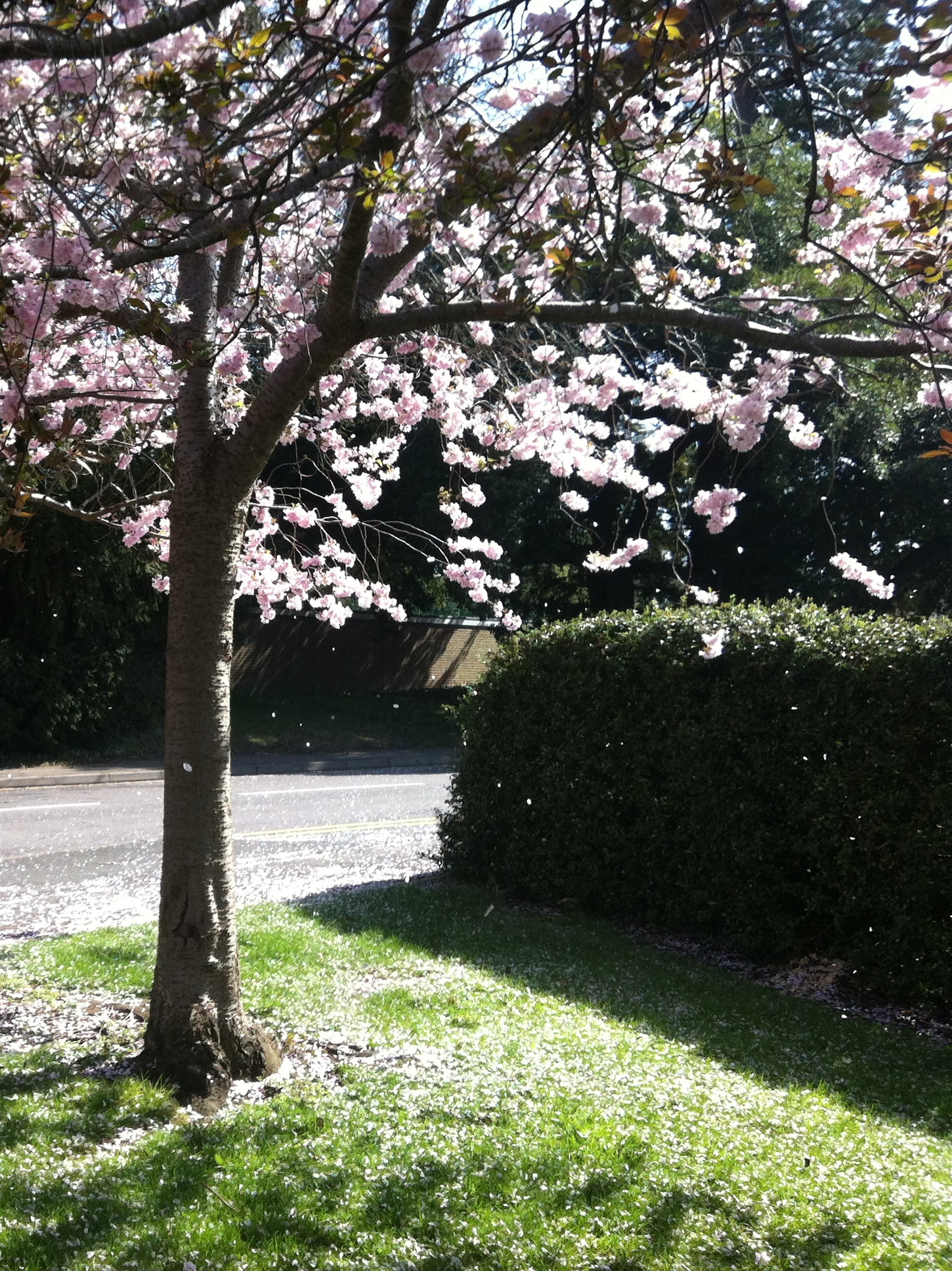
The Grave
Sandy patch of earth
No name, no stone, no flowers
Blossom weeps for him.
William Shakespeare was born on April 23rd 1564 and died on 23rd April 1616. 1964 was the 400th anniversary of his birth and I was living in Stratford on Avon, which was certainly the most exciting place to be at that time for a theatre mad teenager.
The highlight of my acting career had been the part of Mole in Toad of Toad Hall at St Gabriel’s Convent in Carlisle. Cardinal Heenan was the honoured guest in the audience. My part was memorable as it involved a tea party at Toad Hall. We had real cakes and biscuits. I had never seen those pink and white marshmallows with a biscuit base and coconut all over the top. I became so engrossed in examining and eating them that I forgot where I was and had to be prompted to continue my lines. “Oh, you silly ass, Mole”, as rat would say. But I think I got away with it. The Cardinal singled me out for praise afterwards, impressed by the realism I portrayed!
I moved to Stratford from the north of England in 1960, the same year that Peter Hall founded the Royal Shakespeare Company (RSC) and became Artistic Director at the theatre. Sadly the two events were not connected but our paths crossed over the next few years. At that time he was married to Leslie Caron and they lived on the Warwick Road near St Gregory’s Church. I was a teenager at the local girls’ grammar school, Shottery Manor, passionate about literature and especially Shakespeare.
In those days you could pay 4 shillings (20p) to stand at the back of the theatre in Stratford and watch the plays. From 1960 to 64 when I left school I think I saw every production, often going to the matinee and the evening performances. My all time favourite was King Lear in 1962 which I have never forgotten. Paul Schofield played Lear and a young and gorgeous Diana Rigg played Cordelia.
In 1964 when I was doing my A Levels I watched the full history cycle; Richard 11, Henry 1V part 1 and 2, Edward 1V and Richard 111. I became familiar with actors such as Roy Dotrice, Peggy Ashcroft, a very young John Hurt, and my hero David Warner. All the girls at school had a crush on him as he was so 60’s with his gaunt look and flowing scarf. We would hang out at the Dirty Duck pub by the river Avon, barefoot and with flowers in our hair, hoping the actors would pop in after the show, which they often did. I was such a regular at theatre events that I somehow got to know Peter Hall and Leslie Caron. I was asked to babysit once for the child of actor Tom Bell and his first wife when they were visiting the Halls. Tom Bell had become very famous for his part in The L Shaped Room in which he played opposite Leslie Caron. He and his wife were lovely and I was so sad to see that he died some time ago after a long and magnificent career.
1964 also saw the opening of the Shakespeare Centre where visitors could study every aspect of Shakespeare’s work. I was privileged to work there part time while at school and full time in the summer after I left. I loved it. For the centenary year there was a special exhibition with all the sights and sounds and smells of Shakespearean Stratford. As I remember it the plays were performed on a loop and the visitors could wander in and sit down to listen for as long as they wanted. To me it was heaven. I don’t think any exhibition since has bettered that experience for me.
Every year in Stratford there are celebrations for Shakespeare’s birthday but 1964 was spectacular. There were flagpoles put up in the centre of the streets leading from the theatre to the Holy Trinity Church where the bard is buried. Representatives from 115 countries of the world came to unfurl their flag at 11am. This was followed by a procession of dignitaries, townspeople and pupils from the two Grammar Schools, King Edward V1 school for boys, which Shakespeare himself had attended, and Shottery Manor, the school for girls. I was in that procession and will never forget it. After the church service and laying of wreaths at the tomb in the presence of Prince Philip, there was a festival on the Bancroft Gardens. Primary school children danced around maypoles and there was all the fun of the fair. It was a glorious day.
I still consider King Lear to be the greatest play ever written, and William Shakespeare to be the greatest playwright. It is almost 449 years since he was born and the celebrations will take place this weekend in Stratford. But they could never match those of 1964.
http://www.britishpathe.com/video/shakespeares-400th-anniversary-1
Shakespeare’s 400th Anniversary
Photos show a portrait of William Shakespeare, A photograph of my old school Shottery Manor, The parade through the town on 23rd April 1964 and a view of Bridge Street from the roundabout at the top.
July 1964 Click this link to show a class photo of our school leaving day,


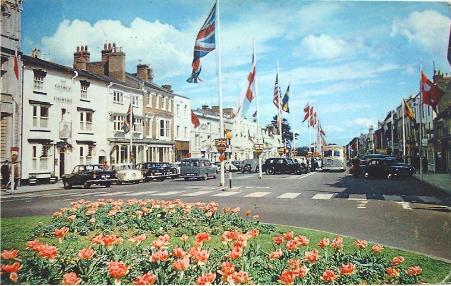
As it is National Poetry Month I thought I would write a Haiku. Traditionally the Haiku has 17 syllables divided into 3 parts, the first with 5 syllables, the second with 7 syllables and the last with 5 syllables. The Japanese Haiku is written in one long line whereas the English Haiku is written in 3 lines. Generally the Haiku is written about nature or the seasons and the words paint the picture in the reader’s mind. The Haiku should appeal to the senses and encourage the reader to meditate on the topic. Mine captures the moment the fishing ends ………..
Sun sets, fishing stops
Herons hover overhead
Fish glide into reeds

Under a fishing umbrella by the side of a lake in the pouring rain with husband and grandchildren, heaven happens. There is nothing quite so exciting as being at the mercy of the elements but safe! It appeals to our most basic human need for shelter and protection. All our needs are met. We are together, warm and dry and we have a picnic. We are relaxed and at peace. There is nothing we must do but enjoy ourselves. It is a precious gift ~ time to be. Grandchildren learn how to fish. They watch the fluorescent tip of the float marking the place where the line enters the water. The bait of sweetcorn gently drifts in the depths as we throw more corn in to attract the fish. And it does. The float waggles then dips down ~ a bite! Ben gets the landing net ready and Rosie slides the unhooking mat into place. The mat is clean and padded to protect the fish from injury or infection. Gerry reels it in and Ben slips the net into the water and under the fish, gently lifting it clear of the water. It’s heavy, maybe 8lbs. A beautiful mirror carp. It has a golden belly and silver scales along each side of the backbone. The hook slips easily out of its mouth with the help of tiny forceps. The children take a photograph of this beautiful creature then it is placed gently back in the net and returned to the lake. We don’t throw the fish back like the match fishermen. We let it rest in the net for a few minutes then tilt the net so it can swim out safely, unharmed.
The rain stops, ducks settle on the bank. The sun comes out to end the day on a glorious note. The match fishermen leave, but we stay to watch the sun go down. The sky glows golden and the lake glitters. Flies abound and the fish leap up to catch them. Bats swirl around silently. Then huge wings darken the sky as three herons appear over the tree tops. They dominate the lake as they swoop down and help themselves to a fish supper.
It is an amazing sight and all we can do is watch in awe, then write Haiku about it!
Sun sets, fishing stops
Herons hover overhead
Fish glide into reeds
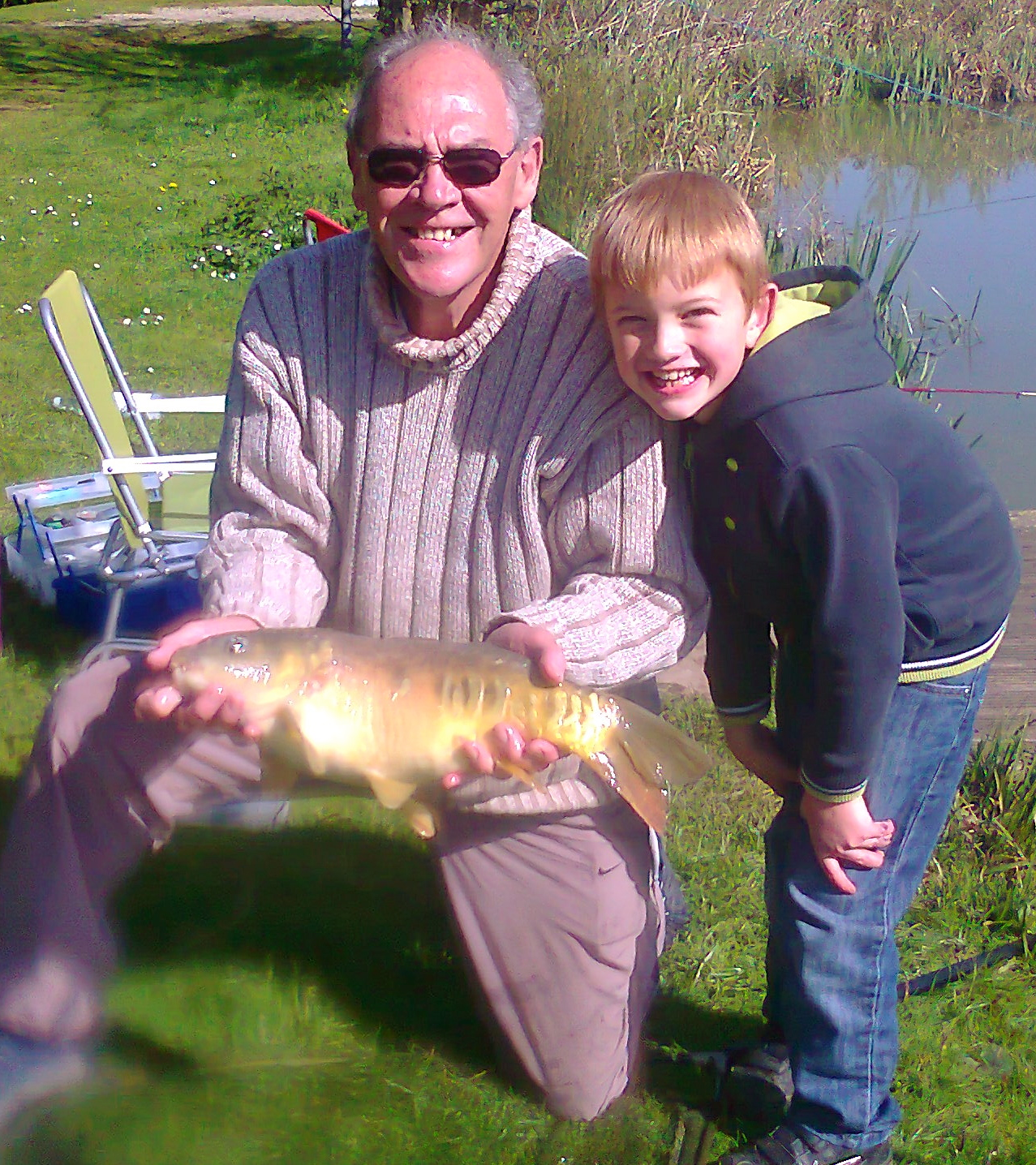

Grandad teaching Ben to fish, Rosie practising with a stick!

He’s got it!


Heron waiting for a fish supper
The town of Sochi stretches for 145 km along the picturesque Black Sea Coast of the Western Caucasus. It is in the Krasnodar region of Russia. Because of the sub-tropical climate, and being in an area of outstanding natural beauty, it has developed into a popular health resort and favourite holiday destination for people from all parts of Russia, and more recently, other parts of the world.
Sochi is not only a town of health and recreation, but also a town dedicated to peace and friendship.
Sochi is linked with several communities in other parts of the world. Being a spa town it was natural, if slightly amazing, for Sochi and Cheltenham to become twin towns, which they did many years ago. This link thrives still and there are regular exchanges made by people of all ages, for many reasons and from all walks of life.
In 1973 an avenue of palm trees dedicated to the friendship of “twin towns” was set out in Sochi’s superb Arboretum. And, there is a Glade of Friendship in the town’s Riviera Park formed by evergreen magnolia trees planted by statesmen, public leaders, and cosmonauts. On 1 October 1975, the Soyuz and Apollo space crews set out the beautiful magnolias here in the name of peaceful space exploration.
But, most impressive in my opinion, is the Tree of Friendship in Sochi’s Peace Garden. People from all walks of life and many different countries have travelled to Sochi and visited this famous tree. Astronauts, Politicians, Hiroshima bomb survivors, Arctic Explorers, and tens of thousands of ordinary people, who, for one reason or another have been drawn to Sochi and to the Peace Garden.
The original citrus fruit tree was planted in 1937 and it has now grown into a whole orchard propagated from cuttings. It is traditional for everyone who visits to leave a small gift from their community. This custom has resulted in a unique collection of amazing items, which are now on display in a small museum in the peace garden. There is a small charge to visit the Peace Garden and the Museum, which raises funds for its maintenance. There is also a visitor’s book with some moving entries: Long ago, M A Uljanov wrote,
“Everything begins with little things – fruit develops from the bud and a swift current is formed by tiny drops. If each person did some good, if only a little, our earth would become a Garden of Friendship.”
I have travelled to Russia several times since 1995. I would like to write a book about my impressions and experiences; the spectacular scenery; the people I have met; the churches I have visited, and the exquisite Icons I have seen. But, the most memorable thing I have seen without doubt is the Tree of Friendship in the Peace garden.

An unforgettable day for me was Easter Sunday in 1997. I had travelled to kisumu in Kenya with a group of educationalists from Gloucestershire.
Sunday is market day in Kisumu and Easter Sunday is no exception. Strolling around among the goods laid out on the ground, we saw an abundance of bananas and mangoes, maize, and spices galore. There were shoes made out of old tyres and handsewn clothing. Dolrosa bought a live chicken for our evening meal. Purchased goods were carried home by the women in baskets on their heads. Heavy goods were bundled on top of a matatu, a type of minibus.
I went off to Mass at St Theresa’s Cathedral where I was due to meet the Archbishop. I had brought gifts of rosary beads, bibles and prayer books from STM to be distributed among the small churches in the tribal villages. I also brought a silver Chalice for the Archbishop. The Mass was a total revelation to me. The congregation were dressed in the most beautiful and colourful outfits I had ever seen. The children were adorable and particularly well dressed as they were to make their First Holy Communion. The Mass was in Swahili which I did not understand but the singing was absolutely wonderful. It was accompanied by African drumming.
It was cloudy, hot and humid outside but lovely and cool in the Cathedral. When Mass ended and we walked out, the heavens opened and the rain came down in torrents. In no time at all the roads were awash and there were puddles appearing by the roadside. From out of nowhere children appeared stripped to the waste and leaped into the puddles. They were full of joy and having a whale of a time. It was great fun to watch them.
When the rain stopped the children all vanished then reappeared carrying empty tin cups, jugs or buckets. This fascinated us and we were curious as to what they were waiting to collect. Within minutes of the ground drying we found out. Flying termites!! They crawled out from every nook and cranny and took to the air. But the children were obviously expert at this and they caught millions of the creatures. They were so proud of their haul as they showed us how many they had caught.
By the time we reached home we were curious as to why they would want all these termites. We soon found out when we got back to Dolrosa’s house. There she was sitting on the kitchen floor over a gas ring with a frying pan full of flying termites. She was preparing them as a treat for our Easter breakfast after church.

Mangoes on a market stall

Shoes made out of old car tyres
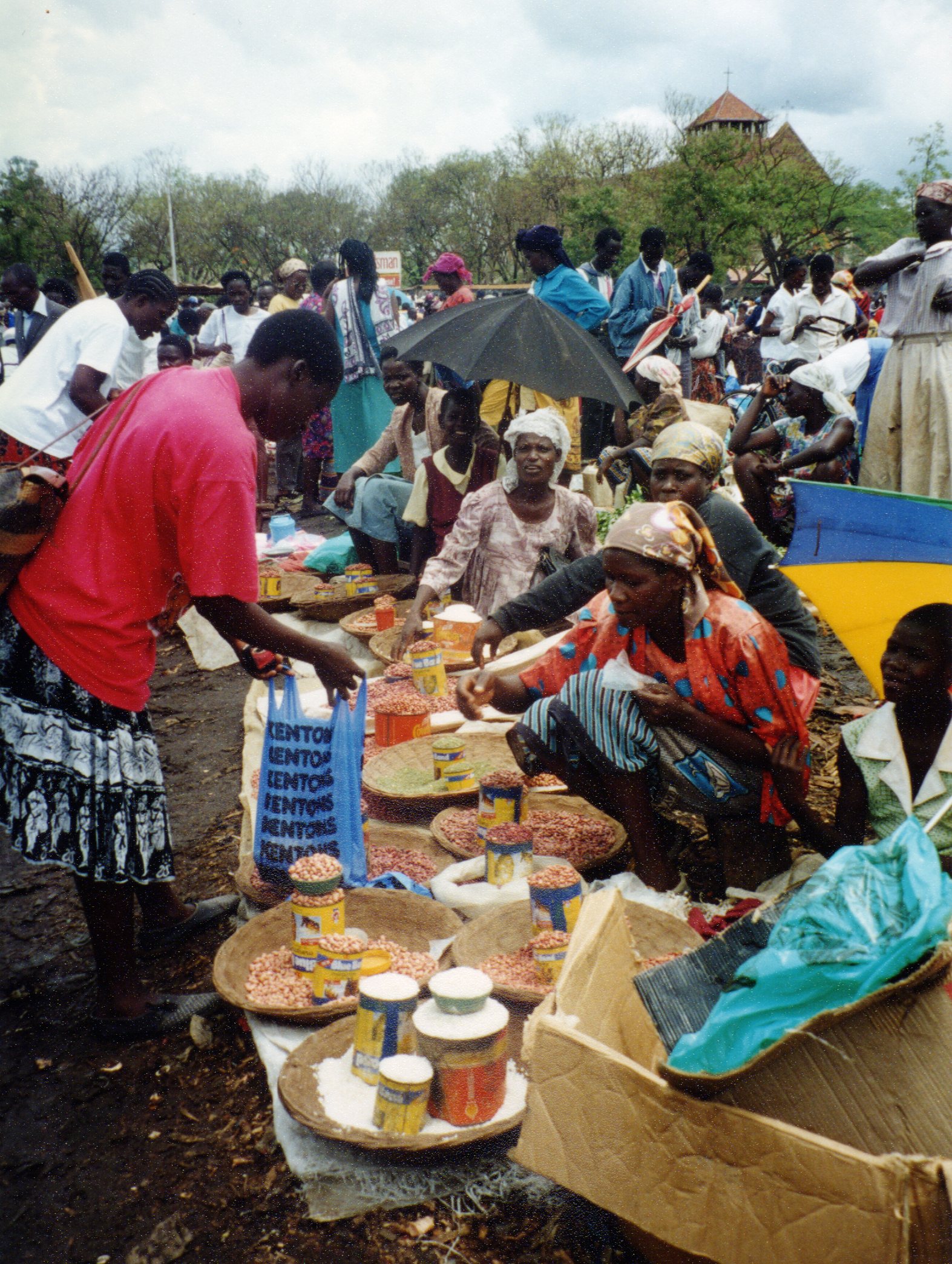
Easter Sunday buying lunch

fruit, vegetables, fish, meat, clothes, shoes, spices, all available at the market
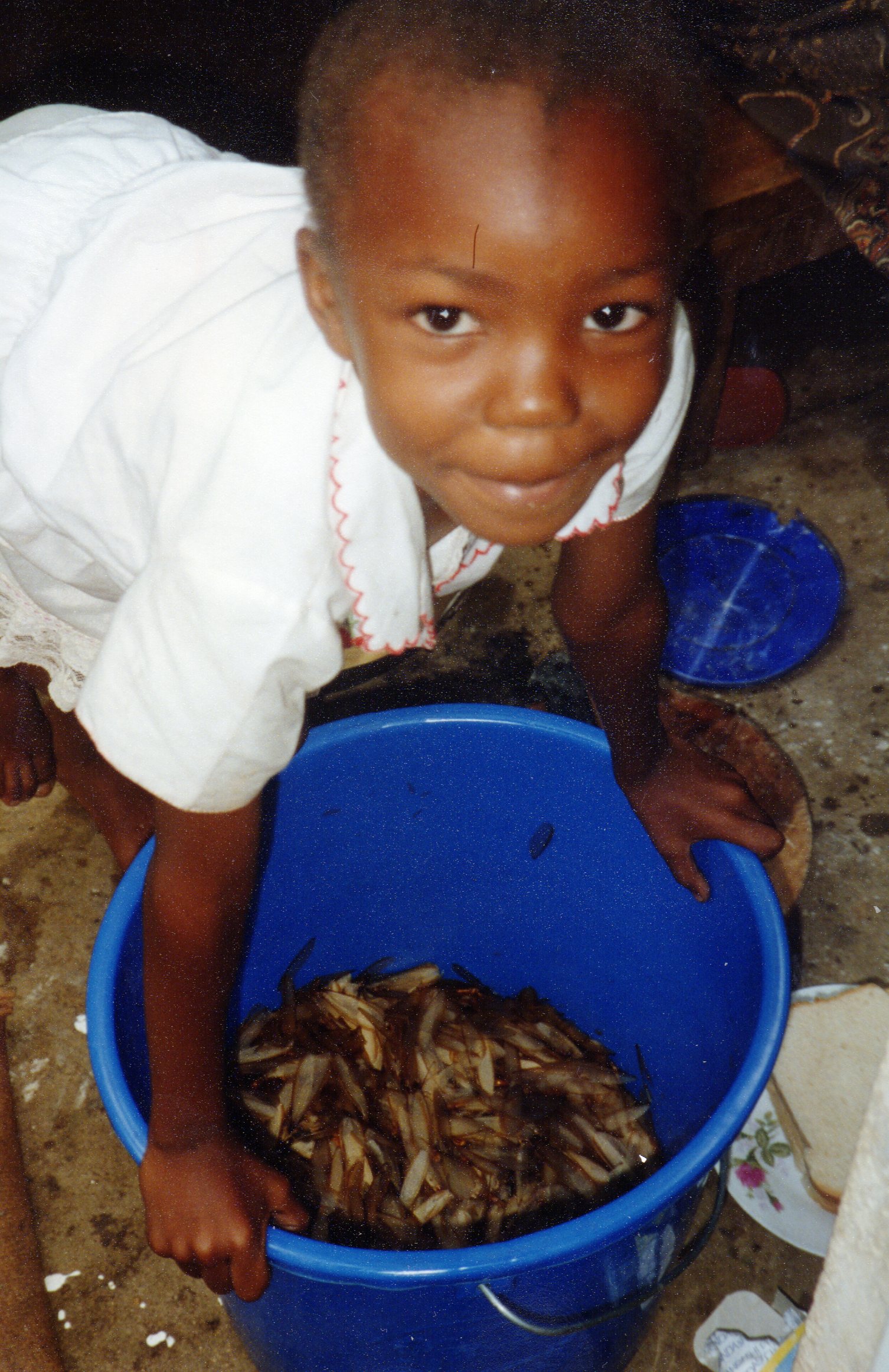
Easter Sunday lunch is fried flying termites after heavy rain ~ nature’s bounty
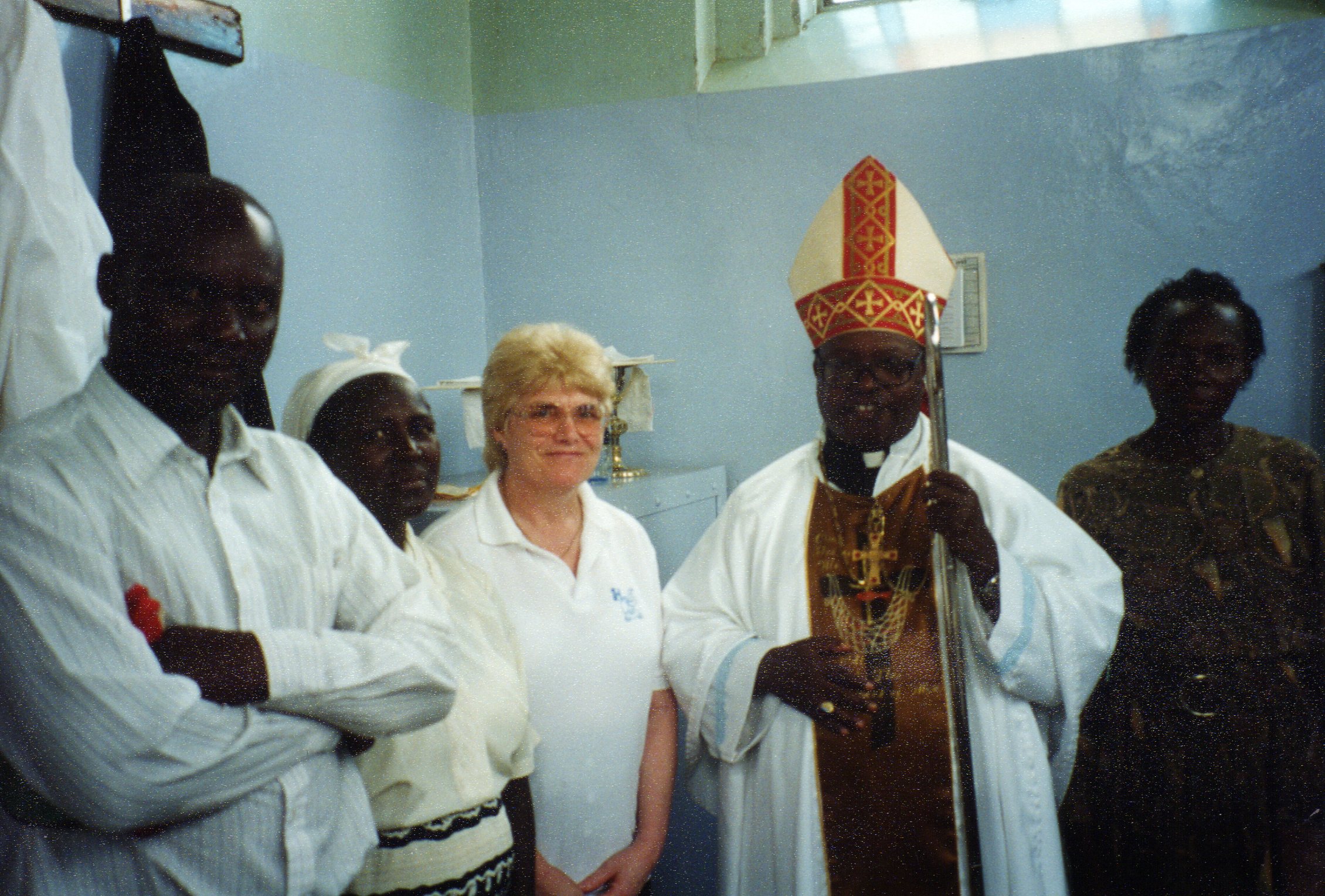
Easter Sunday Mass in Kisumu
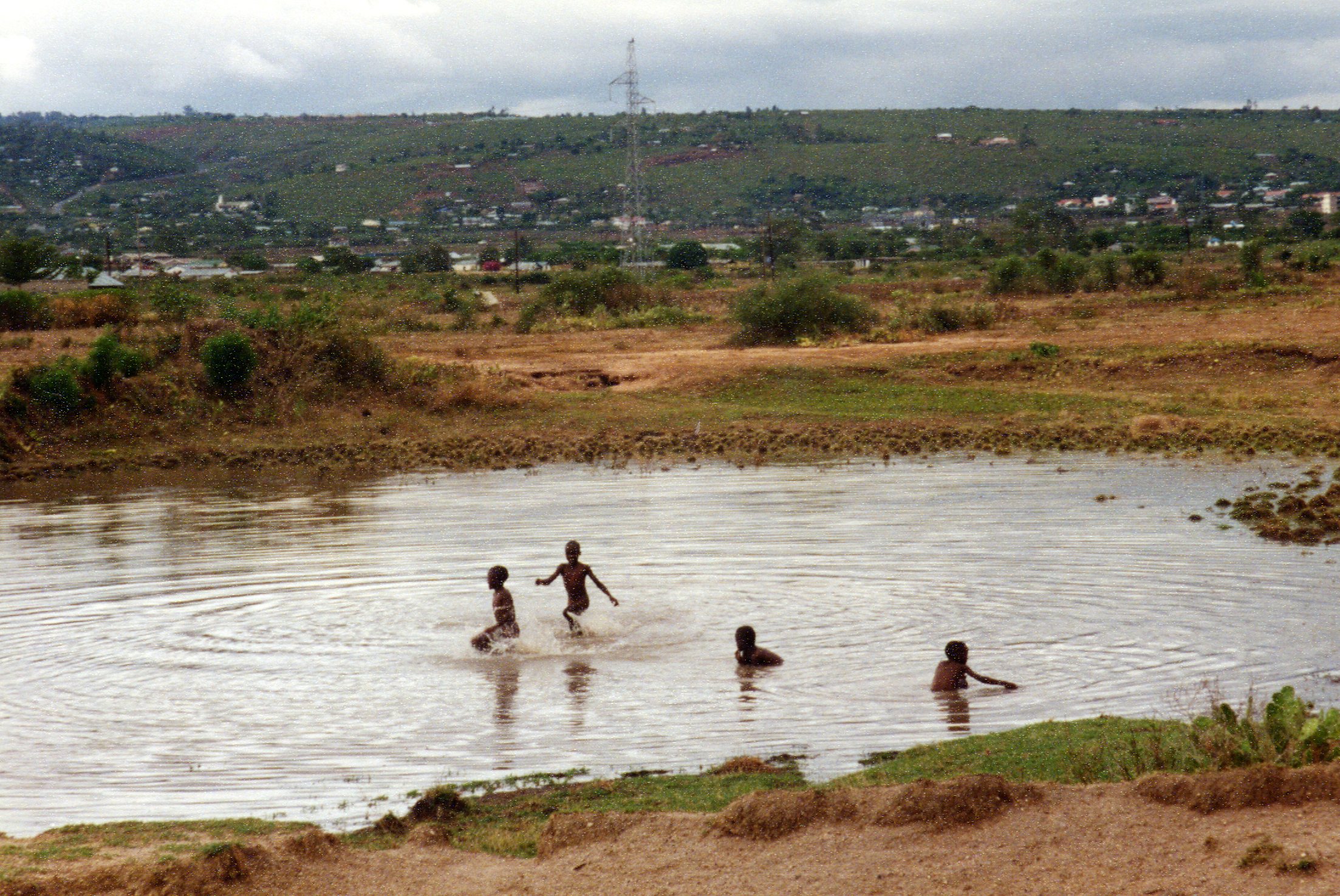
Instant swimming pool after heavy rain

Heading out to fish on Lake Victoria
 Palm Sunday Crosses
 Intricate Palm Sunday sculptures on display
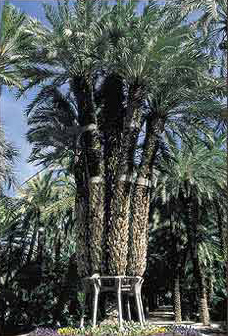 Palm Tree a Elche
 Icon of Our Lady at Taize
 Brother Roger of Taize
“Heaven! is not that an Endless Sphere
Where all thy Treasures and thy Joys appear?
If that be Heaven it is Evrywhere
…
Heaven surely is a State and not a Place
To be in Heaven’s to be full of Grace
Heaven is wherever we see God’s face.”

Gardens of Lindor House




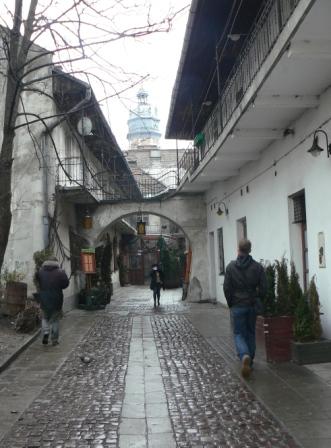
This street was used in the filming of Schindler’s List
Today, 27th January 2025 is Holocaust Memorial Day so I am republishing some of the occasions when the true horror of what happened to the Jewish people was brought forcibly home to me.
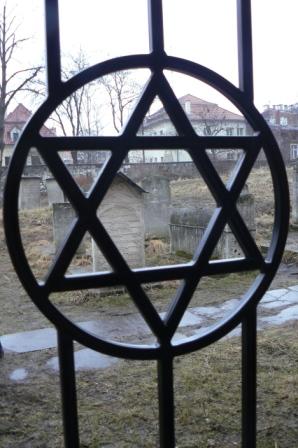
Jewish cemetery
 Karol Wojtyla’s parish church


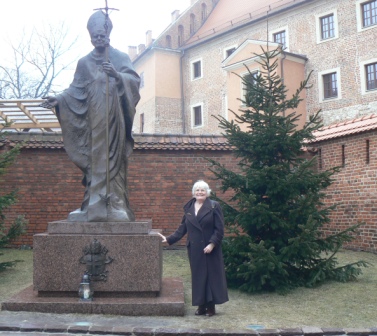
Standing by the statue of Pope John Paul 11

 Heavenhappens