Grass ~ Haiku

Just read in the Guardian newspaper that two more US troops have been killed in Afghanistan and two more UK soldiers from 3rd Battalion Yorkshire Regiment have been killed at a Helmand  checkpoint by an Afghan policeman.   When will the killing ever stop?

Had to change todays Haiku on the theme of “Grass” as this news makes me so sad:~

memorial garden

Grassed garden of grief

A moving memorial

Heroes lie honoured.

National Memorial Arboretum, Alrewas, UK

National Memorial Arboretum, Alrewas, Stafford...

National Memorial Arboretum, Alrewas, Staffordshire, UK (Photo credit: johnmuk)

related articles

The Spirit of Our School

Rest not! Life is sweeping by; go and dare before you die. Something mighty and sublime, leave behind to conquer time. — Goethe

St Thomas More School was a huge part of my life.  In the early 1970’s I watched the new school building rise in the middle of an open field that had once been farmland and an orchard.  There was an ancient hedgerow all around the site and just one magnificent old oak tree in what would be the playing field.  When it was opened in 1975, I was having my third child so was not available for teaching.  But, as I drove past the school every day, I vowed that one day I would work there.

I got my wish in 1984 when my youngest child was ready to start school.  I was offered a job and jumped at the chance.   The next decade was a time of great blessing as I worked in virtually every class, teaching all age groups, then became deputy Head.  In 1994 the original Headteacher was due to retire and, to my surprise, I was offered his job.  He had been such an inspirational Head that the school was a joy to work in.  Taking on his role, I tried to emulate him while making my own mark and bringing my own vision for the school into being.

Due mainly to the quality of the staff and their outstanding teamwork, the school became a strong and successful community, ‘an oasis of excellence’, appreciated by staff, pupils and parents alike.

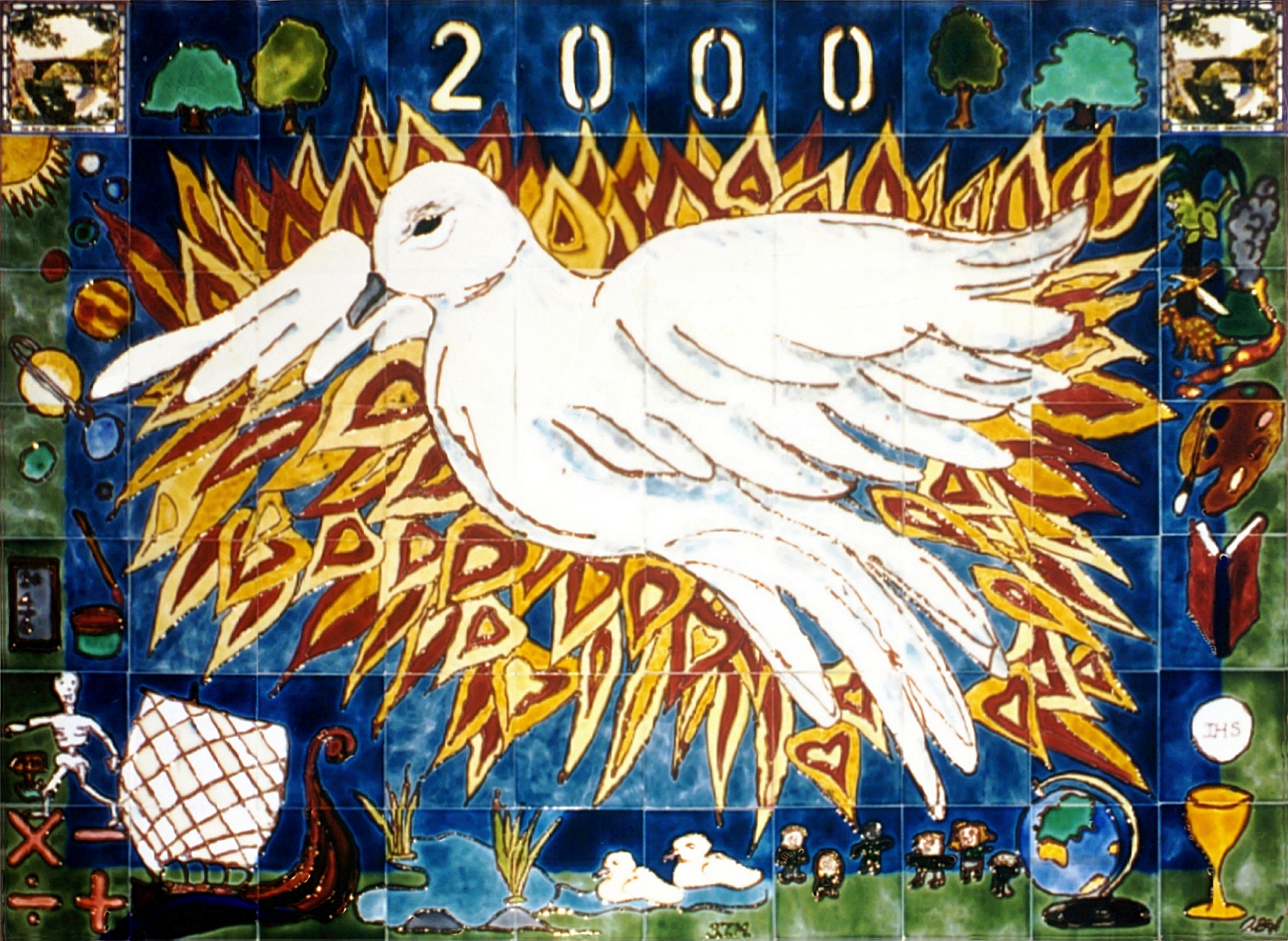
In 1999, as the new millennium approached, the staff wanted to mark the year 2000 with a special feature.  We wanted the whole school community to be involved in creating something totally unique and meaningful.  We came up with the idea of making a large tile frieze.  Each year group was asked to brainstorm their favourite lessons, subjects, or topics, and represent their ideas on paper.

Reception class, the youngest children were just 4 or 5 years old and had only just started school.  They had their photographs taken in their shiny new uniforms, so that was their contribution.

The Year 1 class had helped to build a pond and were raising ducklings which they had hatched from eggs in an incubator, so they drew pictures of that.  I have a wonderful memory of the day the ducklings hatched out ~ the local policeman had called up to the school on a social visit and he watched as the first duckling struggled to crack open the shell.  When it finally succeeded and out popped this beautiful and perfect little bundle of yellow feathers, he was overwhelmed by emotion and had tears in his eyes.

In Year 2 the 7 year olds made their first Holy Communion as it was a Catholic school so they drew a chalice and host.  Being the most significant event in the year, that was their contribution.

Year 3 was the first year of juniors and the children enjoyed learning about Vikings and the Human Body, so they drew lovely longboats and skeletons.

In Year 4 things got much more subject focussed so Maths was represented by a calculator and mathematical symbols.

In Year 5, Music, Dance and Art were the main features, so a pot of paint and a brush was drawn.  Science too was represented by the planets.

By Year 6 the children were getting ready to move on to secondary school.  In order to give them a taste of independence and adventure, it was our tradition to take the class away to Shropshire for a week to stay in a Youth Hostel.  Here, in the Ironbridge Gorge, birthplace of the Industrial Revolution, we had a wonderful time.  We visited the Iron Museum, The Jackfield Tile Museum, Blist’s Hill Reconstructed Village, River Severn Museum and of course the first Iron Bridge ever built.  We also had amazing night hikes, midnight feasts and parties.  Altogether it was an incredible opportunity for fun and learning.  So naturally the Ironbridge at Coalbrookdale was the emblem of Year 6.

The staff gathered all these pictures and images together and chose the ones that would be painted on to the tiles.  The Year 5 teacher, ABW, a wonderfully creative artist and teacher, took on the challenge of putting all the ideas together and creating a design on tracing paper which could be transferred onto numbered ‘green’ tiles.  It was agreed that we would go to Jackfield Tile Museum to create the finished work.

A representative group of staff, parents and children spent a weekend at the Youth Hostel and were each given a small area of the tile frieze to paint.  ABW had done a magnificent job scaling all the children’s artwork up or down so that the frieze would reflect the life of the school.  It was agreed that the year 2000 would go at the top, as well as the 4 trees, oak, ash, poplar and beech, which were the school emblem.  In the top corners would be tiles depicting the Ironbridge itself. The children’s artwork would go around the edge, and at the centre would be the Holy Spirit in the form of a dove surrounded by flames.

We painted the tiles in coloured glaze.  I will never forget the atmosphere in that studio at Jackfield as we worked on the frieze.  There was a stillness and peace in the room which was truly sacramental.  While we worked, the Spirit moved in that place and heaven happened.

When we finished, the tiles were left at the Jackfield tile Museum to be fired.  A couple of weeks later they were collected and set into a frame made by the reception class teacher’s husband.

Bishop Mervyn Alexander of Clifton RIP came in the year 2000 to celebrate the school’s 25th anniversary and he blessed the tile frieze.

Although most of the staff who worked at the school have retired or moved on now, the frieze is still there in the school hall.  And with it is a little piece of all of us who made it.

Sanctuary ~ a Sacred Space

My Sanctuary

At WI I received a lovely gift in the lucky dip.  It was a silver bag containing a little silver and diamanté heart and 2 bottles of Sanctuary; a brand of luxury bathroom products.  It was lovely, although as I only have a shower, it may be passed to someone else!

The word ‘sanctuary’ comes from the Latin root word, sanctus, which means holy.  So the primary meaning of the word is, ‘a sacred space’.  Following on from this is the idea of a ‘place of refuge’, where someone can escape to and find safety.

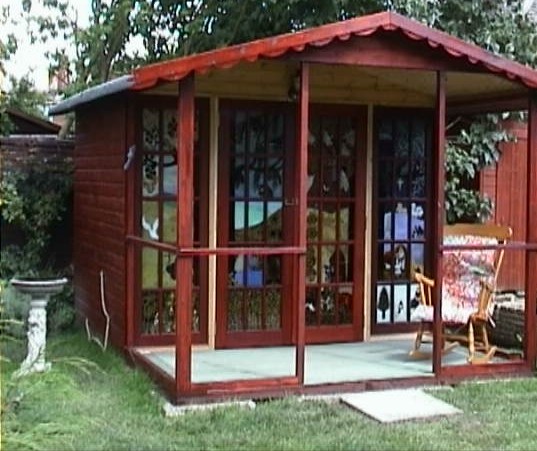
In the year 2000 I retired exhausted from full time working, and spent a year seeking ‘sanctuary’ from a life so busy that it had overwhelmed me.  Being too ill to go anywhere, my sanctuary had to come to me, so my wonderful husband built me a summerhouse at the end of the garden where I could find some healing peace.

It was 3metres by 4metres made of solid wood lined with tongue and groove pine panels with a waterproof, pitched roof and 4 doors.  Each door had 12 glass panes and I was inspired to paint them with glass paints.

At the time I was reading “Landmarks”, An Ignatian Journey, by Margaret Silf and the book inspired me to consider my faith journey.  Knowing that the Domain in Lourdes has been the most formative place in my faith life, and thinking (wrongly) that I might never be well enough to go there again, I decided to reflect its importance in my summerhouse.  Each door would have a depiction of the grotto and of water included, as well as images that I love.

I chose the 4 seasons as my theme and decided to paint the doors Spring, Summer, Autumn and Winter.  Before the doors were hung I measured out 4 pieces of wall lining paper and sketched my designs

 for each door.  I used trees, laburnum, wisteria, maple, holly, bending towards each other to form arched shapes.   I then drew images from nature related to each season, mice, hedgehogs, robins and anything else that came into my mind.  Once the paper design was complete I stuck the paper onto the back of each door and drew over it straight onto the glass with ‘tube lining’.  This dries quite quickly so then I started to paint! 

I am not an artist so the result was very primitive, but because the glaze comes in such beautiful colours, the overall effect was stunning.

Once the doors were hung we laid electricity cables to the summerhouse so that we could light it from inside or out.  This meant that at night we could see the stained glass effect shining down the garden from the house.  If I was in the summerhouse on a sunny day with the doors shut, the stained glass effect cast coloured light all over the inside of the summerhouse.  If I was in there at night I sometimes turned off the lights and lit candles to gain a different effect.

This was my sacred space, my sanctuary, my still point, my little bit of Lourdes and I loved it.  In my summerhouse I looked deep inside my self; I wrote my life story; I restored my spirit; I emerged a different person.

Sadly, I had to move home 3 years ago, and I could not take my summerhouse with me.  But I have the photographs and I just have to think of it to find a beautiful stillness.

Coin Street Chronicles

Having just celebrated the Queen’s Diamond Jubilee and been amazed by Her Majesty’s strong constitution, sense of humour and resilience, I have been reflecting on all that her generation have lived through.

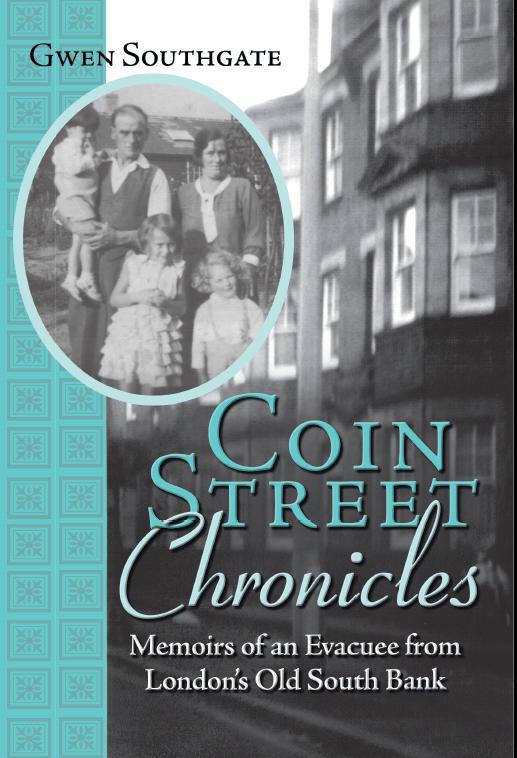
This led me to a book, beautifully written by Gwen Southgate, called Coin Street Chronicles, which was recommended to me by an American friend.   Gwen was born in 1929 into a very poor but caring family, and grew up in the Waterloo District of London.  By the time she was 10 the World War had started and Gwen, along with all her classmates was evacuated to the Dorset countryside.  Gwen moved six times over the next few years and grew in maturity with a very positive attitude to life, despite its hardships.  Gwen was a very intelligent girl and devoured books.  Her teachers were amazed that, although she spoke with a strong cockney accent, she wrote in beautiful prose.

Eventually Gwen managed to get to London University where she studied Science, and met her future husband!  She taught Science in high schools for many years.  She married and had 2 children before moving to Chicago.  She had two more children before moving finally to Princeton, USA.

When Gwen retired from teaching she started writing her memoir as a legacy for her children.  It took her 15 years. Her remarkable memory and the ability to recall every detail from a child’s perspective enabled her to write vividly and with humour and sensitivity.   She published her book herself in America through iUniverse and gave readings for friends and book groups.  Her book was passed from friend to friend and grew very popular through personal recommendation.  In fact it became so popular that it was an Editor’s Choice book from the beginning and won a Star award!   On the American Amazon site there are 23 wonderful reviews and everyone gives Coin Street Chronicles a 5 star rating.  It has been read by academics, editors, reviewers and has twice been likened to the writing of George Orwell.

My review of Coin Street Chronicles

Coin Street Chronicles was recommended to me by a friend who lives in London.  We both thoroughly enjoy wandering the streets of London and finding out about the buildings, streets and boroughs, and what life was like for the residents in years gone by.

The houses in Coin Street are long gone and the area is now part of the very glamorous South Bank with its wonderful riverside walk.  But reading the book transports us back to how it was before, during and after the Second World War.  The book also covers parts of Wales, Sussex and Dorset where Gwen and her little brothers spent years as evacuees.  It is a snapshot of a 20 year period when life was so different from today.

But having read the book, devouring it would be more accurate, I can’t stop thinking about it.  This book is so much more than a memoir, although as a memoir it is brilliant.  All of life is here in its pages.  There is history, humour, pathos, tragedy, wisdom and truth revealed, which is almost Shakespearean.  The book is simply written, in a conversational style, but it deals with issues that are relevant to us all whatever our age or personal situation.

There are complex family relationships, childhood confusion and misunderstanding, education problems, teenage angst, marital difficulties and the problems of living with family members with a range of physical, emotional or mental difficulties.

It is fascinating to read a firsthand account of coping with air raids, bombings, food rationing, evacuation, homelessness and poverty.  Beneath all that there is the gradual revelation of how misinterpretations or misunderstandings between family members can lead to alienation and lifelong estrangements.  My heart breaks for Bertie and Derek and I think Gwen should write another book just about them!

But the part of the book that will stay with me is the complexity of the parent/child relationship.  For a variety of reasons Gwen and her mother had a difficult relationship and it was only when writing the book that she felt she truly understood what a wonderful woman she had been.

I think everyone would gain from reading Coin Street Chronicles: the elderly for the memories of a time gone by, the middle aged to truly appreciate what their parents lived through and the young to help them understand themselves and their parents.

I think it would make a wonderful radio play or TV programme and it should be required reading in schools as part of History lessons.

Brenda Kimmins

It is available in the UK to order from various bookstores, or to buy or download online.

A little bit of magic

I went to a memorial service today for a young man of 36 whom I used to teach.  He was a beautiful soul who saw through life’s shams.  One of his tributes was from his brother who remembered him saying

“you know bro the trouble with the world is people love things and use people, and we are meant to use things and love people”.  I was deeply touched by this and some of his poetry.  I have reproduced one of his poems here for you as a tribute to him.

I believe in magic

like stories once we were told

of fantasy

of fe fi fo fum

of rainbows giving us gold

I believe in magic

‘s just a twinkle in an eye

feelings, I can’t explain to you

‘s like the wisdom of our sky

Life is magic……

it makes you want/want to “free beauty”

…..so beauty can be found ?

as hidden it can be !

Let your selfish side sound

& truly beauty cannot free

but the light you might’ve missed

hits as sunshine when you know

that a true open smile played the twist

to let beauty’s secret show…..

Love peace & harmony for a better world

…..fret ye not for a day shall come

wrongs made right as they should be

all is said as shall be done

our minds in righteous unity…..

©Ashley Cassin

Notes from Ashley. It’s about everything in life being connected, containing spirit.  From the trees to the flowers to the birds & the bees to you & me to the stars in the sky & the one that keeps us alive, I’m trying to explain that peace & harmony is love or love is peace & harmony or love is god or god is love, I believe it as I write & this whole world could benefit from not abusing love (calling it their own ) as it is in so many differing ways, what if love is the energy of life, & people are fighting -killing for it, then it becomes the opposite of what it is. We should always be thankful, accepting, respecting everything everybody. we’re all individuals, but we’re all just atoms in this energy, so why can we just live with it.

Hearts under the hammer

There are some things that are just too sad to write stories about and so I write Haiku.

Scored in syllables

Sharp shards of sorrow spill out

solaced by sharing.

One of these is the auction of of my parents’ possessions, relics of my past.  The setting was ironic ~ an old school, and the weather was in tune with my feelings ~ the heavens hurling their hurt on the deserted playground.

 The timing could not have been worse, viewing on what would have been my father’s 89th birthday.  There is no happy ending here, a family stripped of its history under a hammer, and the grieving just goes deeper.

Some of the antique dolls mum lovingly collected over the years

An earlier trip to Poland ~ Torun 2004

A Trip to Torun in Poland ~ June 2004


On a chilly June morning we caught the National Express coach to Victoria with some friends from Global Footsteps.  On arrival in London we caught the ‘Orbis’ coach to Torun in Poland.  The bus was not full so there was plenty of room and it was very comfortable.  The friendly hostess, Isabella, served tea and coffee and we had a pleasant journey to Dover where we caught the Ferry to Calais.  The weather was lovely and we had an enjoyable crossing.  The channel was unusually busy because it was the 60th Anniversary of the D Day Landings.  Old soldiers were gathering for a memorial service. 

We got back onto the coach and set off northwards through France, Belgium, Netherlands and Germany, crossing the River Oder at the Polish border town of Slubice.  We were expecting long delays at the border but were astonished to be met by smiling customs officers who briefly checked our passports and waved us through with no problems.  This is a very encouraging development since Poland joined the European Union this year.  Already the scenery was fascinating me and the weather was beautiful.   I noticed the narrow cobbled roads in the towns, the many shrines by the roadside in the country and lots of churches.  There was an abundance of pine tree forests and masses of poppies on the verges.  I was thrilled to spot a stag and a hare and then amazed to see storks in the fields and a flock of herons.  We were travelling on Route 22 towards the city of Gdansk.  We saw flats along the way that reminded me of Russia, and a huge river with men fishing.  Petrol stations were Statoil and fuel was 4.0 zl, about 60p, I guessed for a litre.  We saw agriculture everywhere – endless fields of crops with no fences; allotments with dachas like grand sheds; orchards; lakes and picnic spots; and miles of greenhouses and garden centres.  We saw timber-framed houses and lots of new buildings, but we saw very little livestock.  In Belgium and Germany we had seen herds of very healthy looking cattle but none at all yet in Poland.  We saw big churches with round towers, Rapunzel-style, and the remains of old city walls were evident in many towns.

At Bydgostcz we stopped for coffee and met a Polish-Canadian-Scot who reminisced about D-Day, when he was 15 years old.  He told us how he had been taken away from his village in Poland by the German occupying forces.  They had forced him to fight for them.  He was saved by the US troops who eventually offered to take him to the USA to start a new life. He had opted for Canada and eventually married a Scottish lady and went back with her to Scotland.  He has now retired to Vancouver Island in Canada but visits Poland as often as he can.

On entering Torun we saw storks on huge nests on top of telegraph poles.  When the coach stopped a friend was there to meet us.  He took us to the TTCA building to rest and unpack before we met our group leader who treated us to a meal at Damroki restaurant.  The food was delicious and we were entertained by an impromptu folk concert performed by groups from all over Eastern Europe, who had attended the Folk Festival in Torun earlier in the day.

Monday –At 10 am Ula (or Ursula), who is a professional guide, met us at the TTCA.  Thankfully she speaks English very well, self-taught we later found out.  She is going to give us a 5-hour tour of Torun.  She was a mine of information and she showed us everything of interest in the old and new town.  We walked miles until we were ready to mutiny so she took us to her favourite coffee shop.  This was wonderful so all was forgiven.  We drank a special coffee like Cappuccino with Pierniki sprinkled on top.  Pierniki is gingerbread, which is the local speciality.  Later Ula took us to a restaurant, which served pancakes and dumplings with exquisite fillings and lashings of strawberries and cream on top.  We were a little puzzled, as they seemed to put savoury and sweet fillings all together and the portions were way too big, however it was very enjoyable.  After our marathon walking tour we went back for a well-earned rest and shower before dinner.

We were amazed at the low prices of meals in Torun.  It varies of course but it is possible to get a very good meal and a drink for less than £2.  Coffee and delicious pastries with fruit and cream cost less than £1.40.  Kodak films for my camera, which cost £4 in the UK cost £1 here and a loaf of freshly baked bread from the bakers cost about 23p.  We just cannot imagine how the shopkeepers manage to sell their goods at these prices and still make a profit.  We are worried that the cost of living may rise dramatically now that Poland has joined the EU.

Public transport is very reasonable here and accommodation is good.  Rents seem very cheap at £75 a month for a 1 bed roomed, central flat.  Big US hotel chains are moving in with high priced rooms but there are still bargains to be had for the traveller or tourist.  We stayed at the Twin Town Association building, which is in the restored Burgher House and Tower of the ruined Teutonic Castle.  The large rooms have been refurbished to a very high standard and we shared bathrooms and a kitchen as in a Youth Hostel in UK.  It was comfortable and cheap and with fabulous views of the River Vistula from our windows it suited us very well.

Tuesday – Our guide met us at 8 am and rushed us off to catch the bus to the railway station where we caught a train for the 90-minute journey to Gniezno.  The city is known as the cradle of the Polish state as it was in the Cathedral here that the first King of Poland, Boleslaw Chrobry, was crowned in 1025.  We rushed to the Cathedral of the Assumption of the Blessed Virgin Mary and St Adalbert, founded 1000 years ago by King Boleslaw the Brave.  Here we saw the famous bronze doors from 1175, which show 18 scenes from the life of St Adalbert.  We also saw the statue of Our Lady of Gniezno and the sarcophagus of St Adalbert.  St Adalbert was a Bohemian Bishop from Prague who passed through Gniezno in 997 on a missionary trip to convert the Prussians, a heathen Baltic tribe who lived in N E Poland.  Sadly they didn’t want to be converted so they chopped his head off.  King Boleslaw paid a ransom of his weight in gold for the body then brought it back to Gniezno and buried it in the Cathedral in 999.  Pope Sylvester then canonised the martyr.

After this very short visit we rushed off to catch a narrow gauge train to Biskupin.  This trip was organised as a treat and was a major highlight of the trip for me.  Gorgeous weather and fabulous countryside edged with poppies, and white and purple wildflowers.  Biskupin was besieged by children on school trips but was very interesting.  It was a sort of Baltic Blists Hill, with characters in costume minting coins, chopping wood, firing crossbows and riding horses etc.  The ‘iron age’ fortified town was built entirely of wood some 2730 years ago on the shore of a beautiful lake.  It was subsequently disappeared under a peat bog where it was perfectly preserved until 1933 when it was discovered by accident.  It is now a fascinating archaeological reserve and one time film set.

Wednesday – Another gorgeous day arranged for us by a local friend, Anya.  We started with a bus ride to the bike shop where we hired bikes.  It took an age to organise this because the shop appeared to only have huge mountain bikes, which were fine for the men but not for we 3 delicate and very fussy ladies!  We ended up a very motley selection with B on an ancient ‘sit up and beg’ shopper complete with basket, dodgy gears and a mudguard; A on a man’s bike with sticky red handles and me on a junior BMX!  After lots of giggles and false starts we set off for a 23 km round trip to Anya’s home for a barbecue.  We cycled through the forest and past vast poppy fields and a bog seething with very vocal frogs.  When we reached Anya’s home village of Lysomice we saw stork families on top of telegraph poles.  Then we were treated to a super barbecue and lots of homemade blackcurrant drinks, some alcoholic and some not!  We also met Killer the guard dog, who eats cucumbers, and had a guided tour of garden and greenhouses where Anya’s family grow tomatoes, cucumbers, fir trees and flowers to sell at the local Farmers’ Markets.  The whole day was absolutely wonderful and we really enjoyed the cycle ride home to Torun.  I was very proud of myself since I hadn’t been on a bicycle for 25 years!

Thursday – Today is the Feast of Corpus Christe and being a Catholic country the celebrations were massive so we had a free day in Torun.  After the 9am Mass in the churches and 2 Cathedrals, the entire congregation left to process through the streets to the square where decorated altars had been set up.  There were columns of nuns, altar servers, guides, scouts, priests, and rows of young girls in long white dresses and veils.  They carried baskets of flower petals, which they scattered on the ground in front of the canopy covering the Priest and the Monstrance containing the sacred host.  There was a military band leading the procession and a vehicle at the rear with loudspeakers amplifying traditional hymns.  The processions came from all quarters to meet near Copernicus’ statue.  There was a huge poster showing Pope John Paul 11 who visited Torun in 1999.  A service was held here before the whole procession moved on to another square for another service.  The crowd was huge and everyone was dressed in their ‘Sunday Best’.  The windows and balconies of many houses and businesses were hung with posters, tapestries, candles, statues and mini shrines to celebrate the Feast Day.  The Priests and altar servers wore white cassocks with embroidered or lacework chalice and host decorations.  It was a grand occasion and a privilege to watch.  It reminded me of May processions in the North of England when I was a child.

In the evening we visited the Fort and saw a huge fire on the horizon.  We never did find out what building was on fire.

Friday – A very early start again today for the 7.45 bus to the railway station to catch the train to Malbork.  The journey took just 2 hours so we arrived in time for a lovely cup of coffee in the shopping centre.  Sadly when we came out the heavens had opened so we had to buy umbrellas.  The rain was torrential but nevertheless we set off for Mary’s castle.  This is reputed to be Europe’s largest Gothic castle and Poland’s oldest castle.  It is so important that in 1997 it was included in UNESCO’s World Heritage List.  It is situated on the Nogat River, an eastern arm of the Vistula River, which flows through Torun.  It is a truly impressive and huge reconstruction.  The castle was built in three parts (higher, middle and lower castle) by the Teutonic Knights, who called it Marienburg (Mary’s Fortress).  The Teutonic Knights, a German order, were also called Knights of the Cross.  Their commander in chief was called a Grand Master.  They were crusaders who wore white robes with a black cross.  The castle was started in 1276 and finished within 30 years.  The Knights ruled from here for 150 years.  It was the largest fortress in the middle ages, but the castle, like Poland, had a very stormy history being in the hands of various conquering armies then largely destroyed in World War Two.  It is now in danger from subsidence.  Inside the castle there are several notable exhibitions.  There is a room full of tapestries and a room full of exquisite jewellery boxes, altars, crucifixes, artwork and jewellery all made purely from amber.  There is also a bombed out church which has not been renovated due to lack of funds.  This is breathtakingly poignant with its battered walls and statues, and the miraculously undamaged boss of the Mother and Child.  The memory of the broken crucifix will stay with me always.  This empty shell of a church was the most moving thing I saw in Poland and for me it illustrates the total pointlessness of war.

 Saturday ~ Today saw us rise very early for a bus and train journey to Gdansk.  The area was referred to a Gyddanyzc (Gdaniesk) or wetness in 999 in “The Life of St Adalbert.  There was a settlement here as early as 2500BC and by the 13th century when the Teutonic Knights seized the city it was a major port and municipal centre.  In 1454 the city broke free from the Knights and became a part of Poland.  Over the next century there was incredible economic development in the city, which had a monopoly of trade in Polish grain.  The city also became the largest town in Poland and a great centre for shipbuilding.  1580 to 1650 was a ‘Golden Age’ when artists and craftsmen settled here and the city became a centre of artistic and cultural style.  In 1793 during the second partition of Poland the city was annexed to the Prussian state and underwent a long period of Germanisation, briefly interrupted by a period of French rule in 1807 to 1814.  After 1850 there was another economic boom due mainly to the railways, the port and shipbuilding.  In 1920 after WW1 due to the influence of the Britain the free city of Gdansk was created under the patronage of the League of Nations.  However it then fell to the Germans in WW11 during which the Polish citizens of Gdansk were exterminated in concentration camps.  Allied forces carried out air raids then the Soviet Russian troops almost destroyed the city and ruined its industrial base.  After WW2 the Germans were expelled and thousands of new inhabitants set about rebuilding the city.  I think they did a wonderful job as the city is incredibly beautiful.  Peace did not last long though, because between 1970 and 1980 violent workers protests prompted great social and political changes in Poland.  In 1997 the city ceremoniously celebrated the millennium of the visit of St Adalbert Slawnikowic, the Bishop of Prague who left Gdansk in 997 on a Christian mission to then still pagan Prussia.  In 1992 and 1999 Pope John Paul 11 visited Gdansk.

We explored as much as it was possible to see in a day.  We saw the shops, the churches and cathedrals, the memorial to the fallen shipyard workers and then caught a tram to the beach and paddled in the Baltic.  It was a wonderful day and Gdansk is a place that everyone should visit.  It is a city with everything in my opinion.  It has history, culture, spirituality, beautiful buildings, wonderful people and a golden sandy beach.  What more could anyone want.


A Tree of Friendship in a Peace Garden

The town of Sochi stretches for 145 km along the picturesque Black Sea Coast of the Western Caucasus.  It is in the Krasnodar region of Russia.  Because of the sub-tropical climate, and being in an area of outstanding natural beauty, it has developed into a popular health resort and favourite holiday destination for people from all parts of Russia, and more recently, other parts of the world.

Sochi is not only a town of health and recreation, but also a town dedicated to peace and friendship.

Sochi is linked with several communities in other parts of the world.  Being a spa town it was natural, if slightly amazing, for Sochi and Cheltenham to become twin towns, which they did many years ago.  This link thrives still and there are regular exchanges made by people of all ages, for many reasons and from all walks of life.

In 1973 an avenue of palm trees dedicated to the friendship of “twin towns” was set out in Sochi’s superb Arboretum.  And, there is a Glade of Friendship in the town’s Riviera Park formed by evergreen magnolia trees planted by statesmen, public leaders, and cosmonauts.  On 1 October 1975, the Soyuz and Apollo space crews set out the beautiful magnolias here in the name of peaceful space exploration.

But, most impressive in my opinion, is the Tree of Friendship in Sochi’s Peace Garden.  People from all walks of life and many different countries have travelled to Sochi and visited this famous tree.  Astronauts, Politicians, Hiroshima bomb survivors, Arctic Explorers, and tens of thousands of ordinary people, who, for one reason or another have been drawn to Sochi and to the Peace Garden.

The original citrus fruit tree was planted in 1937 and it has now grown into a whole orchard propagated from cuttings.  It is traditional for everyone who visits to leave a small gift from their community.  This custom has resulted in a unique collection of amazing items, which are now on display in a small museum in the peace garden.  There is a small charge to visit the Peace Garden and the Museum, which raises funds for its maintenance.  There is also a visitor’s book with some moving entries:  Long ago, M A Uljanov wrote,

“Everything begins with little things – fruit develops from the bud and a swift current is formed by tiny drops.  If each person did some good, if only a little, our earth would become a Garden of Friendship.”

I have travelled to Russia several times since 1995.  I would like to write a book about my impressions and experiences; the spectacular scenery; the people I have met; the churches I have visited, and the exquisite Icons I have seen.  But, the most memorable thing I have seen without doubt is the Tree of Friendship in the Peace garden.

Easter 1997

An unforgettable day for me was Easter Sunday in 1997.  I had travelled to kisumu in Kenya with a group of educationalists from Gloucestershire.

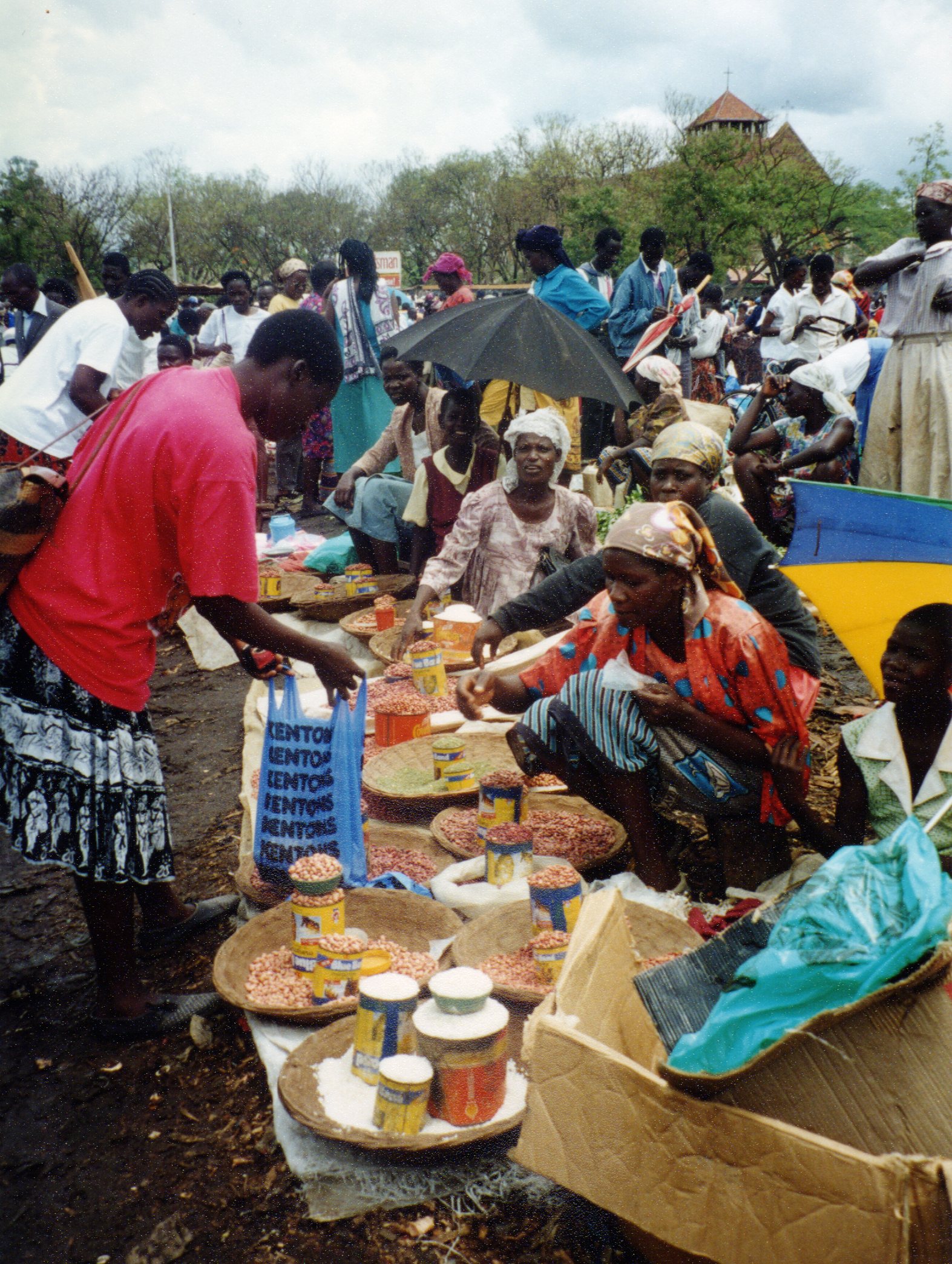
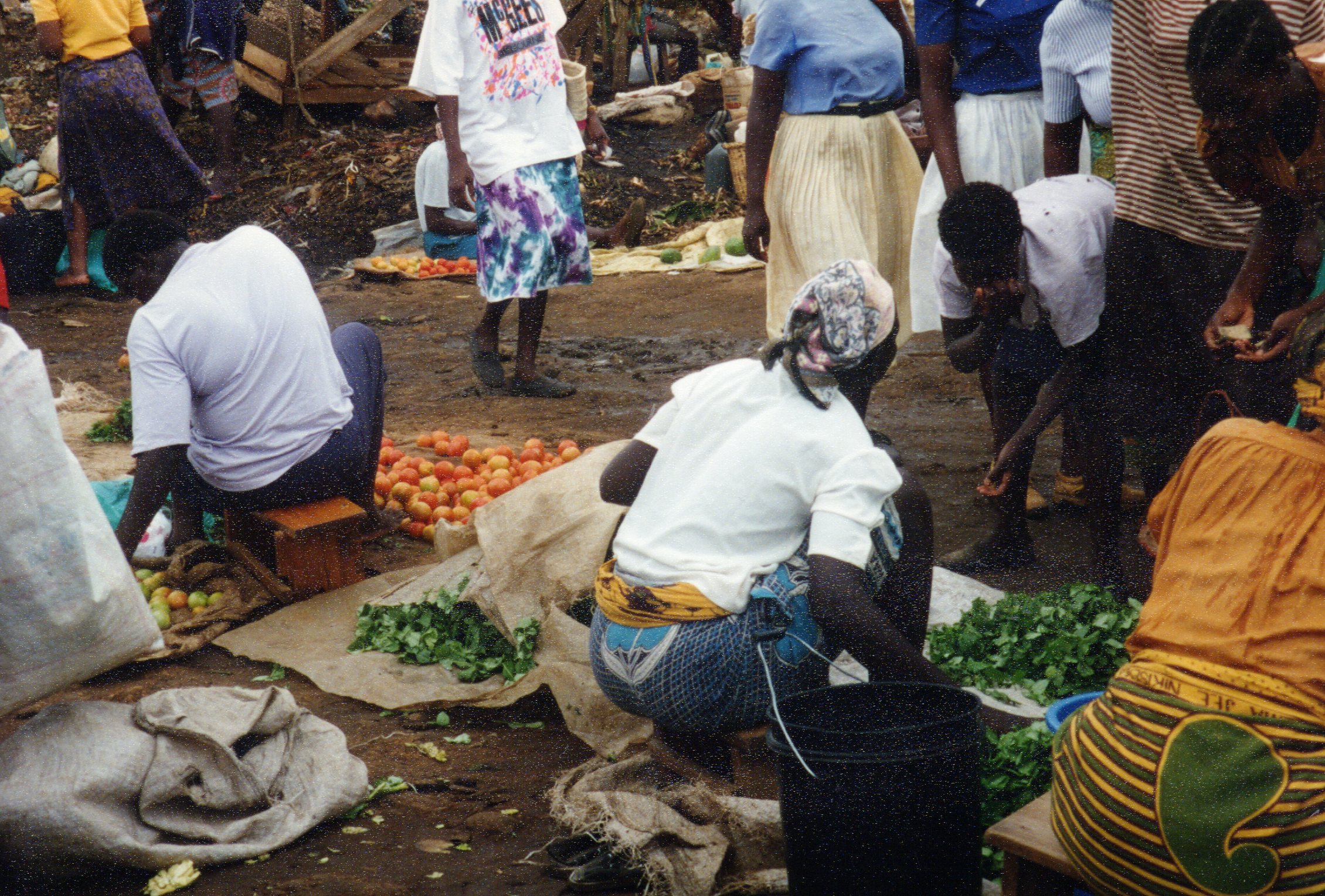
Sunday is market day in Kisumu and Easter Sunday is no exception.  Strolling around among the goods laid out on the ground,  we saw an abundance of bananas and mangoes, maize, and spices galore.  There were shoes made out of old tyres and handsewn clothing.   Dolrosa bought a live chicken for our evening meal.   Purchased goods were carried home by the women in baskets on their heads.  Heavy goods were bundled on top of a matatu, a type of minibus.

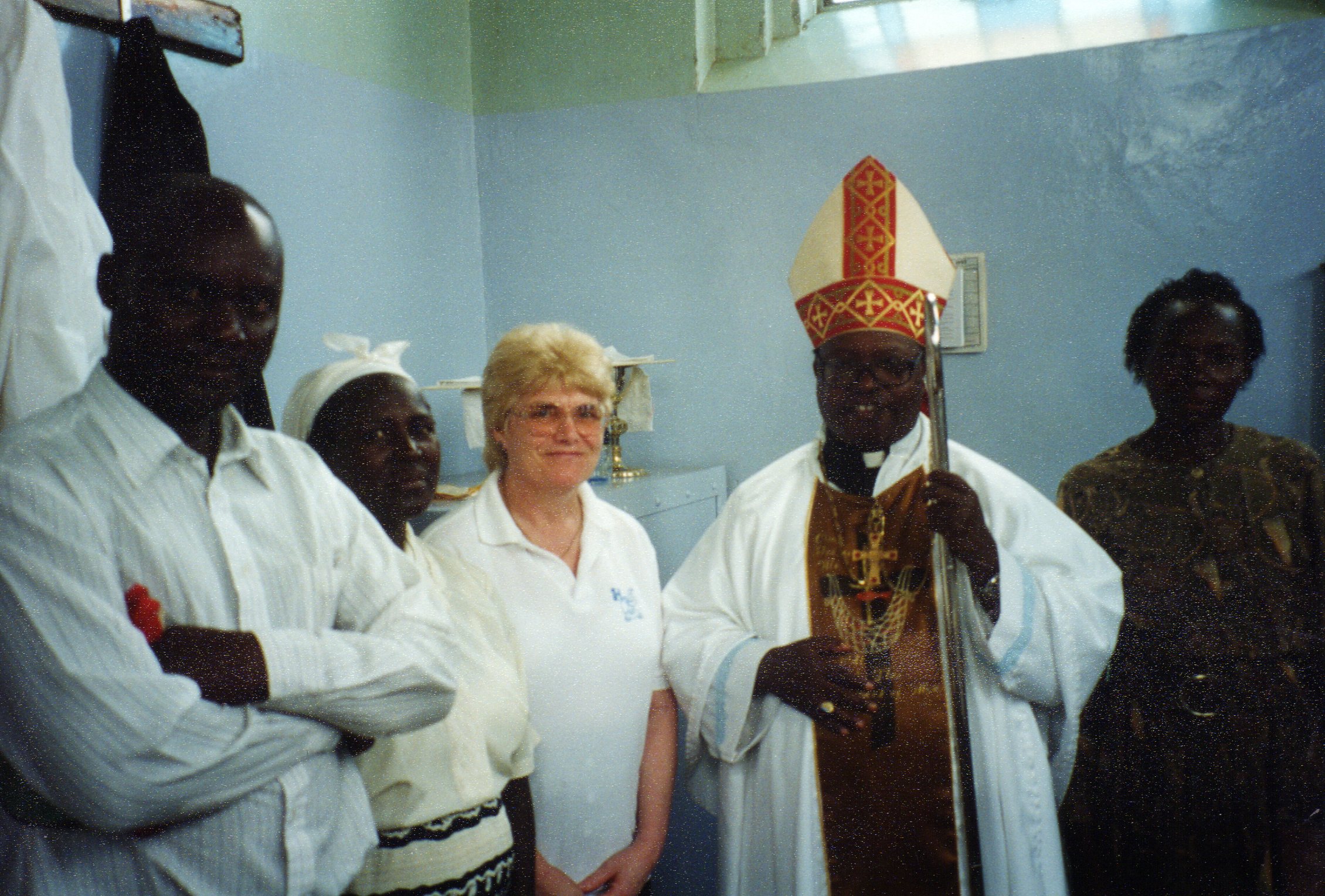
I went off to Mass at St Theresa’s Cathedral where I was due to meet the Archbishop.  I had brought gifts of rosary beads, bibles and prayer books from STM to be distributed among the small churches in the tribal villages.  I also brought a silver Chalice for the Archbishop.  The Mass was a total revelation to me.  The congregation were dressed in the most beautiful and colourful outfits I had ever seen.  The children were adorable and particularly well dressed as they were to make their First Holy Communion.  The Mass was in Swahili which I did not understand but the singing was absolutely wonderful.  It was accompanied by African drumming.

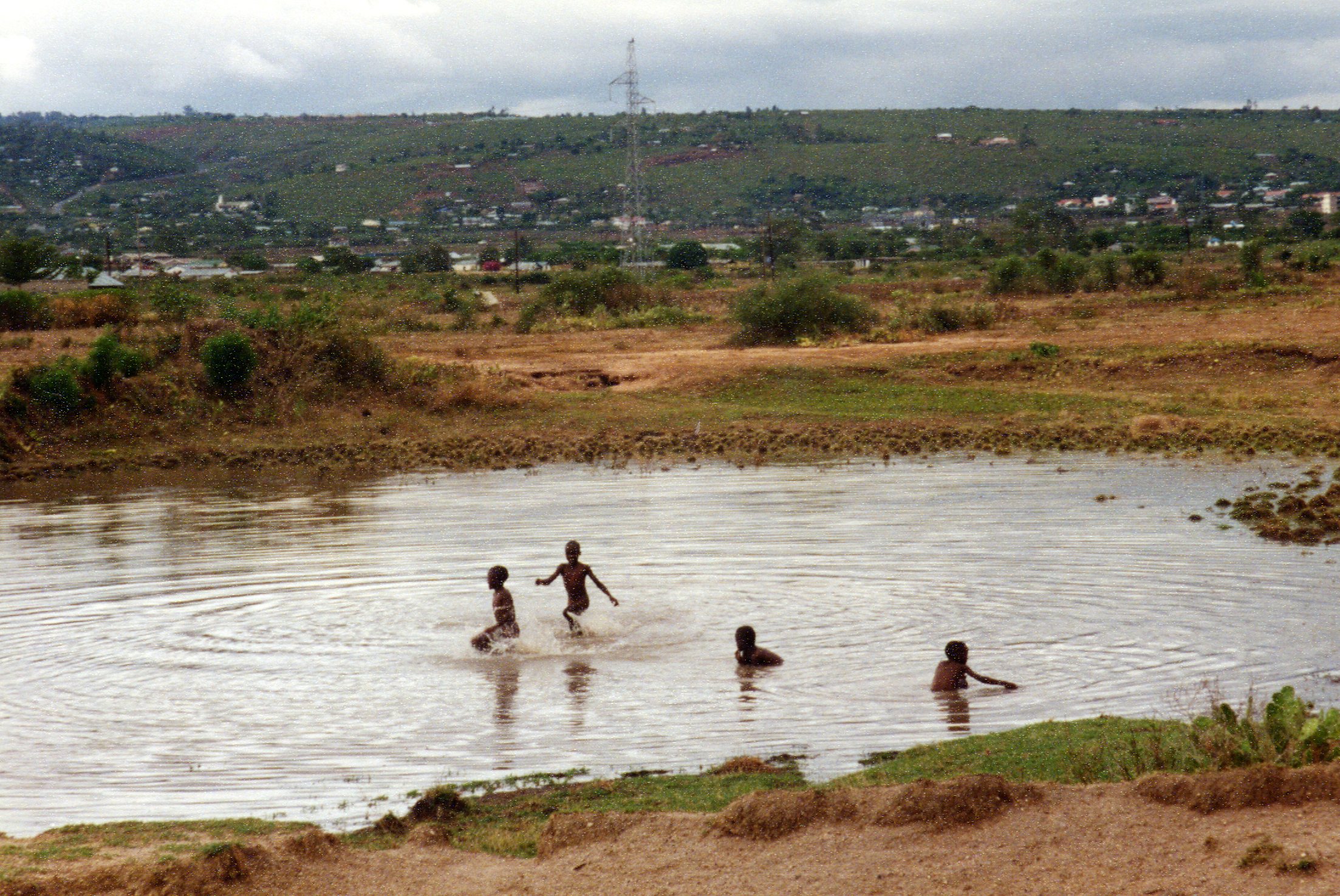
It was cloudy, hot and humid outside but lovely and cool in the Cathedral.  When Mass ended and we walked out, the heavens opened and the rain came down in torrents.  In no time at all the roads were awash and there were puddles appearing by the roadside.   From out of nowhere children appeared stripped to the waste and leaped into the puddles.  They were full of joy and having a whale of a time.  It was great fun to watch them.

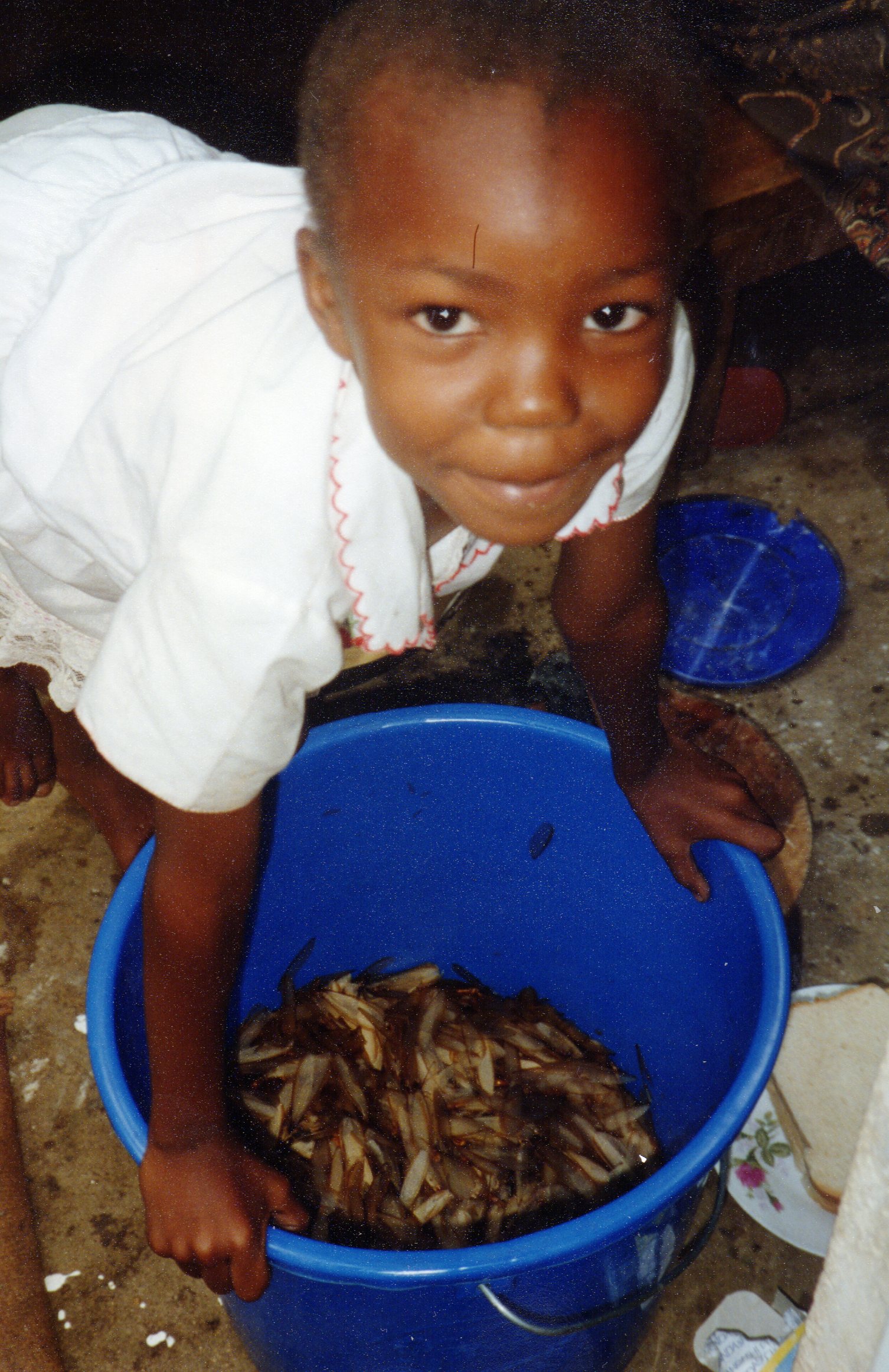
When the rain stopped the children all vanished then reappeared carrying empty tin cups, jugs or buckets.  This fascinated us and we were curious as to what they were waiting to collect.  Within minutes of the ground drying we found out.  Flying termites!!  They crawled out from every nook and cranny and took to the air.  But the children were obviously expert at this and they caught millions of the creatures.  They were so proud of their haul as they showed us how many they had caught.

By the time we reached home we were curious as to why they would want all these termites.  We soon found out when we got back to Dolrosa’s house.  There she was sitting on the kitchen floor over a gas ring with a frying pan full of flying termites.  She was preparing them as a treat for our Easter breakfast after church.

Mangoes on a market stall

Shoes made out of old car tyres

Easter Sunday buying lunch

fruit, vegetables, fish, meat, clothes, shoes, spices, all available at the market

Easter Sunday lunch is fried flying termites after heavy rain ~ nature’s bounty

Easter Sunday Mass in Kisumu

Instant swimming pool after heavy rain

Heading out to fish on Lake Victoria

Palm Sunday 2012

The Little Springtime ~ Palm Sunday
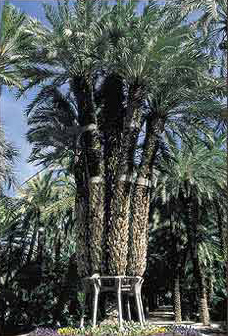
I absolutely love Palm Sunday.  One of the highlights of the school year when I was teaching was making palm crosses for STM parish.  It was a joy to teach successive year sixes how to fold and weave the palms.  We took great pride in making the neatest and tightest crosses so that they would not unfold when held at the Sunday Mass.  At Easter in 1993 I went to the Palm forest in Elche in Spain, where many of the palms which we use in churches all over Europe, are grown.  When the palms start to grow they are tied up and covered so that the sun does not get to them.  This stops them turning green.  When they are fully grown they are cut and wrapped.  They have to be kept moist until they are folded as they dry out quickly. In Spain, where great Palm Sunday processions are held in the streets,palms are folded into amazing intricate and decorative shapes.   But I prefer our simple crosses.  I treasure one that was made for me last year by my husband when I did not manage to get to a church service.  He did not have a proper palm frond so he went out into the garden and picked some long straight leaves which he lovingly weaved into a cross.   That one takes pride of place in my box of treasures.
Between 1970 and 2000 my life as a parent, teacher and then head teacher meant that my trips were always governed by school holidays.  Not being keen on very hot weather my favourite time to travel was always the Easter holidays.  For most of the 80’s and 90’s the Easter holidays meant I could join a Jumbulance trip to Lourdes with ACROSS.  I have written about one special Lourdes trip in a previous blog and I hope to write about my other trips eventually
Other memorable Easter holidays were spent in Kenya, Spain, Taize and Russia. In the Jubilee year of 2000, a very difficult year for me, I travelled between Assisi and Rome. 
Travel for me is an opportunity to learn about other people and to share with them; their traditions, communities and lives.  Sometimes we can be of help in some way and make a difference to people’s lives.  That is a privilege and a blessing.
One man who made a real difference was Roger Schutz.  In the 1940s he was appalled by the violence and suffering he saw across Europe.  Throughout the war years, he sheltered political refugees, especially Jews, whom he helped cross the border into Switzerland from the occupied region of France.  He began to develop the idea of a community based on mutual understanding and respect for all.  He found a suitable site at Taize near Cluny in the Burgundy region of France and on Palm Sunday of 1948, seven men took monastic vows.  They dedicated their lives to working and praying for ‘outsiders’ of all kinds; especially those living in extremes of poverty, hunger, or disease.  Taize is now famous for its gentle and powerful worship built on meditation through repetitive chants, a model of worship which has spread around the world.  Brother Roger’s work continues; to bring reconciliation, unity and peace to all the peoples of the world.  www.taize.fr
There is a beautiful icon of Mary in the Church of Reconciliation inTaize.  I would recommend anyone who travels to France to make a detour so that they can spend some time in Taize.  When I went to Taize one summer I had an amazing experience.   I stood alone in a field full of sunflowers, at the foot of the hill looking up towards the church, as a gentle breeze blew.  The wind caused the flowers to bend and the sound they made was so strange.   It reminded me strongly of the beautiful words of one of my favourite hymns:
 Be still for the presence of the Lord
Be still for the presence of the Lord  The holy one is here
Come bow before him now  With reverence and fear
In him no sin is found  We stand on holy ground
Be still for the presence of the Lord  The holy one is here
Be still for the power of the Lord  Is moving in this place
He comes to cleanse and heal  To minister his grace
No work too hard for him  In faith receive from him
Be still for the power of the Lord  Is moving in this place
I wish you all a peaceful and Happy Palm Sunday and the joy of your family around you x
Palm Sunday Crosses
Intricate Palm Sunday sculptures on display
Palm Tree a Elche
Icon of Our Lady at Taize
Brother Roger of Taize

Krakow today

I must just write a more cheerful account of my visit to Krakow to counter the gloom of the previous post.  Krakow is indeed a beautiful city and a fabulous place to visit.  It is so easy to get to from Bristol Airport taking just 2 hours and 10 minutes.  Once in Krakow it is very easy to catch a bus right into the heart of the city.  Bus tickets are very cheap as is most transport.  We travelled on trams which are spotlessly clean, very efficient and very frequent.  Once in the heart of the city though it is best to just wander.  There is so much to see and it is easier on foot.  If you really want to be a tourist however there are little vehicles which go to all the main sights, or the open carriages driven by a pair of beautifully groomed horses.
There are 10 world class heritage sites in Krakow and I think I saw them all!  I really did walk my feet off but it was a pleasure. There was never any problem with language as most young people speak very good English and older people are so lovely and friendly that we got by with maps, smiles and pointing!  Most of the time though we were shown around by Ben who speaks Polish like a native having lived and worked there for some time.
I suppose I could split my photos up by the days we were there or by the things that really interested me.  I have covered the unmissable Jewish Quarter and (unmissable for me) the Papal connection as well as the Black Madonna Icon.  Apart from those there was the great food, the lovely people, the superb buildings, and the sensational art nouveau stained glass windows of Stanislaw Wyspianski.  I missed the famous salt mines, the oldest in the world, with their breathtaking chapels hewn out of salt but will definitely go there one day.
I spent very little money as we were so well looked after by Ben and Kasia but I wish I had bought some of the amazing amber jewellery.  Amber is called the Baltic Gold, it is not a precious stone but is an organic substance – fossilised tree resin.  The largest deposits and some of the oldest are found around the Baltic shores.  Imagine, it was formed 40-60 million years ago!  I just love its purity, timelessness, richness and sheer beauty.  There is a shop in Krakow which has the most amazing display of amber.  Below is a picture of a sailing ship made entirely of amber that I would love to give house room.  I walked past it many times just to drool!
The meals we had were all superb.  The portions were so big that we had to share!  Krakow is full of wonderful cafes, restaurants and hotels.  Unlike in UK we felt that we could linger for hours over lunch or tea.  In fact there are cafes with WIFI where you can just sit and work or read for hours over a drink without anyone bothering you.  It is part of the cafe culture to encourage artists, writers and academics to spend time together and it is certainly inspiring.
There is a fun side to Krakow too as seen in the Dragon’s Den and the statue of the dragon by the River Vistula.  I had heard the legend of the dragon that used to live in a cave beneath the castle walls waiting to eat sheep or fair maidens.  But I was not prepared to be scared out of my wits by it!  I took little Maja for a walk along the river while my friend popped to the loo.  As I passed the dragon it suddenly roared and belched out a huge jet of smoke and flame.  Apparently it does this every so often – but no-one had told me that!
I also had lots of fun trying to catch a photo of the bugler who plays the Hejnal from the upper windows of St Mary’s Church to the four quarters of the world.  I always seemed to be looking in the wrong quarter!  The Hejnal is the musical symbol of the city.  It was played in medieval times as a warning call.  It is now played daily every hour and at midday on Polish radio.
The market square and cloth hall are fascinating places where tourists can buy any manner of things.  I bought a beautiful palm for Palm Sunday.  I watched the young girl make it from ears of wheat and dried flowers with palm leaves interwoven.  I was surprised by the abundant flower stalls as there did not seem to be any flowers growing locally.  In fact, after a harsh winter when even the Vistula froze over, there was very little greenery around.  I suppose the flowers, huge roses and daffodils, are grown in greenhouses somewhere but they really are beautiful.
So I came home with most of my spending money still in my purse!  The currency is the  Zloty (zl).  It is pronounced zwo-ti and is divided into 100 units called grosz (gr).  The notes feature Polish Kings.  I should have changed my sterling in Poland as I could have got about 5 zlotys to the pound there.  In the UK I only got 4 which is a terrible rate.  But as I didn’t spend most of them it is academic really.
Below are some of my photos, if you want to see the other 600 you will have to pop round!

A visit to Krakow in Poland

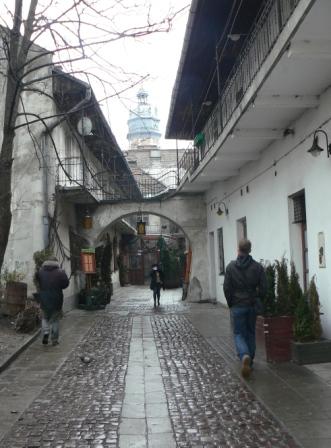
This street was used in the filming of Schindler’s List

Today, 27th January 2025 is Holocaust Memorial Day so I am republishing some of the occasions when the true horror of what happened to the Jewish people was brought forcibly home to me.

The city of Krakow is beautiful, compact, well preserved and a joy to walk around.  I went last week with a dear friend for a few days.  It was a leap of faith for me after my last disastrous attempt at a plane journey.  But this time I just relaxed and enjoyed the whole experience.  I thought it would be really cold but actually it was warmer in Krakow than the UK.
There are some times and some places I find, when all your interests seem to converge, and this was one of those times and places for me.  I once read that the thing of interest to a scientist is ‘everything in the universe’.  I’m no scientist but I do like to make sense of the world and I prefer to find out for myself rather than be told what to believe.  So my visit to the old Jewish quarter in Kazimierz as well as my visit to Schindler’s Enamel factory, which is now a museum, was a revelation.  This is what I learned:
“On great fields something stays.  Forms change and pass; bodies disappear; buts pirits linger, to consecrate ground for the vision – place of souls”. 
So said Maj. Gen. Joshua L Chamberlain at Gettysberg and I knew exactly what he meant when I stood on the site of the Jewish ghetto after visiting Oskar Schindler’s enamelware factory in Zablocie, Krakow.  It happened that I was there on 14thMarch 2012, 69 years to the day of the “final purge”.  The fact that this holocaust happened within living memory is horrific.  The fact that slaughter of innocents on this scale may be happening in parts of the world today is unbearable.
There were about 225,000 Jews living in Krakow before the war but only about 15,000 managed to survive it with the help of brave Poles who kept them hidden, and the enigmatic German Oskar Schindler who needed the cheap labour force they provided.
In March 1941 all Krakow Jews who previously lived in areas such as Kazimierz were forced to live in the new ghetto of Podgorze. The area comprised 320 buildings which had been home to the poorest Poles.  Almost 17000 Jews were now crammed into these buildings and the area was surrounded by barbed wire and walls.  By the autumn of 1941 the jobless Jews who did not have the correct paperwork were transported to concentration camps or shot where they stood.
On March 13-14th 1943 the final extermination was begun.  The firsthand accounts of the few who survived these events were recorded and can be heard at the Schindler factory which is now a museum.  I heard that the remaining men were separated from the women and children.  They were marched off to be used as forced labour.  Any who could not walk unaided were shot on the spot.  Then German soldiers went through the buildings clearing out the women and children to be loaded onto transport which would take them to the extermination camps.  Children and babies were just thrown out of the windows onto the waiting carts, not all landed safely.  The sick and elderly were just killed where they lay.
Literally thousands of Jews were loaded onto transport to the Plaszow camp where they gradually died from starvation, beating, disease, hard labour or execution.   Thousands of others were taken to the extermination camp at Auschwitz-Birkenau over the next few months.   The Auschwitz archives record the fate of those transported.  In February 1944 the remaining men arrived, in May the rest of the children and in August the women.  They all died in the gas chambers shortly afterwards.  The final transport of prisoners from Krakow arrived in Auschwitz the day before the camp was liberated by the Soviet army. 
For a harrowing first hand eyewitness account of all the deportations including the final purge there is the memoir The Cracow Ghetto Pharmacy by Tadeusz Pankiewicz.
On a lighter note, (well a bit lighter!), I am fascinated by the process of education, so a visit to the Jagiellonian University where my hosts worked, Copernicus studied, and Pope John Paul 11, as Karol Wojtyla, both studied and taught, was a rare treat for me!  I discovered that Krakow is still a city of real learning and culture.
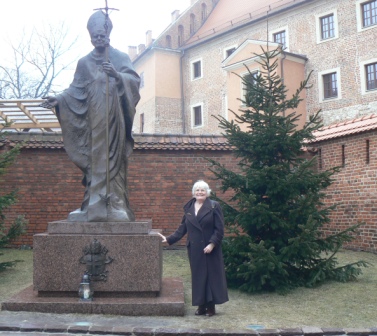
Karol Wojtyla, actor, poet, playwright, keen sportsman, philosopher and eventually Pope, was born on May 18th 1920 in a small flat with no bathroom and no running water.  The flat was above a shop owned and rented from Jews in Wadowice, which is 30 miles south west of Krakow.His mother died when he was very young and in 1938 he moved with his father to Krakow to the Jagiellonian University and became immersed in Polish Literature.  On September 1st1939 the first German bombs fell on Krakow as Karol prayed in the Cathedral onWawel Hill.  By the 6thSeptember the German army had occupied Krakow and renamed it GG, General Government.  On 17th Sept the Russians entered Eastern Poland.  On 27thSeptember Warsaw surrendered, the Polish Government took refuge in Romania and the swastika flew over Wawel Castle.  By November all 186 professors from the Jagiellonian University had been deported to a concentration camp.   This was the beginning of the German plan to destroy Polish culture.  Secondary schools, Universities and theatres were closed.  Masses were restricted and the celebration of Polish feast days was banned. When the University closed Karol got a job in a stone quarry and later in the office at the quarry.  He was involved in a subversive theatre group and the underground religious movement between 1941 and 1945.  On 17thJanuary 1945 the Russian army entered Krakow and the Germans retreated.  Karol Wojtyla was training for the priesthood in secret, finally being ordained on 1st November 1946 and going to continue his studies in Rome.  When he returned to Poland in 1948 it was under communist rule and it might have stayed that way if Karol Wojtyla had not become Pope John Paul 11 in 1978.  His power and influence on the world stage gave support to the trade unions in Poland which led to the Solidarity movement participating in the elections of 1989. Combined with the reforms led by Mikhail Gorbachev in the Soviet Union,and increased pressure from the West, communism collapsed in Europe and the Berlin wall came down.  In 1990 Lech Walesa became President of a democratic Poland.
Lastly,anyone who knows me well knows that I am a passionate collector of icons ~ of the postcard variety I hasten to add not the priceless originals!  I had thought I would go on a bus trip to Czestochowa to see the Black Madonna, but Our Lady of Czestochowa found me in a chapel in the Royal Cathedral at Wawel Hill.  I was mesmerised by this ancient copy, especially the eyes of the Madonna.  They seemed to look right into my soul.  I was more than happy to miss out on the bus trip and stay and pray here.
 So my short visit provided lots of food for thought.  It reaffirmed my belief in the dignity of the individual; in human rights; and in Christian values.  My gregarious side was thrilled to spend time in the company of our wonderful hosts, Ben, Kasia, Maja and their multi-lingualfriend Adam.  I would love to visit Krakow again one day.
Here are some photos from the displays at the Schindler factory or the Jewish Museum which touched me greatly.  They show families and groups of Jews being taken or led away from the ghetto to the camps.  They had to carry whatever they could and abandon the rest.  The last picture shows the Plaszow Camp between 1943-44 where women are being marched to forced labour.

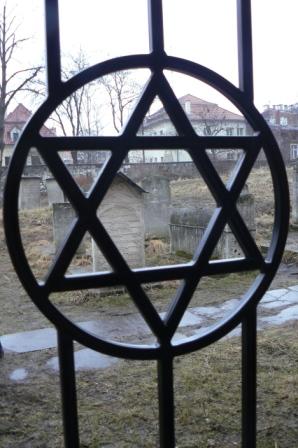
Jewish cemetery

Karol Wojtyla’s parish church


Standing by the statue of Pope John Paul 11

Mothering Sunday

Missing you Mum on Mother’s Day
Just five months ago we sat in the garden on a sunny autumn Thursday, my mother and I.  We saw a hummingbird hawkmoth, a rare visitor to the UK.  Like a large bee crossed with a moth, it hovered over the flowers like a hummingbird.   We were at the The Owlpen, mum’s care home, enjoying the last warm days of the year.  Sitting with us were Diana, Phyllis, Agnes and a lovely Welsh lady who didn’t speak at all.   Agnes spotted a plane with four wings flying round and round in circles.  A training flight we thought or maybe a pleasure flight.  No-one else noticed it.  Diana was earnestly knitting hats for merchant seamen.  She has made hundreds over the years from wool that people bring her.  She says it keeps her mind alert and her hands busy.  She doesn’t need a pattern now, she knows the stitches so well, but she has to concentrate on counting the rows.   Phyllis is a large lady with sparkly eyes, very little hair, and sorely swollen legs.  She has difficulty walking and forgets where she has put her stick.  She loves to chat about her grandchildren and to hear about other people’s.  Agnes is mum’s best friend at the Owlpen.  She is a lovely cultured lady who reads the Times from cover to cover every day to ‘keep abreast of the news’. Agnes enjoys good conversation but gets cross with herself when she can’t remember the words she wants to say.
Mum’s eyes do not sparkle today.  They look milky and dull like an aged pet.  She is not joining in the conversation and does not appear to be enjoying the lovely day.  It worries me that she seems so quiet and a bit confused.  I fear she is fading in mind and body so I ask the nurse to make an appointment for the doctor to visit.  
On Monday I arrive early to be there when the doctor comes.  He is young, gentle and kind and asks mum lots of questions.  She is overawed by him and doesn’t want to be a nuisance so she says she is fine.  I gently coax the symptoms out of her.  Didn’t you have a pain in your tummy mum?  “Yes, a little bit”.  Doesn’t it hurt your back when you are moved mum?  “Yes, a little bit”.  Haven’t you gone off your food because it makes you sick mum?  “Yes, a little bit”.  Bless her, it breaks my heart to see how dependent and deferential she has become.  Where is the proud, strong, creative lady?  What happened to the northern matriarch who watched over the whole extended family for the last sixty plus years?
The doctor says he won’t distress her further as she seems a bit down.  So I stay for the whole day.  We read the book of Old Gateshead and go down ‘memory lane’.  We have coffee and share a bit of cake.  At lunchtime I sit with her and she manages to eat a whole bowl of soup.  She is so animated now that we decide to have a girlie afternoon.  Fortunately I brought my manicure set and some nail varnish.  I cut her nails and massage her hands with Wild Rose Beauty Balm from Neal’s Yard.  Then I buff the nails to smooth them and paint them Midnight Bronze.  By the time I leave she looks relaxed and radiant, and the room is filled with the smell of roses.  I have never been happier in my life and I will treasure the memory of that day forever.  My mum died before the week was out. 
Next Sunday is Mothering Sunday and the pink roses she loved will go on her grave. 
I would give the world to be able to buy her a card, take her for a drive, or make her a special lunch.

Lenten memories of Lourdes

Memories of another March and a pilgrimage to Lourdes
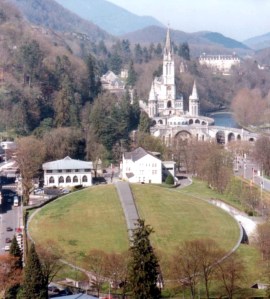
View of the Domain from the tower of the fort
For me Lourdes is a very special place on Holy ground.    The Spirit moves there in the rushing waters of the River Gave, and in the gentle breeze that wafts down from the mountains.  The Spirit moves there in the souvenir shops where the staff will literally move the doors, displays and furnishings to enable a wheelchair bound customer easier access.  The Spirit moves in the cafes where no-one minds if you just buy a drink but use their toilets and take up all of their tables and chairs to eat your own picnic. The Spirit moves in the Churches, the Grotto, the Basilicas and all around the Domain, where the sick and infirm are the VIPs who go straight to the front of any queue, getting the most attentive care.

I have fond memories of travelling as a helper on many ACROSS trips to Lourdes by Jumbulance. Trips were usually made up of 10 VIPs and 10 helpers, with a Doctor and 2 nurses ready for any medical emergency, and a Priest to celebrate the sacraments whenever and wherever the need or opportunity arose.

We all stayed in specially adapted accommodation at L’Astazou where attentive staff catered for our every need.  We helpers were there to make it possible for VIPs, whatever their physical limitations, to take part in and enjoy all the wonderful experiences on offer in Lourdes and the countless opportunities for prayer and Liturgical celebration in spectacular settings.

Amongst the most memorable celebrations I attended, apart from those in the Grotto itself, was an International Mass at Pentecost.  It was celebrated in the amazing Underground Basilica and attended by more than 30,000 people of all ages and in all conditions.  Mere words cannot describe the emotive power and overwhelming joy of celebrating Mass with that number of people singing as one to the Lord in such a vast and impressive setting.

Yet another was celebrated on a mountain-top in a thunderstorm complete with lightning!  We often had to improvise in unusual settings, as when we used a wheelchair for an altar and celebrated Mass on a grassy bank beneath the statue of Our Lady of the Snows, with the sun in the sky and a breath-taking backdrop of the snow-capped Pyrenees.

I imagined sharing such experiences with a very dear friend who was very sick, we will call her M, who, although she had travelled far and wide had never been to Lourdes.   I suggested that we could go together and her immediate response was, “Yes, we should”.  She was keen to make the pilgrimage as soon as possible and we thought Holy Week would be a special time.  So, I set about making the arrangements and she prayed for the strength to travel.

In Oliver Todd’s lovely little guide, The Lourdes Pilgrim, he describes a pilgrimage as,

“a reflection of our life’s journey towards God, with all the decisions and demands that this makes on us.  On a pilgrimage, which might last only a week, we encounter the spiritual milestones of our lifetime’s journey in faith”.

Well my life’s journey towards God has at times resembled stumbling across a minefield on a foggy night in hobnail boots, so I thought I had better get some help!  As there were no organised trips available when we wanted to go, I turned for help to one of my soulmates and a Lourdes veteran, whom I shall call C, to do all the driving and practical stuff so that I could devote all my attention to caring for M.  Thankfully he agreed.

M’s doctor was very keen for our venture to succeed but it was not possible for her to travel with us in person.  So, she visited M at home and made sure that she had everything needed to make the trip as comfortable as possible.  She gave me all the reassurance I needed that I would be able to look after her and assured me that qualified medical help is immediately available in Lourdes itself in case of emergencies.

I then turned to Tangney Tours for help with travel and they could not have been more helpful.  They organised a flight from Birmingham to Toulouse so that we would not have to endure long uncomfortable drives or flights. They organised the perfect ‘people carrier’ for us, a Kangoo, to drive from Toulouse to Lourdes in.  It had plenty of space for luggage and wheelchair, and it was almost brand new with only 500km on the clock.  They also booked us into the central Hotel St Sauveur where we had excellent rooms.  Last but not least they gave us the phone number of their permanent representative in Lourdes, who was most helpful and even came to visit us at the hotel.  So, there was no escaping now.

Lourdes here we come!

Monday~ The journey to Birmingham airport was pleasant and short with M resting comfortably in a reclined passenger seat complete with pillow.  The airline company had been informed that we would be travelling with a wheelchair so we got very good service.  A lovely young lady called Sue met us and took us all the way to the plane.  Sue was very interested in our trip and wanted to hear all about Mary, Bernadette and Lourdes. She asked of Mary, “wasn’t she the one who had a baby?”   Sue told us about a pilgrimage she had been on to the shrines and temples of India, and about her confusion over the Bible, and different Christian religions. Such deep conversation and we hadn’t even left Birmingham Airport!

The flight was short and M slept most of the way while C and I chatted about all the places we would like to visit with her.  The landing made M feel a bit queasy but a cup of tea and a sandwich soon made her feel better.  We then picked up our Kangoo and set off for the drive to Lourdes by the scenic route ~ because I was navigating!  It was picturesque and the weather was dry.  We stopped on the way for refreshments and to give M a chance to stretch her legs.  We nattered, laughed, reminisced and generally relaxed, as we got closer to Lourdes via Tarbes.  We arrived in good time for dinner at the hotel.

One of the surprises of the week was that M really enjoyed her food and ate heartily at every meal.  This was a great relief as she had refused point blank to bring any of the nourishing liquid meals that she had on prescription.

After dinner we settled into our rooms, a shared twin for M and me and a single for C.  We could almost see the Basilica from our window and we could clearly hear the singing from the Torchlight Procession.  But after all that travelling we were happy just to listen for tonight.

Tuesday~ We made our first visit to the Domain to say hello to Our Lady at the Statue of the Crowned Virgin. We then went straight to the Grotto where the Brancardiers cleared a way for us and M had her first glimpse of the spring from which Bernadette had drunk, and the actual Grotto where Our Lady had appeared.  We put our written petitions into the petitions box, handing them over to Our Lady, then touched the cold rock and blessed ourselves with the water trickling down.  We then made our way past all the candles and saw that there were no queues at the baths. M was determined to go into the baths so we went straight to the ladies’ entrance, as C went off to the men’s.  As always, I found the baths very humbling – and incredibly cold.  M bravely entered the bath after me and was almost fully submerged as she walked slowly towards the little statue of Our Lady in penance.  I think she would have stayed there all day she was so moved by the experience.  She didn’t mind the cold, she felt invigorated.  C was out much quicker than us and got into conversation with a Vietnamese lady.  She told him she was only in Lourdes for one day with her doctor son.  She had wanted to bring her husband who had cancer, but sadly he had died before he could make the trip.  His name was Joseph.

We then found each other again and went to see all the places of interest in the Domain.  First, we visited the Crypt, which was the first church to be built in answer to Mary’s request.  It was blessed on Pentecost Sunday 1866 and the first of countless pilgrimages started. Next, we went to the Basilica of the Immaculate Conception, or Upper Basilica, a Gothic style building consecrated in 1876.  Inside there are many chapels to see and beautiful stained-glass windows, which depict the story of Lourdes.  Onward we went to the Rosary Basilica, opened in 1889 and consecrated in 1901, where we were pleased to see that many of the mosaics have been restored to their original beauty.  There is a large mosaic of the Virgin Mary with arms outstretched and an inscription ‘Par Marie a Jesus’ which means ‘Through Mary to Jesus’.  We saw an interesting exhibition about the Turin Shroud at the Chapel of Cosmos and Damian before going back to the hotel for a very welcome lunch.   M requested chicken and chips followed by apple pie and ice cream.  After such a busy morning we had an hour’s rest before getting onto a petite train for a tour of the museums and town of Lourdes. This was very successful as we all saw places we had not seen before.  We decided to get off and visit the rather overpowering Chateau Fort for the fantastic views over Lourdes, and to see the model villages and floral displays. M took lots of photos then we returned to ground in a dreadful old lift and decided to go shopping.  There is a special shop in Lourdes with a very eccentric owner, an obsessive collector, who seems totally unimpressed by customers to the point that he simply ignores them.  His shop is stuffed to the gunnels with treasures and every year it gets harder and harder to see his stock because it is so cluttered.  But it really is so wonderful we just had to battle through his defences.  Onward we went buying candles and postcards until M spotted the River Gave.  The river was like a raging torrent crashing over huge rocks and hurtling round bends.   M was very fond of water, the wilder the better, so we found a place where we could climb down and we sat against a wall basking in the sun like a pair of lizards until it became uncomfortable.  We then had a hot chocolate in a café and headed back to the hotel for a well-earned rest before dinner.  That evening we went to the torchlight procession.  The procession was very small because the big pilgrimages don’t start until Easter week, and it was very dark because the wind was so strong that the candles kept blowing out.  But we made our way down and were ushered straight to the best place in front of the Basilicas.  Our candles were relit and we sang the final hymn, ‘As I kneel before you’.  C remembered talking to a priest who knew the girl who wrote this hymn after an experience in Lourdes.

Wednesday~ M had a good night’s sleep after our very full day yesterday and she was very chirpy at breakfast.  We are letting M set the pace and choose what we do each day so it is a very different experience from the larger ACROSS group pilgrimages.  Today we planned to drive to St Savin to see the old Benedictine Abbey.  On the way I popped into a Chemist to stock up on the dressings, which made M a lot more comfortable.  She posted her cards and had a look at the local street market with C. She was very unimpressed with the prices!  We then set off on the road to Argeles, which would lead us up into the hills and to St Savin.   The weather was not good with drizzling rain so the expected superb views were tantalisingly obscured.  But we arrived and had a wonderfully peaceful time in the ancient abbey.  We settled down by Our Lady’s Altar and lit 3 candles, one for each of us, and our intentions.  As the three of us prayed together in silence, a deep peace settled on us and it lasted and lasted and we rested in it.  To our right a small arch framed the Blessed Sacrament on the altar at the other side of the church.  We quietly left the abbey and headed for the ‘Poste-Café’ for some hot drinks.  We settled down and started talking.  M mentioned the Infant Jesus of Prague and was invited to tell us more.  She gave us a moving account of the story of the statue and we shared some of our journeys through life.  We all need the healing touch that only the Lord can give.  Going from the sublime to the ridiculous, which is a hallmark of pilgrimages I find, we each went into the loos to marvel at the floral toilet seats and animal pictures on the walls.  We had parked the “Roo” in our favourite spot and headed back there for our picnic.  The drizzle had eased and the clouds had lifted to reveal a panoramic view of the snow-covered Pyrenees.  It was made more breathtaking by the black kites flying just a few metres away from us. “It’s a wonderful day – praise the Lord”, as Brother Joe would have said.  Bro. Joe was a Salesian who had travelled to Lourdes with us several times and he was always in charge of the weather, since wherever he went the sun went too.  However, his philosophy was that the sun did not follow him, he just knew where to go to find it!  So, following his example we decided to just drive and see where the Lord took us.   M had warned us that she does not like being driven up steep roads so we convinced her that the Pyrenees were not steep as we headed straight for them.  Fortunately, she was so captivated by the views of the rushing river Gave, the waterfalls and snow-capped mountains against the deep blue sky that she failed to notice how high we were climbing until we arrived in the ski resort of Gavarnie. Here we all turned into children again, throwing snowballs at each other and enjoying the warmth of the sun.  M’s joy was complete when she saw the small row of shops selling souvenirs and wonderful sheepskin goods – and so cheap. She raced through the whistling dolls and cowbells looking for presents for her much loved family, with some success. We then walked as far as we could with M in the wheelchair towards the frozen waterfalls, the source of the river Gave. We passed donkeys, skiers, and intrepid souls who walk or cycle the Pyrenees for fun!  After refreshments in a café we headed back for Lourdes enjoying the spectacular scenery once again.  A more pleasant way to spend a day would be impossible to imagine.  And when we got back to Lourdes we went straight to the Underground Basilica for the Blessing of the Sick.

The service was well attended but we were able to get right to the front with the wheelchair.  C was struck by the beauty of the cross with figures of Mary and John below.  In front of it was a floral display, which we had noticed in other Basilicas.  It comprised a large palm, which seemed to form the base and the back of the display; rising in front and from it were sprays of white flowers and some red tulips.  It symbolised Holy Week from Palm Sunday, and right up to the Resurrection. The Blessing was very simple and moving and then we went back to the hotel exhausted.  Supper was delicious as usual and M managed all four courses. Afterwards she felt so well that we went for a drink in the bar before bed.

Holy Thursday ~ Today was planned as a special treat for M as we knew how much she loved markets. Ray from Tangney Tours had told us that Tarbes market is the biggest and best around so that was our destination. At the sight of all the stalls M got a new lease of life.  She abandoned the wheelchair and was off.  It was all we could do to keep up with her.  I have to say the market was impressive with beautiful French designer clothes at bargain prices.  Still M haggled and got prices even lower until hardened stallholders were visibly despairing.  We felt it was time to rescue them and lured M off to a café for drinks.  After a few more forays and a few purchases she was satisfied and we set off for our next destination, Bartres and Hosanna House.

Hosanna House, home of the HCPT, had been spring cleaned ready for the arrival of the big Easter Pilgrimage.  The English staff had just arrived and the head of the ‘Handicapped Children’s Pilgrimage Trust’ was expected any minute to inspect the house. However, as always, they welcomed us with open arms and let us browse round their lovely little shop.  We could have spent a fortune, in fact two of us did, but we were getting hungry so we set off to find our favourite café in Bartres. We passed the sheepfold where Bernadette had worked as a shepherdess in 1867.  The Bergerie (shepherd’s hut) that Bernadette would have known so well is still there and visible from the road.  After another delicious picnic and lots of hot chocolate we set off for Lourdes once again by a different route.  This time we passed L’Astazou and glimpsed the ‘chateau’ where we had stayed so many times with ACROSS.  It was sad to see it all shuttered and empty but the ACROSS sign was still on the gate. Back in Lourdes M had a rest while C went out to buy all the water bottles, candles and last-minute gifts for the people who were with us in spirit.  He found a wonderful new shop selling religious items but kept it secret, fearing that M and I would plunder it if we knew its whereabouts.

After a quick meal we set off for the Mass of the Last Supper in the Underground Basilica.  This was impressive with quite a big crowd.  Being well wrapped up with blankets in the wheelchair, M slept through some of the incredibly long homily, which was entirely in French.  C and I had to kneel on the cold stone floor for almost two hours so we managed to stay awake.  We would have loved to ‘stay and watch’ all night at the Grotto but we were all very tired and it was raining hard so we went back to the hotel to pack and sleep.

Good Friday~ Our last day in Lourdes and we intended to spend as much of it as possible near the Grotto.  We took candles of various sizes with us and lit them, placing them on the special stands and praying for our intentions and for all of the people who helped and encouraged us and made this pilgrimage possible.

The Grotto has changed, with a new altar made out of rock, and steps possibly for a lectern being cut into the face of the Grotto as well as new candleholders around the inside.

We went to fill up our water bottles with Holy Water from the taps then decided to follow the Way of the Cross in the Underground Basilica.  We had no books with us so we took it in turns to say a few words at each station and to pray again for our intentions.  Then we set off on the return journey to Toulouse.

We stopped briefly so that at the Holy time of 3pm on Good Friday we were sitting together deep in our own thoughts and surrounded by icons in the exquisite Ukranian Orthodox Church.  Looking out of the window we saw the snow-covered mountains bathed in sunlight.  It was a beautiful way to leave Lourdes and we had a wonderful journey back.  The scenery was beautiful and we passed numerous shrines, churches and crosses along the way.  The kites seemed to follow us and we were all totally relaxed. M slept peacefully throughout the flight as C and I recalled all we had seen and done.  We agreed that it was a gentle pilgrimage.  We felt that we had been drawn to Lourdes by Our Lady and guided and blessed by her son.  What a privilege it had been to share that precious time with M.  And what an inspiration she was.  My abiding memory will be that even though she was so ill, and she knew it, she never once complained or worried about herself.  She was incredibly brave and so considerate. Her petitions were always for others not herself.

M died less than a month after we returned from Lourdes.