Rescue

“Photo by courtesy of Shirley Betts, www.castoncameraclub.co.uk “ “Photo by courtesy of Shirley Betts, http://www.castoncameraclub.co.uk

Written for the Haiku Heights prompt word “Rescue”

High tide rushes in

trapping cows in the mudflats

Call in the coastguard

The cows got stuck in the mud The cows got stuck in the mud

Stuck in sinking sand

In danger of drowning, cows

unable to move

We watched this drama unfold on a day at the seaside and I just had to write a little account of it for the grandchildren.  I used to write little stories down for them with photos to encourage them to read.  Now they write stories of their own and are fluent readers at 7 and 9 years old.

Ben and Rosie’s adventure at the seaside

In the Easter holidays Ben and Rosie came to stay at the caravan in Burnham on Sea with grandma and grandad.  The weather was bad and it rained a lot but they still went to play on the beach.

Rosie built a sandcastle with her bucket.  Ben dug 99 holes with his spade.  Grandma caught a shrimp.  Grandad looked for crabs.  We were having fun.  Then Ben saw a little boat and he said, “That boat is sinking grandad”.

Grandad said, “I found a crab but it is dead”.

Again Ben said, “That boat is sinking grandad”.

Grandma and grandad looked but they could not see the boat.

Just then a small rescue hovercraft came along and Ben saw it.  Then a big rescue hovercraft came along and Ben saw it.  They were both orange and black.  The big one was called Light of Elizabeth and the small one was called Spirit of Lelaina. The small hovercraft started to make a loud noise and a cloud of smoke came out of it.  Then it stopped moving.

Ben said, “The rescue boat is sinking grandad”.

This was getting very exciting so grandma said, “If we hurry along the beach we will see what happens”.

Ben let Rosie ride on his orange two wheeled bike, because she could not run very fast.  But the bike was too big and Rosie could not work the pedals, so grandma pushed her along on it.  Ben and grandad walked quickly along the sand, up the steps, over the slipway and down onto the other beach.  Then we all stood at the edge of the water and watched the big hovercraft, the little hovercraft, and the white fishing boat that was sinking.  It was very exciting!

The black rubber skirt around the bottom of the little orange hovercraft had torn.

The belt that drives the big fan on the little orange hovercraft had snapped.

The engine on little orange hovercraft had flooded.

The little orange hovercraft could not move!

First the big hovercraft rescued the little white fishing boat and helped the fishermen get their boat onto a trailer.  Then a 4 wheel drive car towed the trailer and boat safely away.

Then the big rescue hovercraft went to help the little hovercraft.  They put on a new fan belt and tried to start the engine but it would not work because the engine was flooded.  So they tied a long rope to the little hovercraft and pulled it slowly to the beach.  Then all the rescue men pushed and pulled until the little hovercraft was put on a trailer.  Another 4 wheel drive car came to tow the little orange hovercraft away to be repaired.  Ben and Rosie were sorry to see the little hovercraft so damaged and covered in mud.

At last the big orange rescue hovercraft was ready to get out of the water and go back to its home next to the coastguard station in Burnham.  It sailed right to the edge of the beach and the men and a little white dog climbed out.  They tried to get the hovercraft onto its trailer.  They pushed and pulled but it would not move.  Ben said, “The men need help grandad”.  So grandad took hold of the hovercraft and pushed with all his might.  The men pushed, grandad pushed and the little white rescue dog barked.  Then the big orange hovercraft slowly moved onto the back of the trailer.  The men were so pleased that they all cheered and patted each other on the back.  The little white dog was so pleased that he jumped up and down wagging his tail.  Ben, Rosie and grandma were very pleased, and proud of grandad for helping to save the big orange rescue hovercraft.

The rescue men told us they had just rescued a herd of cows that had wandered out of their field and into the River Parrett which flows into the Severn Estuary!  The poor cows were frightened and got stuck in the mud.  That is why the rescue men were covered in mud.

Everyone went home for tea very wet and very muddy ~ but very happy.

The cows were safe.

The little white fishing boat was safe.

The little white dog was safe.

The rescue men were safe.

The little orange hovercraft was safe.

The big orange hovercraft was safe.

Ben can tell his friends at school about it.  Rosie can tell her friends at nursery about it.  And grandma can tell the story to Ben and Rosie over and over again ~ and the story will get better and better!

The End x

Picture Perfect Painswick

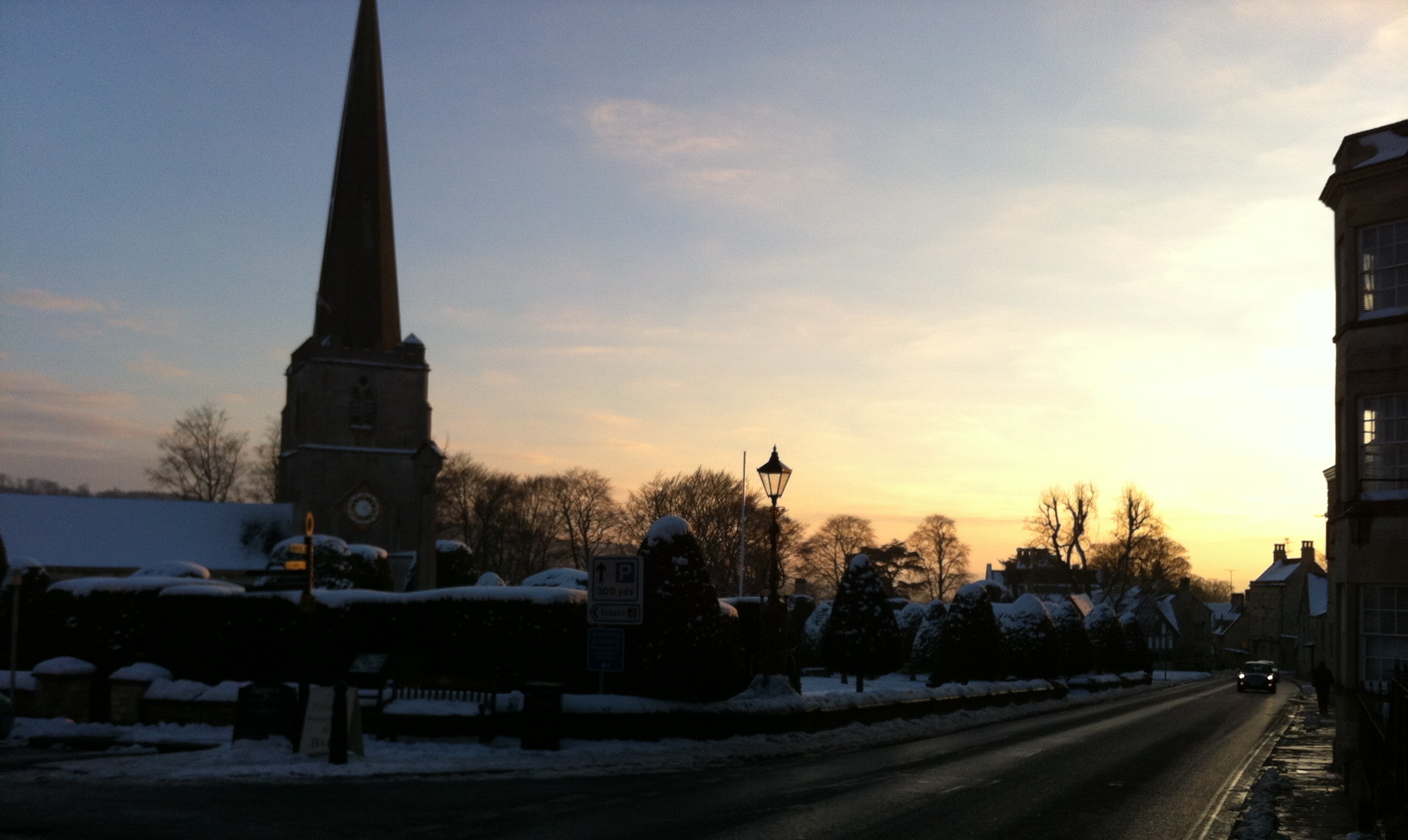
I went to Painswick yesterday to eat carrot cake and to see the snowdrops at the Rococo gardens ~ failed on both counts but had a great time enjoying spectacular scenery in wonderful company.  Painswick is quite high up in the Cotswolds so the snow is much deeper there and lasts far longer than down in the town.  But we had a lovely time, so here for my friends are my impressions in picture and haiku.  Apologies for the poor quality of the photos, I forgot my camera and had to use my phone!  ~

Ice daggers dangle

from ancient lead gutters on

St Mary’s lych gate

St Mary's Lych gate

St Mary’s Lych gate

Snow covered Yew trees

in picture perfect Painswick

Christmas card village

St Mary's Churchyard

St Mary’s Churchyard

Sun sets on Painswick’s

 honeyed stone cottages, and

cold Cotswold churchyard


Rococo gardens at Painswick

Rococo gardens at Painswick

White winter woodland,

following in the footprints

of the fallow deer

Strictly Come Dancing ~ Live Show

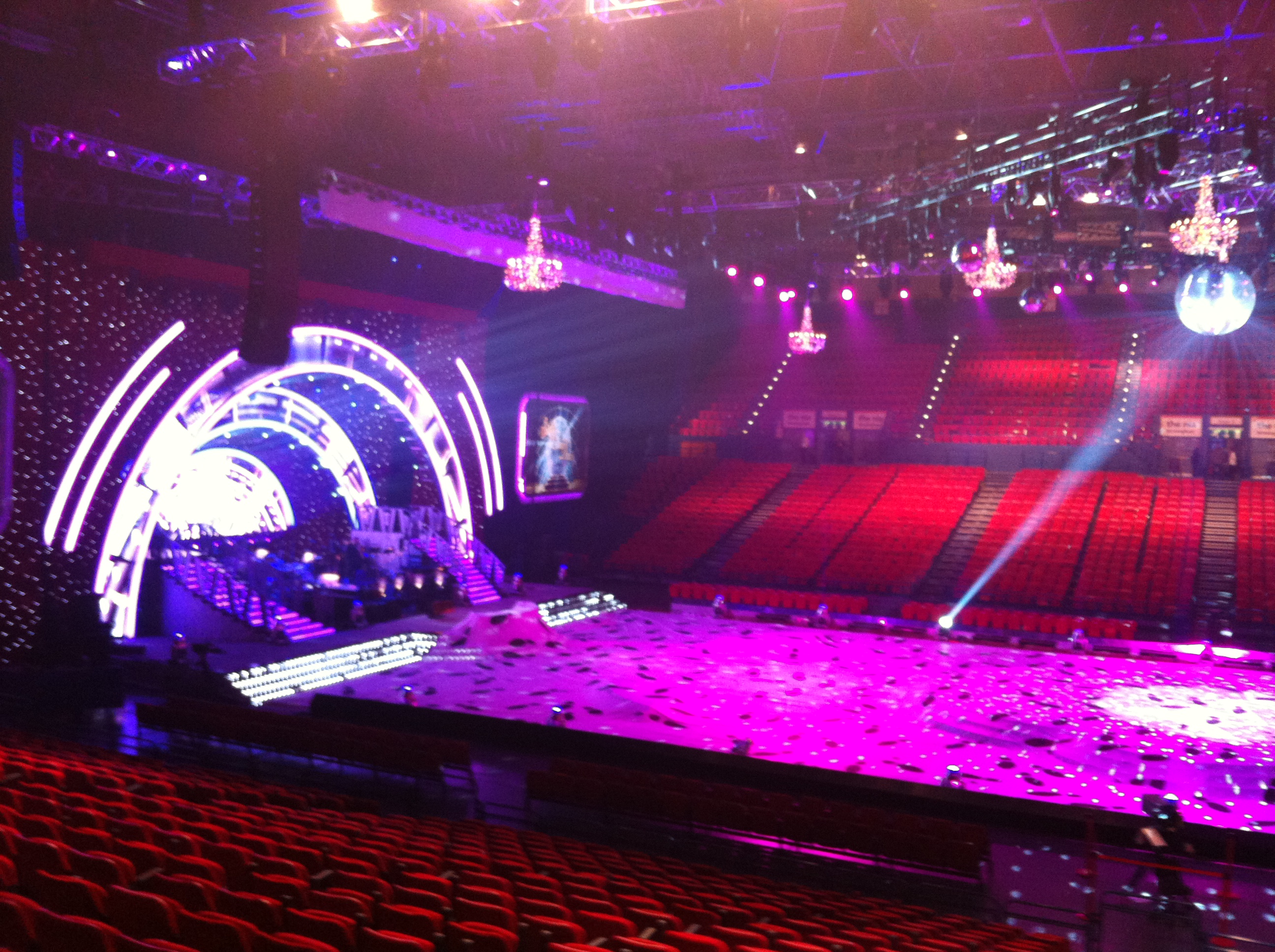
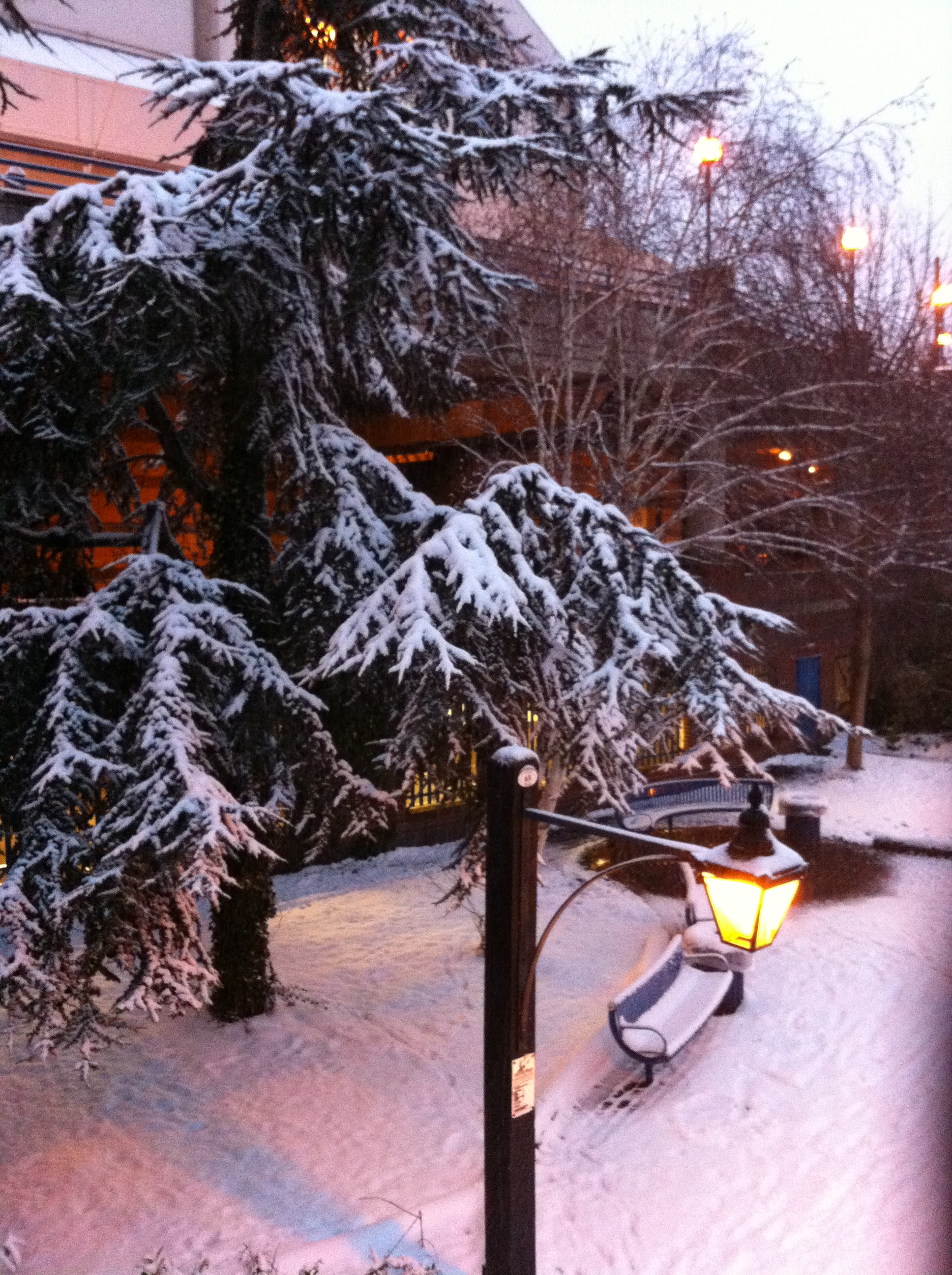
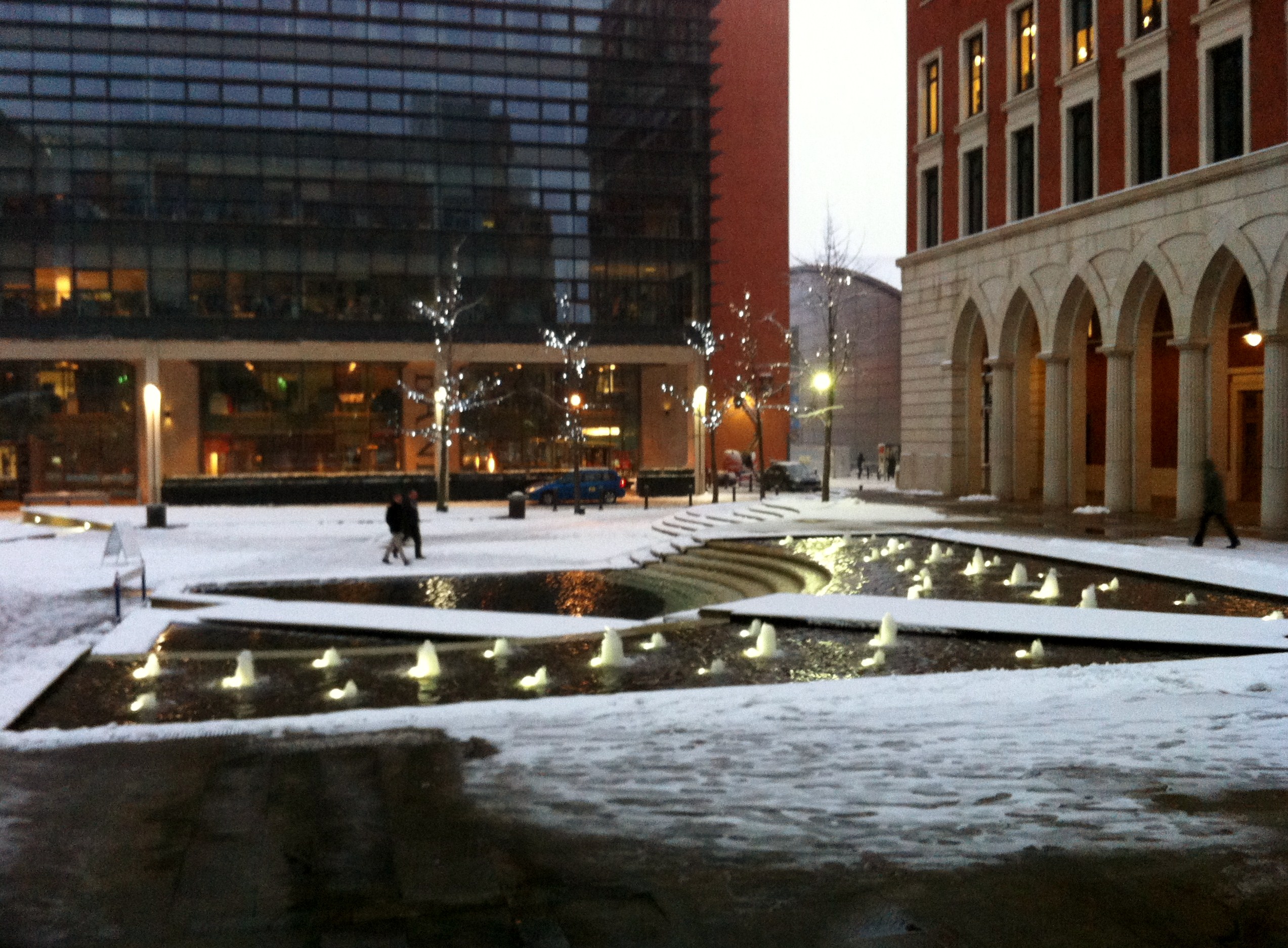
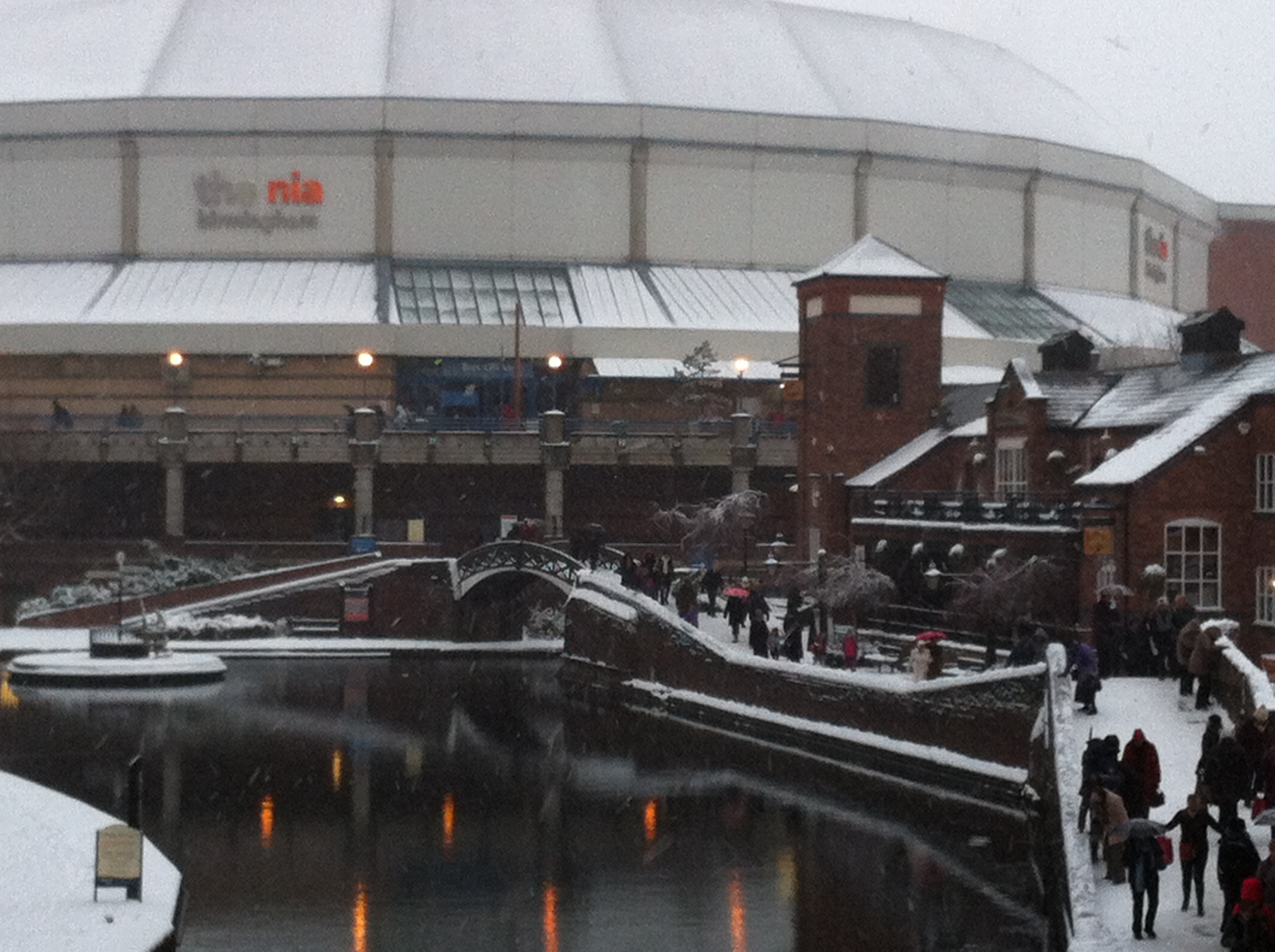
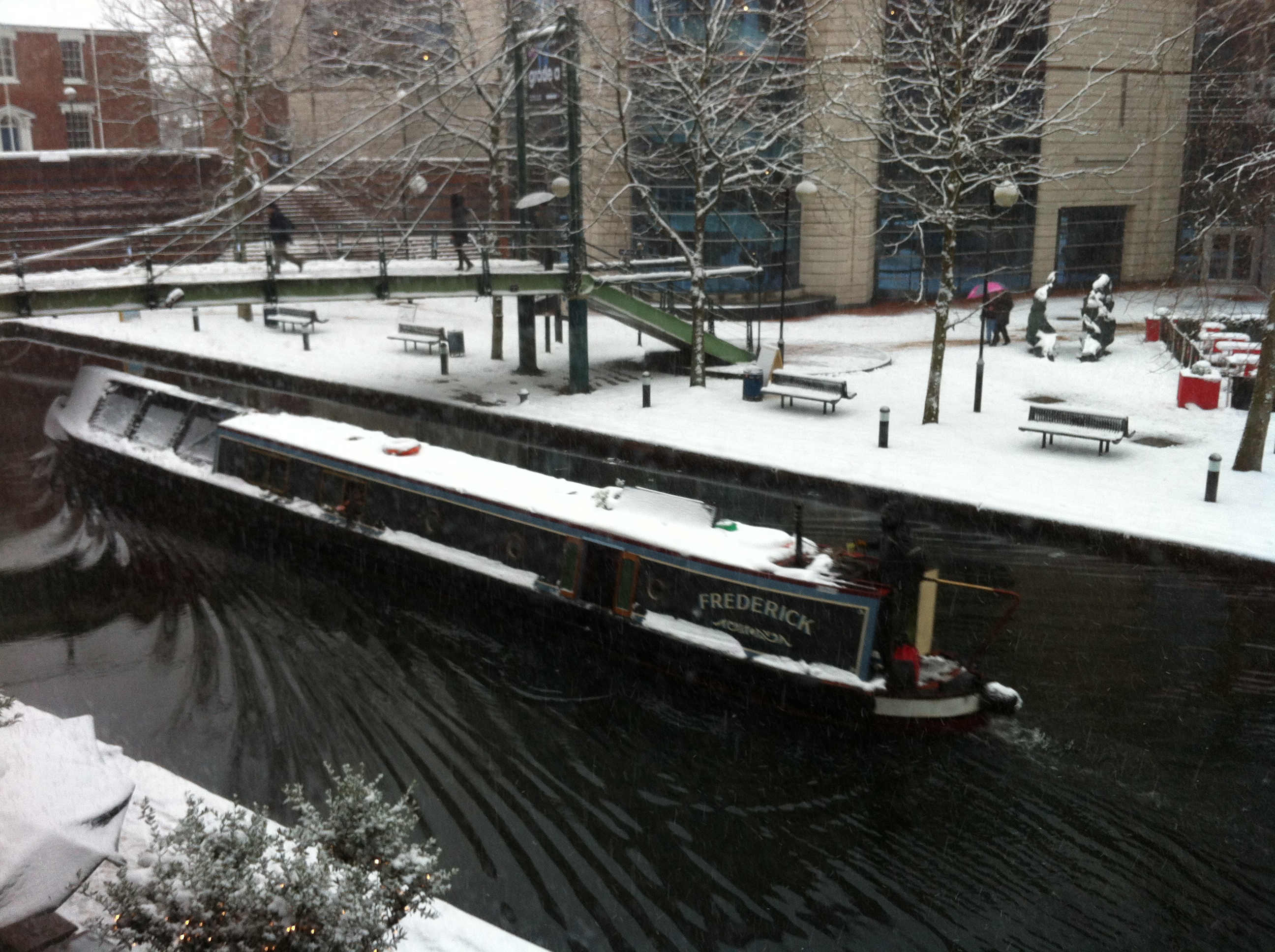
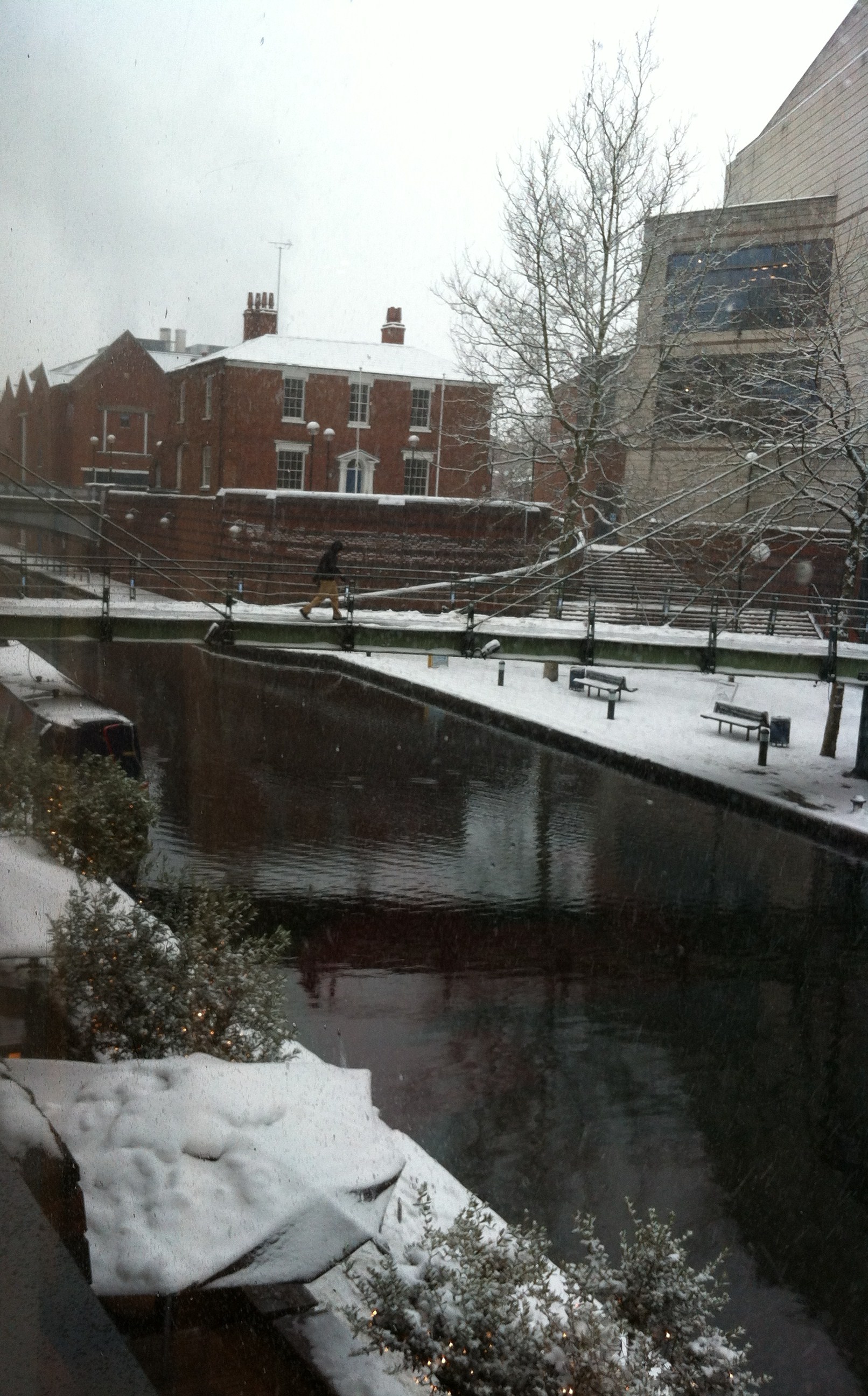
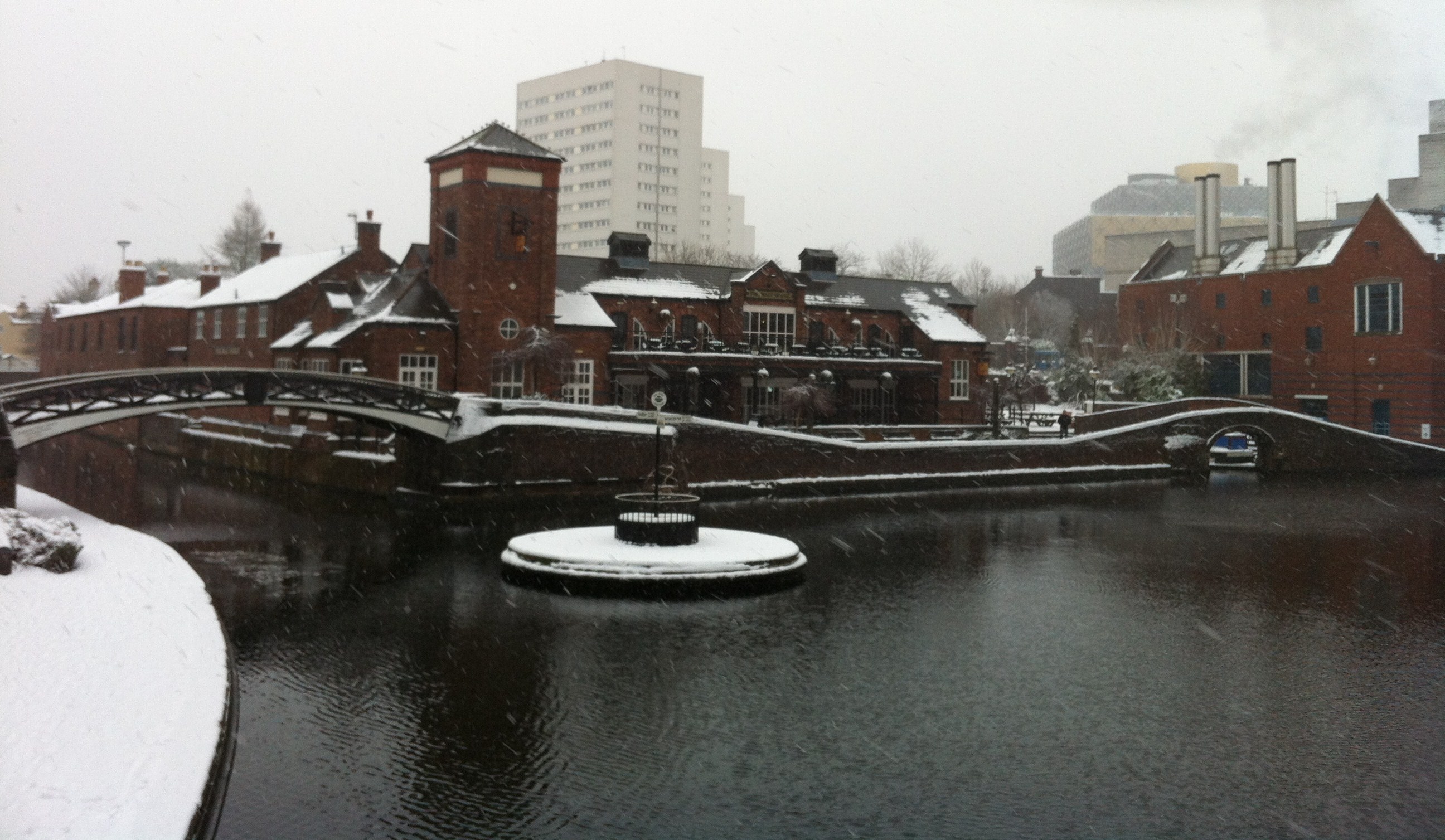
Went to Birmingham at the weekend for the live performance of my favourite TV Show ~ Strictly Come Dancing.  The tickets were an inspired and very thoughtful Christmas present from my children.  The show was at the National Indoor Arena in Birmingham.  The whole day was wonderful.  The NIA is set in the most beautiful part of Birmingham, Brindley Place, where the canals meet.  The setting is always beautiful with trees , water and lighting, but on Sunday it was amazing as the whole scene was set off beautifully by an iced covering of crisp white snow.

Once inside the arena, the performance was truly spectacular.  The costumes, choreography and lighting were breathtaking.  The professional dancers were fabulous and the celebrity contestants were superb.  My favourite of course was the Olympic Gymnast ~ silver medal winner ~ Louis Smith.  he really should be the next James Bond as he has looks, style, physique and boy can he dance!

Judging time at Strictly Live Show

Judging time at Strictly Live Show

Inside the NIA

Inside the NIA

Amazing lighting

Amazing lighting

Before the show

Before the show

IMG_0041

Snow covered fir trees

Snow covered fir trees

IMG_0038 IMG_0036 IMG_0034 IMG_0033 IMG_0032 IMG_0031 IMG_0030 IMG_0027 IMG_0025 IMG_0024 IMG_0019

No School Day

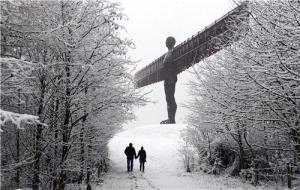
angel of the north in snow

It snowed overnight and the roads are a fright,

So the schools are all closed ~ on a Friday!

Mums and dads can’t drive, their cars slip and slide

So its family fun on a school day.

Dogs in bright jackets are leaping for joy

Taken out for a walk, on a school day.

Babies and toddlers peep out of their prams

They’re going to the park, on a school day.

Tiny tots muffled in mittens and hats,

Squeal in delight, on a school day.

Giggling girls, hugging their friends,

Slide down the hill, on a school day.

Teen terrors in hoodies become little boys

Throwing snowballs at girls, on a school day.

Steep slopes draw the daring on sledges and boards,

They hurtle downhill, on a school day.

I sit at the window and, like falling snow,

My thoughts pile up into drifts.

My smiles turn to tears at the sights and sounds

Of my school days, as the frozen scene shifts.

Of ink wells and blotters, of wafers and milk,

Of chalk boards and outside loos;

Of walking to school by the RiverTyne,

Of castles, and coalmines and ships.

And then there are people, who wave as they pass,

Loved aunties and cousins and friends

A sister and brother no longer in touch

A mother and father I mourned.

There are icicles hanging near a frozen stream,

The snow covered branches are bending

The field is a snow frosted wonderland

Its beauty my broken heart mending.

Small stone ~sparkling studmarks!

Took my little dog, Dayna, for her walk today to our favourite spot ~ the football pitch.  Dayna loves it as not many people go there in the week and I love it as she can run about safely without a lead. I promise I do not let her make a mess there!  Anyway it was icy cold today and the snowflakes were fluttering down.  I was mesmerised by the beauty of the potholes and stud marks which had filled with water and were frozen into little diamond divots.  So of course I had to write a haiku:

Glittering goalposts

Iced sparkling diamond divots

Frozen field of dreams

Fractured families ~ Haiku

These haiku are written for this week’s prompt at haiku Heights which is the word “Death”

Woodpecker on  gravestone

Woodpecker on gravestone

The Boy

Fragile and different

Defeated by the bullies

He jumped to his death

The girl

Remnants of ribbons

And fading flowers weep, where she

Fell to her death

The father

The death of his son

Drove him to despair.  Destroyed,

His life he ended.

The cemetery

Lawned garden of grief

Compassion carved into stone

Too late to show love

Small Stones 8 ~ bare branches

Yew No. 40
Life has formed you, twisted you,
Smoothed you, soothed you
Jagged, dark, and fragile you stand.
Where is your soul?
In the branches you gave life to,
The gnarled core split open to the world,
Or the smooth, worn bark that covers your pain.
You have lived, three hundred years and more
You have grown and changed.
You are beautiful still.
Roots of the ancient Yew Tree at painswick

Roots of the ancient Yew Tree at painswick

Small stones 7 ~ snowdrops and hellebores

Spring was in the air today.  The hellebores flowers are just about open in my garden and the snowdrops are already out at the Rococo gardens.  I love this time of year.

Our local newspaper (Gloucestershire Echo) today reported that,

SNOWDROPS have started to bloom at a garden in Painswick following a mild start to the new year.

With temperatures hovering around the 10C mark so far this January, dozens of the white flowers have emerged earlier than expected at Rococo Garden.

  1. blooming:   Snowdrops on the hidden slopes of the  Rococo Gardens, Painswick. Inset, Paul Hervey-Brookes.
  1. blooming: Snowdrops on the hidden slopes of the Rococo Gardens, Painswick.

Paul Hervey-Brookes, garden adviser at Rococo, said: “They usually start to bloom around the second week of January and the last to flower finish by the end of March.

“But because it has been mild this year so far, they have been tricked into thinking it is later in January than it is, and they have started to come out.”

Temperatures are predicted to plummet in Gloucestershire this week, but Paul says the snowdrops will survive.

He said: “The cold weather will not kill them, it will just stop their bloom, and then they will continue when it starts to get milder.”

Forecasters are predicting a progressive drop in temperature as the week goes on, with a night time low of -1C possible by Thursday.

There should be a let up for areas affected by flooding, as no heavy rain is predicted.

Snowdrops at Painswick Rococo Garden
I happened to be at Painswick when the sun was shining, the views long, the trees magnificently silhouetted against a blue sky. I like trees better in winter than summer. The form becomes the chief point of them, not just the mass of green that is all we see in summer. And because the situation of the Painswick garden is so extraordinary, you get long views both across and down, snowdrops clothing the steep banks below the renovated Eagle House, snowdrops, many of them fat doubles, thick on the grassy bank that leads up to the viewpoint above the maze, snowdrops down by the fish pond and the square, rather dark plunge pool where surely only the most muscular of Victorians would have wanted to plunge. A bonus at Painswick was the best bank of winter-flowering cyclamen I’ve ever seen, pink and magenta Cyclamen coum seeding itself through the grass with an abandon I could only envy.

The Independent 2008

Small Stones 5 ~ Stanley’s first smile

I can’t believe how quickly my grandson, Stanley is developing. he is 5 weeks old today and he is already smiling! I went for a long walk with him, Jenny his mummy and my little dog, Dayna today. It was wonderful as the weather is dry and mild again. The fields all around Gloucestershire are still waterlogged though with lots of flooding near the rivers. But for me there was only one thing that mattered today ~ Stanley’s smile.

No gold nor jewels
Could be as precious to me
As Stanley’s first smile

Small Stones 3 ~ My Mindful Meal

P1080686Winter vegetables

And rhubarb from the garden

Make nourishing meal

I am starting 2013 by clearing space for beauty and joining the Mindful Writing Challenge entitled Small Stones.  A small stone is a short piece of writing (prose or poetry) that precisely captures a fully-engaged (mindful) moment. The process of finding small stones is as important as the finished product – searching for them will encourage you to keep your eyes (and ears, nose, mouth, fingers, feelings and mind) open.

Why don’t you go out and buy yourself a gorgeous notebook, start writing your small stones, and you’ll be in the river too.

ilovesmallstones

ilovesmallstones

Small stone number 4

Small stone number 4

Small Stones 2 ~ Pigeon patrol

pigeon1Plump pigeons patrol

Seeking seeds dropped by sparrows

Beneath bare pear tree

 I am starting 2013 by clearing space for beauty and joining the Mindful Writing Challenge entitled Small Stones.  A small stone is a short piece of writing (prose or poetry) that precisely captures a fully-engaged (mindful) moment. The process of finding small stones is as important as the finished product – searching for them will encourage you to keep your eyes (and ears, nose, mouth, fingers, feelings and mind) open.

Why don’t you go out and buy yourself a gorgeous notebook, start writing your small stones, and you’ll be in the river too.

Mindful Writing Challenge

ilovesmallstones

ilovesmallstones

Small Stones 1 ~ Robin

Robin

I am starting 2013 by clearing space for beauty and joining the Mindful Writing Challenge entitled Small Stones.  A small stone is a short piece of writing (prose or poetry) that precisely captures a fully-engaged (mindful) moment. The process of finding small stones is as important as the finished product – searching for them will encourage you to keep your eyes (and ears, nose, mouth, fingers, feelings and mind) open.

Why don’t you go out and buy yourself a gorgeous notebook, start writing your small stones, and you’ll be in the river too.

Mindful Writing Challenge

ilovesmallstones

Fledged in Fuschia

New Year’s Day 2013

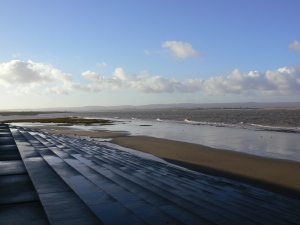
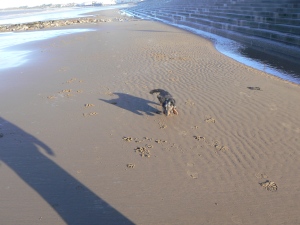
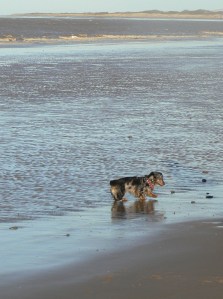
The Christmas holiday is over and my children have all gone home to their various exciting lives.  On New Year’s day we drove to the airport in Bristol and as I was sad to see them all go, so we decided to have a day at the seaside.  This always cheers me up and blows the cobwebs away.  Burnham on Sea may not be exotic but I love it!  It has miles of sand and is almost deserted out of season, so that is where we headed.  My little dog, Dayna, seemed totally confused at first so I imagine she has never seen the sea before.  However in no time at all she was having fun chasing the waves and shaking the sand off her tiny legs.  As the wind blew her tail and ears waved in the air.  Instant laughter and a dreaded day reworked into a blessing.

New Year's Day on Burnham Beach in Somerset

New Year’s Day on Burnham Beach in Somerset

Soaring and screeching

Seagulls over sinking sand

On Somerset shore

So much fun on a deserted beach

So much fun on a deserted beach

Storm in a rockpool

weaving waves into whirlpools

Miniature maelstrom

First taste of the sea for Dayna

First taste of the sea for Dayna

On a New Year’s day

Windy beaches are deserted

To Dayna’s delight


I am starting 2013 by clearing space for beauty and joining the Mindful Writing Challenge entitled Small Stones.  A small stone is a short piece of writing (prose or poetry) that precisely captures a fully-engaged (mindful) moment. The process of finding small stones is as important as the finished product – searching for them will encourage you to keep your eyes (and ears, nose, mouth, fingers, feelings and mind) open.

Why don’t you go out and buy yourself a gorgeous notebook, start writing your small stones, and you’ll be in the river too.

New baby

Inspired by haiku heights prompt “New”

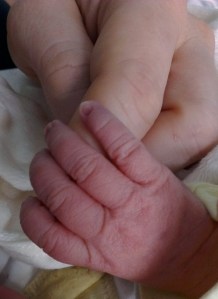
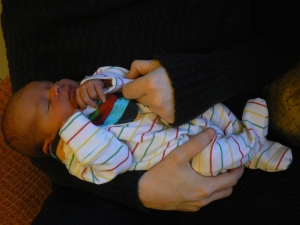
Clutching my finger

Stanley captures my heart with

Love overwhelming.

Stanley's hand

Stanley’s hand

Hunger satisfied.

Swaddled in safety he sleeps,

Surrounded by love

Swaddled in safety

Swaddled in safety

Little innocent

In loving arms enfolded

His life in her hands

Loving arms

Loving arms

The word ‘new’ conjures up all sorts of memories for me.

I was born in Newcastle/Gateshead in the North of England.  It is a wonderful city with 2000 years of history behind it, and I still think of it as home.  Famous in the past for coal mining and ship building, glass making and steel works, it is now more famous as a city of culture, shopping and tourism.  It also has some of the best beaches in the UK nearby and the beautiful Northumberland National Park on the doorstep.

North Sea at Whitley bay

North Sea at Whitley bay

The area around the Quayside and the River Tyne has been transformed in recent years into a contemporary scene that buzzes with activity, in the Baltic Art gallery (which used to be a flour mill), and the Sage which is a breathtaking venue for world class music events.  Then of course there are the famous bridges!  The ‘new’ bridge was built to celebrate this millennium.  It is known locally as the “Winking Eye” because of the way it opens to let ships through.  The cycle path and footpath on the bridge literally opens like an eyelid.  It is a most spectacular bridge which is a superb backdrop for all sorts of events such as the Tall Ships race.  The City Council never run out of ideas for decorating or lighting the bridge to make it even more of an attraction.

Millennium Bridge Illuminated

Millennium Bridge Illuminated

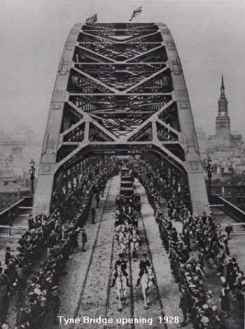
Behind the new bridge is a much older one known as the Tyne Bridge, which was opened on 10th October 1928 by King George V.  My late mum was 3 years old then and she remembered sitting on her uncle’s shoulders watching this event.  This bridge carried the Great North Road (A1) from the South of England to Scotland.  It also carried buses – and trams when I was a child!  Many ships have passed under this bridge over the years.

Tyne Bridge Opening 1928

Tyne Bridge Opening 1928

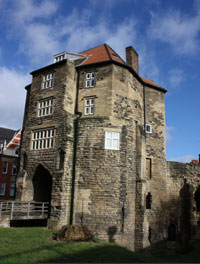
The name ‘Newcastle’ was adopted in Norman times when Robert Curthose, the eldest son of William the Conqueror, built a castle on the site of the old Roman Fort of Pons Aelius.  The original castle was built of earth and timber.  But in 1172, in the reign of King Henry 11 the castle was rebuilt in stone.  Near the river, the original castle keep still stands as well as narrow medieval streets and 14th century staircases.

Blackgate

Blackgate

The Blackgate was photographed by David Simpson

Snow

sunset over snowy mountain in Chile

The prompt for this week at haiku heights is the word ‘snow’.  This set me off thinking of the many places I have been where there is always snow on the mountain tops, the “Everlasting Snows”.  I think of the North West Explorer trip I did many years ago visiting Seattle, Vancouver and the wonderful national parks in USA and Canada.  I will never forget the breathtaking views we saw as we drove along the route through the glaciers to Banff and beyond.

I also remember the trip to the top of the Caucasus mountains at Krasnapolyana in Russia which I have written about before.  This beautiful place will be the setting for many of the events of the 2014 Sochi Winter Olympics.

I remember the very first time I went to Russia.  I arrived in Moscow in the evening having left the UK on a crisp Autumn morning.  The first thing I did in Moscow was go for a walk to Red Square.  As I turned into the square it started to snow gently and there I was at last, totally captivated by the sight of the magnificent multi coloured onion domes on St Basil’s cathedral.  Red Square has been the scene of some dreadful ~ and some impressive events ~ over the course of its history, but I defy anyone to see it without being instantly awed by the sheer magnificence of the whole square and its buildings, especially in the snow!

St Basil's in Red Square in the snow

St Basil’s in Red Square in the snow

Soft flakes fall gently

On sumptuous St Basil’s

White snow on Red Square

Another place with “Everlasting Snows” is the Pyrenees.  These mountains are steeped in history.  For century after century pedlars and merchants, crusaders and warriors, troubadours, shepherds and pilgrims have trekked across these mountains.   The village of Gavarnie was known as “the last village in France” in the Middle Ages on the old pilgrim route to the tomb of St. James at Santiago de Compostela.  It is a great centre for winter sports as well as summer walking now.  I have often travelled to Lourdes with groups or with friends and I have always taken a trip up the mountains to Gavarnie.  I have written about it in a previous post.  The route to Gavarnie from Lourdes takes in the Lavedan Valley, Argeles Gazost, St. Savin de Lavedan, the Chateau of Miremont, the Valley of Luz, Pic du Midi and Luz.   These are all fascinating places in their own right and St Savin is a must see village and church which seems unchanged by time.  The Cirque de Gavarnie is the most famous place in the Pyrenees, with 1,400 metres (4,400 feet) and is home to the highest waterfall in Europe.  Near Gavarnie there is an amazing statue of Our Lady of the Snows.  We often stopped to say mass there with the VIPs in our group, using a spare wheelchair as an altar!  (In Lourdes the sick, disabled or terminally ill are the VIPs.)

Our Lady of the Snows

Our Lady of the Snows

Mass in Gavarnie

A wheelchair for an altar

Snow capped sacristy

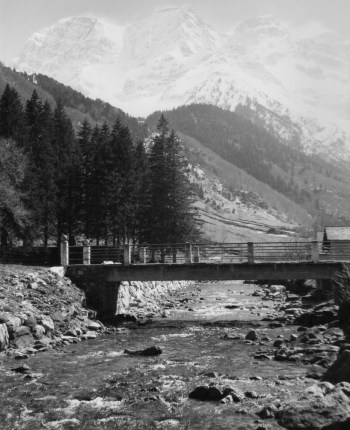
Souce of River gave at Gavarnie

Source of River gave at Gavarnie

River Gave is born

In the Everlasting Snows

Of Haute Pyrenees

Tour guides will tell you that the statue was erected by airmen after the Second World War in gratitude for making their escape across the mountains from occupied France into Northern Spain.  However, this statue was visited and blessed by Pope Pius 12th when he came to Lourdes in 1935, so I guess it might have been erected by grateful resistance fighters in earlier times.   There are many mountain passes in the Pyrenees, known as Le Chemin de la Liberte, which were secret escape routes during WW11 and one of them does pass the spot where Our lady of the Snows statue stands.  This route was taken by hundreds of Frenchmen and Jews fleeing from the Germans as well as RAF and American airmen who had either crash landed or parachuted to safety after being shot down over occupied Europe.  There was a chain of local people who hid, fed and clothed these men, at great personal risk, until the time was right for them to make their escape under cover of darkness over the mountains.  Official statistics tell us that between the years 1940 and 1944, there were 33,000 successful escapes by Frenchmen along the entire length of the Pyrenean chain.  It seems strange that we can now picnic there in the summer sun admiring the snow-capped mountains!

English: Cirque de Gavarnie gripped by frozen ...

English: Cirque de Gavarnie gripped by frozen snow in the Pyrenees (Photo credit: Wikipedia)

Trudging through spring snows

Escaping occupation

‘Cross the Pyrenees

Pyrenees by the River Gave

Pyrenees by the River Gave

Trek through history

On high Pyrenees, scene of

trade and tragedy

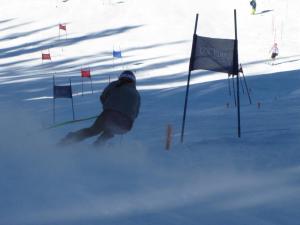
Last but not least, I think of Stratton Mountain in Vermont near where my daughter lives and her husband works.  We won’t be seeing him this Christmas as he will be on the mountain as usual preparing the next generation of winter Olympians.  So I dedicate this series of haiku to him as he lives for the snow!  Jointly they run the superb ski camps known as US Elite Camps.

Stratton Mountain

Stratton Mountain

Bobsleigh, Downhill, Pipe,

Ski-jump, Slalom, Speed and Luge,

Snow capped Olympics.

slalom

Scary snow

Scary snow


Frozen fixtures

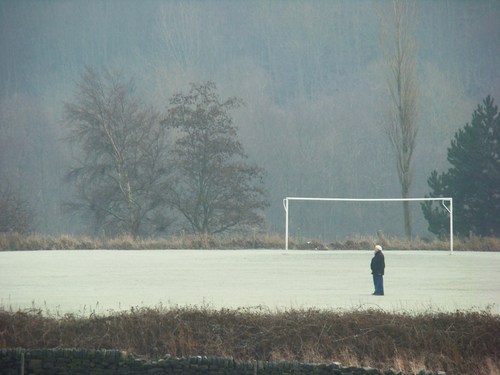
I took my little dog, Dayna, for a walk in my favourite sports field the other day.  Recently it has been too muddy to walk on the grass but today it was frozen rock hard.  The trees around the field looked amazing, their bare branches covered in frost.  There was also a heavy mist which gave the whole place a surreal quality.   Great for dog walking but no good for playing football!

Hoar frosted pitches

on a frozen field; fog bound

fixtures abandoned

frosty football pitch

Desert

Sahara Marathon ~ ultra long distance race in the desert’.

We had a great speaker at WI who fits in beautifully with our Haiku Heights prompt word for this week, Desert.

Tortuous terrain,

Melancholy Marathon,

Desert of Despair

Celia Hargrave, talked about her experience of running in The Marathon Des Sables.  No British woman had ever taken part in the race and it was advertised as “The Toughest Footrace on Earth”.  Both of these factors were a challenge to Celia so she decided to sign up!

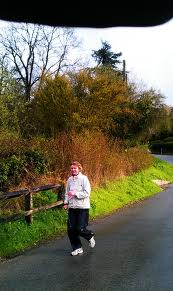
Celia running near her home

Celia is quite an amazing woman.  She is over 60, a former head teacher of a large Birmingham school, and a member of Sheepscombe WI.  Like many WI members, Celia contributes hugely to her community.  She is a magistrate, a fundraising co-ordinator for Sheepscombe Village Hall, and she and her husband open their garden for the National Garden Scheme.  Her garden is about 3 acres set in small woodland with panoramic views.  She has a variety of herbaceous and mixed borders, a rose garden, extensive vegetable plots, and wild flower areas, plantings of spring bulbs with thousands of snowdrops and hellebores, a woodland walk, 2 small ponds, a waterfall and a larger conservation pond.  There are also wooden sculptures in the garden, which is all grown on organic principles.

Panoramic View from Celia’s garden ~ Trench Hill

And, as if that were not enough, Celia co-ordinates a club for the elderly and housebound in her area!

Celia had run before competitively in the Stone Masters Marathon, The Chelmsley Wood 24 hour track Race, the London Marathon in 2 hours 46 minutes, London to Brighton Race and Lands End to John O’Groats so she was no novice!  Her longest distance was over 120 miles for which she was ranked sixth in the world. However the Sahara Marathon or MDS is a 6 day 243 km or 151 mile endurance race in which all competitors have to carry everything they need for their survival.  So this was to be an enormous challenge.

Celia sought medical advice and drew up a training programme which involved running every day.  She did some 50 mile races for charity and started to raise money for her challenge.  Fortunately Celia’s own WI at Sheepscombe organised her fundraising and got TV, radio and press coverage for her.  In order to adapt to running in extreme dry heat conditions, Celia started running in her local sauna!  This caused some consternation among other spa users but helped Celia get used to taking in fluids while running.

Eventually Celia took off for Casablanca in Morocco and travelled to Ouarzazate to meet the other competitors.  The majority seemed to be French that year but there were 20+ from the UK.  Other competitors came from all over the world.  They spent one wonderful night in a 5 star luxury Moorish hotel before setting off on a coach out into the desert.  After several hours they had to get off the coach and walk the rest of the way to their campsite.  Two things that impressed Celia there were the desert orchids and a woman in red high heeled shoes both of which seemed incongruous!

The campsite seemed to be in two halves: one for the competitors, which was very basic; and one for the non-competitors, which was comparatively luxurious.  Celia was sharing a ‘tent’ with 12 to 14 men and women competitors and they had very little space.  In the tent they had to store everything they had brought and carry it on their backs in a rucksack daily.  The rucksack was to be no more than 7 kilos in weight when filled.  Celia had reduced her packing to a minimum but still had to carry her map, day book, compass, medical kit, sleeping bag and food.  Each competitor was allowed 9 litres of water a day which was rationed and given out at each checkpoint along the way.  The 9 litres was for everything ~ drinking, washing clothes and self!

When at last the first day of the race proper arrived, the tent was removed at 6.30am ready to be transported to the next stopping point 15 miles away.  As the temperature can quickly reach 120°F Celia was hoping for an early start, and was not happy to be kept hanging around for hours in the heat.

The Marathon Des Sables is run in sections over 6 days, or 7 for some slower runners.  This is the equivalent of 5½marathons.  That is a speed of between 3 and 14km an hour.  Competitiors can be aged between 16 and 78 years old.

Day 1 ~ 25 km, Day 2 ~ 34km, Day 3 ~ 38km, Day 4 ~ 82km, Day 5 ~ 42km, Day 6 ~ 22km

Celia described the terrain on the first day as ‘dunettes’ and the second day as much higher dunes.  Over the course of the race she would run on sand, rock, dried river beds, oases and dunes. She remembered the wind as well as the heat; but her abiding memory was of the horizon which never seemed to get any closer, and the breathtaking vision of a huge sky where every star was visible because of the total darkness.

By the third day Celia had developed a blister which was treated with iodine in the medical tent.  This was so painful that she determined not to go back there again.  The heat and rubbing really takes its toll on the feet.  Some competitors lost nails or got infections in blisters which can put them out of the race.

Day 4 was a rest day. Then day 5 was the toughest day.  It took Celia 13 hours of non stop running/walking to cover the 50 miles of barren wilderness.  Some competitors had to run right through the night, some taking 32 hours altogether to cover the 50 miles.  Celia had the deepest admiration for these slower runners for their self discipline, determination and sheer perseverance.  Those who know reckon that, while physical fitness is really important,  mental stamina constitutes at least 50% of whether competitors finish the race or not.

By this time Celia was on a high and pleased to be coping so well.  She was way ahead of some competitors, male and female.  But on day 6 all that changed.  Instead of relying on her compass, Celia took a route that others seemed to be following.  This led her to high rocky ground and a precipice which she fell over.  Amazingly her rucksack got wedged in the rocks.  Celia became disorientated, being in pain and in shock.  She began hallucinating.  However she managed to release her bag and carried on a further 11 miles to the end of the stage.  All the time she was worried and anxious in case she could not finish.  But at last she arrived on the tarmac road which marked the last kilometre leading to the finish at the small town of Tazzarine.  Here Celia kissed everybody she met with sheer relief.  She was then taken by jeep to a mud house with a fireplace in the wall and a wellspring of hot water.  This she played in, delighting in being clean for the first time in a week.  She then had some food and was taken by coach back to a hotel for a celebratory Gala Dinner.  It turned out that Celia was 1st among the UK entrants, beating all the men as well as the women.

It was later discovered that the fork in Celia’s rucksack had stuck in her back during her fall over the precipice causing the injury which was causing her so much pain.

Celia has done two other desert events since then, one being the Trans 333, a 208 mile race which she did in 86 hours with only two lots of two hours sleep.86 hours!

She truly is inspirational.

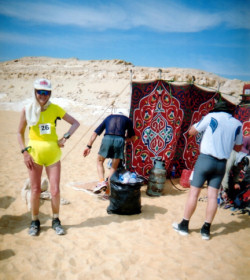
Celia at a checkpoint in the desert

Trees Haiku

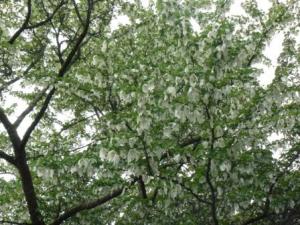
A Handkerchief tree at Minterne Gardens in Dorset

I am fascinated by trees, not only for their beauty, but for the stories they could tell.  Some trees have lived through amazing times and been part of the lives of such interesting people.  If only they could talk!

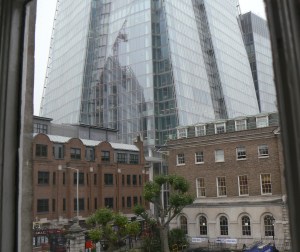
This week I went to the city with a couple of friends. We visited two wonderful museums and wandered along the streets of London where the trees are at their glorious Autumn best.  We strolled along the Embankment beside the River Thames and marvelled at the changing skyline.  I was struck by the juxtaposition of old buildings and new, especially the magnificent Shard which is so close to the old St Thomas’s.  It is a breathtaking sight and a brilliant feat of engineering.  Yet even in front of this awesome glass building my eyes were drawn to a row of trees nearby.

Consumed by the clouds

Engineered to perfection

A giant in glass

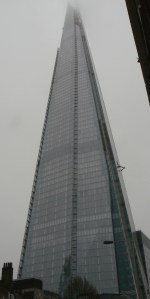
The Shard with trees in the foreground

The enormous Shard disappearing into the clouds

Sheer face of the Shard

Glass monument to mammon

Shatters the skyline

View of the Shard from St Thomas’s

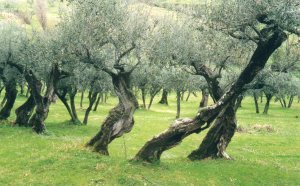
One amazing tree I have seen is an ancient olive tree at the site of St Francis of Assissi’s remote hermitage, the Eremo delle Carceri on Mount Subasio.   Olive trees are the longest living trees.  Indeed in good conditions some live to a thousand years old.  This tree is one of them.  It is protected and propped up by poles.  I find it breathtaking to think that St Francis actually touched this tree, walked by the stream and slept in the cave, all of which can still be seen.  I found it very moving when I visited in 2000 and I have to admit to picking some leaves from the tree.  I have pressed them and kept them in my travel journal from Rome and Assissi.  St Francis lived a simple life and slept in the cave on a bed of stone and a pillow of wood.  Some of his followers lived there as hermits too in prayer and meditation.  The warren of caves still exists in a clearing with a stream and lots of trees.

The ancient Olive Tree that St Francis would have seen

Birds stopped to listen

As the humble hermit preached

At one with the trees.

Leaves from the Olive Tree on Mount Subasio

An early picture of St Francis of Assissi

St Francis’s cell in the cave at Mount Subasio

Olive Trees in Italy

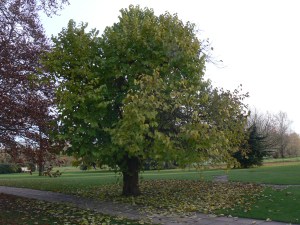
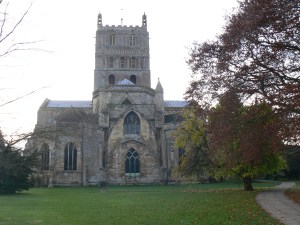
Another tree that inspires me is the Mulberry tree which was in the garden of St Thomas More’s home when he was Lord Chancellor in the time of King Henry V111.  Sir Thomas More, as he was then, bought some land in Chelsea and Kensington in 1524 in order to build his Great House.  Sadly his house is long gone, but the Mulberry tree he planted is still there.  On the site today is Allen Hall, the Seminary of the Roman Catholic Archdiocese of Westminster.  Visitors can visit the seminary by appointment and walk to the secluded walled garden where Thomas More’s Mulberry Tree still stands.  Outside and nearby is a beautiful statue of St Thomas More in a garden facing the river Thames.  In the grounds of Tewkesbury Abbey near where I live there is a Mulberry tree grown from a seed from St Thomas More’s tree.  I often visit this tree and sometimes pick the delicious fruit.

Mulberry Tree at Tewkesbury Abbey

Tewkesbury Abbey and Trees

Portrait of St Thomas More

He planted his tree

And dreamed of Utopia

In turbulent times

The Yew trees in the beautiful village of Painswick in the Cotswolds are also very interesting.  There are 99 of them in the grounds of St Mary’s Church and many of them are hundreds of years old.   They lived through the English Civil War (1642-1645).  There is evidence of Royalist cannonballs high up on the walls of the church to this day.  At times people have tried to establish more Yew Trees in the churchyard but a hundredth will never grow.  It seems as if 99 is the maximum for some reason.  There is an old story that if a hundredth tree ever grows, the devil would pull it out.  It is one of our old Cotswold mysteries!

Last but by no means least, is a historic small-leaved Lime tree at Westonbirt which is unbelievably ancient.  It is reputedly 2000 years old!  It is so big that it seems as if it is many trees.  However, it is actually a clump of around 60 trees all growing from one original.  This was the result of coppicing which was a way of managing woodland for fuel established in Anglo-Saxon times.  Over hundreds of years of repeated cutting, the stump gradually spreads outwards in a ring until it reaches enormous proportions.  My photo does not do it justice!

Ancient Lime tree at Westonbirt