Cotswold Collage

Cotswold Spring2

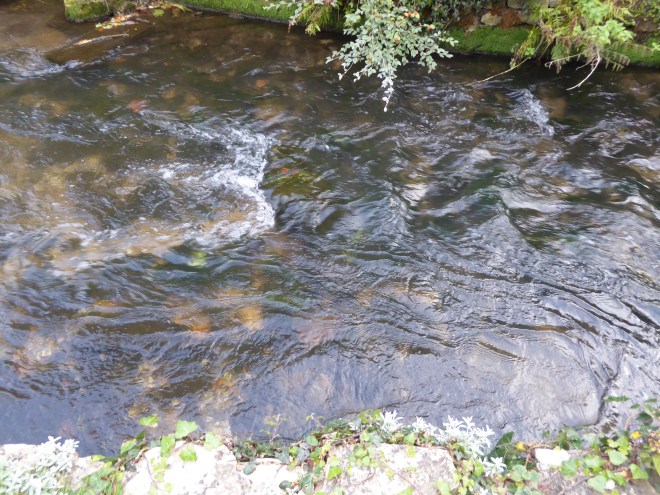
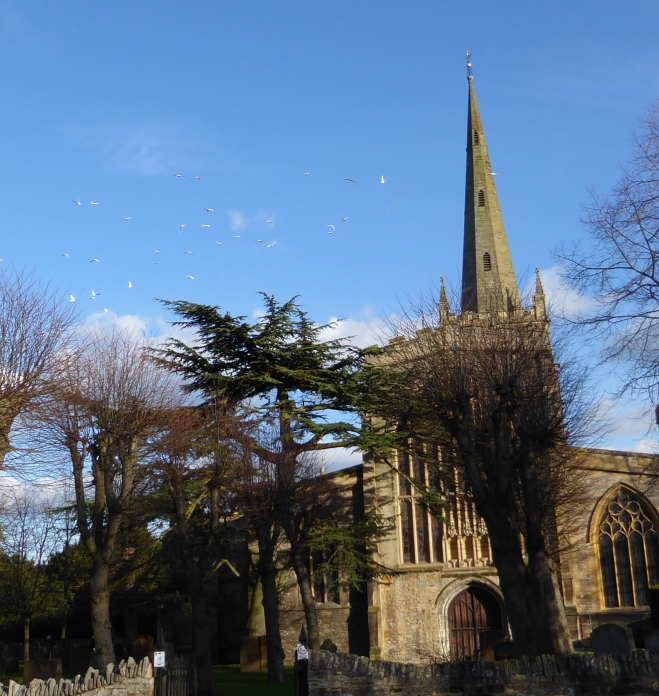
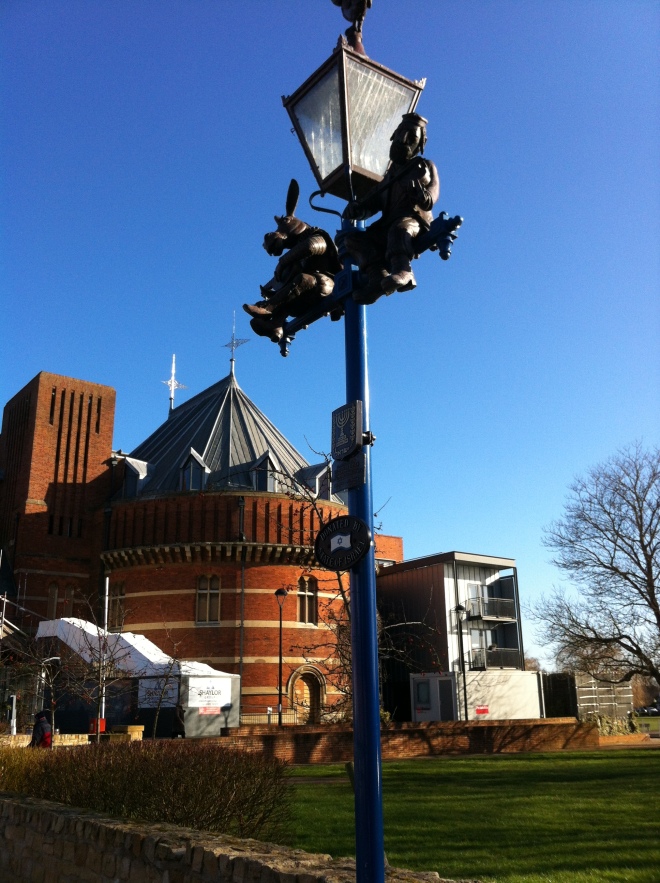
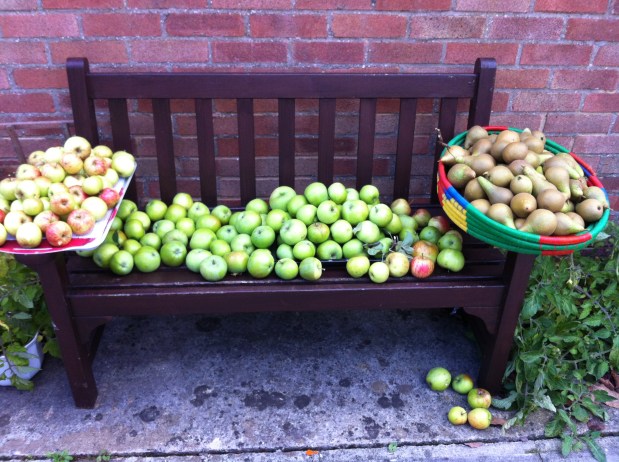
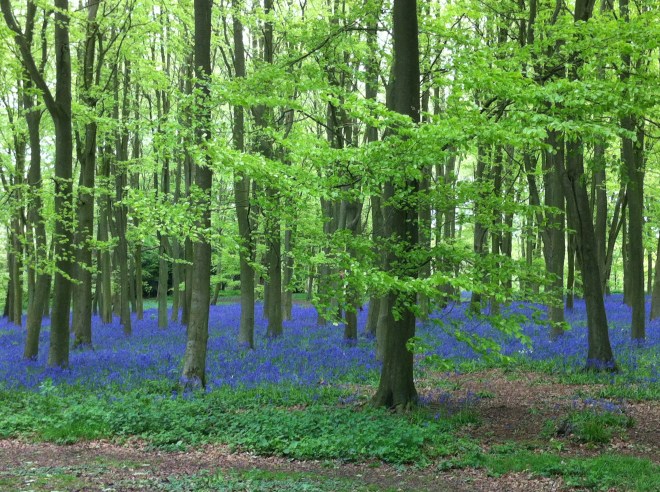
Someone asked me this week if I could recommend places to visit in the Cotswolds for some travellers from USA. Well I am always delighted to boast about just how special the Cotswolds are so I decided to use this as the basis of my weekly photo challenge theme, which is ‘Collage’.

Of course, the best way to truly get to know the Cotswolds is to walk the Cotswold Way.  This walk is literally 100 miles of quintessentially English countryside.  It stretches from Chipping Camden to Bath, taking in picture-perfect villages and ancient sites of historic interest.  The entire area is designated as a place of outstanding natural beauty.

There are bus tours and mini-bus tours of the Cotswolds from towns like Stratford, which I would heartily recommend if you don’t mind being herded with the crowds.  However, if money is no object, I would recommend one of the expert private tour companies who provide beautiful cars and knowledgeable drivers.  They will plan a tour to reflect your interests, whether they be literary, historical, sporting, spiritual, or whatever.

You could even discover the area on horseback, glide along the rivers and canals on a boat trip, or fly over it in a hot air balloon or helicopter.

But for lucky people who live in the Cotswolds, we can spend a lifetime enjoying the scenery and discovering fascinating facts about the people and places that made the area what it is today.

There are honey coloured thatched stone cottages dotted around villages such as Wick and Winchcombe; Stately homes, Castles and Palaces like Sudeley, Warwick and Blenheim; Abbeys, Monasteries, Cathedrals and ancient Churches like Tewkesbury, Prinknash, Gloucester and Ampney St Mary.

There are also glorious rolling hills and farmland bordered by dry stone walls, where healthy sheep graze.  Much of the area’s wealth arose from the wool these hardy sheep produced.

There are also majestic forests, ancient oak woodland and more recently planted specimen trees at Westonbirt Arboretum.  And if gardens are your thing, we are spoilt for choice with Hidcote and Kiftsgate among many others, which include Prince Charles’s own garden at Highgrove.

The Cotswolds also has plenty for the water lovers, with beautiful rivers, canals, docks, quays and lakes.  The great River Thames actually starts in the Cotswolds and we have the tidal River Severn that flows to the sea.

If that is enough to entice you to visit the Cotswolds I will now add a collage of my photos…


Bridging the years

Benhall Woods Bridge

This fallen tree bridges a deep dip in Benhall woods.  As I walk there each day with my little dog, Toffee, it also bridges the years and the generations for me.

I have lived opposite Benhall park and woods for over 30 years now.  It is a delight to have such a wild and wonderful place in the heart of a residential area.  It is filled with Silver Birch, hazel and oak trees as well as blackberry bushes.

I used to bring my children here to play when they were very young.  Then, as teenagers they would play endlessly among the trees, riding their bikes (BMXs in those days) over the natural obstacle course formed long ago by the spoil from the construction of the railway that runs alongside.  The bumps, dips and trenches make a perfect playground and the fallen trees add to the excitement and interest, providing endless hiding places and material for dens.

These days I bring my grandchildren to play in the woods and they love it just as much.  There are always squirrels to spot and birds galore, including owls and woodpeckers that nest high up in the trees.

There is a stream running alongside the woods through a lovely park.  In the stream there are ‘millers’ thumb’ fish, and this week I saw a Great Egret fishing for them!

In spring there was a carpet of snowdrops around the edges of the wood followed later by banks of bluebells in wild areas where nettles flourish.

I love the place.

Recently there has been a lot of controversy because the local council want to allow trainee tree surgeons to practice cutting down trees in the wood.  I have to say I have mixed feelings about this.  I do love the wildness of the wood, but, I can see some work has been carried out to good effect.

One of the saddest aspects of the wood is the tragic suicides that have taken place there in recent years.  A young man hanged himself there some years ago.  Then, tragically, a 15-year-old boy did in 2015 after possibly being bullied.  And a 29-year-old woman sadly did the same last November while suffering from depression.

Since then I notice lots of the lower branches have been removed from the trees, making them difficult to climb and so less likely to be used for this sad purpose.

Bluebells with the Brontes

IMG_6482

While taking my little dog, Toffee, for her walks this week, I have been thinking about WPC’s cue for my blog ~ ‘Earth’.

It struck me as I wandered across the park and through the woods near my home, just how marvellous the earth is at recovering from what nature, and we humans, subject it to.

We had a short cold spell when the grass was covered in frost and the earth in the woods was as hard as rock underfoot and twisted ankles were a real danger.  Then as the long and wet winter dragged on, the grass became waterlogged and sodden, and the woods were a quagmire with mud.  But through it all, the snowdrop, crocus and daffodil bulbs survived, and bloomed.  When the weather turned milder a few weeks ago, the blackthorn hedgerows were covered in blossom and the daisies started to appear.  Then, just in time for Easter, the sun came out and transformed everything.

Suddenly the grass over the park is green and dry and covered in bright yellow dandelions alongside the daisies.  In the woods the mud has dried up and carpets of bluebells have miraculously appeared in vast swathes of violet among the weeds, ferns and tree roots.  The smell is wonderful and indescribable.

I can see why they are called the fairy flower, they are just so delicate and beautiful and seemingly appear from nowhere.  They seem to speak of childhood and innocence.

As I wandered with my puppy, a poem started to form in my mind.  Then it struck me that many poets, including Shakespeare, have crafted lovely verse about Bluebells, which I could never match.

So, I will include a couple of my favourites here from the Bronte sisters.

Firstly, a really poignant poem by Anne Bronte who suffered so much sadness in her adult life and died far too young.

A fine and subtle spirit dwells
In every little flower,
Each one its own sweet feeling breathes
With more or less of power.

There is a silent eloquence
In every wild bluebell
That fills my softened heart with bliss
That words could never tell.

Yet I recall not long ago
A bright and sunny day,
‘Twas when I led a toilsome life
So many leagues away;

That day along a sunny road
All carelessly I strayed,
Between two banks where smiling flowers
Their varied hues displayed.

Before me rose a lofty hill,
Behind me lay the sea,
My heart was not so heavy then
As it was wont to be.

Less harassed than at other times
I saw the scene was fair,
And spoke and laughed to those around,
As if I knew no care.

But when I looked upon the bank
My wandering glances fell
Upon a little trembling flower,
A single sweet bluebell.

Whence came that rising in my throat,
That dimness in my eye?
Why did those burning drops distil —
Those bitter feelings rise?

O, that lone flower recalled to me
My happy childhood’s hours
When bluebells seemed like fairy gifts
A prize among the flowers,

Those sunny days of merriment
When heart and soul were free,
And when I dwelt with kindred hearts
That loved and cared for me.

I had not then mid heartless crowds
To spend a thankless life
In seeking after others’ weal
With anxious toil and strife.

‘Sad wanderer, weep those blissful times
That never may return!’
The lovely floweret seemed to say,
And thus it made me mourn.

And one by her sister Emily, who also died tragically young:

The Bluebell is the sweetest flower
That waves in summer air:
Its blossoms have the mightiest power
To soothe my spirit’s care.

I was going to write a learned post about Shakespeare and Bluebells but then I thought I could just add this link about the bard’s garden.

Then I thought I could write about the beauty of bluebells but then I realised that I could never match this one by bookishnature

So I think I will just post photos of bluebells from my walks with Toffee instead!


As Green as the Grass

As Green as the Grass

P1000994

What a fascinating theme for this week’s photo challenge, the colour green is.

I chose the featured image, showing the flag of the United Kingdom, which I took in Willersey during the Queen’s 90th birthday celebrations, as a mark of respect for those who died or were seriously injured as a result of a supposed terrorist attack in Westminster on Wednesday.  My heart goes out to all of them but especially the policeman who was murdered doing his job of controlling access to the Houses of Parliament.  My nephew is a member of the Metropolitan police and knowing what a wonderful person he is, I expect that PC Keith Palmer was equally dedicated to his duty of keeping the public and our members of Parliament safe.  He did not deserve to die like that and his memory will be treasured by everyone who cares about the values of democracy; peace, freedom, human rights, the rule of law.

I’m not really a green person fashionably speaking as I don’t think I suit the colour. I do try to be green ecologically in that I recycle or reuse whatever I can and I try not to waste anything.  I guess I am green emotionally as I am a pushover for a charitable cause if it is anything to do with children, or people in distress through poverty, illness or homelessness.  Physically, I have to admit that most fish dishes can turn me green as can anything with peppers in as I am allergic to them.  This is quite a problem when eating out these days as most salads, and a lot of cooked dishes, seem to have peppers in them cunningly disguised in some cases as tomatoes or cucumber.

But thankfully all the WPC requested this week was a single photo or a gallery of photos reflecting the colour green. This is a joy to me as I live in an area of outstanding natural beauty, and I love taking photos.  I love the green rolling hills of the Cotswolds, the fresh green fields of the sheep folds and cattle farms, the wild greenery of the hedgerows and roadsides, the manicured lawns of the stately homes, and the lush planting in much loved cottage gardens.  They all make wonderful backdrops to any photo. But most of all I love trees.  There really is no manufactured or digitally created frame that can improve on a picture framed by trees in my opinion.

I have included photos that I have taken on various days out or holidays too so they are not all of the Cotswolds, or even the UK!

So here below is a gallery of green for you to enjoy…

Greenery framing lovely buildings…

Green enhancing the view…

Green as a backdrop for animals…

snowdrop time

17-feb-17-56

One of the best things about this time of year in the UK is the abundance of spring flowers that battle their way through the cold wet earth. In my garden the hellebores have been flowering since Christmas, the snowdrops all through February, and the daffodils popped out as March poured in.  This is something of a miracle as I was sure my little puppy had destroyed them all with her frantic digging.  But thankfully they survived her and Storm Doris.

In the park opposite my little bungalow there are banks of snowdrops growing beside a stream, clumps of crocuses among the trees, and a touching display of daffodils that appeared in 2010 spelling out, “Will You Marry Me?”  I walk my dog there every day.

But for a really impressive display I have to go a little further into the Cotswold countryside and take a walk around the Rococo Gardens at Painswick  or Colesbourne Park.

gerry-3-17-feb-17

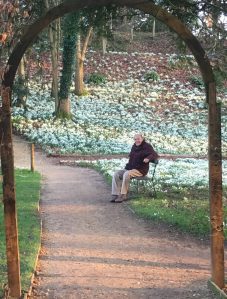
This year the road taken had to be meticulously planned and carefully executed as my husband came with me to both places. He has been using a wheelchair for the last 18 months due to his medical conditions and the debilitating effects of his treatment.  But over the last two months he has made great progress and started walking indoors with some mobility aids.  He has done so well that I was determined to take him to see the snowdrops.  This would be his first walk in the great outdoors.  It was a bit difficult in some places due to uneven ground or slopes, but together we did it.  Fortunately there were lots of places to rest on the road taken.  It was a lovely afternoon out for us both.

17-feb-17-56

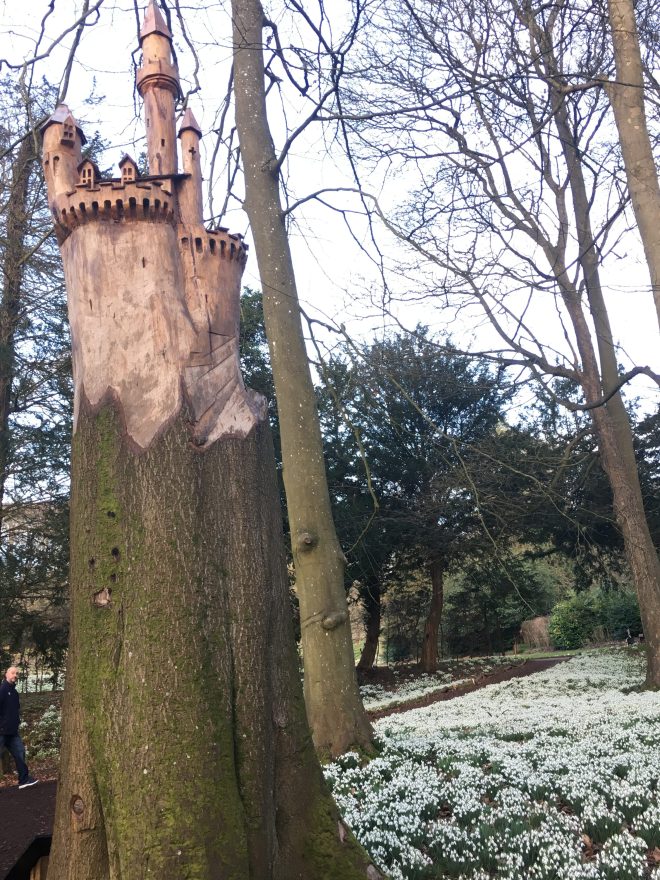
Leaving my husband to rest on a seat in the Rococo Gardens, I wandered down a gravel path and came across a most unusual sight.  A fairy castle inspired by Schloss Neuschwanstein in Bavaria was carved on top of a fallen birch tree.  According to the label it was created by chainsaw sculptor, Denius Parson.  It really was impressive.

I was joined on my walk, as I often am, by a friendly robin.  I enjoyed the sights as he hopped about bending his head to watch me.  There were banks of snowdrops in every direction, with little clumps of cyclamen and hellebore dotted about, and daffodils just beginning to show.

Enjoy my spring photos from the Rococo Garden.  It was dull and drizzly and the sun was setting by the time we left but the photos show the abundance of snowdrops …


A Good Match

A Good Match

I was looking through my photos for this week’s photo challenge on the theme of a ‘good match’ when I came across some that I took last summer in Gloucester. I was there to enjoy the spectacular celebrations to commemorate the 800th Anniversary of the coronation of the 9-year-old King Henry 111.

In the Cathedral, there is a stained-glass window depicting the original event, which took place in St Peter’s Abbey on 28th October 1216.  It must have been overwhelming for the young Henry to go through this ceremony just 10 days after his father, King John, had died.

The celebrations started with a splendid procession through the streets led by Knights on horseback. This was followed by a spectacular performance of the anointing, enthronement and crowning of the boy King in what is now the Cathedral.

The Cathedral was decorated beautifully with pungent herbs, grasses and flowers which would have grown locally in medieval times. Walking on the herb-strewn stone floor created a heady aroma from the crushed rosemary and lavender.

A local schoolboy, Fraser Martin, played the part of the boy king. He was very majestic in the role and yet vulnerable looking.  In fact, everyone was dressed so beautifully and took the occasion so seriously, that the atmosphere was literally awe-inspiring and very moving.

There was entertainment in the cloisters after the ceremony and a medieval tournament in the grounds. The very authentic looking ‘Barons’ and ‘Knights’ put on a wonderful show of fighting with medieval weapons.  They really were a good match.

Henry 111 went on to rule for 56 years and 29 days until 1272.


What brought me to Adlestrop?

What brought me to Adlestrop?

p1010535

I recently started my second free course with the Open University at futurelearn.com

The first course was “Start Writing Fiction“, which was a hands-on course focused on the central skill of creating characters.   My current course is “Literature and Mental Health: Reading for Wellbeing.”  The course aims to explore how poems, plays and novels can help us understand and cope with deep emotional strain.

Readers who were used to following my blog weekly will have noticed that I have written nothing since I lost my little Dachsund, Dayna, who was the subject of my last post.  Maybe other pet owners, especially dog owners, will understand the depths of my despair at losing Dayna.

I am blessed to have a husband, adult children (albeit three of them live abroad), supportive friends and adorable grandchildren.  But, although I love them all dearly, after losing Dayna I was inconsolable.   I gradually slipped into a downward spiral of despair and lost interest in going out, seeing friends,  talking to people, cooking or even eating.  All I wanted to do was stay at home and curl up under a blanket wallowing in my misery and solitude.  I felt bereft and ridiculously lonely.  Hence my interest in finding ways to cope with ‘deep emotional strain’.

All of my children are dog lovers and my eldest daughter volunteers at a rescue centre in California.  They recommended that I get another dog – not as a replacement because my precious Dayna is irreplaceable, but as a companion.  So I started to search.   How I found my new dog is a long story which I will save for another day but suffice it to say she is NOT Dayna

My new puppy was 10 weeks old when I got her, and supposedly a Corgi crossed with a Dachsund.  However everyone including the local vet is convinced she is a Beagle cross.  I personally think there is a bit of shark in her too.  She is very cute and slightly crazy most of the time but totally adorable of course.  My grandson, Stanley, christened her Toffee and instantly fell in love with her.  Well who wouldn’t?

Anyway, I started the course and I am finding it very  stimulating.  It is brilliantly put together with input from poets, authors, doctors, psychiatrists and research scientists, as well as the wonderful actor Sir Ian McKellen, and the amazing Stephen Fry who defies categorisation!

There are countless opportunities for online discussion with other course participants and it was a discussion about the poet Edward Thomas that led me to drive to Adlestrop today.

Edward Thomas was primarily a nature poet and he wrote his famous poem Adlestrop when the train he was travelling on stopped there unexpectedly on 24 June 1914, just before the outbreak of WW!.  Instead of getting irritated, he used all of his senses to take in his surroundings and wallow in the details.

Edward Thomas joined the Artist’s Rifles in 1915 and sadly was killed in action in France in 1917.  Interestingly, his widow, Helen Thomas wrote two books after his death reportedly to help her recover from her deep depression.

Yes, I remember Adlestrop —
The name, because one afternoon
Of heat the express-train drew up there
Unwontedly. It was late June.

The steam hissed. Someone cleared his throat.
No one left and no one came
On the bare platform. What I saw
Was Adlestrop — only the name

And willows, willow-herb, and grass,
And meadowsweet, and haycocks dry,
No whit less still and lonely fair
Than the high cloudlets in the sky.

And for that minute a blackbird sang
Close by, and round him, mistier,
Farther and farther, all the birds
Of Oxfordshire and Gloucestershire.

Edward Thomas 1878 – 1917
Of course Adlestrop Station is no more although the railway line still passes through nearby fields.  Today the fields and the railway line were underwater, flooded after the week of heavy rain we have had in Gloucestershire.  But there is a wonderful bus shelter at the entrance to the village where the old station bench and sign is preserved and a brass copy of the poem displayed.
I went there today as I live just 20 miles away.  It was a cold, cloudy day, and the rain was drizzling down.  But the journey was worth it.  There were swathes of snowdrops by the roadside and in the churchyard.  There is a Yew tree shaped like a cross by the gate to the church.  The writer, Jane Austen was known to worship here when she visited her uncle, the Reverend Thomas Leigh.   There is a beautiful Cotswold stone manor house and a thatched village shop housing the ‘new’ post office. There were young riders in red jackets exercising the racehorses from the beautiful Adlestrop stables.
Here are the photos from Adlestrop

Burford Wildlife Park


We are truly spoilt for choice in our local area for interesting places to go.  I am so lucky to have grandchildren who I can use as an excuse for going to all the farm parks, forests, steam railways and adventure playgrounds.

There certainly wasn’t anything like that where I grew up in the North of England.  My playground was the shipyards on the River Tyne, abandoned coal mines, or the sand dunes and castle ruins on the North Sea Coast.

The child in me can never get enough of our local Wildlife Park at Burford.  It is so well run and the animals are the first priority.  It is such a joy to see the beautifully maintained grounds and healthy happy animals living as naturally as it is possible and safe for them to be.  I have a season ticket there and go as often as I can with the grandchildren.


Cotswold Water Features

p1010232

Autumn is one of my favourite times to go out and about in the Cotswolds.  When the children are back at school and most of the tourists have gone home, the villages and parks are reasonably quiet.  It is a pleasure then to stroll around them and enjoy the peace and quiet and natural beauty.

I live in a Spa town which was founded on the health giving properties of the natural spring water so water is a common feature around here.  Indeed just off the old Roman Road to Cirencester is an area called Seven Springs.

One of the most unusual Springs is  where the water gushes out of a stone crocodile head. I love the fact that a respected cotswold stone builder from the nearby village of Hazleton built this feature in the 19th Century.  Presumably some local landowner paid for it.  The spring water has been gushing out of the crocodile’s mouth ever since.  Some days, like yesterday, after lots of heavy rain, it is a truly spectacular sight.

Many Cotswold villages have delightful streams or rivers running through them and none is more beautiful than Bourton on the Water.  This delightful town is a favourite of mine when the sun is setting and the only activity is the ducks settling down for the night.


Royal Numbers

P1000988

On 11th June 2016 our Queen will celebrate her official 90th Birthday and her husband, Prince Philip will be 95!  These are wonderful ages to reach and definitely worth celebrating.

London is already awash with flags and the celebrations start tomorrow.  Nobody covers royal events as well as the Daily Mail so do click to see the fabulous images of London bedecked.

I’m sure there are street parties planned for cities, towns and villages throughout the UK and beyond.  On my travels through the Cotswolds I have seen lots of bunting in the streets and flags flying from shops churches, public buildings of every sort, as well as private homes and gardens.

I went to Willersey yesterday which is a gorgeous little village.  It is quintessentially Cotswolds with its duck pond, village pubs, honey coloured stone houses, and beautiful cottage gardens.  It also has a village shop which has got to have the most helpful owner in the world.  My sister in law was desperate to buy some bread to take back to her caravan for tea so she popped into the only shop in the village.  Sadly, they had sold out of bread but the owner said,

 “wait a minute I’ve just used 2 slices out of my loaf, you can have the rest of that”

He then ran upstairs to his flat above the shop and returned with the remainder of his lovely crusty seed-topped brown bread!  Can you imagine getting that level of care and service in a city or town supermarket?

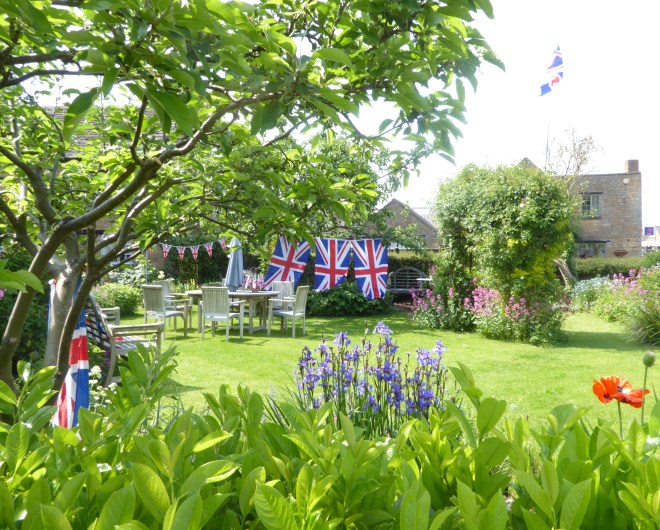
Willersey was like a model village perfectly dressed for a royal themed party.  There was bunting all over the pubs, and flags flying high in the summer breeze.  Several owners had really gone overboard with the decorations in their gardens as you can see from my photos below.  One in particular had a garden table and benches covered in union flags with more flags and bunting in the trees as well as a huge flag on a flagpole.  It looked beautiful against the poppies and colourful flowers in the border.

Willersey is holding a really royal party all afternoon and evening on Saturday 11th.  I do hope the weather stays fine for them.  There will be royal themed fancy dress and hats, races to the next village, themed picnics, and lots of musical entertainment.  There will also be a royal pageant and a whole village photo for the archives.  The day’s events will be rounded off by a Toast to the Queen and everyone writing a message in a giant card for Her Majesty.

It should be lots of fun.

Stepping out

Stepping out

The Cotswold countryside, parks and gardens are a almost swamped by luscious green foliage this year.  The early spring and wet May seem to have benefited the trees and lawns.  It is a joy to walk amongst them.

There are lambs, foals, baby rabbits and ducklings to be seen all around and my garden birds are working overtime to feed their young.  They beaver away all day long in choreographed movements almost like a dance.

I went to a local park with my little granddaughter at the weekend and she was delighted to see six cygnets that have hatched out recently.  The swans nest on an island in the lake but they come over to the grass to feed and walk their little ones.  It is amazing and heart-warming to see how many adults and children turn up in their spare time to see and photograph the new arrivals.

Swans are very protective parents so it is best not to get too close!  As Shakespeare says…

So doth the swan her downy cygnet save,

Keeping them prisoner underneath her wings.

Landscape ~ For ever, for everyone

Landscape ~ For ever, for everyone


Tailor of Gloucester Shop on left

The Tailor of Gloucester’s Shop recreated inside and out as illustrated by Beatrix Potter

Landscape is the theme for the Weekly Photo Challenge and it inspired me to get out and about on a literary trail with my little Panasonic camera.

So many of our great writers were, and still are, inspired by the landscape.  I know I have previously blogged about Thomas Hardy’s Dorset, and I have probably exhausted my readers with photos of Shakespeare’s Stratford on Avon, so just for a change, I set off for Gloucester, and The Tailor of Gloucester’s house in particular.

I chose this because 2016 marks the 150th birthday of Beatrix Potter who wrote a delightful story about the Tailor of Gloucester following her success with The Tale of Peter Rabbit and the Tale of Squirrel Nutkin. I am auditioning this month to be part of a community choir that will perform in the Everyman Theatre’s professional production of The Tailor of Gloucester and I could not be more excited.  The theatre, in my home town, is putting on the play to celebrate the 150th anniversary, and to celebrate the fact that a new Beatrix Potter story has been discovered. The new book, called The Tale of Kitty-in-Boots, is to be published on 1 September 2016.

Beatrix Potter was passionately interested in conserving and protecting the landscape to be enjoyed by everyone.  She was a great supporter of, and benefactor to, what is now the National Trust, whose Motto is the title of this blog~ “For ever, for everyone”.  She was so generous to the trust in fact that when they moved their headquarters to the site of the Steam Museum in Swindon, they named it Heelis, which was Beatrix’s married name.  Altogether Beatrix bequeathed to the nation the 15 farms she had bought in the Lake District comprising over 4000 acres of land, farm buildings, cattle and flocks of rare Herdwick sheep.

The building which now represents the Tailor of Gloucester’s house and shop can be traced back to 1535.  It is in a historic cobbled street which leads through an ancient archway into the cathedral grounds.  Having been through many changes, the building was eventually bought by Beatrix Potter’s publisher, Frederick Warne and Co Ltd in 1978.  Using the illustrations which Beatrix did for the story, they replicated her vision of the inside and front of the building.  

While in the shop I read an account of the remarkable background to the story:

“The inspiration for this story came in May 1894 when Beatrix Potter was staying with her cousin, Caroline Hutton.  Whilst at the Hutton’s home, Harescombe Grange, which lies 5 miles South of Gloucester, Caroline told Beatrix the curious tale of a local tailor.  Closing the shop at Saturday lunchtime with a waistcoat cut out but not sewn together, he was surprised to discover when, on Monday morning he opened the shop again, that apart from one button hole, the waistcoat had been sewn together.  A tiny note was pinned to the button hole which read, ‘no more twist’.  Beatrix requested that they visit Gloucester the next day when she saw the tailor’s shop and sketched some of the city’s buildings.”

Spoiler Alert!

The actual event did of course have a much more logical prosaic explanation than the wonderfully magical one imagined by Miss Beatrix Potter.

There was an actual tailor in Gloucester called Mr Pritchard who worked in a building at the end of the lane leading to the Cathedral.  He was young and very keen to succeed.  He did have an order for a very important client which he had not managed to complete.  He left the garment all cut out when he closed up his shop on Saturday lunchtime ready to be finished on Monday.  However, his two assistants, knowing how worried he was about the garment, came back over the weekend and finished it beautifully for him.

Poor Mr Pritchard, who had obviously been worrying all weekend was amazed when he found the garment completed so beautifully.  In fact he was so surprised that he put a sign in the shop window saying he believed fairies had sewn the garment.

It was some time later that his assistants admitted their part in the mystery and his wife eventually broke the story.

But of course Beatrix had elaborated on the event as only she could, making it Christmas and the poor tailor ill.  It is believed that she actually used her Gloucester friend’s coachman, Percy Parton, as the model for her illustrations of the tailor.  Her other illustrations were drawings that she had done in and around Gloucester and Harescombe Grange.  The most identifiable picture is of College Court, the lovely old lane leading from Westgate Street to St Michael’s Gate, an ancient entrance to old Abbey, now the Cathedral precincts.

Beatrix chose number 9 College Court as the setting for her tailor’s shop and this is the building which Frederick Warne and Co Ltd purchased and restored just as Beatrix had imagined it in her illustrations.

Below are some of my photos from the actual shop.


Do enjoy some landscape photos from around the Cathedral Grounds and the Gloucester Docks close by the Tailor of Gloucester’s shop.

Getting Romantic in Stratford on Avon

To celebrate Valentine’s Day we treated ourselves to a weekend in Stratford on Avon.  The weather was perfect; crisp and cold with a hint of frost in the mornings, and glorious sunshine in the afternoons.  Spring is such a beautiful season in the UK and it has definitely started early this year.

I could never tire of going to Stratford.  I always learn something new about the life and times of William Shakespeare, and new details about the town catch my eye, which are worth a photograph. I find Stratford such a stimulating, yet relaxing place, whatever my state of mind.

During Valentine’s weekend there were smatterings of snowdrops under the trees in the churchyard and along the banks of the River Avon. It seems appropriate that snowdrops were brought to England in the early 16th century, so maybe Shakespeare would have seen some of the first ones.

There were white doves circling the spire of Holy Trinity Church where Shakespeare is buried.  They sparkled in the winter sunshine reflecting the snowdrops below.

White Doves around steeple.JPG

At the entrance to the church I photographed the small Sanctuary Door and knocker.  This door is set into the massive 15th century doors.  I have passed through it countless times not realising its importance.  But I learned that anyone who held on to the ring in the knocker of the sanctuary door, would be let in and given protection for 37 days.  This was a custom started in Saxon times to protect poor people from the harsh penalties for crime, and even from lynch mobs.  It was upheld across the land and continued well through Shakespeare’s time until 1623.

There was also a striking streetlamp outside our hotel, which I had not noticed before.  It was donated to the town by the Government of Israel.  There are wonderful decorative statues and lamps all around the town, mostly donated by ambassadors from countries where Shakespeare is revered.

Lamp donated by Israely Govt

 We stayed in the Arden Hotel, which is right opposite the Shakespeare Theatre.  In fact the building was previously owned by the theatre along with many buildings along the Waterside.  Naturally many famous people have passed through its doors over the years and inside there are some wonderful photographic portraits of famous actors in role. Put your cursor over the pictures to find the names and roles.

So my Valentine weekend was a great success, perfect weather in a beautiful season in my heart’s true home.  In the Shakespeare Centre I came across a sketch of Anne Hathaway, Shakespeare’s wife and mother of his children.  It is the only known likeness of Anne and she was very beautiful.  But she looks so sad.  I suddenly saw her as a real person whom Shakespeare must have loved and missed very much.

Sketch of Ann Hathaway from her lifetime.  The only one in existence

Enjoy some more of my photographs below.


A fruitful season

A fruitful season

My apple and pear harvest 2015

My apple and pear harvest 2015

In the UK Autumn is well underway.  The trees have been turning all shades of gold, orange, amber and red for some time.  But now that the rain and wind has come, the leaves are blowing horizontally off their branches to cover the pavements, fields and gardens.

My precious Japanese maple tree, sheltered from the weather between the wall and the fence outside my window, is absolutely aflame with red leaves. While those at Westonbirt Arboretum are sensational as always.

But my fruit trees are now just skeletons of their former selves.  The apple trees look so ordinary and drab there is no hint that 2015 was the best apple season for 20 years or more!  We had perfect conditions for them due to the mild winter and warm spring.  Spring was followed by gentle rains then a gorgeous hot early summer.  This weather combination produced masses of blossom very early and with plenty of bees around to pollinate the seeds, an abundance of fruits developed.

In my garden the apple trees are trained in the ancient way, horizontally along wires beside a fence.  It’s called Espalier and makes picking the fruit very easy.  It also helps with pruning which I do quite drastically each year because the best fruit grows on the older branches.

I think these apple trees must be over 40 years old.  The thick trunks are gnarled and misshapen, but the fruit is fabulous.  One of the trees is a local early eating variety called Worcester Pearmain.  The apples are small, crisp and wonderfully juicy.   They taste sweet but not cloying, almost with a strawberry flavour.   I haven’t managed to store them well so I use them all up in desserts, cakes and picnic boxes.  The grandchildren love them and eat them straight from the tree.  When I have a glut of apples, like this year, I put a big basket outside on the garden wall with a sign saying ‘help yourself’.   It would grieve me if any were truly wasted, but of course there are always damaged windfalls.  The birds and squirrels love those and feast on them.

My other tree is a Bramley apple tree.  This is by far the best cooking apple around.  It has been grown commercially in the UK for over 200 years but probably a lot longer in orchards and country gardens.  The fruits grow really big, firm and juicy.  They are tart to taste but when cooked they have a sensational flavour.  I make lots of Dorset Apple Cakes, Blackberry and Apple Crumbles and Apple Charlotte.  For my Charlotte I just slice up the apples then drizzle them with lemon and lay them in a deep ovenproof dish.  I then melt some butter, and whizz up some breadcrumbs in my grinder.  I mix brown sugar into the breadcrumbs and maybe a bit of cinnamon or nutmeg.  Then I just sprinkle the breadcrumbs and sugar over the lemony apples, and drizzle them with melted butter (quite generously!)  I repeat these layers a couple of times and finish by sprinkling lemon rind and brown sugar on top of the last layer of breadcrumbs.   Pop this in the oven until it looks golden brown and the smell is mouth-watering.   Then eat it with loads of cream or custard or icecream.  That’s a real treat!

The apples that are left over, I cook down and freeze for apple pies or apple sauce, which will keep us healthy over the winter.  Enjoy the life cycle of my apple trees through my photos ~

Happy with History and Heritage

In previous blogposts I’ve described my love of water and written about days at the seaside, by rivers, or admiring springs and waterfalls  and lakes that are special to me.  I could be happy near any of them.  Beside water I can relax and be at peace.  I am often inspired to write by the sheer beauty and elemental power of water.  But today I would like to bring canals and docks into the mix.

Being born near the great River Tyne, I have been fascinated from the earliest age by ships, bridges, and the industrial buildings that line the banks around docks, ports and quaysides.  Of course many have now been lost to us through disrepair.  Others have been restored as wonderful museums, like the Gloucester Waterways Museum, or art galleries like the Baltic Mill in Gateshead.  Many have been converted into luxury homes and offices like Butler’s Wharf on the River Thames in London.  But some have just aged gracefully, and stand majestically observing the changing world around them.

One such building, close to where I live, is the old ‘Llanthony Provender Mill’ or ‘Foster Brothers’ Oil and Cake Mill’ on Baker’s Quay.  It faces the Gloucester and Sharpness canal, which is served by Gloucester Docks.

Opening in 1862, the 6 storey warehouse played an important role in the industrial development at the docks in the late 19th century.  In fact it is listed by English Heritage because of its important place in Gloucester’s history.  Originally, the mill crushed linseed and cottonseed, extracting the oil from the seeds and then forming the remainder into seed cakes for cattle feed.  According to the civic society, the business remained in the hands of the Foster family for 4 generations, until 1945, when it was sold to West Midland Farmers as a storage and distribution depot.  In the last two decades much of the area has been bought up by developers and some areas have been dramatically changed by the building of the shopping centre and the College on opposite sides of the canal.  However, so much is unchanged, that the area has become a magnet for film makers who use Baker’s Quay as a film set.

Last year Tim Burton’s film, ‘Through the Looking Glass’, was filmed there.  It starred Johnny Depp, Anne Hathaway and Helena Bonham-Carter.  It was an amazing sight with Tall Ships in the misty docks ~ very atmospheric.  Sadly I was not invited to be an extra on this occasion, disappointing as they filmed on my birthday!

The warehouses at the docks are all built of red brick several storeys high.  Inside there are wooden beams and cast iron pillars.  Outside they look very impressive with lots of small windows covered with metal bars.  Many of the warehouses still have faint painted signs showing their original dates, names and uses.  They were mainly for storing grain or salt and had wooden loading bays facing the quay.  Some have very impressive covered areas supported by pillars jutting out to the canal or quayside.

The docks area, the bridges, and the warehouses are utterly fascinating to me.  I have delighted in taking my grandchildren over there by car, bus or train over the years, then going on boat trips down the canal to Sharpness.  Thankfully I have taken lots of photos too as last weekend (3rd October) there was a dreadful fire which partially destroyed this wonderful historic building.   The local people are devastated by the loss of this much loved building, and local photographers and artists have been sharing their thoughts and feelings.

One local artist, Claudia Araceli was drawn to go over to the docks and paint that very building on the day that it was destroyed.  She was there until early evening completing a beautiful painting before leaving at 6.45pm.  The fire caught hold at 9pm and took fire crews all night to extinguish.

The photos at the top of this post show before and after the fire.  One was taken a couple of years ago when I took my grandchildren on a boat trip along the canal.  The other was taken this week after the fire.  Here is Claudia’s stupendous and serendipitous  painting IMG_8623

The gallery below is a general view of the Gloucester Docks area and some of the boats and buildings there.

Rhyme first published in 1844

Doctor Foster went to Gloucester,

In a shower of rain;

He stepped in a puddle,

Right up to his middle,

And never went there again.

Steam train from every angle

Steam train from every angle

Well it is Bank Holiday Monday in the UK so as usual the weather is atrocious.  The rain is pouring down.  I have a sweater on as it is cool to say the least.  I feel so sorry for all the residents of local North Cotswold villages and towns who had planned fetes, festivals, open gardens and the like.  Their long planned for events will all be a washout.

I had planned to go to Childswickham for the ‘retro’ English Village Fete on the village green.  There was to be a flower festival in the church too.  After this I had planned to go to Dumbleton, which is a quintessential English village.  It has a pretty church, a well-used cricket club and a picturesque 19th century Hall which is now a hotel.  There are magnificent trees around beautiful parkland all set off by pretty little cottages and some rather grand houses.  Later I would have gone along the road to my favourite village of Broadway for good food and live music on the green.

I imagined I would get some good shots with my new digital camera (Panasonic Lumix TZ70) that I could take from every angle for this week’s photo challenge.  But it is not to be.  Instead I will use some shots I took some time ago at Toddington Railway Station.

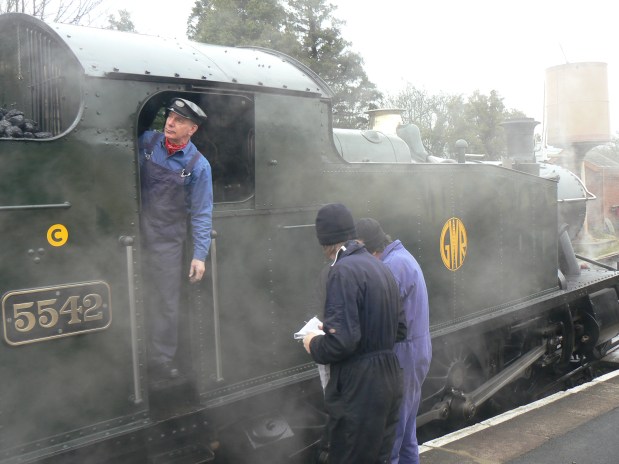
This wonderful old steam railway takes me back to my childhood when we would take day trips by steam train from the grime of Gateshead to the fresh air and fun of the seaside at Whitley bay or South Shields.   It is beautifully restored, maintained and run by dedicated volunteers of the Gloucestershire Warwickshire Railway.  The route it takes gives wonderful views of the Cotswolds, and the towns and villages it passes through.

It is so beautiful that it is sometimes used as a film set and that is how I got my shots.  Alex Sibo, who was studying at our local university, wrote, directed and produced a short documentary film about his family history.  It follows the story of his grandfather, Bruno Siba, as he managed to escape WW11 Czechoslovakia.  He had to hide his identity and change his name in order to escape.  I played a minor part in his film, which was great fun.  You can watch a bit of the film here.

Here are my rather atmospheric shots of Toddington railway station early on a damp morning.  There are more recent shots on a previous blog.

“Today was a good day” or  “I wouldn’t start from here!”

In the woods with hubby and dog

There’s a well-known joke, which has been around since at least 1924 about a tourist in Ireland who asks one of the locals for directions. The Irishman replies: ‘Well, if I were you, I wouldn’t start from here’.

That’s the way I feel about today’s weekly photo prompt!

The prompt is “Today was a good day”.  But recently every day seems to present a challenge of almost unmanageable proportions so I am just going to imagine what ‘a good day’ would be for me.

I think my good day would start with a breakfast of fresh fruit with muesli and natural yoghurt.  I would eat this sitting in a Cotswold garden, by a stream with fish swimming lazily by.  To drink I would have fresh orange juice followed by the perfect cup of coffee.  I imagine it to be an autumn day, early September, when the trees are still laden with fruit, the harvest from field and hedgerow is in, and the birds are well-fed and singing happily.

I would be content for a while sitting with my husband and little dog reading a good book; I can recommend ‘The Snow Child’ by Eowyn Ivey; or doing the puzzles in my favourite daily newspaper.  But pretty soon I would want to meet up with my grandchildren for an adventure.

I would take them anywhere with trees and animals, a playground and a picnic area.  We are spoilt for choice in the Cotswolds with natural woods and ancient forests on our doorstep, as well as Burford Wildlife Park, Bourton on the Water Birdland, and Prinknash Bird Park, which are among my favourites.   Westonbirt Arboretum and Cotswold Wildlife Park are close behind.  There we would run free, or explore on cycles, skates and scooters with the youngest in her pushchair.  We would climb trees, collect berries, nuts and seeds, cross wobbly rope bridges, build dens, swing, slide, feed the animals, sing songs, take photos and make up stories.  Then we would have an enormous feast of a picnic washed down with ice cold spring water and followed by a soft whippy ice cream.

The children would have a nap on the journey back and wake refreshed to capture their memories of the day in collage, painting and drawing, or stories and poems illustrated with their photos.  Later we would bake yummy pies and crumbles with the fruits and berries they collected.  We would enjoy them with their parents before sending them home to sleep well and dream of their good day.

I would return to my seat in a Cotswold garden, by a stream with fish swimming lazily by.   My hubby would be there with our sisters and some special friends.  Someone would barbecue a perfect steak for me and serve it with a fresh salad from the garden.  I would have a large glass of beautiful red wine and watch the hot air balloons float overhead as the sun set.  No doubt one of them will be pig shaped!

Victor and Vanquished ~ Symbol of The Battle of Tewkesbury

Victor Victor

This weekend there is a Medieval Festival taking place in the nearby market town of Tewkesbury.  It is an annual event which commemorates the Battle of Tewkesbury which took place here on 4th May 1471.  The main event is a very realistic re-enactment of the battle on the actual site.

The Battle of Tewkesbury brought to an end the Wars of the Roses between the house of York whose symbol was the white rose, and the house of Lancaster, whose symbol was the red rose.  The Yorkist King Edward 1V, was victorious while Edward, Prince of Wales, son of Henry V1 and last Lancastrian heir to the throne, was killed.  His burial place lies in Tewkesbury Abbey with an inscription which reads,

“Here lies Edward, Prince of Wales, cruelly slain whilst but a youth, Anno Domine 1471, May fourth. Alas the savagery of men. Thou art the soul light of thy Mother, and the last hope of thy race.”

Also in Tewkesbury Abbey high up on the ceiling there is a magnificent Red Rose carved, which shows the badge of Edward 1V, the ‘sun in splendour’.

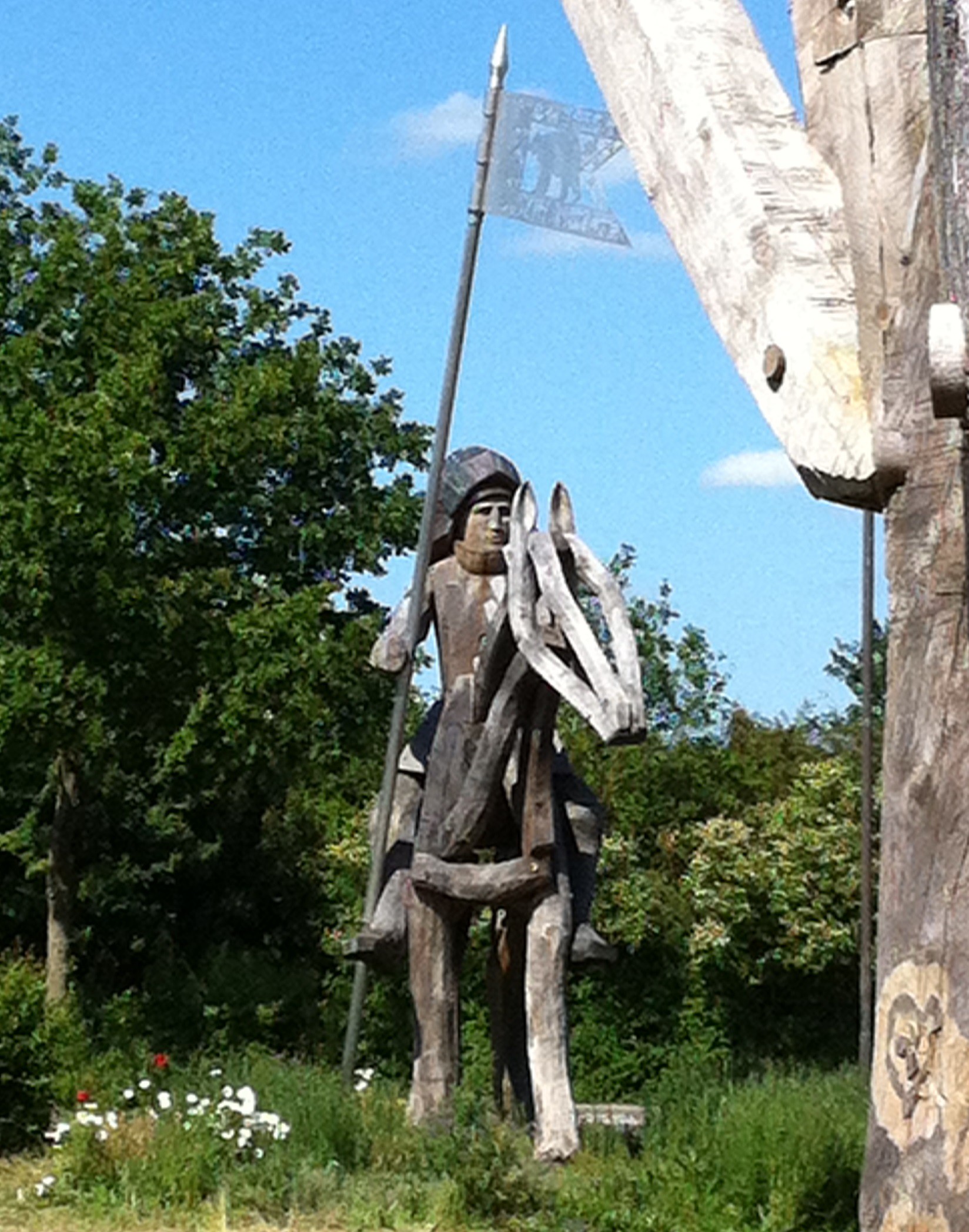
Fittingly, both the victor and the vanquished are remembered in the Abbey.  They are also remembered by an impressive sculpture, which was installed on the Stonehills Roundabout at the Tewkesbury end of the A38 road to Gloucester last year.  The sculpture is called ‘Arrivall’ and consists of two timber framed horses 5m (16ft) tall.   One is a mounted knight, known as Victor, which is a symbol of the victorious Yorkist forces of King Edward IV.  On the opposite side of the roundabout stands the other sculpture, the riderless horse Vanquished, which is a symbol of the beaten Lancastrian forces.  His head is bowed in defeat and exhaustion from the battle.  The sculptures, made by Phil Bews from the Forest of Dean are of green oak, and the work took 2 years to complete.  Local schoolchildren and members of the community were invited to carve poppies on the horses’ legs in remembrance of the centenary of WW1 in 2014.

Both of the horses have lances with pennants which swing in the breeze.  These were made by a local company and donated free.  In fact the local people and business community raised almost all the £65,000 needed for this magnificent sculpture, which rather eerily faces the original battle site.

I took my life in my hands on this busy roundabout to get some photos.  I am looking forward to going back and getting more photos at different times of the year and in different weather conditions, at sunset and in moonlight.  But even in daylight I found the sculptures very impressive and strangely moving.

Doors Painted by Fr Stephen Horton OSB of Prinknash Abbey

Today I took my grandson to Prinknash Abbey for a snack in the wonderful café, and to play in the beautiful grounds of the Monastery of Our Lady and St Peter. I have written about the abbey several times before as it is a very special place for me.  I was thrilled to meet Fr Stephen Horton again, who painted all the beautiful doors above.

The Abbey is set high in the Cotswold Hills near Cranham and Painswick so the views are spectacular.  There is ancient woodland behind, and to the front, a clear view towards Gloucester with its magnificent Cathedral.  On a clear day you can see May Hill with its crown-shaped clump of trees on the summit.  They were planted in celebration of Queen Victoria’s Diamond Jubilee in 1897, and are visible for miles around.  Beyond that there are the Brecon Beacons and the Black Mountains.  Having observed that view on a daily basis, the monks are very good at forecasting the weather merely by looking at May Hill.  If the hill looks a misty blue they know there will be rain at Prinknash later.  If the crown of trees is lost in cloud, there will be a storm.

I discovered while working in the old ‘St Peter’s Grange’, which is now home to the monks again, that it was built in this position, sheltered by the hills and trees, as protection from the plague!  There is documentary evidence, as well as evidence inside, that some parts of the Grange were built in the 14th century.  In 1339 the Bishop of Worcester granted a licence “For the Abbot of Gloucester and his fellow monks to celebrate Mass or to have it celebrated by a suitable chaplain in an oratory within their manor of Princkenasch.”  So we know that there was a chapel on the site then.  By the time the Grange was built the Black Death had already swept through England and people thought it was carried on the wind.  Wealthy people therefore built their homes on the side of a hill sheltered from the wind in the hope that this would protect them.

One of my jobs at the Abbey was to polish the Parker room.  This room was named after William Parker who was Master of the Works in the Abbey before he was elected Abbot in 1515.  He was responsible for many improvements to the building.  In July 1535 Abbot Parker entertained King Henry V111 and Anne Boleyn for a week.  They used St Peter’s Grange as a hunting Lodge because there were many deer around – as there are today nearby.  One fascinating snippet that appeals to me is that Abbot Parker had windows put into positions from which he could watch the monks about their work.  He used to spy on them.  I believe, contrary to what Wikipedia states, that this is where the phrase “Nosey Parker” comes from.

At Prinknash the monks have long been known for their art and craft work.  Vestments and stained glass were early specialities. They also made beautiful pottery for many years from the local clay.  The monks still make Incense that is exported all over the world.  One of the monks. who sadly passed away. created a huge wonderful painting for the millennium which was displayed in the Abbey Church.  He also painted and created stained glass.  Many of his pictures were made into lovely cards which were sold in the Abbey Shop.  The abbey’s walled garden is still growing a variety of fruits.  Today there were ripe raspberries to pick.

As I said, we met Fr Stephen Horton OSB who is the Prior and Novice Master.  He is a prolific and very talented painter.   I was fortunate enough to buy some of his original water colour paintings while I worked at the Grange.  They are my pride and joy.  The one I love especially is a watercolour of the Vale of Gloucester as seen from the roof of the Abbey.   When inspiration struck him for this painting he had no suitably sized paper on which to paint the panorama.  Being a monk and used to making use of whatever is available, he used two pieces of A4 paper side by side.  This painting speaks to me of so much more than the view.  It is creativity at its most basic, I feel.  The painting had to be painted there and then using whatever was to hand.  The muse could not wait for a trip to the art suppliers!  It also speaks to me of the way of life of the monks.  They waste nothing and ask for nothing.  They live such a simple life yet produce beauty all around them from whatever is there to be used.

Apart from being a brilliant painter, Fr Stephen is also a great thinker who gives wonderful sermons.  He says that “the one journey that really matters is the journey inwards”.  On occasion I have asked him for copies of his notes as I want to study his words deeply.  He says monastic silence is, “an inner stillness like at the bottom of the ocean, where the force eight gale might be going on, but deep down you do come to a stability, an inner anchoring”.

One of the saddest things that happened at Prinknash was the theft of a statue of Our Lady of Prinknash in 2002.  There are many statues at Prinknash but this one was extremely beautiful and so special.  It was about 20 inches tall, carved of Flemish Oak, and had belonged to St Thomas More. After the Reformation, it was taken abroad but returned in 1925 when the Benedictine monks founded their new abbey at Prinknash.  Of course this means it was hundreds of years old and priceless in the truest sense.   The Abbey Church was always open for visitors and those who wished to pray, and the statue used to stand on a shelf to the left side of the church.  One day it just disappeared while the monks were at tea, stolen to order presumably as nothing else was taken.  It devastated the community in the abbey and the wider community, including myself, who attended Mass there.  I almost believe it took the heart out of some of the monks and the community itself.  I have a picture of that statue and I often think that one day it will return to its rightful home.  Maybe when the current ‘owner’ dies he will leave it in his will to be returned to Prinknash ~ after all he can’t take it with him!

This coming Saturday, 11th July is the Feast Day of St Benedict who lived in the 6th Century.  I have no doubt that the monks at Prinknash, who follow the rule of St Benedict, will be celebrating with a special meal and maybe a glass of wine.

Below I have added some of my photos of doors for the weekly photo challenge